Why Does My Knee Pop? Common Causes and When to Get Help
Learn why knees sometimes pop, when it’s usually harmless, and when it may signal a problem. Common causes include gas bubbles or tendons snapping, but popping can also point to joint issues. Explore simple at-home steps that may help, and know when it’s time to see a clinician.
If you hear occasional popping without pain, it is usually not serious. But if popping comes with pain, swelling, instability, or locking, you should seek evaluation so we can find the cause and plan treatment.
Quick Overview: What This Post Covers
What makes knees pop.
How to tell harmless popping from trouble.
Simple self-care and when to see a specialist.
Tests and treatments your clinician may use.
How we approach diagnosis and recovery at Princeton Orthopaedic Associates.
Common, Usually Harmless Causes of Knee Popping
Sometimes popping is simply noise from normal joint movement. A few common benign reasons include:
Gas bubbles forming and popping inside the joint fluid, which can create a cracking sound
Tendons or ligaments snapping briefly as they shift over bone when the joint moves
Rough surfaces rubbing in a joint with age-related wear; osteoarthritis can also have inflammatory flares and management depends on symptoms and function
Painless popping alone is not known to cause arthritis; however, if popping is accompanied by pain, swelling, instability, or limits on function, you should have it evaluated.
When Popping May Mean a Problem
Popping that comes with other symptoms may point to an underlying injury. Watch for these signs:
Sharp or persistent pain at the time of popping
Visible swelling or the knee feeling hot
A feeling that the knee gives way, locks, or will not fully bend or straighten
Pain or instability that limits walking or daily activities
Those symptoms suggest we should examine the joint to look for cartilage injuries, meniscal tears, ligament strain, loose fragments, or significant joint inflammation.
Emergency or Urgent Signs
If any of the following occur after a pop, get urgent or emergency care rather than waiting for a routine appointment:
A loud pop during an injury followed by immediate swelling and inability to bear weight
Visible deformity or suspected patellar dislocation
The knee is locked and you cannot fully straighten it - true mechanical locking
Severe pain after trauma or when a fracture is suspected
A hot, very painful swollen knee with fever or chills, or a swollen painful knee in someone who is immunocompromised - possible septic arthritis
What Might Be Causing Painful Popping?
Several common issues can cause painful popping. These include damage to soft tissues, cartilage problems, and mechanical irritation around the joint.
Meniscal tears. A torn meniscus can catch or lock and may produce a pop with pain.
Ligament sprains. A sudden twist or direct blow can cause ligament stretching and an audible pop.
Patellar tracking issues and patellar instability or dislocation. If the kneecap moves unevenly or subluxes, you may feel or hear snapping and experience pain.
Loose bodies or osteochondral injury. Cartilage or bone fragments can catch in the joint and cause painful popping or locking.
Cartilage wear. As cartilage thins with age or injury, joint surfaces can make noise and become painful.
How We Evaluate Popping Knees
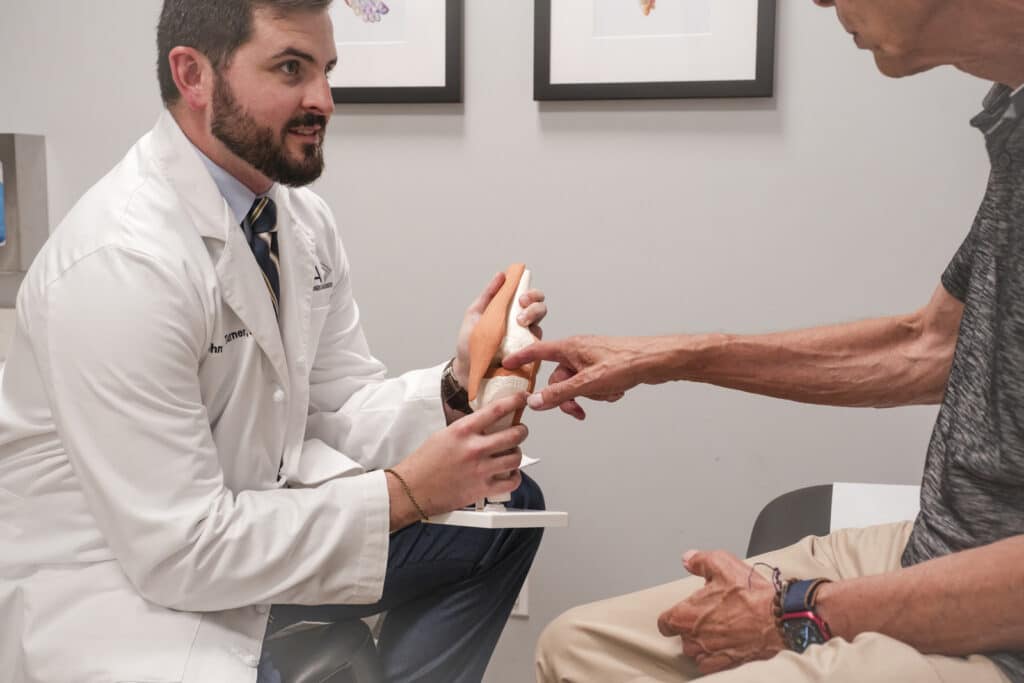
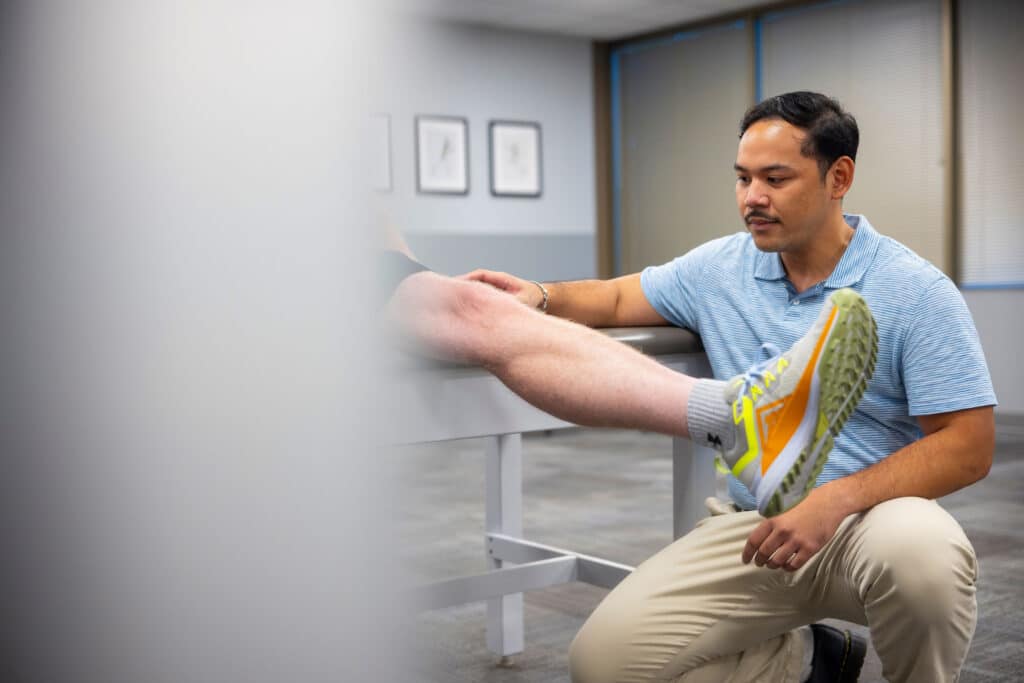
Your clinician will take a careful history and perform a focused exam to check motion, stability, and areas of tenderness. That helps narrow down likely causes.
Imaging and tests are selected based on the history and exam. X-rays are often first-line after trauma to assess for fracture and alignment; X-rays do not show soft tissues. MRI is ordered when the exam or history suggest soft tissue injury such as meniscus or ligament tears, cartilage damage, or when mechanical symptoms persist. Ultrasound can be useful for dynamic snapping and for evaluating superficial tendon or bursal problems.
Test
What it shows
X-ray
Bone alignment, fracture, and evidence of arthritis; does not show soft tissues
MRI
Soft tissues like meniscus, ligaments, and cartilage; used when exam or history suggest soft tissue injury or persistent mechanical symptoms
Ultrasound
Tendon or bursa irritation near the knee and useful for dynamic snapping
At-home Steps You Can Try First
If popping is mild and not accompanied by the concerning signs above, try conservative care while watching symptoms. Small changes often help.
Rest from the activity that triggers the sound for a few days
Ice the area for 10 to 15 minutes if there is pain or swelling
Over-the-counter nonsteroidal anti-inflammatory drugs may reduce pain; avoid NSAIDs if you have a history of gastrointestinal ulcers or bleeding, kidney disease, are taking blood thinners, are in late pregnancy, or have an NSAID allergy. If NSAIDs are not appropriate, consider acetaminophen after checking with your provider
Start gentle strengthening and mobility work for hips, quads, and hamstrings; a physical therapist can guide this
When You Should Schedule an Exam
Contact us for an evaluation if you have persistent pain, swelling, catching or locking, repeated giving way, or if symptoms prevent daily tasks. Early assessment helps us treat the cause and reduce the chance of longer term issues.
Who to See at Princeton Orthopaedic Associates
Specialty
Why you would see them
Sports Medicine
Non surgical evaluation for tendon, ligament, and meniscal problems
Orthopaedic Surgeon
Persistent mechanical symptoms or when surgery may be needed
Physical Therapist
Rehabilitation to improve strength, control, and movement patterns
What to Expect from Treatment
Treatment depends on the diagnosis. Many causes improve with a planned rehab program that reduces pain, restores motion, and strengthens supporting muscles. When structural damage is severe, surgical options may be discussed.
Conservative care first: activity modification, medication, targeted therapy
Procedures: injections may help for persistent inflammation
Surgery: reserved for clear mechanical problems or unresolving structural injury
If you want to discuss symptoms, we make it easy to schedule an exam. A focused visit helps us determine what is normal and what needs treatment so you can get back to your routine with confidence.
This blog post is meant to be informative and should not act as a self-diagnosis tool. If you’d like to see one of our doctors, please contact us here.
If you feel a tight, achy feeling behind your knee, it might be a Baker's cyst.
Daily life with a Baker's cyst often feels like an uninvited house guest, quietly making its presence known with discomfort or swelling behind your knee. However, understanding Baker's cyst symptoms and causes can bring you a sense of empowerment and control, time to kick that house guest out. If you have a Baker's cyst, you may notice the area feeling tight or achy, particularly after standing or walking long. Simple activities like climbing stairs, kneeling, or even fully extending your leg might become challenging. As an orthopaedic surgeon at the forefront of musculoskeletal care, I've seen how disruptive Baker's cysts can be to daily life. It's not just the physical discomfort—there's also the lingering uncertainty about what this swelling means and how to manage it.
Why you can trust us:
We have multiple highly specialized, board-certified, fellowship-trained orthopaedic surgeons.
We know that we serve people - actual humans - not random orthopaedic conditions. That drives us to compassionate care.
The world of orthpaedics is constantly evolving. Our orthopaedic surgeons are constantly evaluating new techniques, tools and methods to serve our community even better.
We provide outcome-focused treatment. We work with our patients to achieve their goals, all while developing custom treatment plans that fit our patient's lives.
A Baker's cyst (known as a popliteal cyst) is a fluid-filled sac that forms behind your knee. It develops when excess joint fluid—known as synovial fluid—accumulates in the popliteal bursa; this small sac serves to help cushion the knee joint. This accumulation causes swelling and, in some cases, discomfort.
The Baker's cyst is usually a symptom of an underlying issue, such as arthritis or a meniscus tear. While the cyst can vary in size, it can become large enough to restrict knee movement and cause significant pain.
What are Baker's Cyst Symptoms?
Bakers cyst symptoms can vary from person to person. Many individuals experience no symptoms at all, while others may notice:
A bulging mass or lump behind the knee
Tightness or stiffness in the knee
Pain in the back of the knee, especially after standing or moving around
Swelling that can extend down the calf in some cases
Limited range of motion in the knee
A clicking or popping sensation with movement
In rare cases, the cyst can rupture, causing a sharp pain with swelling in your lower leg that mimics the symptoms of a blood clot; this can be a medical emergency and should be addressed immediately. Additional symptoms of a ruptured Baker's cyst may include severe pain, sudden swelling, and difficulty bearing weight on the affected leg.
Where Do Bakers Cysts Form, and Why?
Baker's cysts form in the popliteal space at the back of the knee joint. This space contains the popliteal bursa, which is prone to filling with excess synovial fluid under certain conditions. When the knee experiences inflammation due to arthritis, injury, or other joint issues, the body naturally produces more fluid to cushion the joint. However, when there is too much fluid, it can leak into the bursa and form a cyst.
The location behind the knee makes this area particularly vulnerable to fluid buildup because of its anatomy and function in movement, especially when the knee joint is stressed or overused.
What Causes a Baker's Cyst?
Several underlying conditions can lead to the formation of a Baker's cyst:
Osteoarthritis: As the most common cause, this wear-and-tear condition inflames the knee joint, increasing fluid production.
Rheumatoid arthritis: Inflammatory arthritis can cause excessive fluid to accumulate in the affected joint.
Meniscus tear: This injury is a tear in the cartilage of your knee and can trigger inflammation, leading to cyst development.
Knee injuries: Trauma or repetitive stress can inflame the knee joint, prompting fluid buildup.
Gout or other joint issues: Conditions that cause swelling in the knee may result in forming a Baker's cyst.
Is There a Way to Prevent a Baker's Cyst?
While there's no guaranteed way to prevent a Baker's cyst, addressing the underlying causes can reduce the risk of development.
Proper management of arthritis
Regular low-impact exercises
Maintaining a healthy weight to reduce the stress imposed on your knees
Protecting your knees from injury with proper gear and technique during physical activities can also help minimize the chances of developing a cyst.
How to Care for a Baker's Cyst Once You Have One
Once you've been diagnosed with a Baker's cyst, there are several steps you can take to manage the condition and reduce discomfort:
At-Home Treatments
Rest: Limiting activities that aggravate the knee joint can help reduce swelling.
Ice: Applying ice to the back of the knee for 15-20 minutes can help relieve pain and reduce swelling.
Compression: Using a compression bandage can help manage swelling by limiting fluid buildup in the area.
Elevation: Keeping your leg elevated when resting can assist in reducing fluid accumulation and discomfort.
Over-the-counter pain relief: Nonsteroidal anti-inflammatory drugs (NSAIDs) like ibuprofen can help manage pain and inflammation.
What Not to Do When You Have a Baker's Cyst
What not to do when you have a Baker's cyst is just as important as understanding what you should do.
Avoid if You Have a Baker's Cyst
Excessive activity: Overusing the knee through high-impact exercises can worsen the condition.
Ignoring symptoms: Don't wait for the pain or swelling to go away on its own—delaying care can worsen the condition.
Assuming it's just a muscle strain: Misdiagnosing a Baker's cyst as a simple muscle strain can lead to improper treatment and an increased risk of rupture.
When to Seek Help from POA's Orthopaedic Surgeons
If your Baker's cyst persists despite home treatment, causes significant discomfort, or interferes with your daily activities, it's time to consult an orthopaedic surgeon. Seeking professional care can provide reassurance and confidence in your decision-making. At POA, our team of expert orthopaedic surgeons specializes in diagnosing and treating conditions like Baker's cysts and any potential underlying causes like arthritis or meniscus tears.
What Type of Orthopaedic Specialist Should You See?
If you are looking for a doctor to help with a Baker's cyst, you'll want to see an orthopaedic surgeon specializing in knee conditions. At POA, our knee specialists are highly experienced in managing the symptoms and root causes of Baker's cysts, ensuring you receive personalized, comprehensive care.
Meet Our Orthopaedic Knee Specialists
What Does Treatment Look Like from a Medical Standpoint?
Treatment for a Baker's cyst often begins conservatively. In many cases, if the underlying condition causing the cyst is treated, the cyst itself will improve. Here's what medical treatment might involve:
Aspiration: For aspiration of the cyst, your orthopaedic surgeon uses a needle to drain the excess fluid from the cyst, which can provide temporary relief from swelling and discomfort.
Corticosteroid Injections: These anti-inflammatory injections can help reduce swelling and manage pain associated with the cyst.
Physical Therapy: Targeted exercises can help improve joint function, reduce fluid buildup, and manage pain.
Surgery: In cases where the cyst is large, recurrent, or caused by an underlying structural issue, surgery may be necessary to remove the cyst or repair the damaged joint tissue.
Whether you need imaging, joint aspiration, or surgical intervention, our surgeons have the expertise to guide you through the best treatment options.
When to Seek Urgent Care
While Baker's cysts are rarely life-threatening, there are certain instances where we recommend seeking urgent care. If your cyst ruptures, you may experience severe pain, swelling, and bruising in your lower leg; this can be mistaken for a blood clot. If you experience this, immediately seeking medical attention is crucial to rule out the possibility of a more serious condition such as a deep vein thrombosis (DVT).
Need Care Now? POA Has Six Urgent Care Facilities
Monroe
11 Centre Drive Monroe Twp., NJ 08831
Plainsboro
5 Plainsboro Road, Suite 100 Plainsboro, NJ 08536
Robbinsville
1 Union Street Suite 305 Robbinsville, NJ 08691
Princeton
325 Princeton Avenue Princeton, NJ 08540
Hillsborough
315 US Highway 206 Hillsborough Township, NJ 08844
Living with a Baker's cyst can be frustrating, but with the proper care and treatment, it can be entirely manageable. Understanding the condition, starting to address the root causes, and seeking the expertise of an orthopaedic surgeon can make a world of difference.
If you're experiencing Baker's cyst symptoms, don't let the pain or swelling limit your daily life. The knee specialists at POA are here to provide comprehensive, personalized care and guide you through every step of your treatment plan.
Schedule an appointment today with one of POA's expert orthopaedic surgeons and take the first step toward relief!
Does a Baker's Cyst Have Anything to do With Being a Baker?
A Baker’s cyst is not named after bakers or anything related to baking! Instead, it’s named after the British surgeon William Morrant Baker, who first described the condition in the late 1800s. The cyst itself is a fluid-filled sac that forms behind the knee, often due to issues like arthritis or a meniscus tear. While it might sound like something that might happen to a baker, the name is purely a nod to the doctor’s contributions to understanding this knee issue. So, if you ever hear someone mention a Baker’s cyst, remember it's all about medical history and not about pastry!
This blog post is meant to be informative and should not act as a self-diagnosis tool. If you’d like to see one of our doctors, please contact us here.