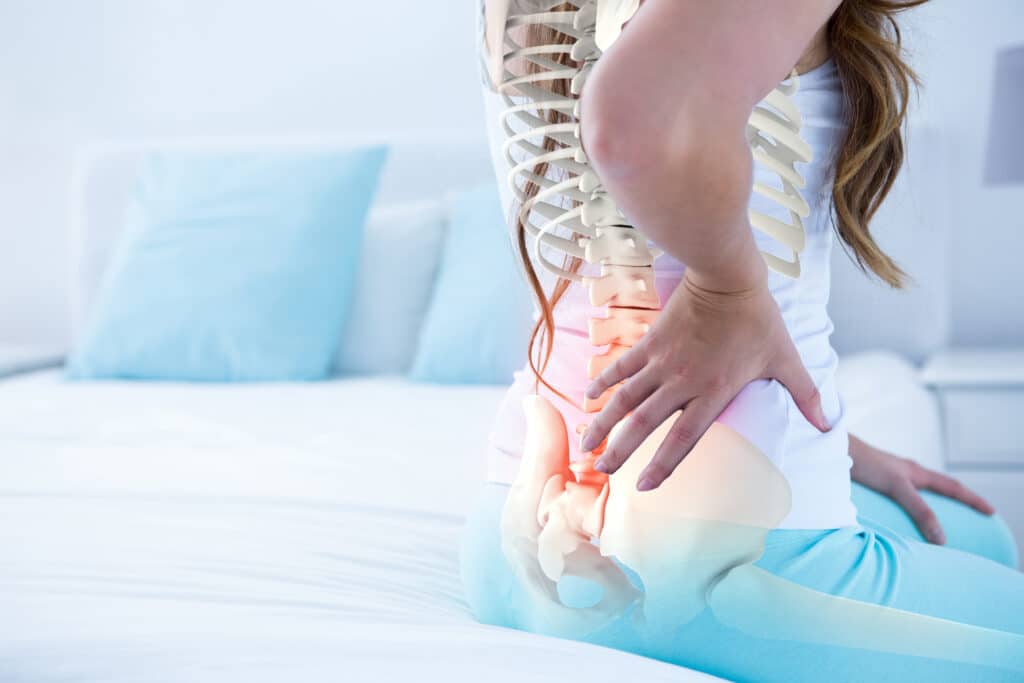
Pain that starts in the lower back or buttocks and travels down one leg is often linked to irritation or pressure on the sciatic nerve. Gentle stretching can help ease tight muscles, calm nerve sensitivity, and support a gradual return to everyday activities.
These stretches are designed to be gentle and accessible. Move slowly, stay within a comfortable range of motion, and focus on steady breathing. If any movement increases pain, tingling, or numbness, it's best to ease off or skip that stretch. Knowing when and how to stretch, along with what to avoid during flareups, can make a big difference in your recovery. If symptoms persist or worsen, it’s important to consult a medical professional.
What You Should Know
Sciatica refers to symptoms from irritation or compression of the sciatic nerve, often causing pain down the back of the leg.
Common causes include a lumbar disc herniation, spinal stenosis, or tight deep hip muscles like the piriformis.
Gentle stretching can reduce muscle guarding and help calm nerve sensitivity.
Avoid stretches that trigger sharp pain, increasing numbness, or leg weakness.
Hold most stretches 20 to 30 seconds, repeat 2 to 3 times, and practice 1 to 2 times daily as tolerated.
Seek care urgently for bowel or bladder changes, progressive weakness, or saddle numbness.
What Is Sciatica and Why Does It Hurt?
The sciatic nerve is the largest nerve in your body. It forms in the lower spine, travels through the buttock, and runs down the back of each leg. When structures around the nerve get irritated or compressed, pain can spread from the low back or hip into the thigh, calf, or foot.
Causes vary. A lumbar disc can bulge and press on the nerve root. Spinal stenosis narrows the canal that the nerves pass through. Sometimes the deep hip muscles tighten and create local nerve irritation. Your plan should match your diagnosis, which is why an exam is helpful before starting a new routine.
Before You Begin: Safe Stretching Basics
Warm up with a short walk or gentle march in place for 2 to 3 minutes.
Move slowly, breathe, and keep pain below a mild, tolerable level.
Stop immediately if pain shoots down the leg or numbness increases.
Use a towel, yoga strap, or chair for support as needed. Avoid bouncing.
Check with your clinician if you are pregnant, have osteoporosis, or recent spine surgery.
Five Gentle Stretches, Step by Step
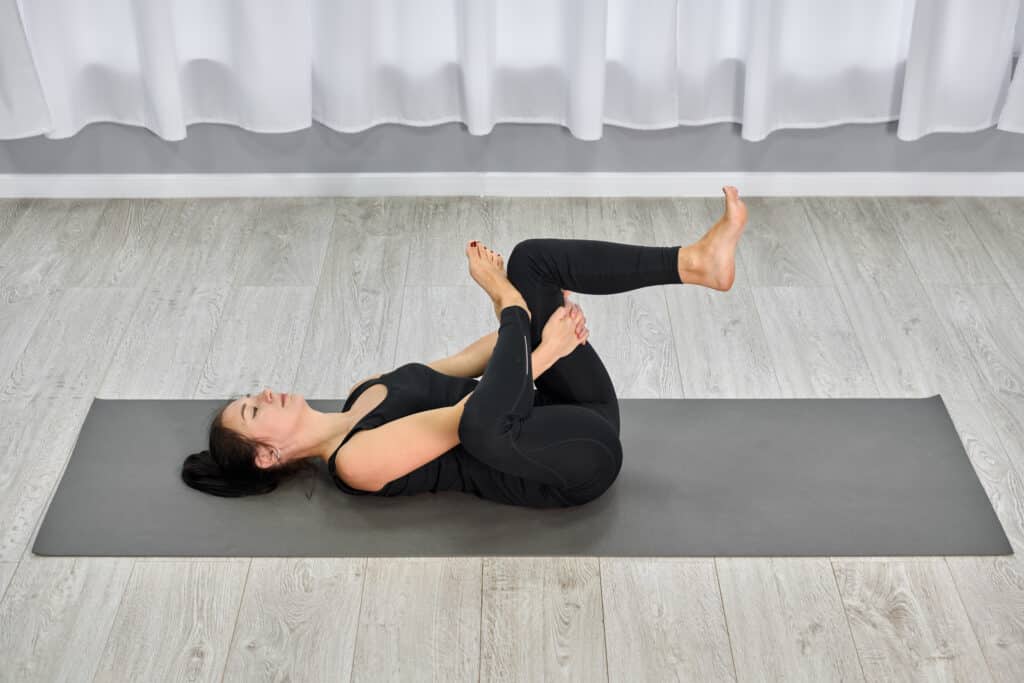
1) Figure-4 Stretch on Back
Lie on your back with knees bent and feet on the floor. Cross the ankle of your painful side over the opposite thigh.
Gently pull the uncrossed thigh toward you until you feel a stretch in the buttock.
Hold 20 to 30 seconds. Repeat 2 to 3 times.
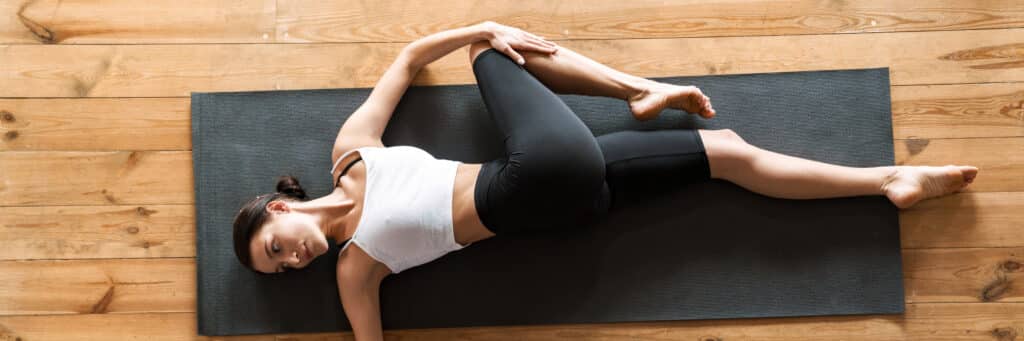
2) Knee to Opposite Shoulder
Lie on your back. Bend the knee on the painful side.
Use both hands to draw the knee across your body toward the opposite shoulder.
Stop at a comfortable stretch in the outer hip. Hold 20 to 30 seconds. Repeat 2 to 3 times.
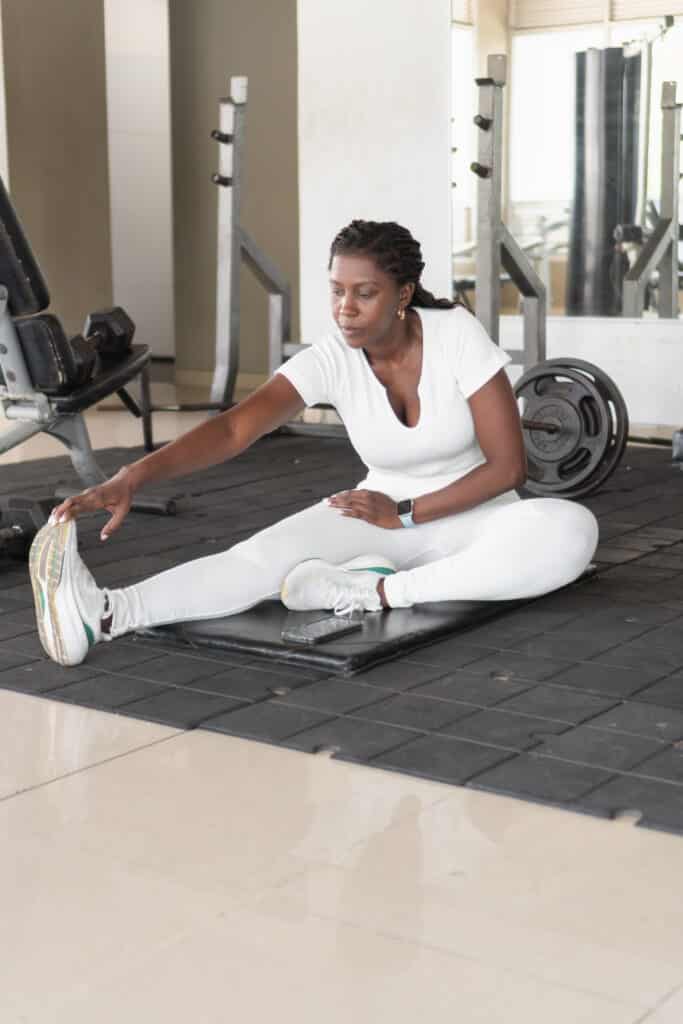
3) Seated Hamstring Stretch
Sit on the floor with one leg extended straight and the other leg bent, with the sole of the foot resting against the inner thigh of the extended leg. Keep your back straight and shoulders relaxed.
Gently lean forward from your hips, reaching toward your shin, ankle, or foot. Stop when you feel a mild stretch in the back of your thigh. Hold for 15–30 seconds, breathing steadily. Return to upright and switch legs. Repeat 2–3 times on each side.
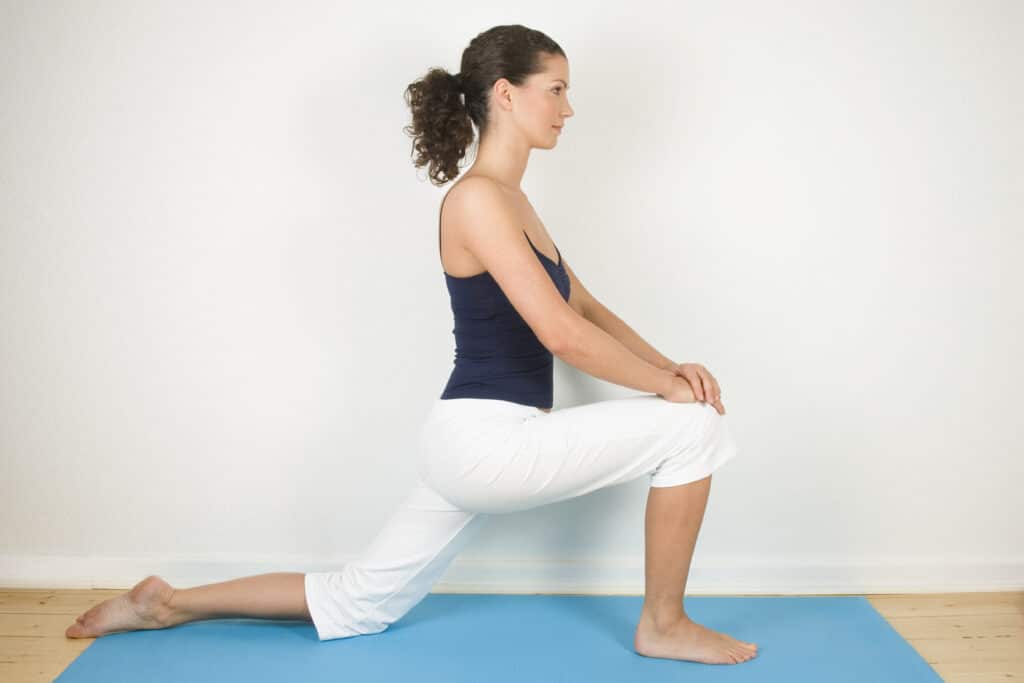
4) Half-Kneeling Hip Flexor Stretch
Kneel on one knee with the other foot in front. Tuck your tailbone slightly and gently shift your weight forward.
You should feel a stretch in the front of the hip on the kneeling side. Keep your trunk upright.
Hold 20 to 30 seconds. Repeat 2 to 3 times each side.
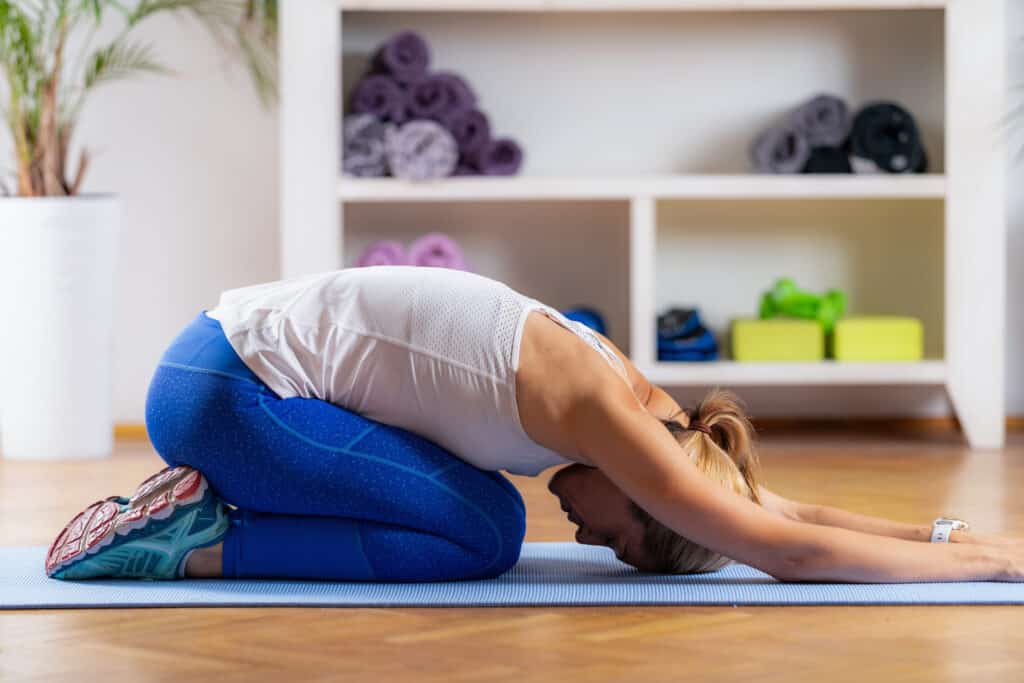
5) Child's Pose, Comfortable Range
Start on hands and knees. Sit your hips back toward your heels while reaching your arms forward.
Stay where it feels easy to breathe. If you notice leg pain or tingling increases with spinal flexion, reduce the depth or skip this position.
Hold 20 to 30 seconds. Repeat 2 to 3 times.
More Mobility Moves That Help
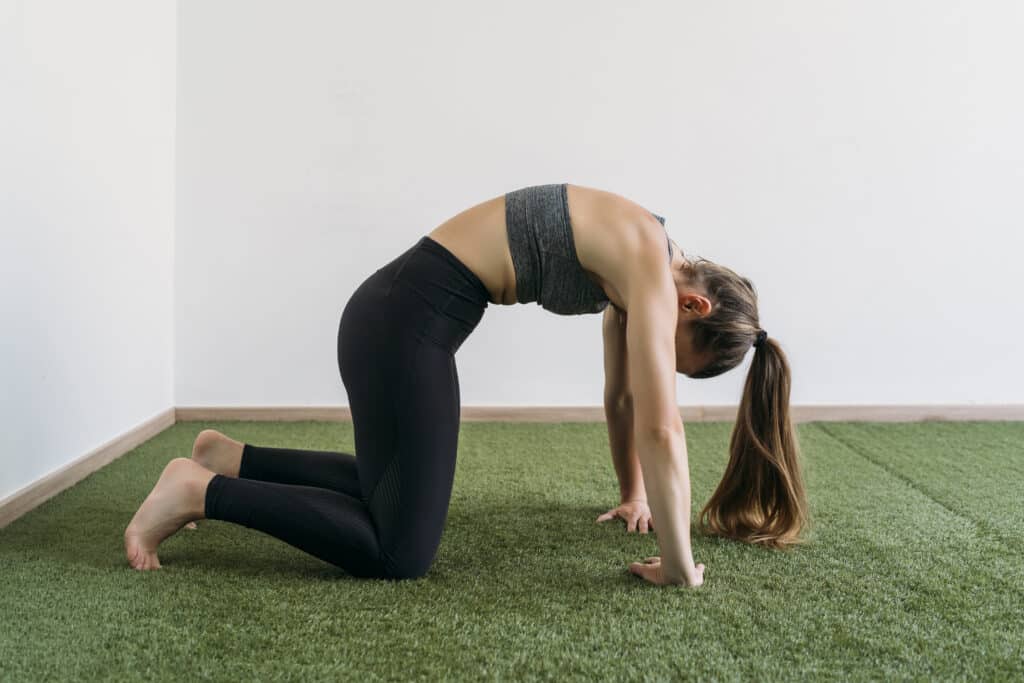
6) Cat–Cow
On hands and knees, gently arch your back toward the ceiling, then lower your belly toward the floor.
Move slowly with your breath for 30 to 60 seconds. Stop if leg pain increases.
7) Seated Piriformis Stretch
Sit tall. Cross the painful-side ankle over the opposite knee.
Lean forward slightly until you feel a stretch in the buttock. Hold 20 to 30 seconds, repeat 2 to 3 times.
How Often Should You Stretch?
Consistency helps calm sensitive tissues. Use this simple guide to pace your recovery.
Stage
Frequency
Holds/Reps
Notes
Early pain
1 to 2 times daily
20 to 30 second holds, 2 to 3 sets
Stay gentle, avoid positions that trigger leg pain
Improving
Daily or every other day
Progress range as comfort allows
Add short walks and easy core work
Maintenance
3 to 5 days per week
Brief routine after activity
Keep flexibility in hips, hamstrings, and low back
What To Avoid During a Flare
Movements that sharply increase leg pain, tingling, or numbness
Heavy lifting with a rounded back
Prolonged sitting without breaks
Bouncing or forcing deeper stretches
Deep spinal flexion or sustained forward bending if it increases leg symptoms.
When To See a Doctor
Get medical care promptly if any of the following occur:
New or worsening leg weakness
Loss of bowel or bladder control
Numbness in the groin or inner thighs
Severe pain after a fall or injury
Pain that does not improve over several weeks despite rest and gentle care
Common Triggers and Risk Factors
Prolonged sitting or long commutes
Repetitive bending or lifting without proper mechanics
Sudden increase in activity or deconditioning
Tight hips and hamstrings that limit normal movement
Age-related spinal changes such as stenosis
Beyond Stretching: What Else Helps
Short, frequent walks to keep joints and nerves moving
Ice or heat for comfort based on your preference
Over-the-counter anti-inflammatory medication if your doctor approves
Physical therapy for targeted mobility, core and hip strength, and body mechanics
Ergonomic changes at work and frequent position changes
Care With Princeton Orthopaedic Associates
If sciatic pain is limiting your day, we can help you find the cause and build a plan that fits your life. Our clinicians guide you on safe exercises, posture, and next steps if additional treatment is needed. Schedule an evaluation to get moving comfortably again.
This blog post is meant to be informative and should not act as a self-diagnosis tool. If you’d like to see one of our doctors, please contact us here.
Hip Flexor Stretches: Safe, Simple Ways To Ease Tight Hips
Tightness in the front of your hips can make everyday movements like walking, running, or standing up from a chair feel stiff and uncomfortable. Understanding what your hip flexors do, why they become tight, and how to stretch them properly can help improve flexibility and ease discomfort.
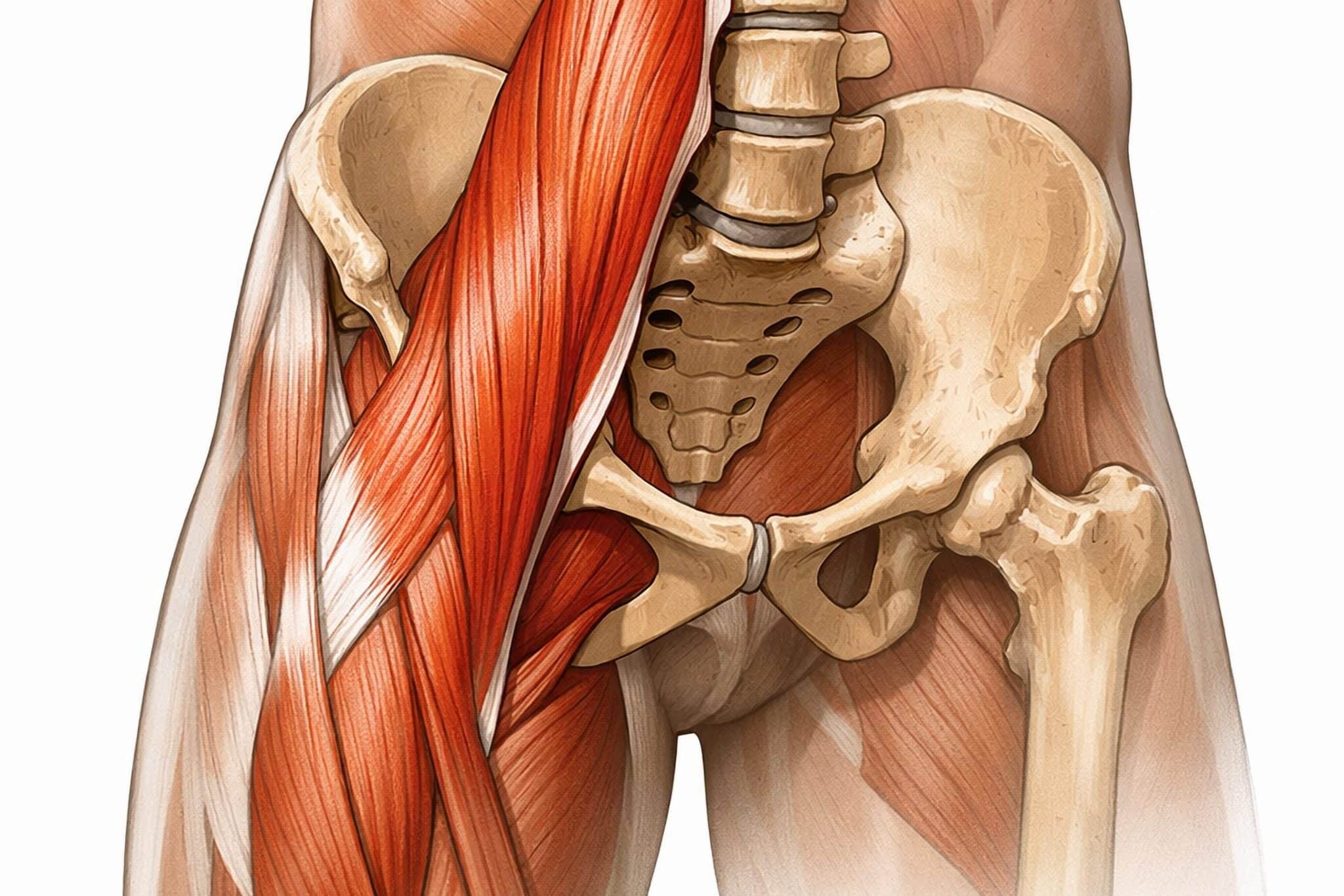
The hip flexors are a group of muscles located at the front of the hip that play a key role in lifting the knee and bending at the waist. The iliopsoas and rectus femoris are among the most important of these muscles. Prolonged sitting, repetitive activity, or a sudden increase in physical demand can cause these muscles to become shortened and sore. With gentle, consistent stretching and mindful movement habits, you can usually restore mobility and reduce tightness.
How Do You Know Your Hip Flexors Are Tight?
You might notice stiffness in the front of your hip or groin after sitting, or discomfort when you step into a long stride. Other common clues include:
Tight or pinching feeling at the front of the hip, especially when standing up from a chair
Low back or front-of-hip discomfort after long periods of sitting
Difficulty straightening the hip fully when walking or climbing stairs
Reduced hip extension while running or pushing off during strides
Standing Lunge With Support
Using the standing lunge with support can help you ease into a hip stretch when kneeling is painful or unstable. This option lets you keep your balance with a chair, table, or counter, which can reduce strain in the knee and back. Start gently, stand tall, and focus on the stretch in the front of the hip. Move slowly and breathe evenly as you feel the stretch deepen.
Stand in a short lunge with the right foot back and the left foot forward. Hold a counter or chair for balance.
Tuck the pelvis and lightly squeeze the right glute. Keep your chest tall.
Gently shift weight forward until you feel a stretch at the front of the right hip.
Hold 20 to 30 seconds. Repeat 2 to 4 times per side.
Good choice if kneeling is uncomfortable or you need extra support.
Wall or Couch Stretch
Use extra knee padding, and skip this variation if you have patellofemoral pain or knee osteoarthritis. Discontinue if knee pressure or pain persists.
This position also lengthens the rectus femoris, a front thigh muscle that acts as a hip flexor.
How Long And How Often Should You Stretch?
Consistency matters more than intensity when you stretch. A steady, gentle routine helps you move well and stay safe. Use the guide below to build a simple plan that fits your day. Start small with short holds and few days per week, then build up as you feel comfortable and your mobility improves.
Goal
Time
Frequency
Notes
General flexibility
20 to 30 seconds per hold
1 to 2 times daily
2 to 4 rounds per side
Warm up
5 to 10 seconds gentle holds
Before activity
Prioritize movement quality and posture
Mobility maintenance
20 seconds
3 to 5 days per week
Pair with hip and core strengthening
Quick Warm-Up Ideas Before You Stretch
2 to 3 minutes of easy walking or marching in place
Gentle leg swings front to back, holding a counter for balance
Pelvic tilts while standing to find a comfortable neutral spine
Before sports or vigorous activity, prioritize dynamic warm-ups (e.g., marching, leg swings, hip circles). If you include static stretches, keep them brief and gentle.
Safety Checks And When To Modify
If you feel a pinching sensation at the front of the hip (especially with a history of femoroacetabular impingement or labral irritation), reduce the range, keep the pelvis gently tucked, or choose a different variation.
When To See An Orthopaedic Specialist
Schedule an evaluation at Princeton Orthopaedic Associates if any of the following apply:
Hip or groin pain that lasts more than a week or keeps returning
Pain that limits walking, stairs, running, or daily activities
Numbness, tingling, or pain that travels into the thigh or back
Clicking or snapping at the hip that is painful
We can confirm the cause of your symptoms, teach you the right technique, and build a plan that combines stretching with strength and movement training so your progress lasts.
The Bottom Line
Hip flexor stretches work best when they’re gentle, well aligned, and consistent. Start with the half-kneeling stretch, focus on pelvic position, and progress to standing or wall variations as you improve. If pain persists, our team is here to help you move with confidence again.
This blog post is meant to be informative and should not act as a self-diagnosis tool. If you’d like to see one of our doctors, please contact us here.
IT Band Stretches: Simple, Safe Moves to Ease Outer Knee and Hip Tightness
f the outside of your knee or hip feels tight or sore, your iliotibial band (IT band) may be involved. You can safely reduce that tension with targeted stretches, proper use of foam rolling, and consistent practice for meaningful relief.
Follow step-by-step stretches that target the muscles connected to the IT band, try a quick 10-minute routine, and be aware of common mistakes to avoid. It’s also important to know when it’s time to see a specialist at Princeton Orthopaedic Associates.
What Your IT Band Does and Why It Feels Tight
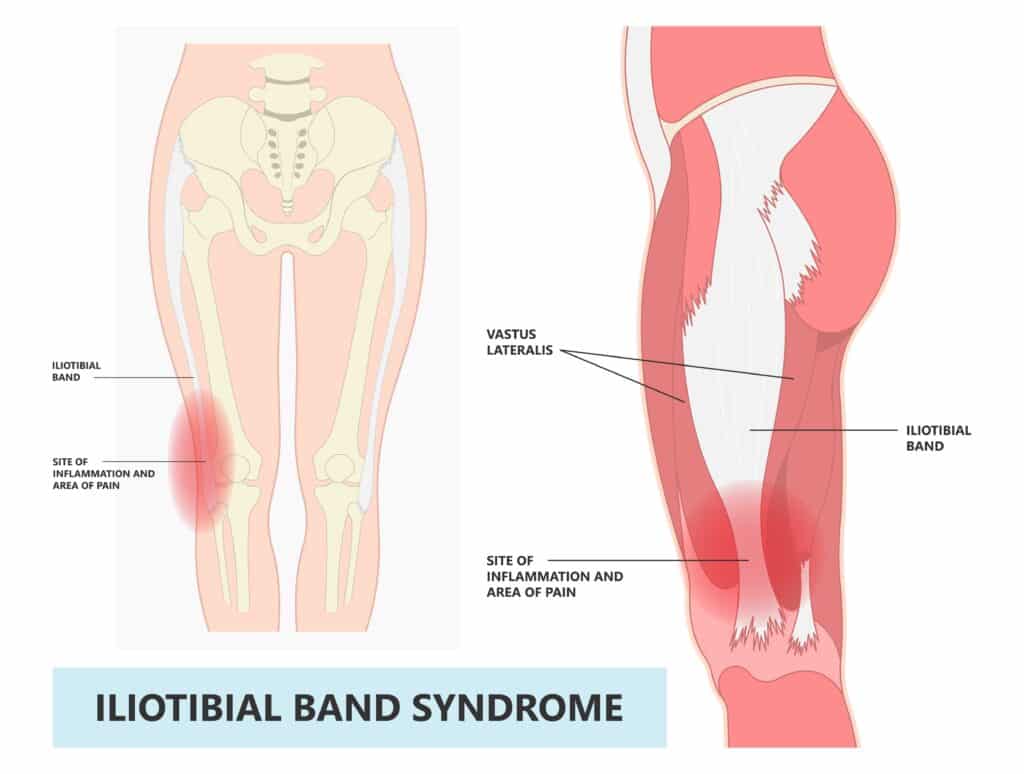
The IT band is a strong band of tissue on the outside of your thigh from your hip to just below the knee. It helps steady the knee while you move. Because it’s not a muscle, you can’t stretch the IT band itself like a hamstring or quad. Instead, you’ll get relief by improving mobility in the muscles that connect to it: the tensor fasciae latae (TFL), glutes, quadriceps, and hamstrings.
Tightness is often linked to repeating the same moves over and over, sitting for long periods, or muscle imbalances around the hip and knee.
Gentle stretching plus smart strengthening offers longer-lasting relief than stretching alone.
Discomfort should feel like a mild, tolerable stretch in the muscle. Sharp or joint pain means stop.
Before You Start: Safety Tips
Warm up with 3 to 5 minutes of easy movement: a short walk or gentle cycling.
Move slowly, avoid bouncing, and breathe normally through each stretch.
Hold each stretch 20 to 30 seconds. Repeat 2 to 3 times per side.
You should feel a comfortable stretch, not tingling, numbness, or sharp pain.
If you have a recent injury, significant swelling, or a joint replacement, ask your clinician which stretches are right for you.
Targeted Stretches That Help Ease IT Band Related Tightness
1) Standing TFL and Outer Hip Stretch (Wall Support)
Stand tall beside a wall for balance. The leg closest to the wall will be your back leg.
Cross the inside leg behind the outside leg. Gently tuck your pelvis under.
Lean your upper body away from the wall until you feel a stretch along the outer hip and upper thigh of the back leg.
Hold 20 to 30 seconds. Repeat 2 to 3 times per side.
2) Seated Figure-4 Glute Stretch
Sit near the front of a sturdy chair, feet flat.
Place your right ankle over your left knee (a figure-4 position). Keep your back tall.
Gently hinge forward from your hips until you feel a stretch in the right glute and outer hip.
Hold 20 to 30 seconds. Repeat 2 to 3 times per side.
3) Half-Kneeling Hip Flexor Stretch With Side Reach
Kneel on a pad with your right knee down and left foot forward.
Gently tuck your pelvis under and shift forward slightly until you feel a front-hip stretch on the right side.
To target the TFL a bit more, reach your right arm overhead and lean your torso slightly to the left.
Hold 20 to 30 seconds. Repeat 2 to 3 times per side.
4) Standing Quadriceps Stretch
Stand and hold a counter or wall for balance.
Bend your right knee and hold your ankle or use a strap. Keep your knees close together.
Gently tuck your pelvis under and avoid arching your low back. You should feel the stretch in the front of the thigh.
Hold 20 to 30 seconds. Repeat 2 to 3 times per side.
5) Supine Hamstring Stretch With Strap
Lie on your back with one knee bent and foot on the floor. Loop a strap around the other foot.
Straighten the strapped leg toward the ceiling until you feel a stretch along the back of the thigh. Keep your knee slightly soft if needed.
Hold 20 to 30 seconds. Repeat 2 to 3 times per side.
Your 10-Minute Stretch Routine: At a Glance
Use this quick reference to build a consistent routine. Aim for most days of the week.
Area
Stretch
Hold
Reps/Side
Frequency
TFL/Outer Hip
Standing cross-over lean
20 to 30 sec
2 to 3
5 to 7 days/week
Glutes
Seated figure-4
20 to 30 sec
2 to 3
5 to 7 days/week
Hip Flexor
Half-kneel with side reach
20 to 30 sec
2 to 3
5 to 7 days/week
Quadriceps
Standing quad stretch
20 to 30 sec
2 to 3
5 to 7 days/week
Hamstring
Supine strap stretch
20 to 30 sec
2 to 3
5 to 7 days/week
Foam Rolling: Where It Helps
Foam rolling can help ease soreness and improve movement around the IT band. Focus on the muscles that affect the IT band instead of pressing directly on the band itself. Move slowly, breathe normally, and stop if anything sharp or lingering hurts. This simple tool can make it easier to glide through stretches and daily activities with less tension in the area.
Glutes: sit on the roller, angle to one side, and work the outer glute area.
Lateral quadriceps: roll the outer front thigh just ahead of the IT band.
TFL (front outer hip): use a small ball or roller to gently address the muscle near the bony front of the hip.
Move slowly for 30 to 60 seconds per area. Avoid direct pressure over the outside of the knee.
Stop if you feel sharp, nerve-like, or lingering pain.
Strength Also Matters
Having balanced strength around your hips and core helps protect the IT band. When the hips and trunk are strong, less stress reaches the outer thigh, and symptoms are less likely to come back. Add simple movements a few days a week to build support and stability for your legs and lower back.
Clamshells and side-lying leg lifts for the gluteus medius.
Bridges or banded bridges for the gluteus maximus.
Lateral band walks and mini-squats with good knee alignment.
Hip hikes on a step and single-leg balance drills.
Start 2 to 3 days per week. Focus on quality form, not speed.
Common Stretching Mistakes
Forcing deep stretches that create sharp pain.
Bouncing or holding your breath.
Ignoring the hips and focusing only on the knee.
Skipping strength work that supports long-term results.
When to Pause and See a Clinician
If any of these signs show up, pause your stretches and seek a checkup. A quick evaluation can stop a small issue from turning into a longer lasting problem. Listening to your body now may save you from more pain later.
Pain lasts more than 1 to 2 weeks despite rest and stretching.
Night pain, swelling, or warmth around the knee or hip.
Catching, locking, or a feeling that the knee might give way.
Numbness or tingling down the leg.
Recent fall or a new injury.
History of hip or knee replacement: confirm safe options with your surgeon or physical therapist.
If you’re unsure which stretches are best for you, our team can help. Sports medicine specialists and physical therapists at Princeton Orthopaedic Associates can tailor a plan to your goals and activity level.
This blog post is meant to be informative and should not act as a self-diagnosis tool. If you’d like to see one of our doctors, please contact us here.