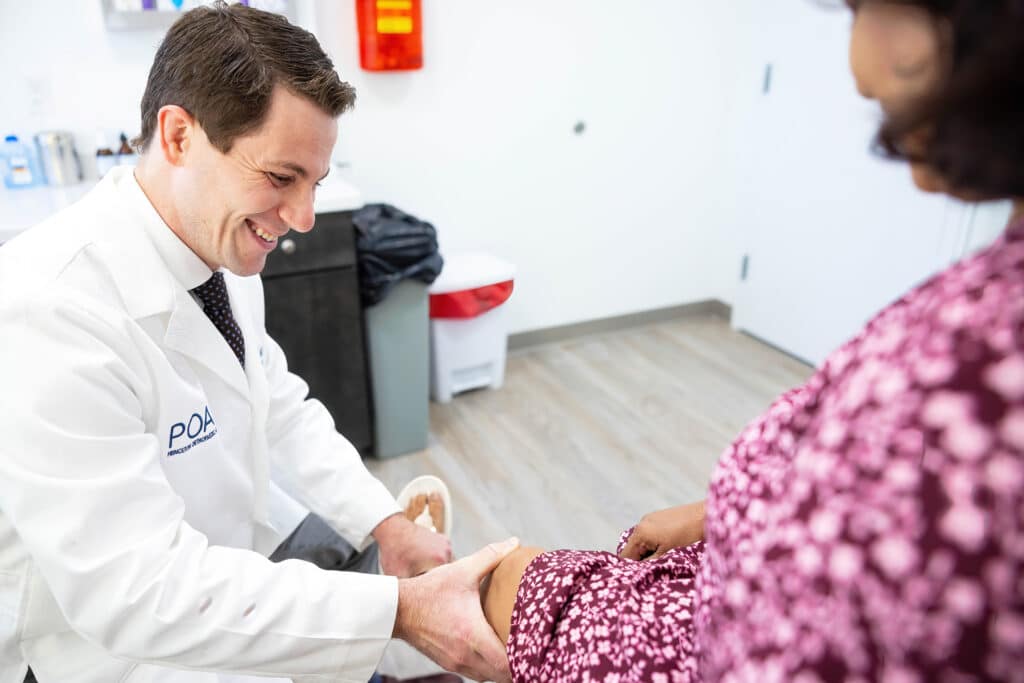
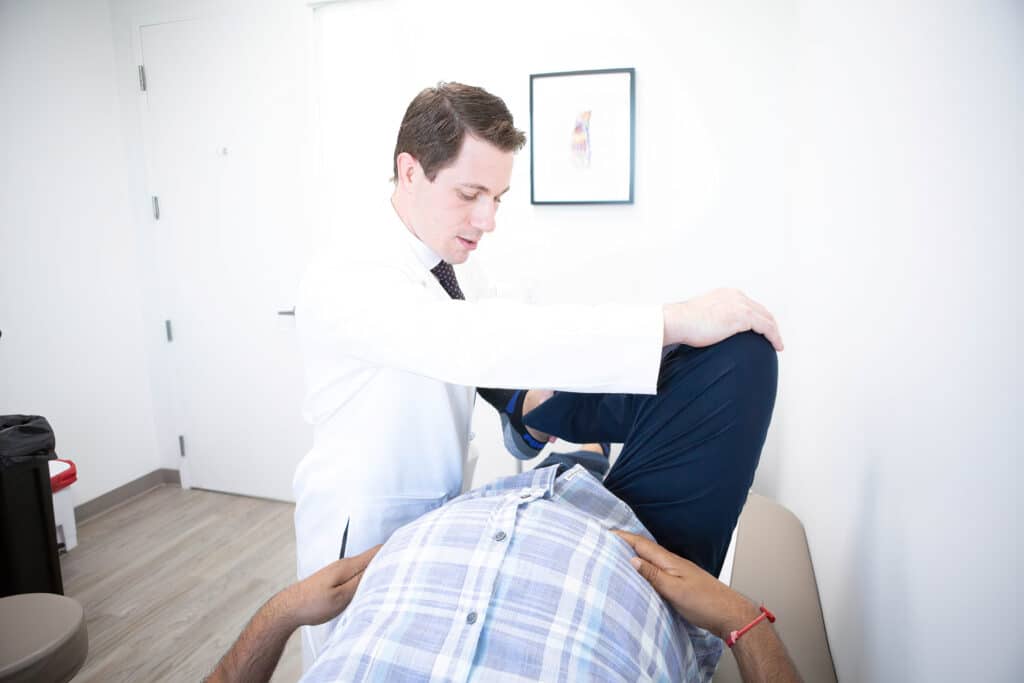
Carpal tunnel syndrome is a common ailment caused by pressure on the medial nerve that runs down the arm, through the wrist, and into the hand. The syndrome is named for the medial nerve’s passageway through the wrist. Carpal tunnel syndrome is often caused by repetitive motions done while the wrist is bent, such as when using a mouse or keyboard.
Symptoms and Diagnosis of Carpal Tunnel Syndrome
Most patients experience numbness or tingling in the thumb, index, and middle fingers. Sometimes, the numbness spreads to the ring finger and the medial nerve in the wrist and forearm. Patients can also experience pain in these areas.
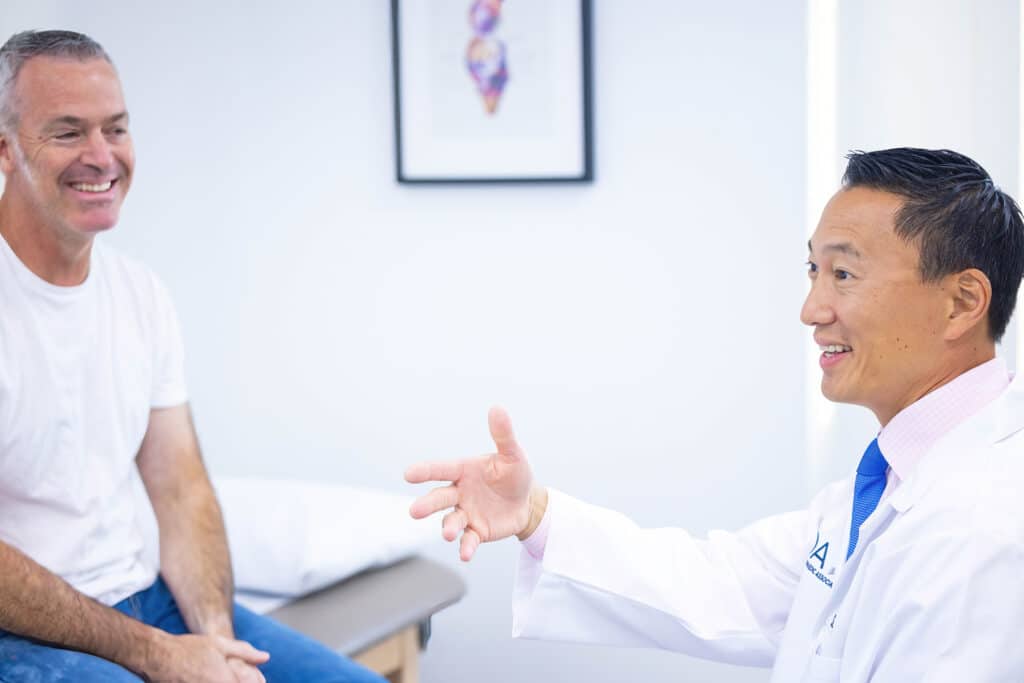
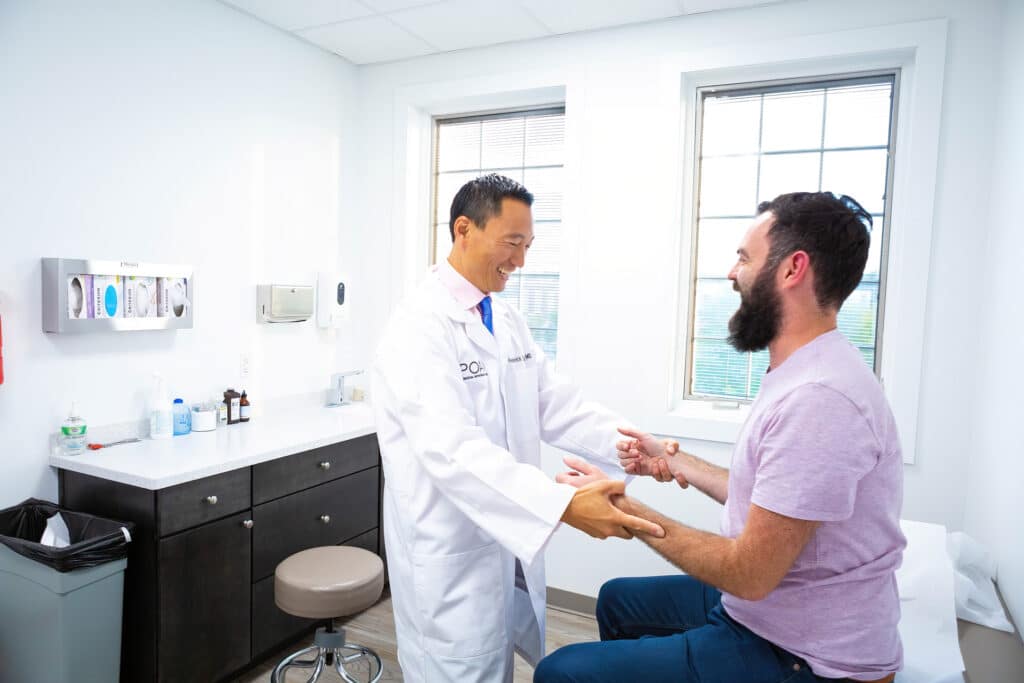
Doctors at Princeton Orthopaedic Associates will diagnose carpal tunnel syndrome through a full patient workup. We will check for recent injuries, perform a physical exam of the hand, wrist, and forearm and obtain imaging of the wrist through either an x-ray or an MRI.
Treatment and Prevention of Carpal Tunnel Syndrome
Carpal tunnel syndrome can be treated in several ways, depending on the severity of the pain or numbness. One of the simplest treatment methods is to wear a splint while using a computer to keep the wrist straight. This reduces the pressure on the nerve.
Patients can also use medication to alleviate the pain, often with over-the-counter medications such as acetaminophen. For more severe pain, corticosteroid injections are an option.
In the most severe cases, you may need surgery to remove pressure from the nerve and alleviate pain or numbness.
Changing the routine or alleviating pressure on the nerve by repositioning your hand and wrist can prevent further issues with carpal tunnel syndrome.
If you have issues with carpal tunnel syndrome or suspect you may have it, contact Princeton Orthopaedic Associates. We can diagnose and treat your carpal tunnel syndrome. You don’t have to continue living with the numbness or pain.
There are two main categories of spinal arthritis: inflammatory arthritis and osteoarthritis. The first is caused by chronic autoimmune disorders, while the second is related to the deterioration of the joints that happens as a person gets older.
At Princeton Orthopaedic Associates, we understand both types of arthritis and have treatment options to address them.
The Basics of Spinal Arthritis
Spinal arthritis includes disease of the vertebrae in the neck (cervical) and the middle (thoracic), and the lower back (lumbar). These bones are separated by discs that serve as joints and cushion the bones. These bones can deteriorate because of chronic diseases or degeneration due to aging. This causes arthritis.
There are two major types of arthritis:
Inflammatory arthritis: This type of arthritis can affect patients of all ages and is caused by chronic autoimmune disorders. Patients report stiffness, limited mobility in the back, and pain in the neck or back. Patients often can improve by taking part in certain exercises or physical therapy. Medicine regimens have also been shown to help these patients.
Osteoarthritis: This type of arthritis more often hits older adults, as it is often caused by degeneration (wear and tear) as the person gets older. The bones along the spine wear down over time. They sometimes develop narrowed or ruptured discs, bone spurs, and cysts. Osteoarthritis is the most common form of arthritis.
Treating Arthritis in the Spine
Osteoarthritis in the lumbar spine causes pain that often radiates down through the lower body, including the pelvis, groin, buttocks, and thighs. Treatment usually involves physical therapy or specific exercises designed to strengthen your core (torso). This can include yoga, aquatic therapy, or similar strengthening exercise routines.
Patients with lumbar osteoarthritis may also go on a regimen of nonsteroidal anti-inflammatory drugs (NSAIDs), such as acetaminophen. If the pain becomes too severe, corticosteroid injections may alleviate the pain. There is also a radiofrequency neurotomy procedure, where radio waves are used to create heat that disrupts the medial nerve’s ability to transmit pain signals.
Neck pain from osteoarthritis, called cervical spondylosis, is caused by a deterioration of the discs and joint cartilage in the cervical spine or neck bones. It’s most common in older patients, though younger people can develop cervical spondylosis. Some patients have little to no symptoms. Others may have stiffness or pain in the neck or shoulders or between the shoulder blades.
Treatment for cervical spondylosis can range from NSAIDs pain medications to corticosteroid injections. Patients may also use muscle-relaxing medication.
In severe cases of osteoarthritis, surgery may be needed to repair herniated or degenerated discs or to remove bone spurs from the spine. Recovering can take up to six months and requires physical therapy to return a proper range of motion.
Get Started With Princeton Orthopaedic Associates
Princeton Orthopaedic Associates has doctors and nursing teams dedicated to treating spinal pain due to arthritis. Our team provides exceptional diagnosis, treatment, and recovery support from your first visit to your last. We know that each patient is unique, which is why we tailor every treatment plan specifically for you and your needs.
Acute soreness in your muscles after any workout is a relatively normal phenomenon. It typically occurs with lactic acid build-up and is felt hours to a day after physical activity.
Delayed onset muscle soreness (DOMS) results after strenuous physical activity and presents as muscle soreness one to three days after exercise. This is a result of microtears in the muscle tissue resulting in inflammation in the tissue. Both phenomena are typical characteristics of muscle building as a result of increased physical activity. Both phenomena are easily treated and self-limiting with proper hydration, stretching, warm-up, warm down, and rest time.
If the soreness lasts for more than several days or becomes more intense, evaluation by a trained professional is recommended. In addition, soreness in the muscle bellies being trained is typical. Still, a more serious problem may exist when pain is located in the tendon insertions (e.g., Achilles tendon, patellar tendon, biceps tendon). If this type of pain persists or worsens, then once again, evaluation with a trained professional is recommended.
The knee is the largest joint in the body, making it vulnerable to many problems. Being aware of these problems and how to prevent them can help keep your knees healthy throughout your life, says Frederick Song, MD, an orthopedist on staff at University Medical Center at Princeton (UMCP).
Overuse injuries: In young athletes, overuse injuries are increasingly common, including patellofemoral syndrome, a dull pain caused by irritation under the knee cap. These injuries are often caused by playing the same sport year-round, weakening muscles that protect the knee. Playing different sports during different times of the year can help prevent injuries by working different muscle groups. “The number one way to treat overuse injuries is to temporarily stop playing that sport and work on a supervised strengthening program.” Dr. Song says. “It’s hard for parents and athletes to commit to stopping, but it can prevent more serious problems.”
Traumatic injuries: Sudden injuries from acute deceleration or cutting with or without contact are common in youth athletes and young- and middle-aged adults. These injuries include ligament tears and tears of the meniscus, the fibrocartilage that acts as a shock absorber between knee bones. Adults who participate in sports should also vary their activities and perform exercises to strengthen the hamstrings and quadriceps — muscles that support the knee. Keeping your core muscles strong is also essential for injury prevention. For tears, treatment usually involves surgery to remove or repair the damaged meniscus or reconstruct the ligament.
Degenerative injuries: In adults over 50, the most common knee problem is osteoarthritis, the gradual breakdown, and loss of cartilage. It’s challenging to prevent arthritis, but keeping your weight down, strengthening the muscles surrounding the knee, and focusing on low-impact exercises such as swimming and biking can help. Osteoarthritis is first treated conservatively with physical therapy and anti-inflammatory medication. Second-line treatments include injections to reduce pain or improve lubrication in the knee. “If a patient exhausts all of those treatments and continues to have pain that affects their daily activity,” Dr. Song says, “then we discuss knee replacement.”
When to see a doctor
Sudden pain and swelling due to injury should be evaluated as soon as possible. Swelling that comes on gradually, and doesn’t improve in a matter of days with rest and ice, should also be brought to your doctor’s attention.
As the largest joint in the body, the knee is one of the most easily injured.
Millions of people visit their doctor every year because of common knee problems, including fractures, ligament and cartilage tears, overuse injuries, and osteoarthritis. So how do you keep your knees strong and help protect them from injury?
Put simply, keep your muscles strong. (and keep your weight down)
Vulnerable to Injury
Your knees provide stable support for your body and allow your legs to bend and straighten. They are aided by the muscles in the front of your thigh (quadriceps) and the back of your thigh (hamstrings). Because they (are) made up of many components – bones, cartilage, ligaments, and tendons – your knees are vulnerable to various injuries.
Athletes of all ages – from the high school soccer star to the middle-aged weekend warrior – are susceptible to acute injuries like tears to the anterior cruciate ligament (ACL) and the meniscus (as well as traumatic cartilage injuries).
Additionally, athletes, particularly young athletes who (specialize) in only one sport year-round, are at high risk for overuse injuries, including:
Patellafemoral pain syndrome, which causes pain in the front of the knee.
Patellar tendonitis, inflammation of the tendon that connects the kneecap to the shin bone.
Iliotibial (IT) band syndrome, inflammation of the band of tissue that runs along the side of the thigh and knee
Further, young athletes are also at greater risk for growth plate injuries. Growth plates are areas of developing cartilage at the ends of long bones where bone growth occurs in children. When the growth plate is injured, it can fracture and disrupt average bone growth.
(Several studies have demonstrated that if a young athlete who is skeletally immature (growth plates are still open) specializes in one sport year-round, they have a 15-20x increased chance of musculoskeletal injuries compared with the same athlete that participates in multiple sports during the same period.) Simply put, young athletes should be encouraged to participate in a variety of sports up until they are more skeletally mature (15-16 years old for boys and 13-14 years old for girls).
As you age, knee problems are generally associated with osteoarthritis, resulting from wear and tear on the joint. With osteoarthritis, the protective cartilage in the knee gradually wears away, resulting in bone rubbing on bone.
According to the Centers for Disease Control and Prevention, osteoarthritis affects more than 30 million adults in the United States.
In addition to age, risk factors for osteoarthritis include:
(Traumatic) injury or overuse.
Gender, women are more likely to develop osteoarthritis than men, especially after age 50.
Being overweight or obese. Extra weight puts extra stress on the knees.
Genetics. People who have family members with osteoarthritis are at greater risk of developing osteoarthritis themselves.
Symptoms of a knee problem depend on the type of injury or condition. However, most knee problems cause pain and may limit your availability to move your knee. (Knee swelling can also indicate a structural issue.)
Diagnosing and Treating
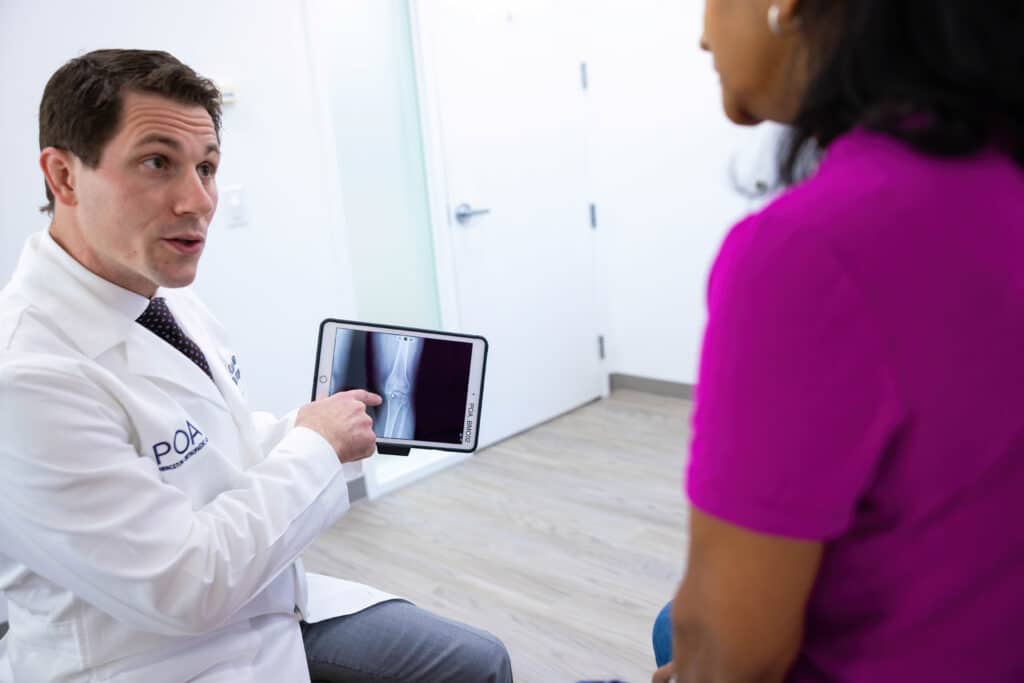
Doctors can often diagnose knee problems with a medical history and physical exam. We may recommend x-rays and other imaging tests to confirm the problem. Treatment depends on the condition, but it involves physical therapy to strengthen the knee and the muscles surrounding it in most cases. We can usually treat tendon injuries with rest, ice, compression, and elevation. Our team may treat osteoarthritis with anti-inflammatory (medications) or cortisone (steroid) injections to reduce pain and swelling.
If knee injuries do not respond to conservative treatments, surgery may be necessary.
At the University Medical Center of Princeton (UMCP), board-certified orthopedic specialists, also experts in sports medicine, offer advanced, minimally invasive techniques to treat knee conditions.
We can often treat sports injuries (including ligament and meniscal damage) with arthroscopic surgery, a minimally invasive procedure that enables doctors to examine and repair (or reconstruct) tissues inside (the knee) through small incisions around the joint.
Protecting Your Knees
You cannot avoid some knee problems, but you can prevent many conditions by doing the following:
Warm up before playing sports. (Breaking a sweat by jogging followed) by stretching are good warm-up (strageties). Stretching the quadriceps, hamstrings, calf, and hip muscle groups helps warm up the knees. (Stretching after athletic participation is also important in for injury prevention)
Strengthen your leg muscles through exercise, conditioning and weight training. Strong thigh and leg muscles help support and protect the knees.
Cross-train. Protect your knee muscles from overuse injuriesby varying your sports. For instance, if you play basketball, try swimming for a season. If you’re a runner, hop on a bike instead.
Avoid sudden changes in the intensity of exercise and increase the force or duration of activity slowly.
Wear the proper footwear and protective gear when playing sports.
Maintain a healthy weight. Even one less pound can help take the pressure off your knees.
It is important to note that exercise, including low-impact movement, can help relieve symptoms and slow the progression even if you have osteoarthritis.
If you suffer from knee pain or injury, talk to your doctor before the condition worsens. Often, physical therapy and medication will be enough to get you back on the field or back to your normal activities in no time.
I was referred to Dr. Rossy by my general practitioner. Following surgery, I can say with measured honesty that Dr. Rossy is excellent at what he does. He is professionally personable and will answer all your questions to allay any anxiety one may have. He offers a truthful and honest opinion regarding diagnosis and surgical outcomes. Sekena, his personal assistant, is very efficient. I would highly recommend this team at POA to take genuine care of your orthopaedic needs. Thank you both and your team for the excellent care.
Diane F.
People with knee arthritis often come into the office with a common question. When is the right time to have my joint replaced? Although that varies from person to person, my answer is usually the same. When you have tried everything else, and it is bad enough, it is getting in the way of living your life." Knee replacement surgery can be an extremely effective tool to manage debilitating arthritis. It is, however, still a surgery. With all surgeries, there are risks, so we always exhaust every conservative option, and we attempt to manage those risks before ever moving forward.
The most common complaints I get in the office include joint swelling, pain in the knee, tightness, balance issues, clicking and popping, weakness, and loss of range of motion, so these are all hallmarks of progressive arthritis of the knee. These should be evaluated by an appropriate orthopedic surgeon to determine the proper steps for you. Joint arthritis should always be managed stepwise, starting with conservative treatments first. These include the following:
1. Exercise. Exercise is great for the knee joint and can improve your function and decrease your pain. You can do this on your own with directed activities or under the guidance of a skilled physical therapist. As arthritis progresses, it can cause stiffness of the joint, leading to loss of range of motion. Pain can cause you to guard and use your muscles less fluidly, resulting in weakness. Breakdown of the joint can also lead to stability issues resulting in the sensation that one may fall. Optimizing range of motion, strength, and balance can ultimately improve the feeling of your knee and delay the need for a joint replacement in the setting of knee arthritis.
2. Weight Loss. One of the most reliable strategies to improve the pain in your knee and decrease the progression of arthritis is weight loss. Every pound of bodyweight you carry is equivalent to 4 pounds of force on the joint. What does that mean? That means that 10 pounds of weight loss are like taking a 40-pound weight off your leg. That being said, weight loss can be very challenging in arthritis. It can be challenging to find a way to exercise with a painful joint. The best strategies include low-impact exercise such as walking, swimming, and bicycling. It can also be helpful to solicit the help of a registered dietician or nutrition specialist in determining the correct foods to eat. Decreasing the overall number of calories consumed daily can be a fast track to weight loss. The quickest way to do this; avoid drinking your calories. Sipping more water and tea and avoiding sugared or artificially-sweetened drinks can allow the pounds to fly off. Finally, in extreme circumstances, you may require a bariatric surgical intervention to decrease the amount of daily caloric intake and facilitate weight loss.
3. Medication. Several medicines can also be used to manage swelling and pain safely. We often recommend that over-the-counter medications be tried first. These include Tylenol (acetaminophen) and nonsteroidal anti-inflammatories (NSAIDs). These include ibuprofen, Advil, Motrin, and Aleve. You can take these drugs safely to decrease the overall amount of joint pain one is dealing with and facilitate better function. You should monitor prolonged use under the care of a physician. Please discuss this with your doctor before taking it for more than one month's time. Narcotics and illicit drugs are very rarely the answer. While these drugs can manage acute pain, they are poor medications at managing chronic pain. We strongly recommend against taking opiate pain medications to control your osteoarthritis.
4. Injections. Injections can be an excellent tool for decreasing joint pain and improving your day-to-day life. Different injections are often employed in arthritis, with other functions and durations of use. The first-line treatment is usually a steroid (cortisone) shot. Intraarticular corticosteroid injections can decrease the swelling of the joint and improve pain and function. While these are not permanent solutions, they can have a lasting effect on many people, especially mild arthritis. Viscosupplement injections (hyaluronic acid) - while these come by several names, including gel shots (chicken fat), lubricant shots, viscosupplementation injections can be a great tool to decrease their joint pain. While not a solution for everyone, these shots can be very effective and can be taken every six months to improve the overall function in the joint and decrease pain. Discuss this with your doctor.
Surgery is the last option. When conservative options have been tried and exhausted, and the pain and loss of function affect your quality of life, surgery may be the last option on your plate. The main things to do before having surgery are to get healthy. Losing bodyweight not helps decrease the pain of the joint but also speeds your recovery and improves the longevity of a joint replacement. Also, managing your chronic conditions like blood pressure issues, diabetes, and unhealthy habits such as smoking should be optimized before choosing an elective surgery, as this may decrease your chance of complications and once again improve your overall outcome.
When it is ultimately time to consider a joint replacement, a partial or total knee replacement may suit you. This should be decided with your x-rays with your treating orthopedic surgeon. In general, we use minimally-invasive techniques, avoiding damage to the knee joint muscles. Additional technologies are utilized in the appropriate scenarios, including custom-made knee instrumentation, navigation, and robotic surgery. While not necessary for all surgeries, this can be helpful in complex systems and unique cases. Finally, joint replacement has come far enough to be performed as an outpatient procedure. Young and healthy individuals with moderate-to-severe knee arthritis may be eligible candidates to complete their joint replacement and go home the same day. Please talk to your doctor about any questions regarding your knee arthritis.
Bridgewater resident Martha Barrett endured knee pain for nearly 25 years.
Then the former college gymnast met with Brian Vannozzi, MD, a board-certified orthopedic surgeon at Princeton Medical Center’s Jim Craigie Center for Joint Replacement and a partner at Princeton Orthopaedic Associates. Together they agreed on a total knee replacement. She had had nine surgeries at other facilities over the years, but nothing had helped her regain her mobility.
After the procedure Martha was ecstatic. “I have zero pain now,” she says. “I can chase my three-year-old grandson down the street. I can play tennis. Dr. Vannozzi gave me my life back.”
See Martha talk about her incredible journey in this short video – from knee pain to meeting Dr. Vannozzi to reclaiming her life:
Martha’s enthusiasm for her new life has served as an example for her friends. “I’ve recommended Princeton Health to six of my friends, and they are all thrilled.”
With results like this, it’s no wonder Penn Medicine Princeton Health was recently ranked by US News & World Report as “high performing” in knee replacement.
For more information on the Jim Craigie Center for Joint Replacement and Dr. Vannozzi call 609-924-8131
Dr. Jon Ark has been elected Chairman of the Department of Orthopaedic Surgery at the University Medical Center of Princeton at Plainsboro. Dr. Ark is now Chairman of the newly formed Department of Orthopaedic Surgery. The Department was created when Princeton HealthCare System merged with the University of Pennsylvania Health System.
Dr. Ark graduated with honors from Duke University with a Bachelor of Science in Engineering and Biomedical and Electrical Engineering. He subsequently went to medical school at UMDNJ-Robert Wood Johnson, where he received his medical degree. He served his surgical internship and orthopaedic training at Columbia Presbyterian Medical Center in New York. Upon completion of his orthopaedic residency, he served as a Harvard/Mass General Hospital Hand Fellow. He then served as a volunteer for Orthopaedics Overseas, assisting in China for two months. Dr. Ark then entered a private practice in Raleigh, North Carolina, for two years. He also served as an instructor in orthopaedic surgery for the University of North Carolina at Chapel Hill Medical School.
Dr. Ark obtained additional training and specialized in Foot and Ankle surgery at Thomas Jefferson University Hospital in Philadelphia, Pennsylvania. Completing the training, he joined Princeton Orthopaedic Associates in 1995, where he specializes in Hand Surgery as well as Foot and Ankle Surgery. Dr. Ark is a Board Certified surgeon with the Certificate of Added Qualification in Hand Surgery. He is also an active member of the American Academy of Orthopaedic Surgeons, the American Society for Surgery of the Hand, and the American Orthopaedic Foot and Ankle Society.
Penn Orthopaedics and Princeton Orthopedic Associates have announced a new strategic alliance in an effort to enhance and continue to improve orthopaedic care to patients in New Jersey and Pennsylvania. As part of the Penn Medicine Orthopaedic Specialty Network, physicians and surgeons at each entity will work collaboratively across state lines to expand patients’ access to highly specialized orthopaedic care, while improving care team communication and processes and collecting data to help physicians advance clinical research and care.
As part of this alliance, Princeton Orthopedic Associates’ 25 physicians and five practice locations will further expand the footprint of the Penn Orthopaedics network of affiliated physicians and hospitals – which also includes Cape Regional Medical Center in New Jersey and Bayhealth in Delaware – to reach to those in central New Jersey.
“When looking for a partner in the tri-state area, we focused on finding an institution which shared our commitment to providing the highest quality care, to creating an environment where our patients and their families would feel most comfortable and cared for, and to aligning with a group that would be unwavering during the changing healthcare climate,” said Stuart Levine, MD, president of Princeton Orthopedic Associates. “In Penn Medicine Orthopaedics, we found the level of dedication and personalized patient care that we had been looking for in a regional partner.”
“One of the main goals of the Penn Orthopaedics team is to provide the best orthopaedic care, whether a joint replacement, a hand transplant or a cartilage repair, to the greatest number patients,” said L. Scott Levin, MD, FACS, chair of Orthopaedic Surgery and a professor of Plastic Surgery at Penn Medicine. “The partnership with Princeton Orthopedic Associates, the leading community group in central New Jersey, was a natural fit, as our missions are built on the same ideals: taking the best possible care of our patients and forging strong relationships with them and their families, and advancing practice through clinical innovation.”
Princeton Orthopedic Associates is already one of the largest orthopaedic practices in New Jersey, serving primarily those in Mercer County and by proximity to Pennsylvania, those in northern Bucks County.
Sequence rules uses cookies to track the order of requests a user has made and the time between requests and makes them available via Cloudflare Rules. This allows you to write rules that match valid or invalid sequences. The specific cookies used to validate sequences are called sequence cookies.
session
cf_ob_info
The cf_ob_info cookie provides information on: The HTTP Status Code returned by the origin web server. The Ray ID of the original failed request. The data center serving the traffic
session
cf_use_ob
The cf_use_ob cookie informs Cloudflare to fetch the requested resource from the Always Online cache on the designated port. Applicable values are: 0, 80, and 443. The cf_ob_info and cf_use_ob cookies are persistent cookies that expire after 30 seconds.
session
__cfwaitingroom
The __cfwaitingroom cookie is only used to track visitors that access a waiting room enabled host and path combination for a zone. Visitors using a browser that does not accept cookies cannot visit the host and path combination while the waiting room is active.
session
cf_chl_rc_i
These cookies are for internal use which allows Cloudflare to identify production issues on clients.
session
cf_chl_rc_ni
These cookies are for internal use which allows Cloudflare to identify production issues on clients.
session
cf_chl_rc_m
These cookies are for internal use which allows Cloudflare to identify production issues on clients.
session
__cfruid
Used by the content network, Cloudflare, to identify trusted web traffic.
session
__cf_bm
Cloudflare's bot products identify and mitigate automated traffic to protect your site from bad bots. Cloudflare places the __cf_bm cookie on End User devices that access Customer sites that are protected by Bot Management or Bot Fight Mode. The __cf_bm cookie is necessary for the proper functioning of these bot solutions.
session
__cflb
When enabling session affinity with Cloudflare Load Balancer, Cloudflare sets a __cflb cookie with a unique value on the first response to the requesting client. Cloudflare routes future requests to the same origin, optimizing network resource usage. In the event of a failover, Cloudflare sets a new __cflb cookie to direct future requests to the failover pool.
session
_cfuvid
The _cfuvid cookie is only set when a site uses this option in a Rate Limiting Rule, and is only used to allow the Cloudflare WAF to distinguish individual users who share the same IP address.
session
cf_clearance
Whether a CAPTCHA or Javascript challenge has been solved.
session
Google reCAPTCHA helps protect websites from spam and abuse by verifying user interactions through challenges.
Name
Description
Duration
_GRECAPTCHA
Google reCAPTCHA sets a necessary cookie (_GRECAPTCHA) when executed for the purpose of providing its risk analysis.
179 days
Google Tag Manager simplifies the management of marketing tags on your website without code changes.
Name
Description
Duration
cookiePreferences
Registers cookie preferences of a user
2 years
td
Registers statistical data on users' behaviour on the website. Used for internal analytics by the website operator.
session
These cookies are used for managing login functionality on this website.
Name
Description
Duration
wordpress_logged_in
Used to store logged-in users.
Persistent
wordpress_sec
Used to track the user across multiple sessions.
15 days
wordpress_test_cookie
Used to determine if cookies are enabled.
Session
WPForms is a user-friendly WordPress plugin for creating custom forms with drag-and-drop functionality.
Name
Description
Duration
wpfuuid
Used to track user interactions with forms.
11 years
Statistics cookies collect information anonymously. This information helps us understand how visitors use our website.
Google Analytics is a powerful tool that tracks and analyzes website traffic for informed marketing decisions.
Used to distinguish new sessions and visits. This cookie is set when the GA.js javascript library is loaded and there is no existing __utmb cookie. The cookie is updated every time data is sent to the Google Analytics server.
30 minutes after last activity
__utmc
Used only with old Urchin versions of Google Analytics and not with GA.js. Was used to distinguish between new sessions and visits at the end of a session.
End of session (browser)
__utmz
Contains information about the traffic source or campaign that directed user to the website. The cookie is set when the GA.js javascript is loaded and updated when data is sent to the Google Anaytics server
6 months after last activity
__utmv
Contains custom information set by the web developer via the _setCustomVar method in Google Analytics. This cookie is updated every time new data is sent to the Google Analytics server.
2 years after last activity
__utmx
Used to determine whether a user is included in an A / B or Multivariate test.
18 months
_ga
ID used to identify users
2 years
_gali
Used by Google Analytics to determine which links on a page are being clicked
30 seconds
_ga_
ID used to identify users
2 years
_gid
ID used to identify users for 24 hours after last activity
24 hours
_gat
Used to monitor number of Google Analytics server requests when using Google Tag Manager
1 minute
_gac_
Contains information related to marketing campaigns of the user. These are shared with Google AdWords / Google Ads when the Google Ads and Google Analytics accounts are linked together.
90 days
__utma
ID used to identify users and sessions
2 years after last activity
__utmt
Used to monitor number of Google Analytics server requests
10 minutes
These cookies help us measure the effectiveness of our website content and understand how visitors find and use our site. This allows us to improve the experience and provide more helpful resources.
Facebook Pixel is a web analytics service that tracks and reports website traffic.