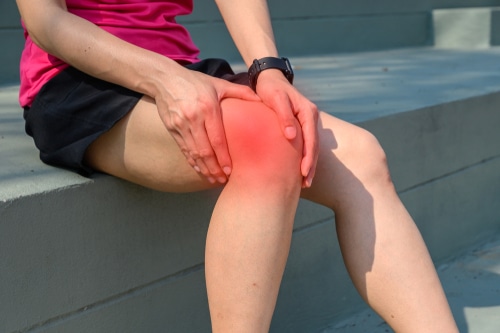
Your legs rely on a powerful team of muscles to stand, walk, climb stairs, and stay balanced. Below, we explain the major muscle groups of the thigh and lower leg, what they do, common conditions that affect them, and practical steps you can take to prevent injury and recover safely.
How Your Leg Muscles Are Organized
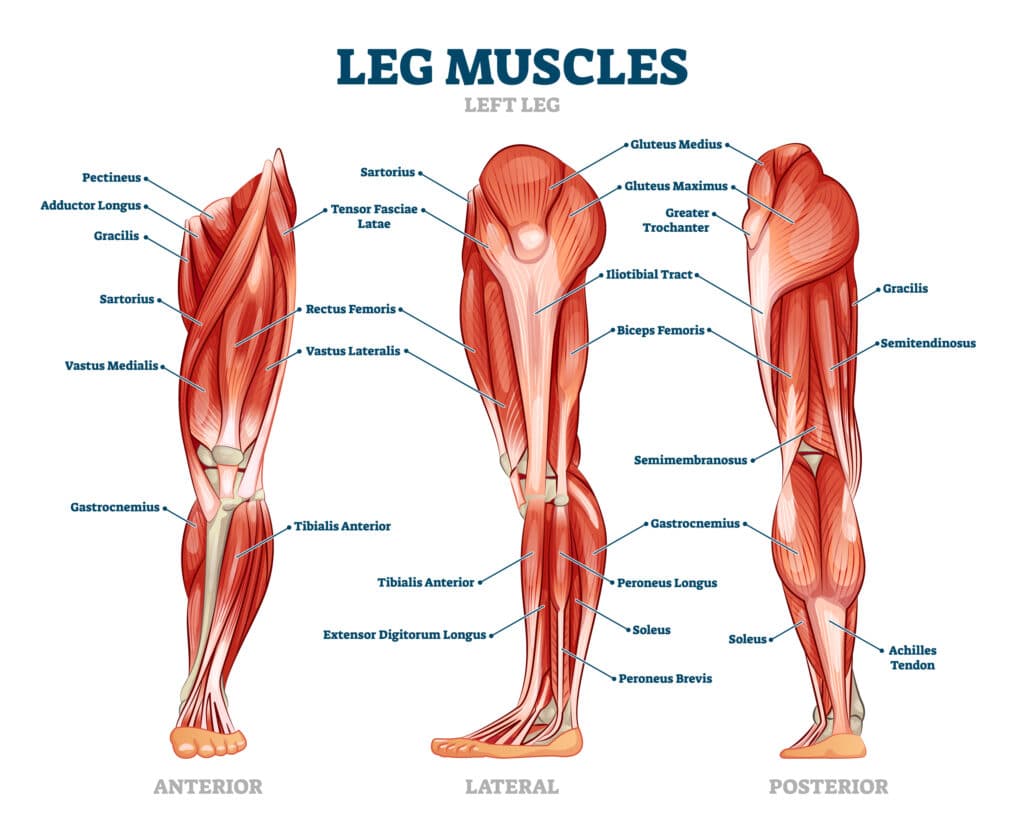
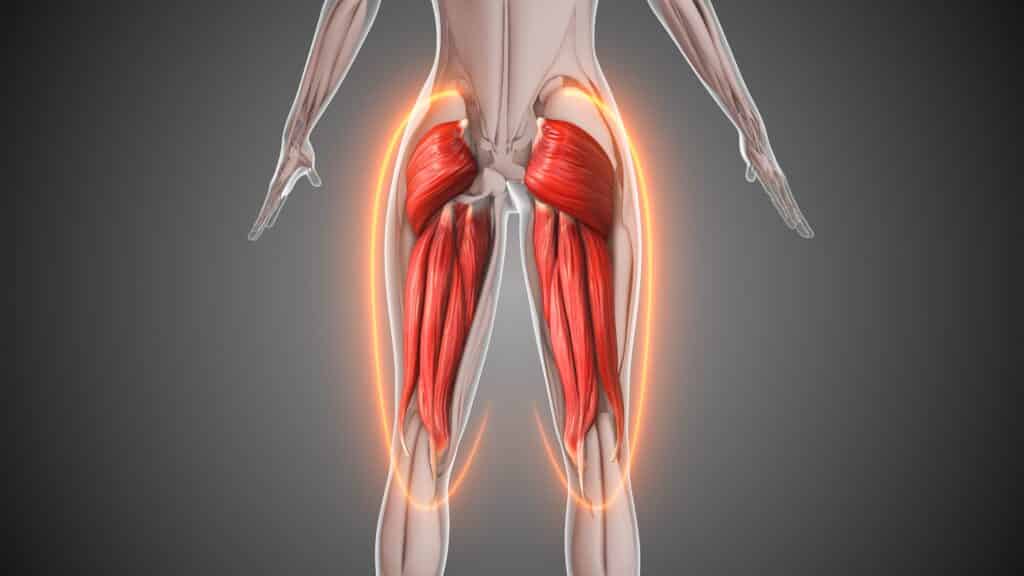
Leg muscles are organized into groups based on their location and function. Each group has a specific job, and they work together with the other groups to move your hips, knees, ankles, and feet. This teamwork keeps your steps smooth and balanced during daily activities.
The gluteal region at the hip: gluteus maximus, medius, and minimus help control hip movement and stabilize the pelvis while you walk.
Front of the thigh (anterior compartment): quadriceps straighten the knee, and one of them, the rectus femoris, also helps flex the hip.
Back of the thigh (posterior compartment): hamstrings bend the knee and extend the hip.
Inner thigh (medial compartment): adductor muscles pull the legs toward the midline and help steady the pelvis.
Front of the lower leg (anterior compartment): tibialis anterior and toe extensors lift the foot and toes to clear the ground when you walk.
Outer lower leg (lateral compartment): peroneal muscles (also called fibularis longus and brevis in current anatomical terminology) evert the foot and help control side-to-side ankle stability.
Deep posterior compartment: tibialis posterior (with flexor hallucis longus and flexor digitorum longus) supports the arch, contributes to inversion, and aids dynamic ankle stability.
Back of the lower leg (posterior compartment): gastrocnemius and soleus form the calf and point the foot downward for push-off, working through the Achilles tendon.
#image_title
Major Leg Muscles and What They Do
Region
Muscle Group
Key Muscles
Primary Actions
Everyday Role
Hip
Gluteals
Gluteus maximus, medius, minimus
Hip extension, abduction, rotation
Stand up from a chair, steady pelvis during walking
Clear toes during swing, controlled foot placement
Lower leg (outer)
Peroneals
Peroneus longus, peroneus brevis
Foot eversion, plantarflex assist
Stabilize the ankle on uneven ground
Lower leg (back)
Calf
Gastrocnemius, soleus; Achilles tendon
Plantarflexion assists knee flexion via the gastrocnemius
Push-off for walking, running, jumping
How These Muscles Work Together
Leg movement is a team effort. The glutes stabilize the pelvis, allowing the hamstrings and quadriceps to move the hip and knee smoothly, while the lower leg muscles guide ankle and foot position for balance and push-off.
Efficient walking and running require controlled hip motion, steady knee tracking, and a stable ankle.
Muscle imbalances, fatigue, or restricted flexibility can shift loads to the wrong areas and raise injury risk.
Common Leg Muscle Problems
We diagnose and treat a wide range of leg muscle injuries and overuse conditions. Here are some of the most common:
Hamstring strain: sudden pain in the back of the thigh, often during sprinting or quick starts.
Quadriceps strain or tendinopathy: pain in the front of the thigh or just above the kneecap, worse with squatting or stairs. Pain below the kneecap more commonly points to patellar tendinopathy (jumper’s knee).
Groin pull involving the adductors: inner thigh pain with cutting, kicking, or side-to-side movements.
Calf strain: sharp pain or tightness in the calf, sometimes with difficulty pushing off.
Achilles tendinopathy or tear: pain or stiffness at the back of the heel or a sudden pop with loss of push-off strength.
Medial tibial stress syndrome (shin splints): aching along the inner shin with running or walking volume increases.
Muscle cramps: sudden, involuntary contractions that can follow fatigue, heat, or dehydration.
Prevention Tips You Can Start Today
Small, steady habits can lower your chance of strains and overuse injuries, and they can help you recover more quickly if symptoms appear. By incorporating simple home routines, you may improve your strength, flexibility, and balance over time, thereby supporting safer movement during daily activities and sports.
Warm up for 5 to 10 minutes, then include dynamic movements that match your activity.
Gradually increase training volume or intensity to give muscles and tendons time to adapt.
Strengthen all major groups: glutes, quadriceps, hamstrings, calves, and core for balanced support.
Maintain flexibility in hip flexors, hamstrings, quads, and calves to allow healthy joint motion.
Rotate activities to vary stress on tissues and schedule regular recovery days.
Wear supportive, well-fitting footwear suited to your activity and replace worn shoes.
Stay hydrated and fuel activity with adequate nutrition.
Self-Care for Mild Symptoms
Relative rest from painful activities while staying gently active as tolerated.
Ice for 15-20 minutes several times per day, especially after activity.
Compression and elevation for swelling, if present.
Your clinician recommends over-the-counter pain relief.
Gradual return to activity with a focus on form and strength balance.
#image_title
When to Seek Medical Evaluation
Situation
What It May Indicate
What to Do
A sudden pop with immediate pain or swelling
Possible muscle or tendon tear
Seek a same-day medical evaluation
Inability to bear weight or a visible deformity
Significant injury that needs prompt care
Seek same-day medical evaluation
Calf swelling, warmth, and tenderness, especially with shortness of breath
Concerning for a blood clot
Seek emergency or urgent medical care
Pain that persists or keeps returning despite rest
Overuse injury or biomechanical issue
Schedule an orthopaedic assessment
How Princeton Orthopaedic Associates Can Help
We begin by listening to your history and watching how you move. We assess strength, flexibility, and joint function across various movements. If imaging is helpful, imaging tests can clarify which muscle, tendon, or joint is involved and guide the appropriate treatment plan.
Targeted activity modification to calm irritation while keeping you moving.
Physical therapy focused on strength, balance, flexibility, and gait (movement) retraining.
Bracing, taping, or assistive devices when appropriate.
Medications or injections when clinically indicated for pain and inflammation.
Surgical consultation for significant tears or injuries that don’t respond to conservative care.
Our goal is to treat the problem and its cause so you can return to the activities you enjoy with confidence.
Next Steps
If leg pain is limiting your daily routine or training, we’re here to help. Schedule an evaluation to obtain a precise diagnosis and a plan that aligns with your goals.
This blog post is meant to be informative and should not act as a self-diagnosis tool. If you’d like to see one of our doctors, please contact us here.
Trigger Finger: Symptoms, Causes, and Treatment Options
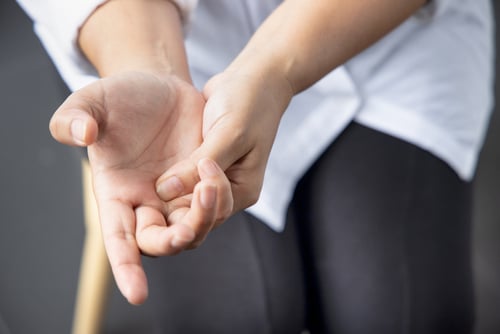
Trigger finger, also called stenosing tenosynovitis, happens when a finger or thumb catches, clicks, or locks as you try to bend or straighten it. We explain why it occurs, the most common symptoms, how doctors diagnose it, and the treatment options that help you get back to comfortable hand use.
If you feel a pop in your palm or need to use your other hand to straighten a finger, you are not alone. This condition is common, often treatable without surgery, and very responsive to early care.
What Is Trigger Finger?
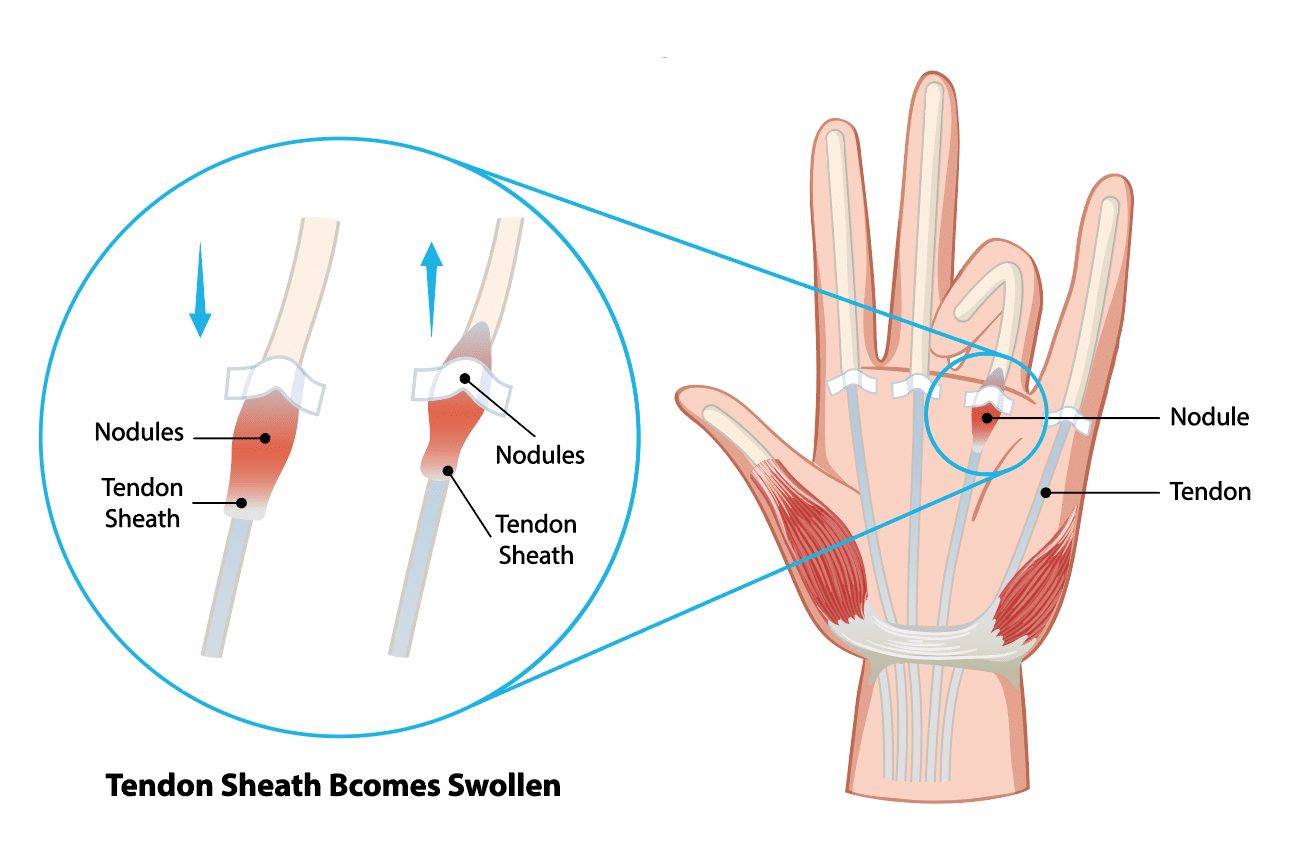
Your flexor tendons glide through tunnels in the palm called pulleys. With trigger finger, the tendon lining and the A1 pulley at the base of the affected finger or thumb become irritated and thickened. That narrowing makes the tendon catch as it moves, which creates clicking or locking.
Medical term: stenosing tenosynovitis, which means a tight tendon tunnel that limits smooth motion.
Most often involves the ring finger, middle finger, or thumb, but any digit can be affected.
The problem sits at the palm-side base of the finger where the tendon first enters the sheath.
Common Signs and Symptoms
Most people notice symptoms gradually, developing over days or weeks rather than all at once. At first, you may feel stiffness when you wake up, which improves as you use your hand. You might also notice a dull ache at the base of the finger near the palm, and a tendency for the finger to catch or click as you move it.
Clicking, catching, or popping when bending or straightening the finger or thumb
Pain or tenderness at the base of the finger on the palm side
Stiffness, especially in the morning
A small, tender bump in the palm that moves with the finger
Locking in a bent position that may suddenly release or require the other hand to straighten
Why Does Trigger Finger Happen?
Several factors can irritate or swell the tendon and its sheath, which tightens the space the tendon needs to glide.
Repetitive gripping or tool use that stresses the palm
Inflammatory conditions, such as rheumatoid arthritis
Diabetes, which can affect tendon health and healing
Coexisting hand issues like carpal tunnel syndrome or De Quervain’s tendinopathy
A prior hand injury or local swelling around the tendon sheath
How Trigger Finger Is Diagnosed
Diagnosis relies on what you tell the clinician and a careful examination of the hand. The doctor checks for tenderness over the A1 pulley, watches how the finger moves, and may feel a small lump along the tendon. Imaging tests are not usually needed unless the exam is unclear.
Tenderness over the A1 pulley at the base of the affected digit
Clicking, catching, or locking is observed with active motion
A small, moving nodule in the tendon may be felt
Ultrasound can be used in select cases to assess the tendon sheath
Doctors differentiate trigger finger from conditions like Dupuytren’s contracture, which pulls the finger down but does not cause tendon catching
Nonsurgical Treatment Options
Many people improve without surgery, especially when care starts early. The goals are to calm irritation, help the tendon glide smoothly, and reduce stress on the pulley. You may change how you use your hand, rest the affected finger with a removable splint, and work with a therapist. In some cases, a corticosteroid injection helps reduce swelling and catching.
Activity changes: limit prolonged gripping, take breaks, and use tools with larger, cushioned handles
Splinting: a removable splint, often worn at night, can rest the tendon and reduce morning stiffness
Anti-inflammatory strategies: ice and over-the-counter medications as directed by your clinician
Hand therapy: guided stretching, gentle tendon gliding, and education on joint protection
Corticosteroid injection: a targeted injection into the tendon sheath can reduce swelling and catching. Possible side effects include temporary soreness, skin lightening or thinning near the site, and a short-term rise in blood sugar in people with diabetes.
Helpful Daily Habits
Switch tasks or hands to limit repeated gripping
Use pens, kitchen tools, and garden tools with wider handles
Warm up the hand with a gentle motion before heavier use
Practice tendon-gliding exercises from your care team
What To Avoid For Now
Forceful or prolonged squeezing, like heavy pruning or weight handles without padding
Repeating the same grip task without breaks
Sleeping with the finger curled tightly
Pushing through painful locking episodes
Surgical Treatment When Needed
If symptoms persist, the finger locks frequently, or injections and splinting do not help, surgery can be a good option. The procedure is called an A1 pulley release. The surgeon widens the tight opening at the base of the finger so the tendon can glide smoothly again.
Typically performed with local anesthesia as an outpatient
Open or percutaneous techniques are used based on your anatomy and the surgeon's preference
Finger motion usually begins the same day to limit stiffness
Expected recovery includes temporary tenderness in the palm and progressive return to daily tasks
Risks include infection, stiffness, scar tenderness, and nerve irritation, which are uncommon
Choosing a Treatment Path
Your care plan is tailored to how your hand feels, your medical history, and what you want to return to doing. The plan explains options from less invasive treatments to surgery and describes what to expect at different stages. You and your clinician work together to choose the best path for you.
Situation
First Steps
If Symptoms Persist
Mild clicking and morning stiffness
Activity changes, splinting, ice, hand therapy
Consider corticosteroid injection
Frequent triggering that interferes with work or self-care
Corticosteroid injection and targeted therapy
Discuss surgical release
Locked finger or long-standing symptoms
Prompt evaluation by a hand specialist
Surgical release is often recommended
Recovery and Returning to Activity
After treatment, moving the hand in a steady, gentle way helps the tendon glide smoothly and reduces stiffness. Whether you had nonsurgical care or surgery, follow the recommended exercises and gradually return to daily tasks. Protect the palm from heavy pressure until it feels comfortable and strong again.
Follow your home exercise program and protect the palm from heavy pressure until it is comfortable
Ease back into gripping tasks with larger-handled tools and frequent rest breaks
Let your care team know if locking returns or if stiffness limits progress
When To See a Hand Specialist
Schedule an evaluation if any of the following apply:
Triggering lasts more than a few weeks or is getting worse
You need your other hand to unlock the finger
Pain or stiffness interferes with work, sports, or daily tasks
You have diabetes or rheumatoid arthritis, and the symptoms are persistent
Care at Princeton Orthopaedic Associates
Princeton Orthopaedic Associates treats trigger finger with careful evaluation and a plan that fits your goals. The team offers nonoperative options first and uses precise surgical release when needed. If your finger catches, clicks, or locks, you can regain comfortable hand use. Call to schedule an appointment to begin.
This blog post is meant to be informative and should not act as a self-diagnosis tool. If you’d like to see one of our doctors, please contact us here.
Shoulder Labrum Tears: Symptoms, Diagnosis, and Treatment Options
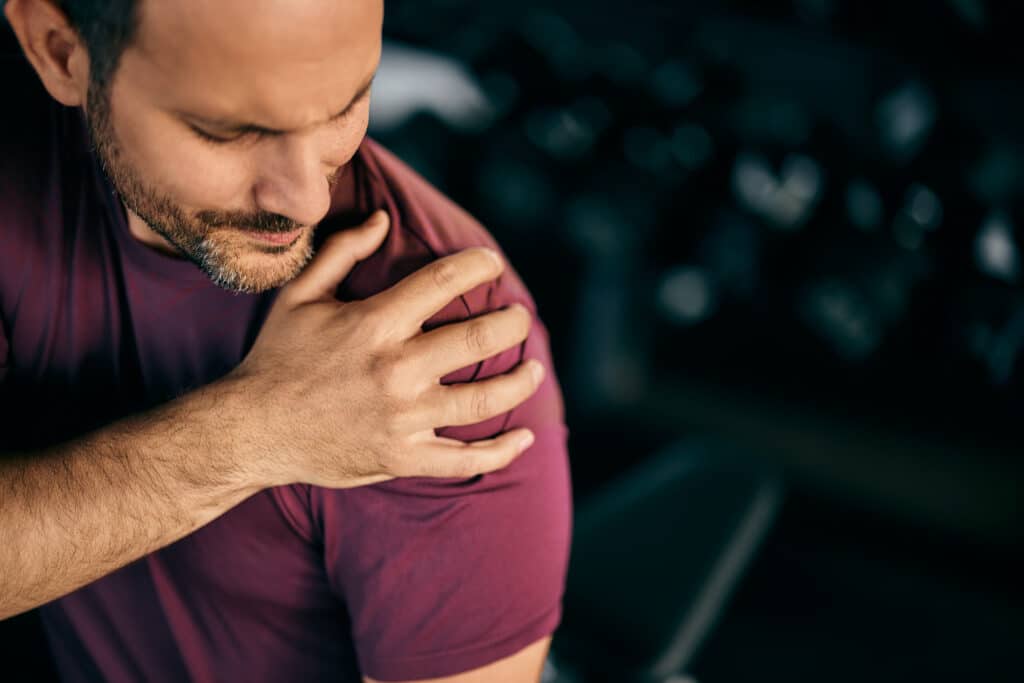
Shoulder labrum tears can cause deep shoulder pain, clicking, or a sense that the joint might slip. You'll learn what the labrum does, how tears happen, the most common symptoms, how we diagnose the problem, and which treatments can help you return to daily activities and sports safely. By understanding what causes labrum tears and the steps involved in evaluation and treatment, you can ask informed questions, set realistic goals, and participate actively in recovery with your care team.
What Is the Shoulder Labrum?
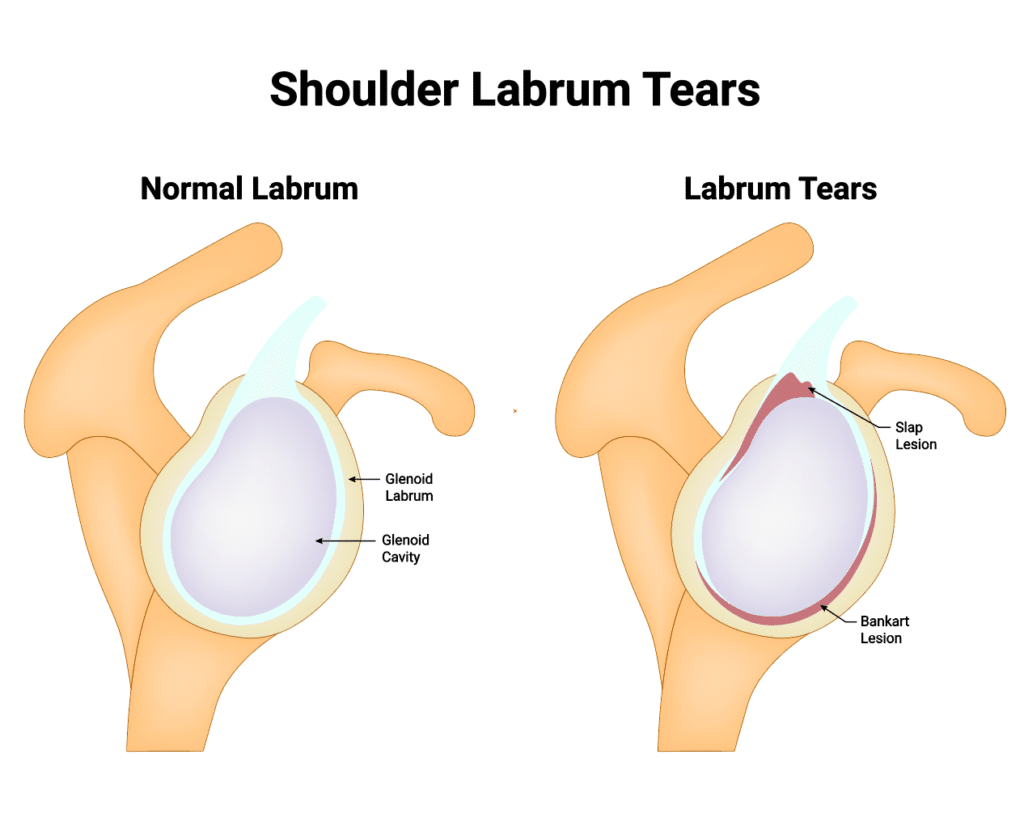
The shoulder labrum is a rim of cartilage that lines the shallow socket of the shoulder joint, called the glenoid. It deepens the socket, cushions the joint, and helps your ligaments and biceps tendon keep the ball of the shoulder centered.
When the labrum tears, the joint can feel painful or unstable. Some people notice catching, clicking, or a drop in strength when lifting, pushing, or reaching overhead.
Common Types of Labrum Tears
Several patterns of tearing can occur depending on where the labrum is injured and how the injury happened.
Type
Location
Typical Cause
Common Symptoms
Typical Treatment Approach
SLAP Tear (Superior Labrum Anterior to Posterior)
Top of the socket where the biceps tendon attaches
Overhead sports, falls on an outstretched arm, wear-and-tear
Pain with overhead use, clicking, reduced throwing power
Physical therapy, activity modification; arthroscopic repair or biceps procedures when needed
Bankart Tear
Front-lower portion of the labrum
Shoulder dislocation or subluxation
Instability, repeated dislocations, apprehension with abduction/external rotation
Rehab to restore control; arthroscopic Bankart repair for recurrent instability
Posterior Labral Tear
Back portion of the labrum
Forceful pushing, blocking, falls, repetitive loading
Deep posterior pain, clicking, pain with pushing or bench press
Rehab focused on scapular/rotator cuff control; arthroscopic repair if instability persists
Symptoms You Might Notice
Symptoms can vary depending on the type of labrum tear and your level of activity, but several signs are common across many cases. People may notice deep shoulder pain during lifting or overhead work, a sensation of catching or grinding within the joint, and reduced strength when pushing or throwing. Some experience night pain or reduced range of motion compared with the other shoulder. These patterns help guide evaluation and treatment choices.
Deep, hard-to-point-to shoulder pain, often with overhead use
Sensation of catching, grinding, or clicking inside the joint
Weakness when lifting, pushing, or throwing
Feeling that the shoulder could slip out or is less stable than usual
Pain at night or when lying on the affected side
Decreased range of motion compared with your other shoulder
Common Types of Labrum Tears
How Labrum Tears Happen
Trauma, such as a fall on an outstretched hand or a direct blow
Shoulder dislocation or partial dislocation
Repetitive overhead motion in activities like baseball, tennis, swimming, or weightlifting
Gradual wear related to age and everyday use
Shoulder laxity or poor shoulder blade and rotator cuff control
When to See a Shoulder Specialist
Pain or instability that lasts more than a few days after an injury
Recurring popping, catching, or a sense of slipping in the joint
Weakness that limits work, exercise, or sport
Night pain that interrupts sleep
How We Diagnose a Labrum Tear
Diagnosis starts with a detailed history and a hands-on exam that includes specific tests to stress different parts of the labrum and shoulder. We assess shoulder blade position, rotator cuff strength, and signs of instability.
Imaging often includes X-rays to evaluate the bones and joint alignment. An MRI, sometimes with a small amount of contrast dye in the joint, can help show the labrum and associated soft-tissue injuries.
Nonsurgical Treatment
Many labrum tears improve without surgery, especially when pain is the main issue and the shoulder is stable.
Activity modification to reduce painful overhead or heavy pushing motions
Pain and inflammation control with ice and medications as advised
Targeted physical therapy to restore shoulder blade control and rotator cuff balance
Gradual strengthening and return-to-sport progression guided by symptoms
In some cases, a guided corticosteroid injection may help with pain to allow better participation in therapy
Surgical Options
If pain or instability persists despite focused rehab, arthroscopic surgery may be recommended. Through small incisions, your surgeon can evaluate the labrum and repair or trim damaged tissue as appropriate.
Bankart repair to restore stability when the front of the labrum is torn with a dislocation
SLAP repair or procedures involving the biceps tendon, chosen based on age, activity, and tear pattern
Posterior labral repair for recurrent symptoms at the back of the joint
Recovery Timeline and Return to Activity
Recovery depends on the type of tear, the procedure performed, and your sport or job demands. The general ranges below are common starting points that your surgeon and therapist will personalize.
Phase
Typical Timeframe
Focus
Sling/Protection
2-4 weeks after debridement; 4-6 weeks after repair
Protect healing tissue, gentle hand/elbow motion, pain control
Early Motion
Weeks 2-8 after debridement; Weeks 4-10 after repair
Restore range of motion under guidance, avoid provocative positions
Strength & Control
Months 2-4
Scapular and rotator cuff strength, posture, gradual load
Return to Sports/Work
3-4 months for non-contact after debridement; 4-6+ months after repair
Progressive sport-specific drills; throwing programs may take longer
Protecting Your Shoulder Going Forward
Keep the shoulder blade stable during overhead work and lifting
Build balanced strength in the rotator cuff and core
Ease into new training volumes and avoid sudden spikes
Use proper technique for throwing, pressing, and pull-ups
Stop and seek guidance if you feel joint slipping, catching, or sharp pain
Get the Right Diagnosis and a Clear Plan
If shoulder pain, clicking, or instability is limiting you, we’ll examine your shoulder, review imaging when needed, and create a plan that fits your goals. Most people start with focused rehab, and when surgery is the best path, your team will guide you each step of the way.
Schedule an evaluation with Princeton Orthopaedic Associates to get moving comfortably again.
This blog post is meant to be informative and should not act as a self-diagnosis tool. If you’d like to see one of our doctors, please contact us here.
Iliotibial Band Syndrome: Outer Knee Pain You Can Treat
Iliotibial band syndrome, or more commonly called the IT Band, is a common source of aching on the outside of the knee or thigh. Below, you’ll learn what the iliotibial band is, why it gets irritated, how symptoms show up in daily life and sport, and the treatments that help you return to comfortable movement.
Whether you run, cycle, walk for exercise, or spend long hours sitting, this condition can affect how your hip and knee work together. The good news is that most people improve with a plan that reduces irritation and restores strength and mobility around the hip and knee.
Quick Facts
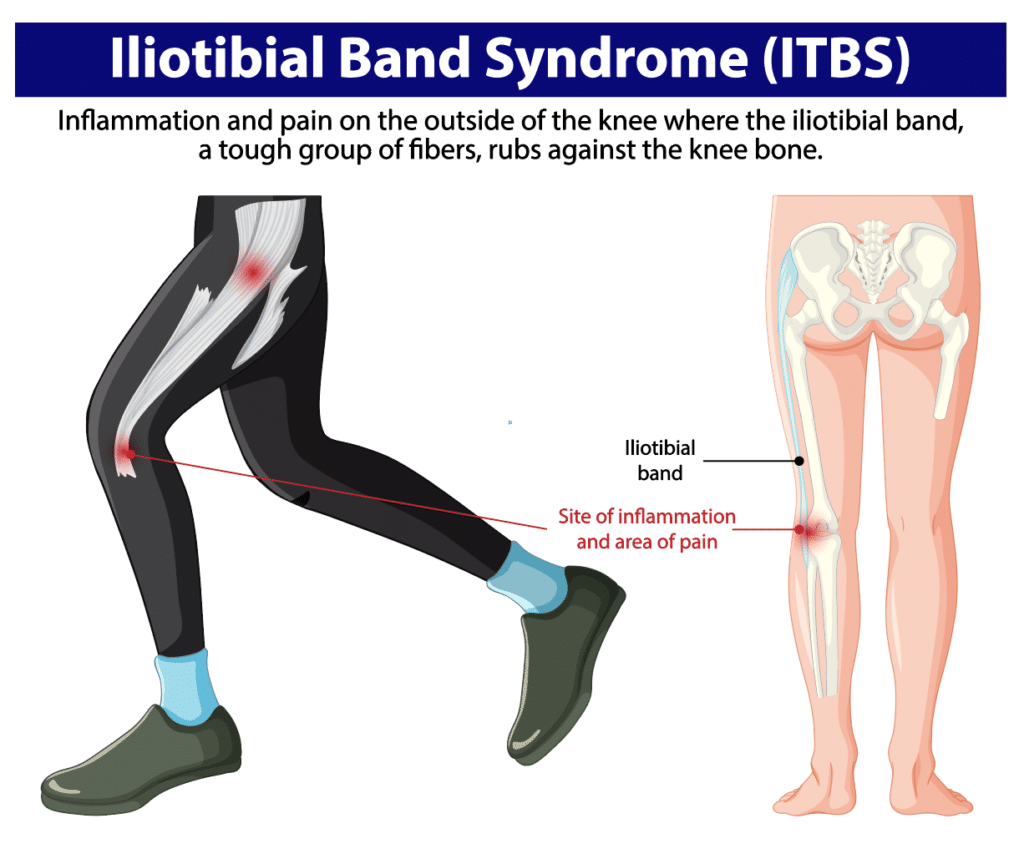
The iliotibial band, or IT band, is a strong band of connective tissue that runs from the outer hip to just below the knee.
Irritation develops where the band moves over the outer knee, often from repetitive bending and straightening of the leg.
People notice pain during runs, walks, stair use, or after sitting for a long time.
Weak or tight hip and thigh muscles, training errors, and unsupportive footwear commonly contribute.
Most cases improve without surgery through changes in activity, targeted strengthening, stretching, and physical therapy.
What Is the IT Band and IT Band Syndrome?
The IT band is a thick, fibrous band that supports the outside of your thigh. It connects muscles near the hip to the shinbone and helps stabilize the knee during walking, running, and standing.
Symptoms arise when tissues deep to the IT band (such as a fat pad or bursa) are compressed against the lateral femoral epicondyle during repetitive knee flexion and extension. This compression leads to irritation and pain on the outer knee, and may be felt higher up the thigh or into the hip.
Common Symptoms
Symptoms often begin gradually and worsen with repetitive flexion and extension of the knee, such as during running, cycling, or climbing stairs. People commonly describe a mix of pain on the outer knee, tightness along the outside of the thigh, tenderness when the outer knee is touched, and discomfort that changes with movement. The pain can flare with activity but may ease with rest, and occasional stiffness after sitting is not required for the diagnosis.
Symptoms often begin gradually and tend to worsen with repetitive activities. People describe:
Aching, burning, or sharp pain on the outer side of the knee
Tightness or pulling along the outside of the thigh
Discomfort with running, prolonged walking, or going down stairs
Tenderness when pressing on the outer knee
Occasional stiffness after sitting that may ease with gentle movement (more common in other knee conditions)
If you notice snapping at the outer hip, this may reflect a related but different condition (external snapping hip/greater trochanteric pain), not classic IT band syndrome at the knee
Why It Happens
IT band irritation usually stems from how the leg moves and how much load it is asked to handle. Multiple factors can combine to create friction near the outer knee.
Everyday Contributors
Long periods of sitting that tighten the hips and thighs
Weak gluteal and hip stabilizer muscles
Standing or walking with the weight shifted to one side
Footwear that matches your needs may help some people; orthotics can be considered when alignment or support is an issue after a professional assessment
Repetitive daily movement without strength or mobility balance
Athletic Contributors
Rapid increases in running or cycling volume or intensity
Downhill running or training on banked or sloped surfaces
Stride mechanics that stress the outer knee
Weakness in hip abductors and core stabilizers
Insufficient recovery between high-load sessions
How IT Band Syndrome Is Diagnosed
A sports medicine or orthopaedic clinician typically diagnoses IT band syndrome through your history and a focused exam. They’ll check tender areas along the outer knee and hip, assess hip and core strength, and look for tightness in surrounding muscles.
Imaging is not always needed. X-rays or an MRI may be ordered when symptoms are atypical, severe, or to rule out other causes of outer knee pain such as arthritis, meniscus problems, or stress injuries.
Treatment That Works
Most people recover with a stepwise approach that calms irritation and corrects the movement issues that caused it.
Reduce Pain and Calm Irritation
Modify or pause aggravating activities such as hills, speed work, or long runs and walks
Apply ice to the outer knee or thigh for 15 to 20 minutes as needed
Use anti-inflammatory medication if recommended by your doctor
Consider a brief period of cross-training that avoids repetitive knee bending
Improve Mobility in Tight Areas
Gentle stretching for the hips, hip flexors, quadriceps, hamstrings, and the tensor fasciae latae near the outer hip
Directly stretching the IT band itself is limited by its dense structure; focus on the surrounding muscles
Soft tissue work or foam rolling for the glutes and thigh muscles to reduce tension
Avoid high-pressure foam rolling directly over the outer knee in the early painful phase; instead, target the hips, glutes, and thigh muscles
Gradual return to the full range of motion without provoking pain
Strengthen and Retrain Movement
Targeted strengthening for gluteus medius and other hip stabilizers
Core and pelvic control exercises to support proper knee alignment
Gait or running form adjustments with guidance from a clinician or physical therapist
Footwear review, and orthotics when alignment or support is an issue after a professional assessment
For persistent pain, a clinician may consider a carefully selected corticosteroid injection in the area of irritation (often image-guided). Injections should be used judiciously as part of a broader rehab plan. Surgery is rarely needed and is considered only when symptoms fail to improve after a thorough course of nonoperative care.
Recovery Timeline
Healing time varies based on how long symptoms have been present, training demands, and how consistently you follow your plan. These general ranges are common:
Stage
Typical Timeframe
What to Expect
Early
Several weeks
Pain reduces with activity changes, icing, and basic mobility work.
Established
1 to 3 months
Strength and movement retraining restore tolerance for daily life and sport.
Recurrent or Chronic
Longer than 3 months
More comprehensive rehab and training plan adjustments are needed.
Prevention Tips
Prevention means keeping movement balanced and building strength around the hip and knee. A simple plan can help avoid flare-ups: gradually increase activity, vary routes, stretch key muscles, and choose footwear that fits your needs. Regular rest breaks and listening to your body are important to prevent irritation from returning.
Increase running or cycling volume gradually, especially after time off
Vary routes to avoid repeated downhill or sloped surfaces
Maintain hip and core strengthening year-round
Replace worn shoes and use footwear that matches your needs
Take movement breaks during long periods of sitting
When to See a Specialist
Schedule an evaluation if pain lasts more than a week, returns when you resume activity, or changes how you walk or run. Early guidance helps you recover faster and reduces the risk of the problem becoming chronic.
Guides a graded return to activity and long-term prevention
Get Back to Comfortable Movement
IT band syndrome can interrupt training and make everyday tasks frustrating, but it is highly treatable. With the right mix of activity changes, targeted strengthening, mobility work, and expert guidance, you can ease pain and return to the activities you enjoy.
Foot Pain: Common Causes, Symptoms, and Treatment Options
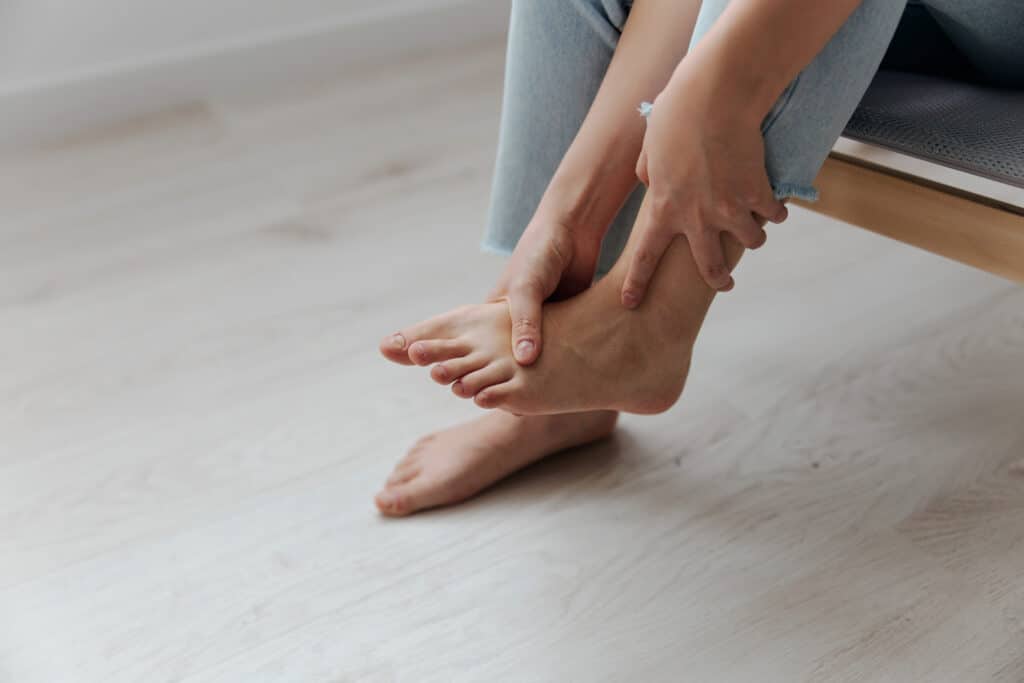
Foot pain can come from many sources, from irritated tendons and tight fascia to nerve irritation and arthritis. Here, you’ll find a clear overview of why feet hurt, how to tell what might be going on, and the proven ways we help people heal and stay active.
Whether your foot pain is new or has lasted for months, know how your pain acts, where it hurts, and how it changes with walking or standing. This helps you find relief faster. You can start practical steps today and use the medical options we choose when home care does not work.
Foot Pain at a Glance: What to Know
Location matters. Heel, arch, forefoot, toes, top of foot, or ankle pain often points to different causes.
Common culprits include plantar fasciitis, tendon irritation, stress fractures, arthritis, and nerve problems.
Training errors, worn shoes, long days on your feet, or sudden changes in activity can trigger pain.
Early care helps. Activity changes, ice, supportive footwear, and guided exercises often ease symptoms.
See a specialist if pain is severe, you can’t bear weight, there’s deformity, or symptoms persist despite rest.
Imaging, such as X-rays, ultrasound, or MRI, may be used when a fracture, tendon tear, or arthritis is suspected.
Most cases improve without surgery through physical therapy, orthotics, and targeted treatments.
Persistent bunions, neuromas, severe arthritis, or unstable injuries sometimes need surgical care.
Good shoes, gradual training, and strengthening reduce the odds of recurring pain.
Your plan should match your specific diagnosis, goals, and activity demands.
#image_title
How Your Foot Works and Why It Can Hurt
Your foot has 26 bones, numerous joints, strong ligaments, and powerful tendons. This complex design allows it to absorb shock, stabilize the body, and push you forward with every step.
Problems arise when tissues are overworked, inflamed, worn by arthritis, or irritated by pressure or footwear. The plantar fascia, Achilles tendon, and small nerves between the toes are frequent sources of symptoms.
Where It Hurts Can Point to the Cause
Use this guide to match common pain locations with frequent causes and typical clues. A precise diagnosis still requires an exam.
Pain with lacing shoes tightly, swelling on top, pain with push-off
Outer Foot / Ankle
Ankle sprain, peroneal tendinitis
Tenderness along outer ankle or foot, pain on uneven ground
Big Toe Joint
Bunion, hallux rigidus, turf toe, gout
Prominent bunion, stiffness or grinding, sudden redness and swelling with gout
Common Causes by Area
Heel Pain
Plantar fasciitis: Irritation of the band of tissue under the foot that supports the arch. Often worse with the first steps in the morning.
Achilles tendinitis: Overuse irritation of the tendon connecting the calf to the heel. Common with increased training or tight calves.
Heel spur: A bony growth at the heel that may accompany plantar fasciitis. Pain usually comes from the irritated soft tissues, not the spur itself.
Bursitis or retrocalcaneal irritation: Inflammation of cushioning sacs near the Achilles insertion at the back of the heel.
Stress fracture: Tiny crack in the heel bone from repetitive load. Tender to touch, often worse with weight bearing.
Arch and Bottom of the Foot
Plantar fasciitis: The most common cause of arch pain, related to overload of the plantar fascia.
Posterior tibial tendon problems: This tendon supports the arch. Irritation or insufficiency can cause aching along the inside of the ankle and arch, sometimes with a flattening of the foot.
Flatfoot strain: Flexible flat feet may ache after prolonged standing or walking, especially on hard surfaces.
Ball of the Foot and Toes
Metatarsalgia: Pain under the ball of the foot from overload or footwear pressure.
Morton neuroma: Thickening of a small nerve between the toes, causing burning, tingling, or a sock-bunched-up feeling.
Sesamoiditis: Irritation of the small bones under the big toe joint, often in push-off athletes or with flexible forefeet.
Hammertoe irritation: A toe deformity that rubs in shoes and can cause corns or calluses.
Stress fractures: Small cracks in the metatarsal bones from repetitive impact.
Top of Foot and Midfoot
Extensor tendinitis: Irritation of the tendons on top of the foot, sometimes from tight laces or increased activity.
Midfoot arthritis: Wear of the joints in the middle of the foot, causing stiffness and aching, often worse with push-off.
Lisfranc sprain: Injury to the midfoot ligaments that needs careful evaluation if pain and swelling persist. Persistent midfoot pain, inability to bear weight, or bruising on the bottom of the foot warrants prompt evaluation.
Stress fracture: Overuse injury of the midfoot bones, common with training spikes or sudden activity changes.
Outer Foot and Ankle
Ankle sprain: Ligament injury after rolling the ankle. Pain, swelling, and tenderness on the outside are typical.
Peroneal tendinitis: Irritation of the tendons that run behind the outer ankle bone, often aggravated by uneven ground.
Big Toe Joint
Bunion (hallux valgus): A bony prominence and angulation at the base of the big toe that can cause shoe pressure and pain.
Hallux rigidus: Arthritis and stiffness of the big toe joint that makes push-off painful.
Turf toe: Sprain of the big toe joint from a hyperextension injury.
Gout: Sudden, intense pain, redness, and swelling at the big toe joint due to crystal inflammation.
When to Seek Care Urgently
Severe pain or swelling after an injury, or visible deformity
Inability to bear weight or take four steps
Numbness, tingling, or weakness in the foot
Fever, redness, warmth, or an open wound near a painful area
Pain that persists beyond a couple of weeks despite rest and home care
How To Diagnose Foot Pain
Your specialist begins with a careful history and hands-on exam. We look at where it hurts, when it hurts, your footwear, and how you walk.
Physical exam: Tender points, flexibility, strength, alignment, and gait
Imaging as needed: X-rays for bones and joints, ultrasound for soft tissues, MRI for complex or persistent problems
Nerve testing in select cases when symptoms suggest nerve entrapment
The goal is a clear diagnosis, so your treatment targets the true source of pain.
Treatment Options That Help
Most foot pain improves with a combination of activity changes, shoe adjustments, focused exercises, and targeted medical care. Your plan will be tailored to your diagnosis and goals.
Self-Care and Rehabilitation
Activity changes: Reduce high-impact activities while symptoms settle
Ice and elevation for swelling or after activity as needed. Avoid prolonged direct skin contact. If you have diabetes with neuropathy or peripheral vascular disease, consult a clinician before icing.
Supportive footwear and, when appropriate, cushioned insoles or custom orthotics
Stretching tight calves and plantar fascia, plus strengthening foot and ankle stabilizers
Physical therapy to correct mechanics, restore mobility, and build resilience
Medical Treatments
Medications such as anti-inflammatories, when appropriate
Cushioning pads or offloading for pressure points under the forefoot or heel
Immobilization or a walking boot for stress fractures or significant sprains
Image-guided corticosteroid injections for select conditions,s such as plantar fasciitis or a neuroma. They are typically reserved for cases that do not respond to conservative care and carry small risks, such as plantar fascia rupture or fat pad atrophy, so they should be used judiciously.
Surgery is considered when pain persists despite comprehensive nonoperative care, or when structural problems require correction
Prevention Tips to Protect Your Feet
Wear supportive shoes that match your activity and replace them when worn
Increase training volume gradually and vary your activities
Warm up, stretch calves and hamstrings, and maintain ankle and foot strength
Use orthotics or padding if your provider recommends them for alignment or offloading
Address new pain early to prevent chronic irritation
Getting Back on Your Feet
If foot pain is limiting your day, we’re here to help you find the cause and create a clear plan forward. Schedule an exam with a Princeton Orthopaedic Associates specialist to start moving comfortably again.
This blog post is meant to be informative and should not act as a self-diagnosis tool. If you’d like to see one of our doctors, please contact us here.
Strengthen Your Posterior Chain to Move Better and Hurt Less
A strong back line, called the posterior chain, helps you stand tall and move well. It may help protect your spine, and it supports everyday tasks like lifting, climbing stairs, and getting up from a chair. It covers what the posterior chain includes, why it matters for back and knee comfort, easy form cues, and safe exercises you can start today.
We’ll also outline how often to train, common mistakes to avoid, and when it may be helpful to see a clinician at Princeton Orthopaedic Associates for personalized care and safer progress.
Disclaimer
Please note that these exercises are listed here as examples. You will absolutely need to consult with a qualified doctor, trainer, or medical professional to decide if this information is right for you. You can cause harm to yourself by doing exercises incorrectly or those that do not align with your body or desired outcomes. Please be careful!
Quick highlights
The posterior chain includes the glutes, hamstrings, calves, and the muscles that support your spine.
Training these muscles improves posture, balance, and lifting mechanics while reducing strain on the knees and lower back.
Start with hip-hinge patterns and bodyweight exercises, then progress to resistance as control improves.
What Is the Posterior Chain?
The posterior chain runs along the back of the body and is made of muscles that help keep the spine steady and allow the hips to extend. These muscles work together with many daily activities, such as standing, walking, lifting, and climbing stairs, so keeping them strong can support good posture and ease movement. Keeping this area strong supports your posture and reduces strain during daily activities.
The gluteal muscles in the hips generate power and control hip alignment
Hamstrings are in the back of the thigh, which assist hip extension and bend the knee
Calves, which help you push off the ground and keep the ankle stable
Spinal and core stabilizers, which keep the trunk steady so the hips can do their job
Why Building These Muscles Matters
Supports healthy posture and reduces stress on the lower back
Improves hip control to help reduce knees collapsing inward during squats, steps, or runs
Enhances balance and reduces the chance of slips during daily activities
Makes lifting, carrying, and stair climbing feel easier and safer
Master the Hip Hinge First
The hip hinge is the foundation of many posterior chain moves. Instead of bending your back, shift your hips back while keeping your spine in a comfortable neutral range so the glutes and hamstrings do the work.
Hinge cues
Stand tall, unlock your knees, and keep your chest lifted
Push your hips back toward a wall while maintaining a comfortable neutral range in your spine
Feel a stretch in the hamstrings; stop before the back rounds
Drive through your heels and squeeze the glutes to return to standing
Practice by lightly touching your hips to a wall behind you or sliding your palms down your thighs to learn the pattern.
Posterior Chain Exercises You Can Start Today
Choose 3 to 5 movements that feel comfortable and fit your body. Do each with slow, controlled reps and steady breathing. Focus on keeping good muscle control rather than rushing to finish. This careful approach helps you learn the pattern and build strength safely.
Exercise
Main Muscles
How to Do It
Reps
Glute Bridge
Glutes, hamstrings
Lie on your back, knees bent, feet hip-width. Exhale and lift hips until shoulders, hips, and knees line up. Pause, then lower with control.
8 to 12
Hip Hinge to Wall
Glutes, hamstrings
Stand a foot from a wall. Push hips back to tap the wall while maintaining a comfortable neutral range in your spine, then stand tall.
8 to 12
Romanian Deadlift (light dumbbells)
Glutes, hamstrings, back stabilizers
Hold weights by your thighs. Hinge at the hips with soft knees until you feel hamstring tension, then press through heels to stand.
6 to 10
Hamstring Curl (exercise ball or sliders)
Hamstrings, glutes
Bridge hips, then bend knees to roll the ball or sliders toward you. Keep hips lifted and trunk steady.
8 to 12
Bird Dog
Spinal stabilizers, glutes
On hands and knees, brace your core. Reach opposite arm and leg long without arching the back. Pause, switch sides.
6 to 10 each side
Step-up
Glutes, calves
Stand a foot from a wall. Push your hips back to tap the wall while maintaining a comfortable neutral spine, then stand tall.
8 to 12 each side
How Often Should You Train?
Most people benefit from training the posterior chain on nonconsecutive days so the muscles have time to rest and recover. Spacing workouts helps you keep good form and avoid overload. Consistent practice slowly builds strength and control while protecting your knees and back.
Level
Frequency
Sets x Reps
Notes
Beginner
2 days per week
1 to 2 sets of 8 to 12 reps
Prioritize form and slow tempo; stop a rep or two before fatigue changes your form.
Intermediate
2 to 3 days per week
2 to 3 sets of 6 to 12 reps
Increase load gradually when all reps feel steady and controlled.
Common Mistakes to Avoid
Rounding or overextending your lower back during hinges and deadlifts
Letting knees collapse inward during squats, step-ups, or bridges
Moving too fast and using momentum instead of muscle control
Loading heavy before you can keep a neutral range and steady knee alignment
Safety Tips
Warm up with 5 minutes of light cardio and dynamic movements like leg swings
Brace your midsection as if preparing for a gentle cough to protect the spine
Stop if you feel sharp pain, tingling, or symptoms traveling down a leg
Progress weight slowly and give your body at least 24 to 48 hours between sessions
Safety note: Individuals with osteoporosis, acute low back or radicular pain, or recent postoperative status should consult a clinician before hip hinging or deadlifting.
Who Benefits From Posterior Chain Training?
Desk workers looking to counteract long hours of sitting
Walkers, runners, and cyclists who want better hip control and stride efficiency
Parents and caregivers who lift and carry throughout the day
Adults seeking better balance and confidence with daily activities
When to See an Orthopaedic Specialist
If pain limits your daily activities, you’re unsure about your form, or you have had a recent injury, consider seeing an orthopaedic specialist. Getting advice early can help you avoid delays, keep your movement safe, and build strength steadily. A clinician can check your technique and tailor exercises to your needs.
At Princeton Orthopaedic Associates, we evaluate the way you move, identify which muscles need attention, and create a clear plan to reach your goals. If needed, we coordinate care with physical therapy to help you progress step by step.
This blog post is meant to be informative and should not act as a self-diagnosis tool. If you’d like to see one of our doctors, please contact us here.
Knee Pain After Running: Causes, Relief, and When to See a Specialist
Knee pain after a run is common, whether you are new to running or building mileage. Below you will find the most frequent causes, how to tell what is driving your pain, simple steps to feel better, and when it is time to schedule an exam with our team at Princeton Orthopaedic Associates.
Quick Takeaways
The location of pain often points to the cause. Pain behind or around the kneecap is usually patellofemoral pain. Pain on the outside of the knee is often associated with iliotibial band irritation. Pain just below the kneecap can be patellar tendinopathy.
Training errors, poor mechanics, and worn shoes are common triggers. Hills, downhills, sudden increases in mileage, and slanted roads can exacerbate symptoms.
Early care focuses on reducing irritation, improving hip and leg strength, and adjusting running mechanics.
See a specialist if pain limits walking, if the knee locks or gives way, or if symptoms last more than one to two weeks despite rest.
Where It Hurts Can Help Identify the Cause
Use this guide to match your pain pattern with likely sources. An exam is the best way to confirm the diagnosis.
Location of Pain
Possible Cause
Common Triggers
Front of the knee or behind the kneecap
Patellofemoral pain syndrome (runner’s knee)
High-impact mileage, prior injuries, and age-related changes
Hills, stairs, prolonged sitting, weakness of the hips or quads
Repetitive kneeling, direct pressure, and overuse
Meniscal irritation or tear
Twisting, deep knee bends, uneven terrain
Stiffness and swelling after activity
Knee osteoarthritis
Inside line of the knee or catching sensation
Warmth or tenderness near the kneecap
Bursitis
Repetitive kneeling, direct pressure, overuse
Why Knee Pain Flares With Running
Running multiplies the force through your knees with every step. Small issues in strength, flexibility, or form can add up over thousands of strides.
Training load: Rapid changes in mileage or intensity do not allow tissues time to adapt.
Surface and terrain: Downhills and slanted roads increase stress on the kneecap and IT band.
Footwear: Worn-out shoes reduce shock absorption and support.
Strength and control: Weak hips and core allow the knee to collapse inward, which stresses the kneecap and outer knee.
Mobility: Tight quads, hamstrings, calves, or hip flexors change how the knee tracks and loads.
What You Can Try Now
These steps are safe for most runners and are intended to reduce irritation while protecting the knee. Start by reducing hard miles and hills, then gradually resume activity as comfort returns. If pain persists for more than a week despite rest, or if you notice swelling, catching, or weakness, consult a clinician promptly.
Calm Irritation
Relative rest: Reduce mileage and hills until walking and daily activities are comfortable.
Apply ice for 15 to 20 minutes after activity to reduce soreness and swelling.
Use anti-inflammatory medication only if recommended by your doctor.
Adjust Training
Shorten your stride and increase cadence by about 5 to 10 percent to reduce knee load.
Avoid downhills and slanted road shoulders until pain settles.
Use run-walk intervals and add mileage gradually, usually no more than 10 percent per week.
Cross-train with low-impact activities such as cycling, swimming, or the elliptical trainer.
Strength and Mobility
Strengthen hips, glutes, and core to control knee position.
Build quad and hamstring strength with controlled, pain-free ranges.
Stretch quads, hamstrings, calves, and hip flexors to improve tracking.
Foam roll surrounding muscles such as quads, glutes, and the tensor fasciae latae near the hip.
Footwear and Support
Replace running shoes regularly, often every 300 to 500 miles.
Choose shoes that match your foot type and training surfaces.
Consider orthotics if advised after an exam and gait assessment.
Common Running-Related Knee Conditions
These conditions often respond well to targeted rehab and training changes.
Condition
What It Is
Helpful Strategies
Patellofemoral pain
Irritation where the kneecap tracks over the femur
Hip and quad strengthening, taping or bracing, cadence work, hill modification
Iliotibial band syndrome
Compression/impingement of tissues over the lateral femoral epicondyle and adjacent fat pad (commonly referred to as IT band syndrome).
Gradual loading, eccentric and isometric quad exercises, and manage jumping volume
Patellar tendinopathy
Overload of the tendon below the kneecap
Reduce twisting and deep knee bends, progressive strengthening, and imaging if persistent
Gradual loading, eccentric and isometric quad exercises, and managing jumping volume
When to Pause Running and See a Specialist
Severe pain, swelling, or inability to bear weight.
Knee catching, locking, or giving way.
Numbness or tingling in the legs.
Pain that interferes with sleep or daily activities.
Symptoms lasting longer than one to two weeks despite rest and activity changes.
How We Diagnose Knee Pain
History and exam to pinpoint the irritated structures and movement patterns.
Gait and running form are reviewed as needed.
Imaging, such as X-rays or MRI, should be used only when findings suggest structural injury or if symptoms do not improve.
Treatment Options at Princeton Orthopaedic Associates
Targeted physical therapy to restore strength, mobility, and control.
Training and form guidance, including cadence, stride, and hill management.
Taping or bracing for short-term support when appropriate.
Medications as directed to manage pain and inflammation.
Injections are not used for a kneecap tendon problem because steroids can weaken tendons and raise the chance of tearing. If they are clearly needed, image-guided injections may be used for joint arthritis or for certain bursitis near the tendon or IT band inflammation, as decided by your specialist.
Returning to Running Safely
Start with pain-free walking, then use short run-walk intervals.
Increase total weekly running time gradually, often by 10 percent or less.
Run on level, predictable surfaces at first. Add hills later.
Perform strength training two to three days per week to maintain progress.
Use a simple pain rule: discomfort during a run should be mild and should settle within 24 hours. If it lingers or worsens, scale back.
If knee pain is keeping you from the miles you love, we can help you identify the cause and build a clear plan back to comfortable running.
This blog post is meant to be informative and should not act as a self-diagnosis tool. If you’d like to see one of our doctors, please contact us here.
Job Title: Call Center Representative
Work Type: Full-Time | Non-Exempt | On-Site Five Days
Location: Princeton
Salary Range: $17.50 - $24.00 per hour
Practice Introduction:
Princeton Orthopaedic Associates (POA), a division of OrthoNJ, is a Community of Extraordinary Care professionals serving Central New Jersey since 1974. With 28 physicians, including 18 Orthopaedic surgeons, across 7 office locations, urgent care centers, and surgical center, POA operates as an outcome-focused orthopaedic practice that combines extraordinary talent, advanced techniques, and cutting-edge tools with compassionate service. As part of New Jersey's largest independent orthopaedic group practice, POA physicians work collaboratively to provide personalized, patient-centered care while maintaining the values and autonomy of the private practice model.
Princeton Orthopaedic Associates is built on a foundation of compassion, patient focus, quality, collaboration, honesty, and excellence. We are a community where every team member- regardless of role- is expected to embody these values in their daily work, hold themselves and colleagues accountable to high standards, and speak up when behavior falls short of our expectations. We foster a culture of continuous improvement where feedback is welcomed, mistakes become learning opportunities, and successes are celebrated together. As a member of our team, you'll be expected to contribute ideas, mentor new colleagues, and actively participate in creating an environment where both patients and staff thrive.
Job Description:
Princeton Orthopaedic Associates is seeking a dedicated, empathetic, and enthusiastic Call Center Representative to join our team in the Call Center, where the goal is to provide exemplary service and a positive experience to every caller. The Call Center facilitates inbound calls from patients who wish to schedule appointments or have questions about their medical conditions. Ideal candidates will have knowledge of health insurance guidelines, medical terminology, strong communication skills, and be able coordinate urgent and non-urgent appointments utilizing different provider schedules. Team members must be able to work swiftly with high attention to detail and ensure customer satisfaction while maintaining a professional demeanor.
Key Responsibilities:
Answering incoming calls; scheduling, rescheduling, and canceling patient appointments with the correct provider
Manage large amounts of inbound and outbound calls in a timely and friendly manner
Accurately and professionally collect patient demographic, insurance, and third-party information to ensure the patient's chart is accurate and up to date
Quickly identify patient needs, clarify information, and transfer patient calls to the right department
Work closely with billing team for insurance eligibility, and insurance referral requirements
Directing calls to the proper departments
Processing incoming electronic referrals and faxes
Display superior customer service skills and excellent verbal communication skills, and be able to handle a very fast-paced environment.
Ability to exhibit cooperation, flexibility, and provide assistance when interfacing with physicians, management, staff, and patients
Collaborate and develop strong professional relationships with team members
Additional duties as assigned by the supervisor or manager to meet department needs
Required Skills/Abilities:
Must be able to work the hours needed, including occasional Saturday and Sunday hours
Ability to communicate effectively on the telephone
Ability to handle a "call center" environment: work quickly and multi-task
Ability to handle confidential and sensitive information
Ability to exercise good telephone manners to handle calls appropriately and professionally
Ability to demonstrate compassion and sensitivity to caller
Ability to work in a team-oriented environment
Very familiar with computer functions and programs
Ability to type quickly and accurately while speaking on the phone
Experience / Qualifications:
High school diploma or equivalent
Will only be considered if have previous call center and orthopaedic/medical experience
Excellent communication and interpersonal skills
Strong attention to detail and ability to multitask in a fast-paced environment
Compensation & Benefits:
OrthoNJ, LLC is required by New Jersey law to disclose the compensation range for this position. The hiring range for this role is $17.50-$24.00 per hour. Compensation is determined based on several factors, including but not limited to the candidate’s qualifications, relevant experience, and geographic location. Certain roles may also be eligible for additional compensation, such as bonuses or incentive pay, as well as benefits. Eligible full-time employees are offered a comprehensive benefits package, which may include paid time off, medical, dental, vision, and a retirement plan.
Full Time Benefits Summary:
Medical Insurance
Dental, Vision, Life Insurance (Voluntary Options)
Paid Time Off, Paid Holiday Time
Flexible Spending Accounts
401k/matching contribution
EEO Disclosure:
POA is an equal opportunity employer.
POA, as a member organization of OrthoNJ, is strongly committed to creating and preserving equal opportunity for all employees and applicants. We make all employment decisions - including recruitment, hiring, compensation, training, promotion, transfer, discipline, dismissal from employment, and other personnel matters - without regard to actual or perceived race, color, ancestry, religion, sex, national origin, age, disability, protected veteran status, marital status, sexual orientation, genetic information, citizenship, gender identity and expression, parental status, or other legally protected characteristics or conduct.
Job Title: Accounting Associate
Work Type: Full-Time | Exempt
Location: Princeton, NJ | On-Site Five Days
Reports to: Accounting Manager
Salary Range: $60,000K - $75,000K
Practice Introduction:
Princeton Orthopaedic Associates (POA), a division of OrthoNJ, is a Community of Extraordinary Care professionals serving Central New Jersey since 1974. With 28 physicians, including 18 Orthopaedic surgeons, across 7 office locations, urgent care centers, and surgical center, POA operates as an outcome-focused orthopaedic practice that combines extraordinary talent, advanced techniques, and cutting-edge tools with compassionate service. As part of New Jersey's largest independent orthopaedic group practice, POA physicians work collaboratively to provide personalized, patient-centered care while maintaining the values and autonomy of the private practice model.
Princeton Orthopaedic Associates is built on a foundation of compassion, patient focus, quality, collaboration, honesty, and excellence. We are a community where every team member- regardless of role- is expected to embody these values in their daily work, hold themselves and colleagues accountable to high standards, and speak up when behavior falls short of our expectations. We foster a culture of continuous improvement where feedback is welcomed, mistakes become learning opportunities, and successes are celebrated together. As a member of our team, you'll be expected to contribute ideas, mentor new colleagues, and actively participate in creating an environment where both patients and staff thrive.
Job Description:
The Accounting Associate will perform a variety of business office functions including accounts payable management and backup to onboarding and payroll processing. This position supports ongoing process improvements for all bookkeeping activities and helps support and communicates standards for purchasing and contract maintenance.
Responsibilities:
Review and process approved invoices for payment
Enter and classify invoices to the correct general ledger account and location/department
Reconcile vendor statements
Monitor and resolve all account payable issues
Develop and maintain professional relationships with vendors
Collect, prepare and process payroll for the organization (approximately 300 employees/partners)
Audit data in payroll system/troubleshoot errors
Point person for payroll related inquiries & issues
Educate employees on payroll policies and procedures
Additional payroll, HR related and AP functions as needed
Experience/ Qualifications:
Minimum 3 years accounts payable and payroll processing experience; at least 1 year with medium to large corporation
Proficient in Quickbooks and Microsoft Office Suite
Critical Competencies:
Ability to meet time sensitive deadlines and handle confidential information in a discreet, professional manner
Superior troubleshooting and organizational skill
Excellent attention to detail, verbal and written communication skills
Ability to be an effective team member and display initiative
Education/Certification:
Bachelor’s Degree (preferred)
Compensation & Benefits:
OrthoNJ, LLC is required by New Jersey law to disclose the compensation range for this position. The hiring range for this role is $60,000 – $75,000 annually. Compensation is determined based on several factors, including but not limited to the candidate’s qualifications, relevant experience, and geographic location. Certain roles may also be eligible for additional compensation, such as bonuses or incentive pay, as well as benefits. Eligible full-time employees are offered a comprehensive benefits package, which may include paid time off, medical, dental, vision, and a retirement plan.
Full Time Benefits Summary:
Medical Insurance
Dental, Vision, Life Insurance (Voluntary Options)
Paid Time Off, Paid Holiday Time
Flexible Spending Accounts
401k/matching contribution
EEO Disclosure:
POA is an equal opportunity employer
POA, as a member organization of OrthoNJ, is strongly committed to creating and preserving equal opportunity for all employees and applicants. We make all employment decisions – including recruitment, hiring, compensation, training, promotion, transfer, discipline, dismissal from employment, and other personnel matters – without regard to actual or perceived race, color, ancestry, religion, sex, national origin, age, disability, protected veteran status, marital status, sexual orientation, genetic information, citizenship, gender identity and expression, parental status, or other legally protected characteristics or conduct.
THIS POSITION IS ONSITE WITH NO REMOTE OPTION. CANDIDATES MUST BE ABLE TO COMMUTE TO PRINCETON, NJ.
Job Title: Medical Assistant
Work Type: Full-Time | Non-Exempt | On-Site Five Days
Salary Range: $17.00 - $26.50 per hour
Practice Introduction:
Princeton Orthopaedic Associates (POA), a division of OrthoNJ, is a Community of Extraordinary Care professionals serving Central New Jersey since 1974. With 28 physicians, including 18 Orthopaedic surgeons, across 7 office locations, urgent care centers, and surgical center, POA operates as an outcome-focused orthopaedic practice that combines extraordinary talent, advanced techniques, and cutting-edge tools with compassionate service. As part of New Jersey's largest independent orthopaedic group practice, POA physicians work collaboratively to provide personalized, patient-centered care while maintaining the values and autonomy of the private practice model.
Princeton Orthopaedic Associates is built on a foundation of compassion, patient focus, quality, collaboration, honesty, and excellence. We are a community where every team member- regardless of role- is expected to embody these values in their daily work, hold themselves and colleagues accountable to high standards, and speak up when behavior falls short of our expectations. We foster a culture of continuous improvement where feedback is welcomed, mistakes become learning opportunities, and successes are celebrated together. As a member of our team, you'll be expected to contribute ideas, mentor new colleagues, and actively participate in creating an environment where both patients and staff thrive.
Job Description:
Princeton Orthopaedic Associates is seeking a dedicated and skilled Medical Assistant to join our growing team. You'll be crucial in delivering top-notch patient care and supporting our healthcare professionals. We're looking for someone with a strong grasp of medical terminology, excellent patient service skills, and a solid background in clinical procedures, all aimed at providing extraordinary care.
Key Responsibilities:
Greeting patients, showing them to the exam room, collecting patient medical history, and preparing patients for examinations
Prepare and maintain examination rooms, ensuring they are clean and well-stocked with necessary supplies
Assist healthcare providers with patient examinations and procedures
Coordinating communication between patients, family members, medical staff, administrative staff, insurance plans, and other departments
Managing patient care flow and assisting with monitoring message pools
Monitoring their own workflow independently to meet the requirements of their position at a level of expertise that requires minimal supervision
Explaining policies, procedures, or services to patients using clinical or administrative knowledge
Addressing patient, physician, and staff concerns and resolving problems accordingly
Providing assistance and directing patient inquiries or complaints to appropriate medical staff members and follow up to ensure satisfactory resolution
Required Skills/Abilities:
Strong communication skills for liaising with patients and internal teams.
Ability to multitask to help manage the flow of patients.
Ability to maintain a clean and organized area for patients.
Proficient in medical terminology with a focus on musculoskeletal anatomy.
Experience / Qualifications:
High school diploma or equivalent
Completion of a Medical Assistant program or relevant certification preferred
Experience with casting and splinting preferred
Excellent communication and interpersonal skills
Strong attention to detail and organizational abilities
Familiarity with electronic health record systems
Ability to maintain a flexible schedule
Ability to travel between offices within a defined geographic area
Strong attention to detail and ability to multitask in a fast-paced environment
Compensation & Benefits:
OrthoNJ, LLC is required by New Jersey law to disclose the compensation range for this position. The hiring range for this role is $17.00-$26.50 per hour. Compensation is determined based on several factors, including but not limited to the candidate’s qualifications, relevant experience, and geographic location. Certain roles may also be eligible for additional compensation, such as bonuses or incentive pay, as well as benefits. Eligible full-time employees are offered a comprehensive benefits package, which may include paid time off, medical, dental, vision, and a retirement plan.
Full Time Benefits Summary:
Medical Insurance
Dental, Vision, Life Insurance (Voluntary Options)
Paid Time Off, Paid Holiday Time
Flexible Spending Accounts
401k/matching contribution
EEO Disclosure:
POA is an equal opportunity employer.
POA, as a member organization of OrthoNJ, is strongly committed to creating and preserving equal opportunity for all employees and applicants. We make all employment decisions - including recruitment, hiring, compensation, training, promotion, transfer, discipline, dismissal from employment, and other personnel matters - without regard to actual or perceived race, color, ancestry, religion, sex, national origin, age, disability, protected veteran status, marital status, sexual orientation, genetic information, citizenship, gender identity and expression, parental status, or other legally protected characteristics or conduct.
Sequence rules uses cookies to track the order of requests a user has made and the time between requests and makes them available via Cloudflare Rules. This allows you to write rules that match valid or invalid sequences. The specific cookies used to validate sequences are called sequence cookies.
session
cf_ob_info
The cf_ob_info cookie provides information on: The HTTP Status Code returned by the origin web server. The Ray ID of the original failed request. The data center serving the traffic
session
cf_use_ob
The cf_use_ob cookie informs Cloudflare to fetch the requested resource from the Always Online cache on the designated port. Applicable values are: 0, 80, and 443. The cf_ob_info and cf_use_ob cookies are persistent cookies that expire after 30 seconds.
session
__cfwaitingroom
The __cfwaitingroom cookie is only used to track visitors that access a waiting room enabled host and path combination for a zone. Visitors using a browser that does not accept cookies cannot visit the host and path combination while the waiting room is active.
session
cf_chl_rc_i
These cookies are for internal use which allows Cloudflare to identify production issues on clients.
session
cf_chl_rc_ni
These cookies are for internal use which allows Cloudflare to identify production issues on clients.
session
cf_chl_rc_m
These cookies are for internal use which allows Cloudflare to identify production issues on clients.
session
__cfruid
Used by the content network, Cloudflare, to identify trusted web traffic.
session
__cf_bm
Cloudflare's bot products identify and mitigate automated traffic to protect your site from bad bots. Cloudflare places the __cf_bm cookie on End User devices that access Customer sites that are protected by Bot Management or Bot Fight Mode. The __cf_bm cookie is necessary for the proper functioning of these bot solutions.
session
__cflb
When enabling session affinity with Cloudflare Load Balancer, Cloudflare sets a __cflb cookie with a unique value on the first response to the requesting client. Cloudflare routes future requests to the same origin, optimizing network resource usage. In the event of a failover, Cloudflare sets a new __cflb cookie to direct future requests to the failover pool.
session
_cfuvid
The _cfuvid cookie is only set when a site uses this option in a Rate Limiting Rule, and is only used to allow the Cloudflare WAF to distinguish individual users who share the same IP address.
session
cf_clearance
Whether a CAPTCHA or Javascript challenge has been solved.
session
Google reCAPTCHA helps protect websites from spam and abuse by verifying user interactions through challenges.
Name
Description
Duration
_GRECAPTCHA
Google reCAPTCHA sets a necessary cookie (_GRECAPTCHA) when executed for the purpose of providing its risk analysis.
179 days
Google Tag Manager simplifies the management of marketing tags on your website without code changes.
Name
Description
Duration
cookiePreferences
Registers cookie preferences of a user
2 years
td
Registers statistical data on users' behaviour on the website. Used for internal analytics by the website operator.
session
These cookies are used for managing login functionality on this website.
Name
Description
Duration
wordpress_logged_in
Used to store logged-in users.
Persistent
wordpress_sec
Used to track the user across multiple sessions.
15 days
wordpress_test_cookie
Used to determine if cookies are enabled.
Session
WPForms is a user-friendly WordPress plugin for creating custom forms with drag-and-drop functionality.
Name
Description
Duration
wpfuuid
Used to track user interactions with forms.
11 years
Statistics cookies collect information anonymously. This information helps us understand how visitors use our website.
Google Analytics is a powerful tool that tracks and analyzes website traffic for informed marketing decisions.
Used to distinguish new sessions and visits. This cookie is set when the GA.js javascript library is loaded and there is no existing __utmb cookie. The cookie is updated every time data is sent to the Google Analytics server.
30 minutes after last activity
__utmc
Used only with old Urchin versions of Google Analytics and not with GA.js. Was used to distinguish between new sessions and visits at the end of a session.
End of session (browser)
__utmz
Contains information about the traffic source or campaign that directed user to the website. The cookie is set when the GA.js javascript is loaded and updated when data is sent to the Google Anaytics server
6 months after last activity
__utmv
Contains custom information set by the web developer via the _setCustomVar method in Google Analytics. This cookie is updated every time new data is sent to the Google Analytics server.
2 years after last activity
__utmx
Used to determine whether a user is included in an A / B or Multivariate test.
18 months
_ga
ID used to identify users
2 years
_gali
Used by Google Analytics to determine which links on a page are being clicked
30 seconds
_ga_
ID used to identify users
2 years
_gid
ID used to identify users for 24 hours after last activity
24 hours
_gat
Used to monitor number of Google Analytics server requests when using Google Tag Manager
1 minute
_gac_
Contains information related to marketing campaigns of the user. These are shared with Google AdWords / Google Ads when the Google Ads and Google Analytics accounts are linked together.
90 days
__utma
ID used to identify users and sessions
2 years after last activity
__utmt
Used to monitor number of Google Analytics server requests
10 minutes
These cookies help us measure the effectiveness of our website content and understand how visitors find and use our site. This allows us to improve the experience and provide more helpful resources.
Facebook Pixel is a web analytics service that tracks and reports website traffic.