Work Type: Full-Time | Non-Exempt | On-Site Five Days
Salary Range: $16.00 - $20.50 per hour
Practice Introduction:
Princeton Orthopaedic Associates (POA), a division of OrthoNJ, is a Community of Extraordinary Care professionals serving Central New Jersey since 1974. With 28 physicians, including 18 Orthopaedic surgeons, across 7 office locations, urgent care centers, and a surgical center, POA operates as an outcome-focused orthopaedic practice that combines extraordinary talent, advanced techniques, and cutting-edge tools with compassionate service. As part of New Jersey's largest independent orthopaedic group practice, POA physicians work collaboratively to provide personalized, patient-centered care while maintaining the values and autonomy of the private practice model.
Princeton Orthopaedic Associates is built on a foundation of compassion, patient focus, quality, collaboration, honesty, and excellence. We are a community where every team member- regardless of role- is expected to embody these values in their daily work, hold themselves and colleagues accountable to high standards, and speak up when behavior falls short of our expectations. We foster a culture of continuous improvement where feedback is welcomed, mistakes become learning opportunities, and successes are celebrated together. As a member of our team, you'll be expected to contribute ideas, mentor new colleagues, and actively participate in creating an environment where both patients and staff thrive.
Job Description:
Are you passionate about patient care? We are hiring full-time Physical Therapy Aides to join our growing team across our Princeton, Ewing, Monroe, and Hillsborough locations. This role is fundamental to supporting our physical therapists, occupational therapists, and physical therapy assistants in providing exceptional care.
You'll enjoy a positive and collaborative work environment while ensuring our patient care areas remain neat, clean, and safe. If you're eager to contribute to a high-quality healthcare setting, we want to hear from you!
Key Responsibilities:
Setting up therapy equipment and cleaning treatment areas for appointments.
Wash and restock towels and linens for the treatment areas prior to the patient appointments.
Preparing and administering hot/cold packs as directed by PT, OT, or PTA.
Maintaining cleanliness of therapy area and equipment.
Assist patients move to or from a therapy area.
Assist patients with the treatment equipment.
Assist PTs, OTs, and PTAs as directed; work under the direct supervision of a PT, OT, or PTA.
Required Skills/Abilities:
Strong communication skills for liaising with patients and internal teams.
Ability to assist with transfers (moving a patient from a chair to table or gait training).
Ability to multitask to help manage the flow.
Proficiency in setting up equipment for the PT’s and OT’s.
Ability to maintain a clean and organized area for patients.
Basic understanding of medical/PT terminology.
Experience / Qualifications:
Previous experience is preferred.
Excellent patient service skills with the ability to provide compassionate care.
Ability to follow instructions and work collaboratively as part of a team.
Active listening and great communication skills.
Attention to detail.
Organizational skills.
Professional and friendly.
Ability to travel to different offices if needed.
Compensation & Benefits:
OrthoNJ, LLC is required by New Jersey law to disclose the compensation range for this position. The hiring range for this role is $16.00-$20.50 per hour. Compensation is determined based on several factors, including but not limited to the candidate’s qualifications, relevant experience, and geographic location. Certain roles may also be eligible for additional compensation, such as bonuses or incentive pay, as well as benefits. Eligible full-time employees are offered a comprehensive benefits package, which may include paid time off, medical, dental, vision, and a retirement plan.
Full Time Benefits Summary:
Medical Insurance
Dental, Vision, Life Insurance (Voluntary Options)
Paid Time Off, Paid Holiday Time
Flexible Spending Accounts
401k/matching contribution
EEO Disclosure:
POA is an equal opportunity employer.
POA, as a member organization of OrthoNJ, is strongly committed to creating and preserving equal opportunity for all employees and applicants. We make all employment decisions - including recruitment, hiring, compensation, training, promotion, transfer, discipline, dismissal from employment, and other personnel matters - without regard to actual or perceived race, color, ancestry, religion, sex, national origin, age, disability, protected veteran status, marital status, sexual orientation, genetic information, citizenship, gender identity and expression, parental status, or other legally protected characteristics or conduct.
Job Title: Workers' Compensation and Motor Vehicle Scheduling/Support Specialist
Work Type: Full-Time | Non-Exempt | On-Site Five Days
Salary Range: $18.00 - $29.00 per hour
Practice Introduction:
Princeton Orthopaedic Associates (POA), a division of OrthoNJ, is a Community of Extraordinary Care professionals serving Central New Jersey since 1974. With 28 physicians, including 18 Orthopaedic surgeons, across 7 office locations, urgent care centers, and surgical center, POA operates as an outcome-focused orthopaedic practice that combines extraordinary talent, advanced techniques, and cutting-edge tools with compassionate service. As part of New Jersey's largest independent orthopaedic group practice, POA physicians work collaboratively to provide personalized, patient-centered care while maintaining the values and autonomy of the private practice model.
Princeton Orthopaedic Associates is built on a foundation of compassion, patient focus, quality, collaboration, honesty, and excellence. We are a community where every team member- regardless of role- is expected to embody these values in their daily work, hold themselves and colleagues accountable to high standards, and speak up when behavior falls short of our expectations. We foster a culture of continuous improvement where feedback is welcomed, mistakes become learning opportunities, and successes are celebrated together. As a member of our team, you'll be expected to contribute ideas, mentor new colleagues, and actively participate in creating an environment where both patients and staff thrive.
Job Description:
We are seeking a detail-oriented and organized Workers' Compensation and Motor Vehicle Scheduling/Support Specialist to join our growing team. The ideal candidate will play a crucial role in managing appointments and ensuring efficient patient flow for our workers' compensation and motor vehicle accident patients. This position requires strong communication skills, proficiency in various electronic medical record (EMR) systems, and a solid understanding of medical terminology and coding.
The Workers Compensation and Motor Vehicle Scheduling/Support Specialist will be responsible for coordinating medical appointments, verifying insurance, and providing exceptional patient service for workers' compensation and motor vehicle accident (MVA) patients. This role is essential for ensuring timely care and proper documentation throughout the claims process.
Key Responsibilities:
Manage and coordinate patient appointments using EMR system; initial consultations, follow-up visits, diagnostic tests, and specialized treatments for patients with work-related or MVA injuries
Complete registration process for all new workers' comp and MVA patients
Verify insurance eligibility and benefits for patients prior to appointments
Ensure accurate documentation review and maintain compliance with HIPAA regulations
Utilize CPT and ICD coding for billing purposes while ensuring accuracy in medical records
Provide clerical support, including filing, typing, and managing multi-line phone systems
Assist with patient intake processes and maintain health information management standards
Answer patient calls and emails, addressing questions about upcoming appointments, case status, and required documentation
Assist with the completion of claim forms and ensure the timely submission of documentation to insurers
Collaborate with medical staff to develop care plans and ensure seamless patient service
Juggle and prioritize multiple schedules for different healthcare providers and patients, resolving any conflicts that may arise
Required Skills/Abilities:
Attention to detail to ensure accuracy in invoicing and protect company revenue.
Strong communication skills for liaising with clients and internal teams, and resolving issues promptly.
Proficiency in Excel and other software tools for daily data management and report generation.
Organizational skills to maintain accurate records and ensure compliance with billing procedures.
Experience / Qualifications:
Previous experience (at least one to two years) in a medical office or clinic setting is preferred; orthopaedic, workers' compensation, or MVA experience is a plus
Familiarity with EMR systems
Knowledge of medical terminology, ICD-9/ICD-10 coding, CPT coding, and insurance verification processes
Strong computer skills, including proficiency in Microsoft Office applications
Excellent organizational skills with the ability to multitask in a fast-paced environment
Demonstrated customer service skills with an emphasis on patient care and satisfaction
Ability to work collaboratively within a team while also being self-motivated
Compensation & Benefits:
OrthoNJ, LLC is required by New Jersey law to disclose the compensation range for this position. The hiring range for this role is $18.00-$29.00 per hour. Compensation is determined based on several factors, including but not limited to the candidate’s qualifications, relevant experience, and geographic location. Certain roles may also be eligible for additional compensation, such as bonuses or incentive pay, as well as benefits. Eligible full-time employees are offered a comprehensive benefits package, which may include paid time off, medical, dental, vision, and a retirement plan.
Full-Time Benefits Summary:
Medical Insurance
Dental, Vision, Life Insurance (Voluntary Options)
Paid Time Off, Paid Holiday Time
Flexible Spending Accounts
401k/matching contribution
EEO Disclosure:
POA is an equal opportunity employer.
POA, as a member organization of OrthoNJ, is strongly committed to creating and preserving equal opportunity for all employees and applicants. We make all employment decisions - including recruitment, hiring, compensation, training, promotion, transfer, discipline, dismissal from employment, and other personnel matters - without regard to actual or perceived race, color, ancestry, religion, sex, national origin, age, disability, protected veteran status, marital status, sexual orientation, genetic information, citizenship, gender identity and expression, parental status, or other legally protected characteristics or conduct.
Job Title: Pre-Certification Coordinator
Work Type: Full-Time | Non-Exempt | On-Site Five Days
Salary Range: $20.00 - $28.00 per hour
Practice Introduction:
Princeton Orthopaedic Associates (POA), a division of OrthoNJ, is a Community of Extraordinary Care professionals serving Central New Jersey since 1974. With 28 physicians, including 18 Orthopaedic surgeons, across 7 office locations, urgent care centers, and a surgical center, POA operates as an outcome-focused orthopaedic practice that combines extraordinary talent, advanced techniques, and cutting-edge tools with compassionate service. As part of New Jersey's largest independent orthopaedic group practice, POA physicians work collaboratively to provide personalized, patient-centered care while maintaining the values and autonomy of the private practice model.
Princeton Orthopaedic Associates is built on a foundation of compassion, patient focus, quality, collaboration, honesty, and excellence. We are a community where every team member- regardless of role- is expected to embody these values in their daily work, hold themselves and colleagues accountable to high standards, and speak up when behavior falls short of our expectations. We foster a culture of continuous improvement where feedback is welcomed, mistakes become learning opportunities, and successes are celebrated together. As a member of our team, you'll be expected to contribute ideas, mentor new colleagues, and actively participate in creating an environment where both patients and staff thrive.
Job Description:
Princeton Orthopaedic Associates is seeking an experienced Pre-Certification Coordinator. As a Pre-Certification Coordinator, you will be responsible for authorizing upcoming MRI’s and CT’s. You will have the opportunity to build and maintain a positive working relationship with our referring offices, patients, and clinical staff.
To be successful, you must have a strong ability to multi-task, a strict sense of urgency, be technically savvy, service-oriented, communicate effectively, and consistently display a professional demeanor.
Key Responsibilities:
Must be organized and able to work in a fast paced, high-volume environment with excellent follow-through
General understanding of the organization, functions, policies and procedures of the department, and the inter-relationship with insurance carriers and MRI/CT scan providers
Obtain pre-certifications and pre-determinations for upcoming surgeries
Request treatment records, as needed, for use in pre-service insurance reviews
Maintain ongoing communication for the efficient clinic operations
Handle messages from internal colleagues, vendors, and patients
Ability to work independently and in a team environment
Ability to multi-task while producing accurate work
Knowledge of medical terminology and familiarity with HIPAA regulations to ensure patient confidentiality
Ability to navigate electronic medical record systems efficiently
Assist with miscellaneous tasks and projects, as needed
Ability to work well with others and collaborate across the organization to achieve goals
Required Skills/Abilities:
Knowledge of medical office best practices
Excellent interpersonal, verbal and written communication skills with an advanced ability to communicate professionally and effectively with physicians and administrative staff and patients
Flexible, personable, extremely organized and detail-oriented individual with the ability to interface with a heavy patient volume
Ability to handle stressed patients with patience and clarity
High accuracy in data entry to prevent delays or denials
Excellent interpersonal and customer service skills
Excellent organizational skills and attention to detail
Excellent time management skills with a proven ability to meet deadlines
Proficient with Microsoft Office Suite or related software
Proficiency in medical EMR systems
Experience / Qualifications:
At least 1-2 years of previous experience is required (orthopaedics preferred)
Proficiency in using Microsoft Office Suite and phone systems is essential
Experience with health information, worker’s comp, motor vehicles, and customer service will be beneficial
Compensation & Benefits:
OrthoNJ, LLC is required by New Jersey law to disclose the compensation range for this position. The hiring range for this role is $20.00-$28.00 per hour. Compensation is determined based on several factors, including but not limited to the candidate’s qualifications, relevant experience, and geographic location. Certain roles may also be eligible for additional compensation, such as bonuses or incentive pay, as well as benefits. Eligible full-time employees are offered a comprehensive benefits package, which may include paid time off, medical, dental, vision, and a retirement plan.
Full Time Benefits Summary:
Medical Insurance
Dental, Vision, Life Insurance (Voluntary Options)
Paid Time Off, Paid Holiday Time
Flexible Spending Accounts
401k/matching contribution
EEO Disclosure:
POA is an equal opportunity employer.
POA, as a member organization of OrthoNJ, is strongly committed to creating and preserving equal opportunity for all employees and applicants. We make all employment decisions - including recruitment, hiring, compensation, training, promotion, transfer, discipline, dismissal from employment, and other personnel matters - without regard to actual or perceived race, color, ancestry, religion, sex, national origin, age, disability, protected veteran status, marital status, sexual orientation, genetic information, citizenship, gender identity and expression, parental status, or other legally protected characteristics or conduct.
Come Join Our Team!
Thrive in a Supportive Orthopaedic Environment, all while making a difference in our patient's lives!
Princeton Orthopaedic Associates is seeking a full-time Front Desk Concierge to become a part of our growing team. The candidate should be able to perform all related clerical and administrative functions according to current practices and established procedures, while striving to be the best part of the patient’s day. The candidate will represent the practice in a professional, upbeat, customer-focused manner with an emphasis on service excellence.
Duties and Responsibilities include but are not limited to:
Greet patients and visitors in a friendly and timely manner.
Verifies patient information and accurately updates demographics and insurance information; confirms purpose of visit, obtains reports or x-rays performed at other facilities.
Collect the co-pays and balances from the patients.
Coordinate referrals as needed.
Collaborate with medical staff to ensure smooth operations of the front desk area.
Schedule future appointments for patients. Keeps patient appointments on schedule by notifying provider of patient's arrival or of any delays with the patient.
Contribute to team effort by accomplishing related results as needed.
Requirements:
Previous experience in a medical office front desk role is preferred.
Strong organizational skills with attention to detail; great at multi-tasking.
Possesses strong interpersonal, oral, and written communication skills with excellent self-discipline and patience.
Able to work independently and in a team environment.
Ability to travel to different offices if needed.
Must be able to work the hours needed, including occasional Saturday hours.
Salary
Salary is based on skills, experience, and productivity. At least 2 years of experience is strongly preferred.
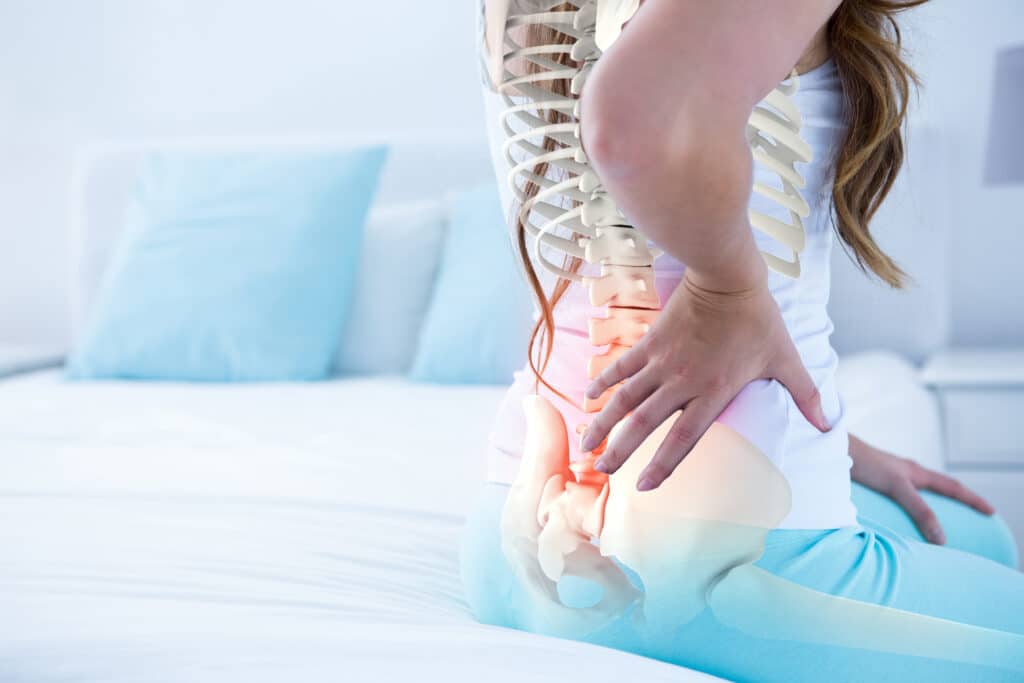
Pain that starts in the lower back or buttocks and travels down one leg is often linked to irritation or pressure on the sciatic nerve. Gentle stretching can help ease tight muscles, calm nerve sensitivity, and support a gradual return to everyday activities.
These stretches are designed to be gentle and accessible. Move slowly, stay within a comfortable range of motion, and focus on steady breathing. If any movement increases pain, tingling, or numbness, it's best to ease off or skip that stretch. Knowing when and how to stretch, along with what to avoid during flareups, can make a big difference in your recovery. If symptoms persist or worsen, it’s important to consult a medical professional.
What You Should Know
Sciatica refers to symptoms from irritation or compression of the sciatic nerve, often causing pain down the back of the leg.
Common causes include a lumbar disc herniation, spinal stenosis, or tight deep hip muscles like the piriformis.
Gentle stretching can reduce muscle guarding and help calm nerve sensitivity.
Avoid stretches that trigger sharp pain, increasing numbness, or leg weakness.
Hold most stretches 20 to 30 seconds, repeat 2 to 3 times, and practice 1 to 2 times daily as tolerated.
Seek care urgently for bowel or bladder changes, progressive weakness, or saddle numbness.
What Is Sciatica and Why Does It Hurt?
The sciatic nerve is the largest nerve in your body. It forms in the lower spine, travels through the buttock, and runs down the back of each leg. When structures around the nerve get irritated or compressed, pain can spread from the low back or hip into the thigh, calf, or foot.
Causes vary. A lumbar disc can bulge and press on the nerve root. Spinal stenosis narrows the canal that the nerves pass through. Sometimes the deep hip muscles tighten and create local nerve irritation. Your plan should match your diagnosis, which is why an exam is helpful before starting a new routine.
Before You Begin: Safe Stretching Basics
Warm up with a short walk or gentle march in place for 2 to 3 minutes.
Move slowly, breathe, and keep pain below a mild, tolerable level.
Stop immediately if pain shoots down the leg or numbness increases.
Use a towel, yoga strap, or chair for support as needed. Avoid bouncing.
Check with your clinician if you are pregnant, have osteoporosis, or recent spine surgery.
Five Gentle Stretches, Step by Step
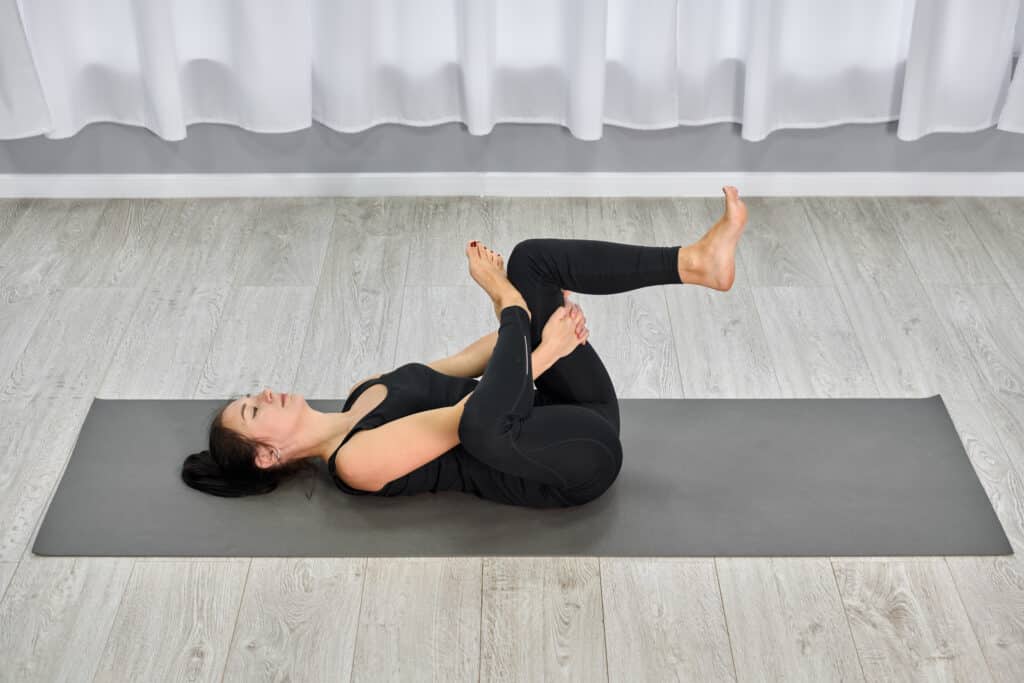
1) Figure-4 Stretch on Back
Lie on your back with knees bent and feet on the floor. Cross the ankle of your painful side over the opposite thigh.
Gently pull the uncrossed thigh toward you until you feel a stretch in the buttock.
Hold 20 to 30 seconds. Repeat 2 to 3 times.
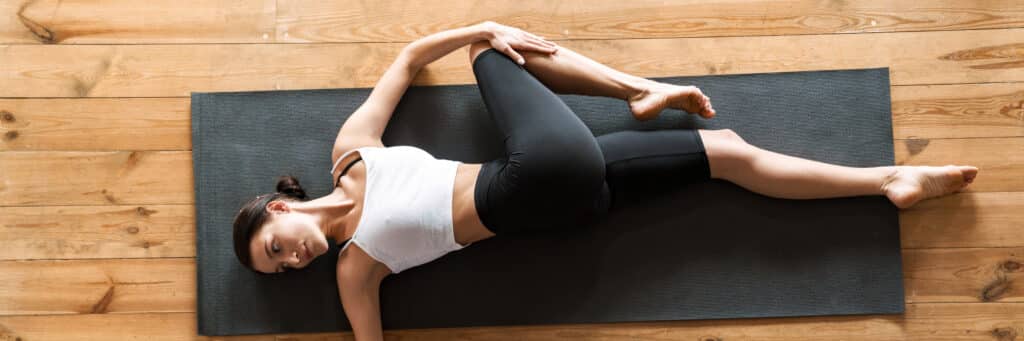
2) Knee to Opposite Shoulder
Lie on your back. Bend the knee on the painful side.
Use both hands to draw the knee across your body toward the opposite shoulder.
Stop at a comfortable stretch in the outer hip. Hold 20 to 30 seconds. Repeat 2 to 3 times.
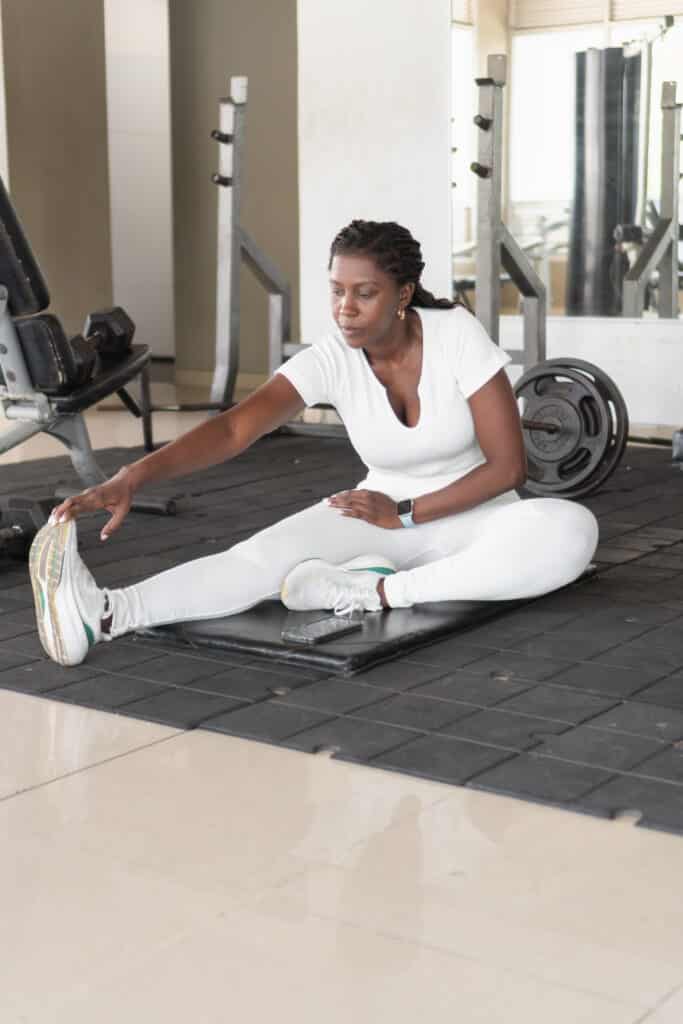
3) Seated Hamstring Stretch
Sit on the floor with one leg extended straight and the other leg bent, with the sole of the foot resting against the inner thigh of the extended leg. Keep your back straight and shoulders relaxed.
Gently lean forward from your hips, reaching toward your shin, ankle, or foot. Stop when you feel a mild stretch in the back of your thigh. Hold for 15–30 seconds, breathing steadily. Return to upright and switch legs. Repeat 2–3 times on each side.
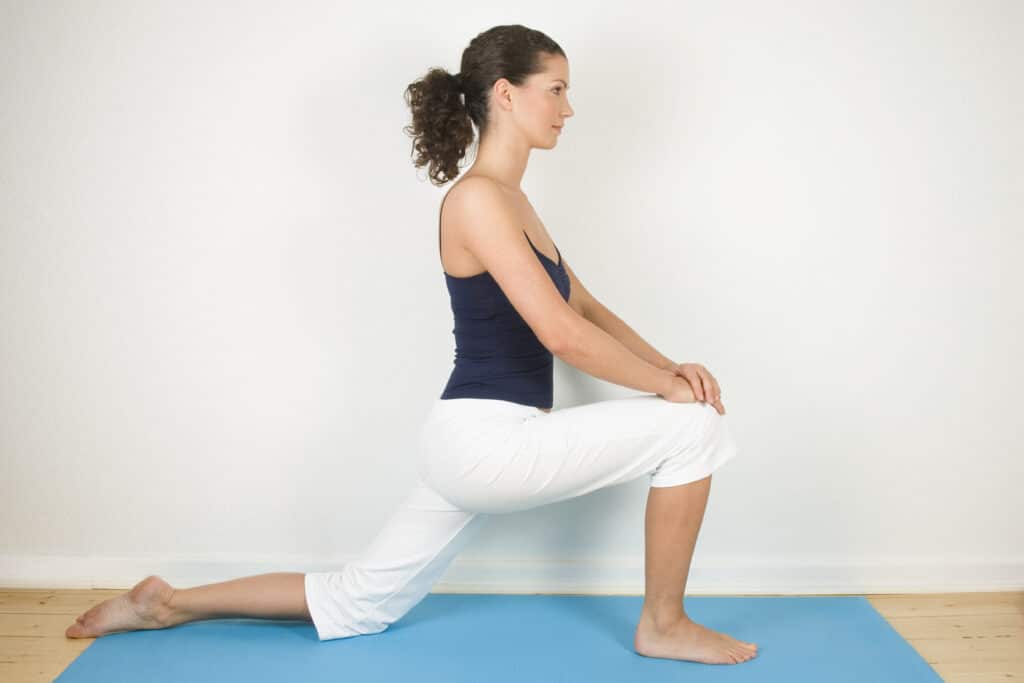
4) Half-Kneeling Hip Flexor Stretch
Kneel on one knee with the other foot in front. Tuck your tailbone slightly and gently shift your weight forward.
You should feel a stretch in the front of the hip on the kneeling side. Keep your trunk upright.
Hold 20 to 30 seconds. Repeat 2 to 3 times each side.
5) Child's Pose, Comfortable Range
Start on hands and knees. Sit your hips back toward your heels while reaching your arms forward.
Stay where it feels easy to breathe. If you notice leg pain or tingling increases with spinal flexion, reduce the depth or skip this position.
Hold 20 to 30 seconds. Repeat 2 to 3 times.
More Mobility Moves That Help
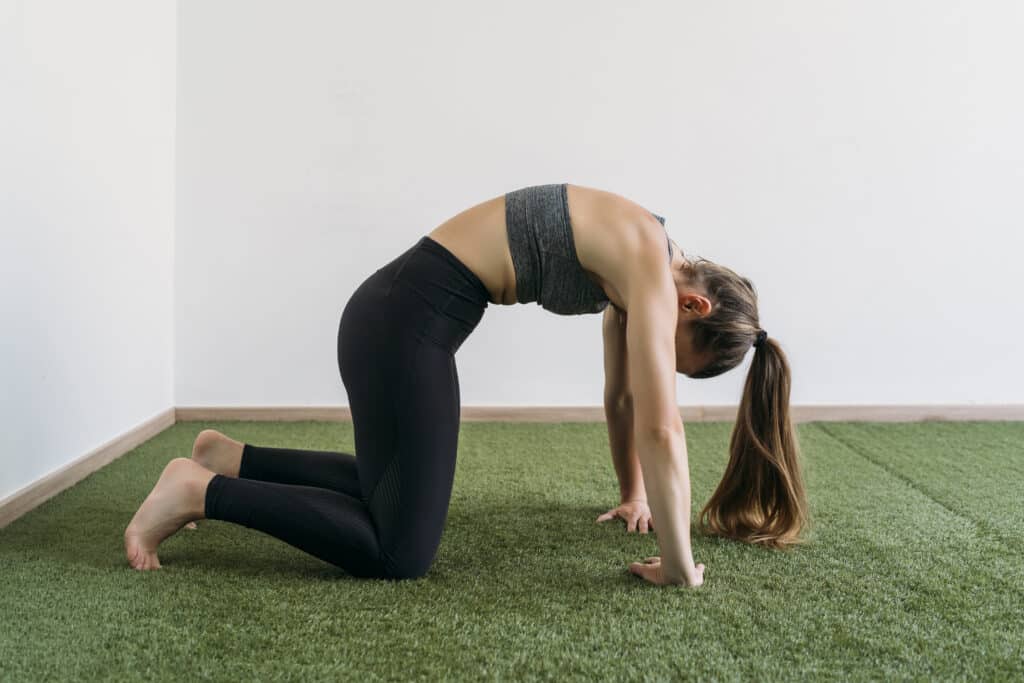
6) Cat–Cow
On hands and knees, gently arch your back toward the ceiling, then lower your belly toward the floor.
Move slowly with your breath for 30 to 60 seconds. Stop if leg pain increases.
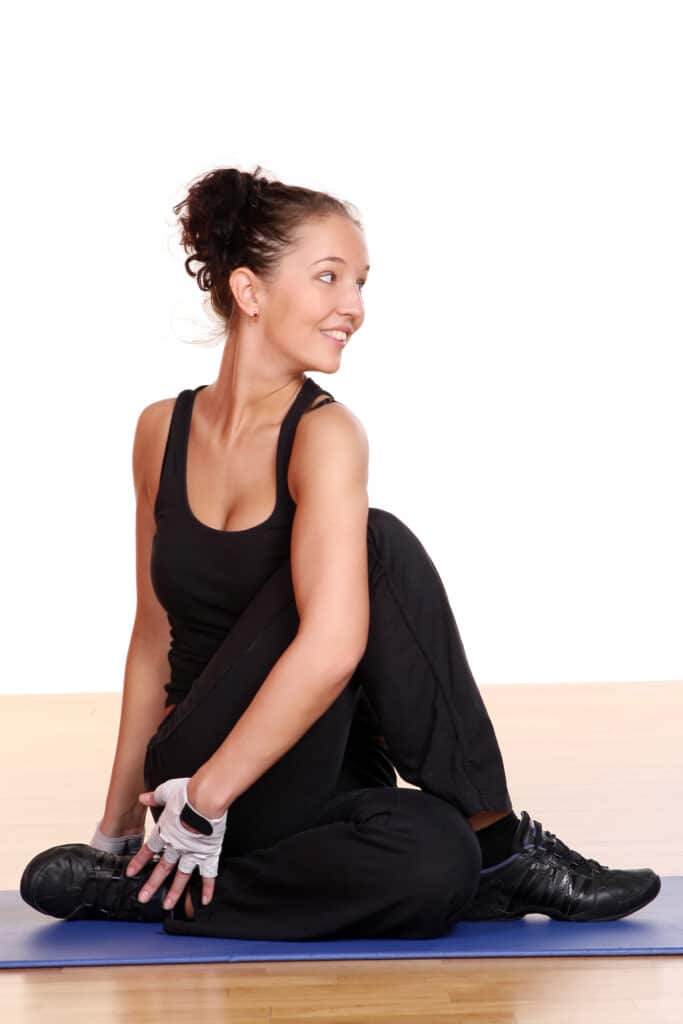
7) Seated Piriformis Stretch
Sit tall. Cross the painful-side ankle over the opposite knee.
Lean forward slightly until you feel a stretch in the buttock. Hold 20 to 30 seconds, repeat 2 to 3 times.
How Often Should You Stretch?
Consistency helps calm sensitive tissues. Use this simple guide to pace your recovery.
Stage
Frequency
Holds/Reps
Notes
Early pain
1 to 2 times daily
20 to 30 second holds, 2 to 3 sets
Stay gentle, avoid positions that trigger leg pain
Improving
Daily or every other day
Progress range as comfort allows
Add short walks and easy core work
Maintenance
3 to 5 days per week
Brief routine after activity
Keep flexibility in hips, hamstrings, and low back
What To Avoid During a Flare
Movements that sharply increase leg pain, tingling, or numbness
Heavy lifting with a rounded back
Prolonged sitting without breaks
Bouncing or forcing deeper stretches
Deep spinal flexion or sustained forward bending if it increases leg symptoms.
When To See a Doctor
Get medical care promptly if any of the following occur:
New or worsening leg weakness
Loss of bowel or bladder control
Numbness in the groin or inner thighs
Severe pain after a fall or injury
Pain that does not improve over several weeks despite rest and gentle care
Common Triggers and Risk Factors
Prolonged sitting or long commutes
Repetitive bending or lifting without proper mechanics
Sudden increase in activity or deconditioning
Tight hips and hamstrings that limit normal movement
Age-related spinal changes such as stenosis
Beyond Stretching: What Else Helps
Short, frequent walks to keep joints and nerves moving
Ice or heat for comfort based on your preference
Over-the-counter anti-inflammatory medication if your doctor approves
Physical therapy for targeted mobility, core and hip strength, and body mechanics
Ergonomic changes at work and frequent position changes
Care With Princeton Orthopaedic Associates
If sciatic pain is limiting your day, we can help you find the cause and build a plan that fits your life. Our clinicians guide you on safe exercises, posture, and next steps if additional treatment is needed. Schedule an evaluation to get moving comfortably again.
This blog post is meant to be informative and should not act as a self-diagnosis tool. If you’d like to see one of our doctors, please contact us here.
Hip Flexor Stretches: Safe, Simple Ways To Ease Tight Hips
Tightness in the front of your hips can make everyday movements like walking, running, or standing up from a chair feel stiff and uncomfortable. Understanding what your hip flexors do, why they become tight, and how to stretch them properly can help improve flexibility and ease discomfort.
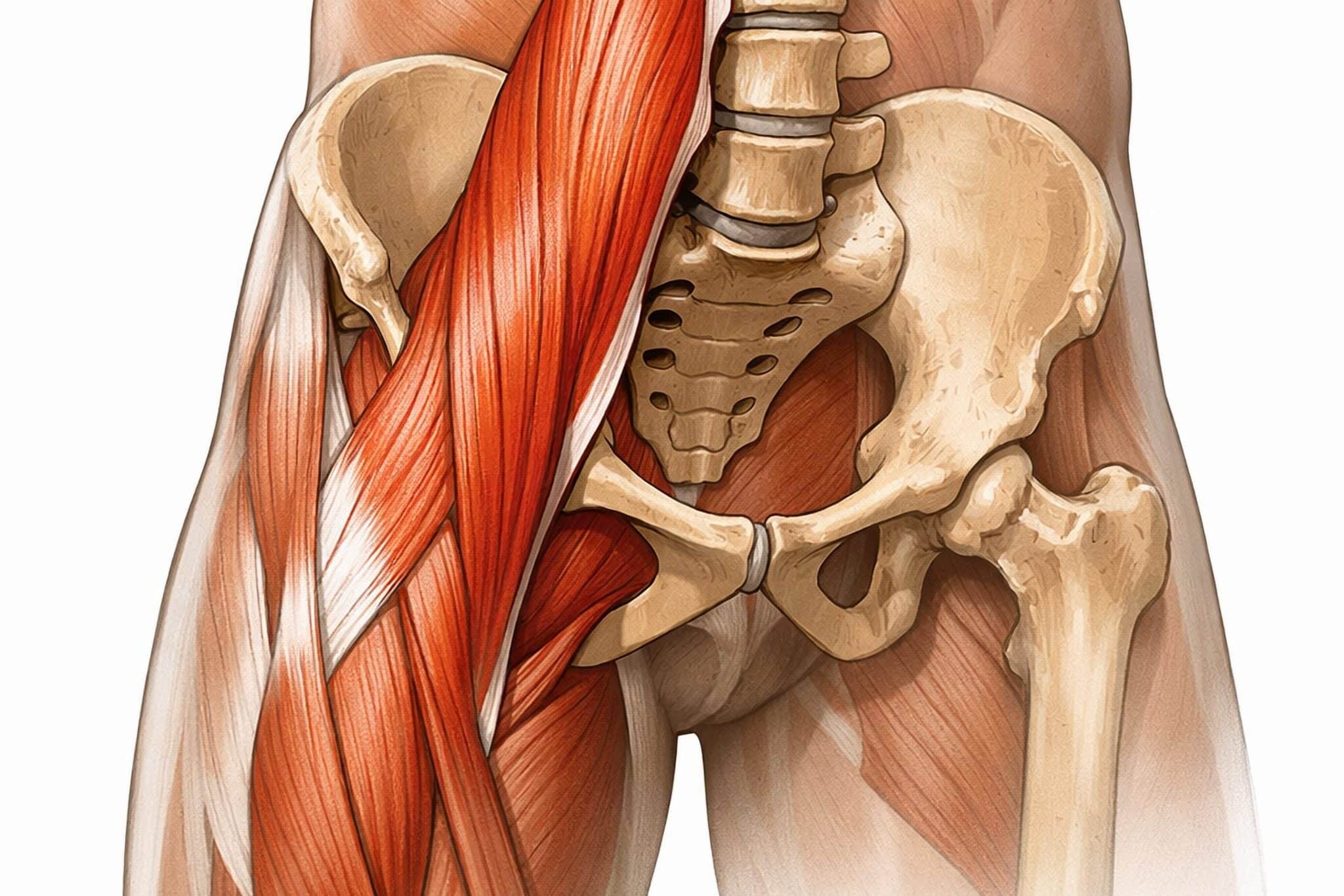
The hip flexors are a group of muscles located at the front of the hip that play a key role in lifting the knee and bending at the waist. The iliopsoas and rectus femoris are among the most important of these muscles. Prolonged sitting, repetitive activity, or a sudden increase in physical demand can cause these muscles to become shortened and sore. With gentle, consistent stretching and mindful movement habits, you can usually restore mobility and reduce tightness.
How Do You Know Your Hip Flexors Are Tight?
You might notice stiffness in the front of your hip or groin after sitting, or discomfort when you step into a long stride. Other common clues include:
Tight or pinching feeling at the front of the hip, especially when standing up from a chair
Low back or front-of-hip discomfort after long periods of sitting
Difficulty straightening the hip fully when walking or climbing stairs
Reduced hip extension while running or pushing off during strides
Standing Lunge With Support
Using the standing lunge with support can help you ease into a hip stretch when kneeling is painful or unstable. This option lets you keep your balance with a chair, table, or counter, which can reduce strain in the knee and back. Start gently, stand tall, and focus on the stretch in the front of the hip. Move slowly and breathe evenly as you feel the stretch deepen.
Stand in a short lunge with the right foot back and the left foot forward. Hold a counter or chair for balance.
Tuck the pelvis and lightly squeeze the right glute. Keep your chest tall.
Gently shift weight forward until you feel a stretch at the front of the right hip.
Hold 20 to 30 seconds. Repeat 2 to 4 times per side.
Good choice if kneeling is uncomfortable or you need extra support.
Wall or Couch Stretch
Use extra knee padding, and skip this variation if you have patellofemoral pain or knee osteoarthritis. Discontinue if knee pressure or pain persists.
This position also lengthens the rectus femoris, a front thigh muscle that acts as a hip flexor.
How Long And How Often Should You Stretch?
Consistency matters more than intensity when you stretch. A steady, gentle routine helps you move well and stay safe. Use the guide below to build a simple plan that fits your day. Start small with short holds and few days per week, then build up as you feel comfortable and your mobility improves.
Goal
Time
Frequency
Notes
General flexibility
20 to 30 seconds per hold
1 to 2 times daily
2 to 4 rounds per side
Warm up
5 to 10 seconds gentle holds
Before activity
Prioritize movement quality and posture
Mobility maintenance
20 seconds
3 to 5 days per week
Pair with hip and core strengthening
Quick Warm-Up Ideas Before You Stretch
2 to 3 minutes of easy walking or marching in place
Gentle leg swings front to back, holding a counter for balance
Pelvic tilts while standing to find a comfortable neutral spine
Before sports or vigorous activity, prioritize dynamic warm-ups (e.g., marching, leg swings, hip circles). If you include static stretches, keep them brief and gentle.
Safety Checks And When To Modify
If you feel a pinching sensation at the front of the hip (especially with a history of femoroacetabular impingement or labral irritation), reduce the range, keep the pelvis gently tucked, or choose a different variation.
When To See An Orthopaedic Specialist
Schedule an evaluation at Princeton Orthopaedic Associates if any of the following apply:
Hip or groin pain that lasts more than a week or keeps returning
Pain that limits walking, stairs, running, or daily activities
Numbness, tingling, or pain that travels into the thigh or back
Clicking or snapping at the hip that is painful
We can confirm the cause of your symptoms, teach you the right technique, and build a plan that combines stretching with strength and movement training so your progress lasts.
The Bottom Line
Hip flexor stretches work best when they’re gentle, well aligned, and consistent. Start with the half-kneeling stretch, focus on pelvic position, and progress to standing or wall variations as you improve. If pain persists, our team is here to help you move with confidence again.
This blog post is meant to be informative and should not act as a self-diagnosis tool. If you’d like to see one of our doctors, please contact us here.
IT Band Stretches: Simple, Safe Moves to Ease Outer Knee and Hip Tightness
f the outside of your knee or hip feels tight or sore, your iliotibial band (IT band) may be involved. You can safely reduce that tension with targeted stretches, proper use of foam rolling, and consistent practice for meaningful relief.
Follow step-by-step stretches that target the muscles connected to the IT band, try a quick 10-minute routine, and be aware of common mistakes to avoid. It’s also important to know when it’s time to see a specialist at Princeton Orthopaedic Associates.
What Your IT Band Does and Why It Feels Tight
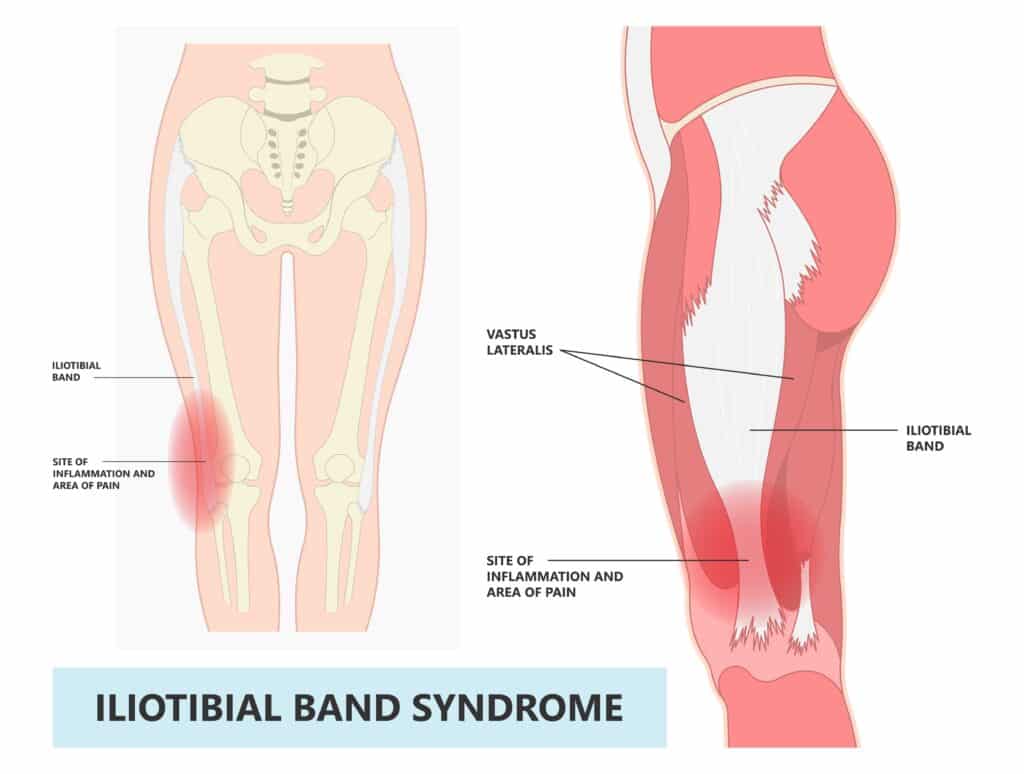
The IT band is a strong band of tissue on the outside of your thigh from your hip to just below the knee. It helps steady the knee while you move. Because it’s not a muscle, you can’t stretch the IT band itself like a hamstring or quad. Instead, you’ll get relief by improving mobility in the muscles that connect to it: the tensor fasciae latae (TFL), glutes, quadriceps, and hamstrings.
Tightness is often linked to repeating the same moves over and over, sitting for long periods, or muscle imbalances around the hip and knee.
Gentle stretching plus smart strengthening offers longer-lasting relief than stretching alone.
Discomfort should feel like a mild, tolerable stretch in the muscle. Sharp or joint pain means stop.
Before You Start: Safety Tips
Warm up with 3 to 5 minutes of easy movement: a short walk or gentle cycling.
Move slowly, avoid bouncing, and breathe normally through each stretch.
Hold each stretch 20 to 30 seconds. Repeat 2 to 3 times per side.
You should feel a comfortable stretch, not tingling, numbness, or sharp pain.
If you have a recent injury, significant swelling, or a joint replacement, ask your clinician which stretches are right for you.
Targeted Stretches That Help Ease IT Band Related Tightness
1) Standing TFL and Outer Hip Stretch (Wall Support)
Stand tall beside a wall for balance. The leg closest to the wall will be your back leg.
Cross the inside leg behind the outside leg. Gently tuck your pelvis under.
Lean your upper body away from the wall until you feel a stretch along the outer hip and upper thigh of the back leg.
Hold 20 to 30 seconds. Repeat 2 to 3 times per side.
2) Seated Figure-4 Glute Stretch
Sit near the front of a sturdy chair, feet flat.
Place your right ankle over your left knee (a figure-4 position). Keep your back tall.
Gently hinge forward from your hips until you feel a stretch in the right glute and outer hip.
Hold 20 to 30 seconds. Repeat 2 to 3 times per side.
3) Half-Kneeling Hip Flexor Stretch With Side Reach
Kneel on a pad with your right knee down and left foot forward.
Gently tuck your pelvis under and shift forward slightly until you feel a front-hip stretch on the right side.
To target the TFL a bit more, reach your right arm overhead and lean your torso slightly to the left.
Hold 20 to 30 seconds. Repeat 2 to 3 times per side.
4) Standing Quadriceps Stretch
Stand and hold a counter or wall for balance.
Bend your right knee and hold your ankle or use a strap. Keep your knees close together.
Gently tuck your pelvis under and avoid arching your low back. You should feel the stretch in the front of the thigh.
Hold 20 to 30 seconds. Repeat 2 to 3 times per side.
5) Supine Hamstring Stretch With Strap
Lie on your back with one knee bent and foot on the floor. Loop a strap around the other foot.
Straighten the strapped leg toward the ceiling until you feel a stretch along the back of the thigh. Keep your knee slightly soft if needed.
Hold 20 to 30 seconds. Repeat 2 to 3 times per side.
Your 10-Minute Stretch Routine: At a Glance
Use this quick reference to build a consistent routine. Aim for most days of the week.
Area
Stretch
Hold
Reps/Side
Frequency
TFL/Outer Hip
Standing cross-over lean
20 to 30 sec
2 to 3
5 to 7 days/week
Glutes
Seated figure-4
20 to 30 sec
2 to 3
5 to 7 days/week
Hip Flexor
Half-kneel with side reach
20 to 30 sec
2 to 3
5 to 7 days/week
Quadriceps
Standing quad stretch
20 to 30 sec
2 to 3
5 to 7 days/week
Hamstring
Supine strap stretch
20 to 30 sec
2 to 3
5 to 7 days/week
Foam Rolling: Where It Helps
Foam rolling can help ease soreness and improve movement around the IT band. Focus on the muscles that affect the IT band instead of pressing directly on the band itself. Move slowly, breathe normally, and stop if anything sharp or lingering hurts. This simple tool can make it easier to glide through stretches and daily activities with less tension in the area.
Glutes: sit on the roller, angle to one side, and work the outer glute area.
Lateral quadriceps: roll the outer front thigh just ahead of the IT band.
TFL (front outer hip): use a small ball or roller to gently address the muscle near the bony front of the hip.
Move slowly for 30 to 60 seconds per area. Avoid direct pressure over the outside of the knee.
Stop if you feel sharp, nerve-like, or lingering pain.
Strength Also Matters
Having balanced strength around your hips and core helps protect the IT band. When the hips and trunk are strong, less stress reaches the outer thigh, and symptoms are less likely to come back. Add simple movements a few days a week to build support and stability for your legs and lower back.
Clamshells and side-lying leg lifts for the gluteus medius.
Bridges or banded bridges for the gluteus maximus.
Lateral band walks and mini-squats with good knee alignment.
Hip hikes on a step and single-leg balance drills.
Start 2 to 3 days per week. Focus on quality form, not speed.
Common Stretching Mistakes
Forcing deep stretches that create sharp pain.
Bouncing or holding your breath.
Ignoring the hips and focusing only on the knee.
Skipping strength work that supports long-term results.
When to Pause and See a Clinician
If any of these signs show up, pause your stretches and seek a checkup. A quick evaluation can stop a small issue from turning into a longer lasting problem. Listening to your body now may save you from more pain later.
Pain lasts more than 1 to 2 weeks despite rest and stretching.
Night pain, swelling, or warmth around the knee or hip.
Catching, locking, or a feeling that the knee might give way.
Numbness or tingling down the leg.
Recent fall or a new injury.
History of hip or knee replacement: confirm safe options with your surgeon or physical therapist.
If you’re unsure which stretches are best for you, our team can help. Sports medicine specialists and physical therapists at Princeton Orthopaedic Associates can tailor a plan to your goals and activity level.
This blog post is meant to be informative and should not act as a self-diagnosis tool. If you’d like to see one of our doctors, please contact us here.
Gentle Neck and Back Stretches You Can Do At Home
If your neck or back feels tight, daily tasks like work, sleep, and exercise can become more difficult. This simple guide offers safe stretches to ease stiffness, improve posture, and help you move more comfortably. You'll learn when to stretch, how long to hold each stretch, and when it might be time to consult a clinician or physical therapist.
Before You Start: Safe Stretching Basics
Move slowly and stay in a comfortable stretch, not in pain. You should feel gentle tension that eases with steady breathing.
Hold most stretches 15 to 30 seconds, repeat 2 to 4 times per side, once or twice daily.
Stop and contact a clinician if you notice numbness, tingling, weakness, or pain that spreads into an arm or leg.
If you have osteoporosis, a recent injury, surgery, or active sciatica, ask your doctor or physical therapist which movements are best for you.
A Quick Daily Routine
Warm up with a short walk around the room for 1 to 2 minutes.
Do the neck sequence below, then the back sequence.
Finish with 3 slow breaths, in through your nose and out through your mouth, to help muscles relax.
Neck Stretches
These movements target common areas of tightness that can contribute to neck pain, tension headaches, and poor posture.
1) Chin Tucks
Sit or stand tall. Gently draw your chin straight back, as if making a small double chin. Keep your eyes level.
Hold 3 to 5 seconds, relax. Repeat 8 to 10 times.
Helps strengthen the deep neck flexors and counters forward head posture.
2) Upper Trapezius Stretch
Sit tall and hold the edge of your chair with your right hand. Tilt your left ear toward your left shoulder to feel a stretch on the right side of your neck.
Option: Rest your left hand lightly on the right side of your head for a gentle assist. Avoid pulling.
Hold 15 to 30 seconds, repeat 2 to 4 times each side.
3) Levator Scapulae Stretch
Turn your head about 45 degrees to the left, then tuck your chin toward your left armpit.
Place your left hand lightly on the back of your head to guide the stretch. You should feel it along the back and side of the neck.
Hold 15 to 30 seconds, repeat 2 to 4 times each side.
4) Doorway Chest Stretch
Tight chest muscles can pull the shoulders forward, which can increase neck strain.
Stand in a doorway with your forearms on the doorframe and elbows at shoulder height.
Step one foot forward and gently shift your weight until you feel a stretch across the chest and front of the shoulders.
Hold 15 to 30 seconds, repeat 2 to 3 times.
Back Stretches
These stretches focus on the upper and lower back, hips, and the muscles that support your spine.
1) Cat‑Cow Mobility
Start on hands and knees. Inhale as you gently let your belly lower and lift your chest. Exhale as you round your back and tuck your chin.
Move slowly through 8 to 12 repetitions.
2) Child’s Pose
From hands and knees, sit your hips back toward your heels and reach your arms forward.
Relax your shoulders and breathe into your sides and lower back.
Hold 20 to 30 seconds, repeat 2 to 3 times.
3) Single Knee‑to‑Chest
Lie on your back with knees bent. Bring one knee toward your chest, hands on the shin or behind the thigh.
Hold 15 to 30 seconds, then switch. Repeat 2 to 4 times each side.
4) Lower Trunk Rotations
Lie on your back with knees bent and feet flat. Gently let both knees fall to one side while keeping your shoulders on the floor.
Hold 10 to 20 seconds, then switch sides. Repeat 5 to 10 times total.
5) Prone Press‑Ups
The prone press up can help ease stiffness in the lower back for some people. If you feel more pain in your legs, numbness, tingling, or a change in how your legs or feet feel during the move, stop right away. Do not push through nerve symptoms, and talk with your clinician before trying again.
Lie on your stomach and prop up on your elbows, letting your low back relax.
Option: Press into your hands to raise your chest a bit higher if comfortable. Keep hips on the floor.
Hold 5 to 10 seconds, repeat 8 to 10 times.
6) Hamstring Stretch
Lie on your back. Loop a towel or strap around one foot and gently straighten the knee toward the ceiling until you feel a stretch in the back of the thigh.
Keep the other leg bent for comfort. Hold 15 to 30 seconds, switch sides, repeat 2 to 3 times.
7) Figure‑4 Hip Stretch
Lie on your back, cross your right ankle over your left knee. Lift the left leg and hold behind the thigh.
Feel the stretch in the right hip or buttock. Hold 15 to 30 seconds, switch sides, repeat 2 to 3 times.
How Often Should You Stretch?
Doing stretches regularly matters more than doing long, hard sessions. If you practice a little every day, you are more likely to keep your joints flexible and your back strong. Use the chart below to plan how often you stretch, how long to hold each stretch, and how many times to repeat.
Goal
Frequency
Hold Time
Repetitions
Ease stiffness
Daily or 5 days per week
15 to 30 seconds
2 to 4 per side
Posture support
Daily micro‑breaks
5 to 10 seconds for resets
Little and often throughout the day
Warm up
Before activity
Gentle, shorter holds
8 to 10 easy reps of mobility moves
Ergonomic Habits That Help
Set a reminder to stand and move for 1 to 2 minutes every 30 to 60 minutes.
Keep screens at eye level and your keyboard close so your shoulders stay relaxed.
Use a supportive chair, and place feet flat on the floor or on a small footrest.
Choose a pillow height that keeps your neck in a neutral position.
When To Contact Princeton Orthopaedic Associates
If your pain lasts more than a week or two despite trying home care, or if it wakes you at night or keeps you from daily tasks, you should seek an evaluation. Call if you notice numbness, tingling, weakness, or new changes in bowel or bladder control, as these need urgent attention.
Pain lasts more than 1 to 2 weeks despite home care.
Pain wakes you at night or limits daily tasks.
You notice numbness, tingling, or weakness in an arm or leg.
Pain began after a fall or accident.
There are changes in bowel or bladder control. This is urgent and needs immediate care.
Our team can diagnose the source of pain, tailor a stretching and strengthening plan, and coordinate physical therapy when needed.
Next Step
If your neck or back pain keeps returning, a personalized plan usually helps most. Schedule an exam with Princeton Orthopaedic Associates so we can identify what is driving your symptoms and guide you through the right exercises for long‑term relief.
This blog post is meant to be informative and should not act as a self-diagnosis tool. If you’d like to see one of our doctors, please contact us here.
Exercises to Relieve Lower Back Pain: A Step-by-Step Guide
Lower back pain is common, and the right movements can make a big difference. This guide walks you through simple mobility drills, gentle stretches, and core-strengthening exercises, plus how often to do them, how to stay safe, and when to see a specialist at Princeton Orthopaedic Associates.
What You'll Learn
How to move your back safely without flaring symptoms.
Mobility exercises that ease stiffness.
Core and hip strengthening that supports your spine.
Stretching for tight hips, hamstrings, and glutes.
A simple weekly routine you can follow.
What to do if pain increases during a movement.
Signs you should pause and contact a clinician.
How often to practice and how to progress safely.
Ways our team can personalize your plan.
When imaging or further evaluation may be appropriate.
Before You Start: Safety, Setup, and Pain Rules
These movements should feel gentle and controlled. You may notice a comfortable stretch or mild muscular effort, but you should not experience sharp, stabbing, or worsening pain at any point during the exercise. If you feel uncomfortable, ease back, rest briefly, and check your form. Move slowly, keep your movements smooth, and breathe steadily throughout each position.
Warm-up: 3 to 5 minutes of easy walking or marching in place.
Breathing: Inhale through your nose, exhale through pursed lips.
Avoid holding your breath during exercises.
Range of motion: Stay in a pain-free range and ease in gradually.
Surface: Use a yoga mat or carpet for comfort.
Stop if you notice new numbness, leg weakness, or pain traveling below the knee that intensifies.
Mobility First: Gentle Movements to Reduce Stiffness
Begin with slow, comfortable movements to ease the back and improve blood flow throughout the spine. Move with control, staying in a pain-free range, and stop if anything sharp or increasingly uncomfortable appears. For most moves, aim for about five to ten deliberate repetitions unless otherwise noted.
1) Pelvic Tilts (Supine)
Lie on your back with knees bent and feet hip-width apart.
Gently flatten your low back toward the floor by tightening your abdominals, then return to neutral.
Perform 1 to 2 sets of 8 to 12 reps.
2) Lower Trunk Rotations
On your back with knees bent, slowly roll both knees to one side, pause, then roll to the other side.
Keep shoulders relaxed against the floor.
5 to 10 reps each side.
3) Single Knee to Chest
Bring one knee toward your chest using your hands or a towel behind the thigh.
Hold 15 to 30 seconds, switch sides.
Repeat 2 to 3 times per side.
4) Cat to Cow
On hands and knees, gently round your spine up, then lengthen it as you look slightly forward.
Move slowly with your breath.
8 to 10 slow reps.
5) Child’s Pose Reach
Sit back toward your heels with knees comfortable, reach arms forward, and relax your torso.
Hold 20 to 30 seconds, 2 to 3 times, staying pain-free.
Build Support: Core and Hip Strengthening
Strong hips and a steady core help unload irritated tissues in the lower back and support your spine during daily tasks. Perform each movement with deliberate control, paying attention to alignment and how your body feels. If any symptom worsens, stop the exercise and reassess your form. Aim for two to three sets, with 30 to 60 seconds of rest between sets.
1) Bridge
On your back, knees bent, feet planted.
Squeeze glutes and lift hips until shoulders, hips, and knees form a line.
Pause 2 seconds, lower slowly; 8 to 12 reps.
2) Bird Dog
From hands and knees, brace your core.
Extend opposite arm and leg without arching your back.
Hold 2 to 3 seconds; 6 to 10 reps per side.
3) Dead Bug (Modified)
On your back, hips and knees bent to about 90 degrees, arms up.
Keep your low back gently anchored to the floor.
Tap one heel to the floor and return; switch sides; 6 to 10 reps per side.
4) Side-Lying Clamshell
Lying on your side with knees bent, keep feet together.
Lift the top knee without rolling your hips; 10 to 15 reps per side.
5) Forearm Plank (Knees or Toes)
Maintain a long spine, keep ribs and pelvis aligned.
Hold 10 to 20 seconds without pain; 2 to 4 holds.
Stretch What's Tight: Hips and Legs
Tight hips or hamstrings can pull on the pelvis and increase back strain. Hold each stretch 15 to 30 seconds, repeat 2 to 3 times, and keep breathing.
Hamstring Strap Stretch: On your back, loop a strap or towel around the foot and gently straighten the knee until a mild stretch is felt in the back of the thigh.
Hip Flexor Stretch: Half-kneeling, gently shift your weight forward until you feel the front of the hip stretch on the kneeling side.
Piriformis Figure-4: Cross one ankle over the opposite knee and draw the legs toward your chest until the outer hip stretches.
A Simple Weekly Plan
Use this plan as a flexible starting point and adjust it based on how you feel and what you can tolerate. Prioritizing consistency and gradual progress matters more than pushing for fast gains. Listen to your body, and modify days, reps, or rest as needed to stay comfortable and avoid flare-ups.
Day
Mobility
Strength
Stretch
Notes
Mon
Pelvic tilts, trunk rotations
Bridge, clamshell
Hamstrings
Easy start, 1 to 2 sets
Tue
Cat to cow
Bird dog
Hip flexors
Focus on form
Wed
Child’s pose
Dead bug
Piriformis
Optional walk 10 to 20 min
Thu
Pelvic tilts, trunk rotations
Bridge, clamshell
Hamstrings
Add 1 to 2 reps if comfortable
Fri
Cat to cow
Bird dog
Hip flexors
Short and easy
Sat
Choice mobility
Plank holds
Piriformis
Walk or light activity
Sun
Recovery
—
Gentle stretch
Listen to your body
Progress Tips
Increase reps or holds by small amounts once a week if movements feel easy and symptoms stay settled.
Keep motions smooth and controlled, not fast or jerky.
Add short daily walks to support circulation and recovery.
Use supportive footwear and avoid prolonged sitting when possible.
When to Pause and Contact a Clinician
Most back pain improves with gentle activity and careful pacing, but some warning signs require medical input sooner rather than later. If your symptoms persist beyond a short period, intensify, or there are new concerns, seek medical guidance promptly. The list below describes red flags that warrant evaluation by a clinician.
Severe or worsening pain that doesn’t change with rest.
Leg numbness, tingling, or weakness that’s increasing.
Changes in bowel or bladder control.
Fever, unexplained weight loss, or recent significant trauma.
How Princeton Orthopaedic Associates Can Help
If your symptoms aren’t improving, our team can evaluate your movement, identify the source of pain, and build a program that fits your goals. Most people do well with focused physical therapy, activity modification, and a progressive home plan.
If you’re unsure where to start, schedule an exam with our spine or physical therapy team. We’ll help you understand what’s safe, how to progress, and when additional options are appropriate.
This blog post is meant to be informative and should not act as a self-diagnosis tool. If you’d like to see one of our doctors, please contact us here.
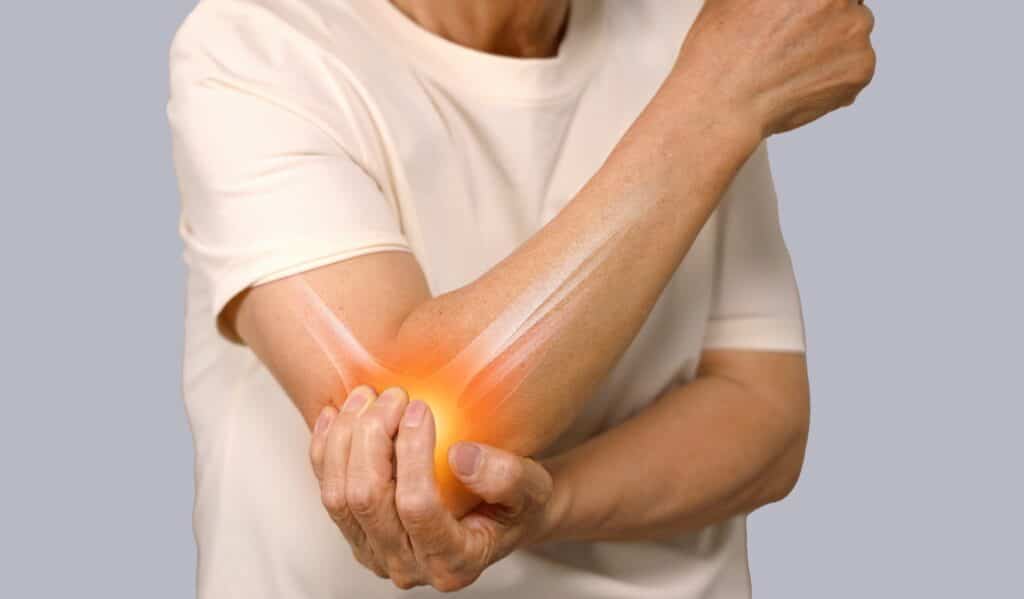
Elbow Tendinopathy: What It Is and How We Treat It at Princeton Orthopaedic Associates
Elbow tendinopathy is a common overuse injury that causes pain and tenderness in the tendons around the elbow. It happens when these tendons—connecting muscle to bone—become irritated from repeated stress. In this blog, you’ll find simple home treatments that can help relieve symptoms and learn when it’s time to see a specialist.
Quick overview
We’ll cover what causes elbow tendinopathy, the differences between lateral and medial types, practical home care tips, rehab strategies like strengthening and stretching, and when injections or surgery might be needed.
What Is Elbow Tendinopathy?
Elbow tendinopathy is an overuse condition where the tendons around your elbow become irritated. Tendons connect muscles to bone, and when they’re overloaded they can be painful and tender.
There are two common forms. Lateral elbow tendinopathy affects the outer elbow and is often called tennis elbow. Medial elbow tendinopathy affects the inner elbow and is often called golfer's elbow. Both share similar causes and treatments.
What Causes Elbow Tendinopathy?
Repeated or forceful wrist and arm motions are the usual culprits. These motions create small tears and inflammation in the tendon where it attaches to the bone.
Repeated gripping or twisting of the wrist
Working with vibrating tools or heavy lifting
Poor technique in sports or tasks that load the forearm
Weakness in the wrist or shoulder that shifts stress to the elbow
Simple Steps You Can Try at Home
Many people feel better with early conservative care. Try these measures for several weeks while monitoring symptoms.
Modify activities that cause pain and avoid repetitive motions when possible
Ice the area for 10 to 15 minutes every few hours to reduce pain and swelling
Use over the counter anti inflammatory medication if it’s safe for you and your doctor agrees
Wear a counterforce strap or supportive brace during aggravating activities
Rehabilitation: Exercises and Therapy
Physical therapy is the mainstay for lasting relief. A therapist will show you targeted exercises to rebuild tendon health and correct movement patterns.
Eccentric strengthening of the wrist extensor or flexor muscles helps rebuild tendon tolerance
Grip strengthening and progressive loading programs are used once pain improves
Stretching and manual therapy help reduce tightness in the forearm and shoulder
Other Medical Treatments
If symptoms persist despite conservative care, your provider may discuss additional options. These are considered after a careful evaluation.
Corticosteroid injections may offer short term relief in select cases, but guidelines warn about potential tendon weakening or rupture with repeated use. A careful, shared decision process helps decide if this option fits your goals and activity level [AAOS guidelines 2020; NICE guidelines 2021].
PRP injections, a type of biologic treatment, may be discussed when appropriate. Current evidence is mixed and appears to depend on the specific tendinopathy and stage of injury; decisions should be individualized based on patient needs [Cochrane review on PRP for tendinopathy 2019; AAOS guidelines 2020].
Surgery is rarely needed and is reserved for persistent tendon damage that affects function
Recovery Timeline
Recovery varies with how long symptoms have been present and how consistently you follow rehab recommendations.
Therapy and strengthening restore function for most people
Chronic
2 months or longer
May need advanced treatments and extended rehab for full recovery
Preventing Recurrence
Once your pain improves, keep working on strength, flexibility, and technique. Those steps reduce the chance that tendinopathy will come back.
Practice ergonomic changes at work and during activities
Use proper form for sports and lifting
Build balanced strength in the forearm, shoulder, and core
Gradually increase activity load rather than jumping back in too fast
When You Should See Us
Contact our team if pain lasts despite home care, limits your daily tasks, or if you’re losing strength. We’ll evaluate your elbow, identify the root cause, and recommend a personalized plan.
Schedule an exam with one of our sports medicine doctors or physical therapists to get targeted treatment and a clear recovery plan.
This blog post is meant to be informative and should not act as a self-diagnosis tool. If you’d like to see one of our doctors, please contact us here.
Sequence rules uses cookies to track the order of requests a user has made and the time between requests and makes them available via Cloudflare Rules. This allows you to write rules that match valid or invalid sequences. The specific cookies used to validate sequences are called sequence cookies.
session
cf_ob_info
The cf_ob_info cookie provides information on: The HTTP Status Code returned by the origin web server. The Ray ID of the original failed request. The data center serving the traffic
session
cf_use_ob
The cf_use_ob cookie informs Cloudflare to fetch the requested resource from the Always Online cache on the designated port. Applicable values are: 0, 80, and 443. The cf_ob_info and cf_use_ob cookies are persistent cookies that expire after 30 seconds.
session
__cfwaitingroom
The __cfwaitingroom cookie is only used to track visitors that access a waiting room enabled host and path combination for a zone. Visitors using a browser that does not accept cookies cannot visit the host and path combination while the waiting room is active.
session
cf_chl_rc_i
These cookies are for internal use which allows Cloudflare to identify production issues on clients.
session
cf_chl_rc_ni
These cookies are for internal use which allows Cloudflare to identify production issues on clients.
session
cf_chl_rc_m
These cookies are for internal use which allows Cloudflare to identify production issues on clients.
session
__cfruid
Used by the content network, Cloudflare, to identify trusted web traffic.
session
__cf_bm
Cloudflare's bot products identify and mitigate automated traffic to protect your site from bad bots. Cloudflare places the __cf_bm cookie on End User devices that access Customer sites that are protected by Bot Management or Bot Fight Mode. The __cf_bm cookie is necessary for the proper functioning of these bot solutions.
session
__cflb
When enabling session affinity with Cloudflare Load Balancer, Cloudflare sets a __cflb cookie with a unique value on the first response to the requesting client. Cloudflare routes future requests to the same origin, optimizing network resource usage. In the event of a failover, Cloudflare sets a new __cflb cookie to direct future requests to the failover pool.
session
_cfuvid
The _cfuvid cookie is only set when a site uses this option in a Rate Limiting Rule, and is only used to allow the Cloudflare WAF to distinguish individual users who share the same IP address.
session
cf_clearance
Whether a CAPTCHA or Javascript challenge has been solved.
session
Google reCAPTCHA helps protect websites from spam and abuse by verifying user interactions through challenges.
Name
Description
Duration
_GRECAPTCHA
Google reCAPTCHA sets a necessary cookie (_GRECAPTCHA) when executed for the purpose of providing its risk analysis.
179 days
Google Tag Manager simplifies the management of marketing tags on your website without code changes.
Name
Description
Duration
cookiePreferences
Registers cookie preferences of a user
2 years
td
Registers statistical data on users' behaviour on the website. Used for internal analytics by the website operator.
session
These cookies are used for managing login functionality on this website.
Name
Description
Duration
wordpress_logged_in
Used to store logged-in users.
Persistent
wordpress_sec
Used to track the user across multiple sessions.
15 days
wordpress_test_cookie
Used to determine if cookies are enabled.
Session
WPForms is a user-friendly WordPress plugin for creating custom forms with drag-and-drop functionality.
Name
Description
Duration
wpfuuid
Used to track user interactions with forms.
11 years
Statistics cookies collect information anonymously. This information helps us understand how visitors use our website.
Google Analytics is a powerful tool that tracks and analyzes website traffic for informed marketing decisions.
Used to distinguish new sessions and visits. This cookie is set when the GA.js javascript library is loaded and there is no existing __utmb cookie. The cookie is updated every time data is sent to the Google Analytics server.
30 minutes after last activity
__utmc
Used only with old Urchin versions of Google Analytics and not with GA.js. Was used to distinguish between new sessions and visits at the end of a session.
End of session (browser)
__utmz
Contains information about the traffic source or campaign that directed user to the website. The cookie is set when the GA.js javascript is loaded and updated when data is sent to the Google Anaytics server
6 months after last activity
__utmv
Contains custom information set by the web developer via the _setCustomVar method in Google Analytics. This cookie is updated every time new data is sent to the Google Analytics server.
2 years after last activity
__utmx
Used to determine whether a user is included in an A / B or Multivariate test.
18 months
_ga
ID used to identify users
2 years
_gali
Used by Google Analytics to determine which links on a page are being clicked
30 seconds
_ga_
ID used to identify users
2 years
_gid
ID used to identify users for 24 hours after last activity
24 hours
_gat
Used to monitor number of Google Analytics server requests when using Google Tag Manager
1 minute
_gac_
Contains information related to marketing campaigns of the user. These are shared with Google AdWords / Google Ads when the Google Ads and Google Analytics accounts are linked together.
90 days
__utma
ID used to identify users and sessions
2 years after last activity
__utmt
Used to monitor number of Google Analytics server requests
10 minutes
These cookies help us measure the effectiveness of our website content and understand how visitors find and use our site. This allows us to improve the experience and provide more helpful resources.
Facebook Pixel is a web analytics service that tracks and reports website traffic.