Follow a treatment plan with exercises and support.
Prevent future problems with proper technique and ergonomics.
Why Elbow Pain Gets in the Way
You may not think much about your elbow until it starts to ache. When it does, everyday tasks like lifting a mug, typing, or turning a doorknob can feel surprisingly difficult. This guide explains common elbow problems and what you can do to feel better.
How Your Elbow Is Built
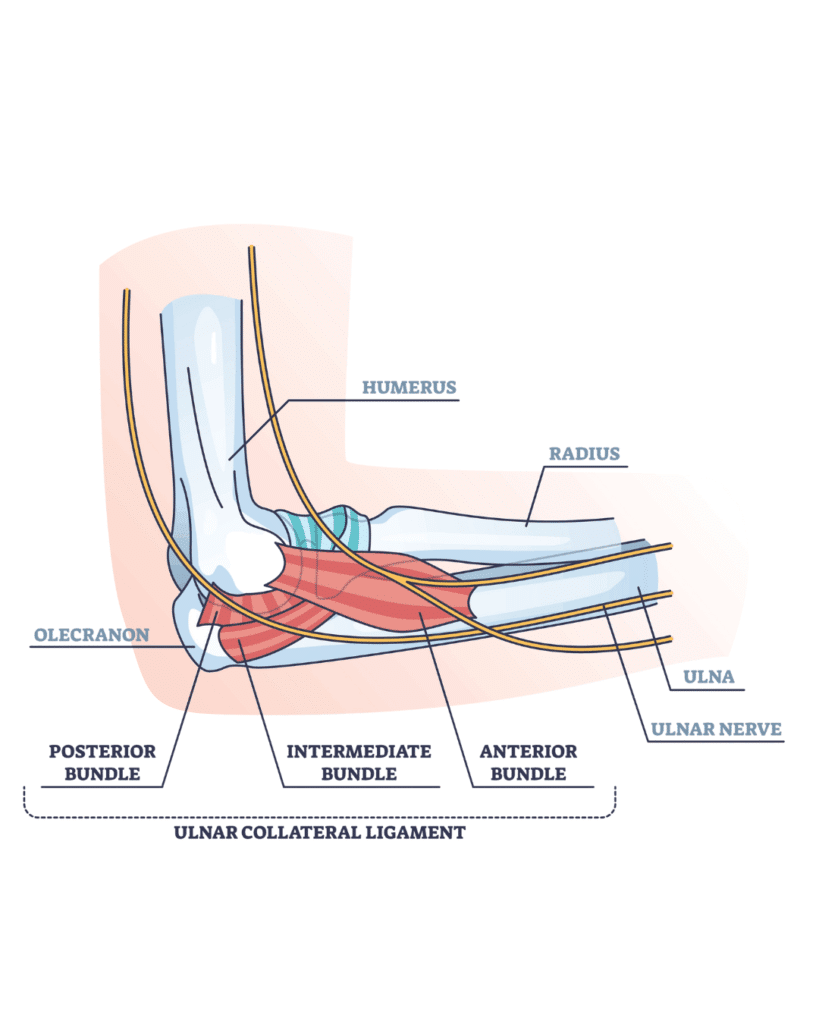
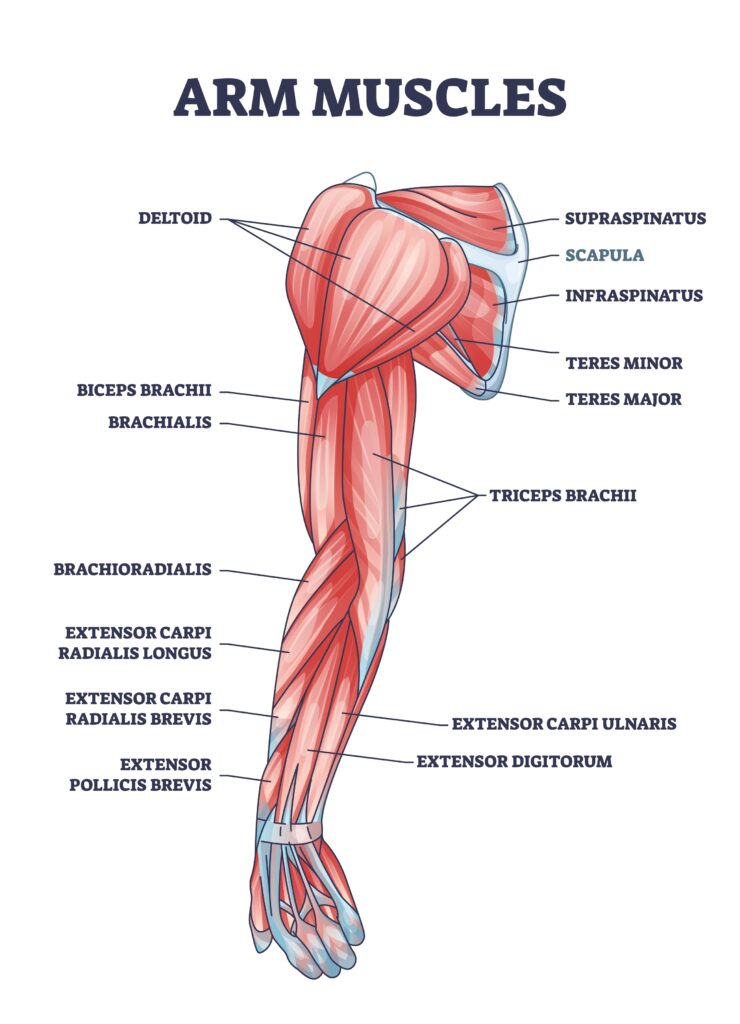
Your elbow is where the upper arm bone, called the humerus, meets the two forearm bones: the radius on the thumb side and the ulna on the little finger side. Muscles cross the joint to bend and straighten your arm, and tendons connect those muscles to the bone. Important nerves for the hand and wrist also pass through the elbow.
Two key muscles help the joint move smoothly. The biceps muscle bends the elbow, while the triceps muscle straightens it. Small bony knobs at the end of the humerus, called epicondyles, are common attachment points for tendons and are frequent sources of pain when irritated.
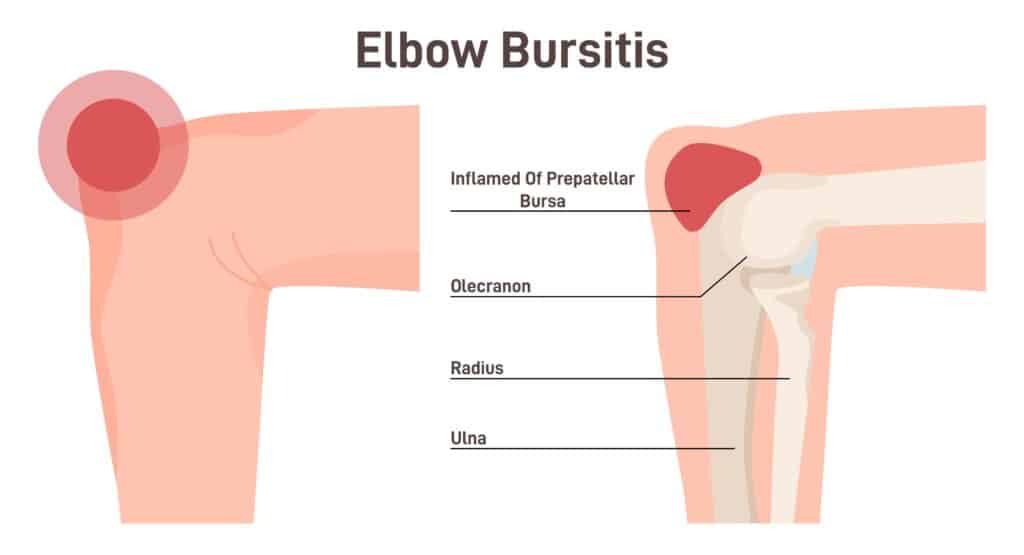
The tip of the elbow is the olecranon, which is part of the ulna. A small, fluid-filled cushion named the bursa sits over the tip to protect soft tissue. Nearby nerves include the median nerve, which supplies most fingers, and the ulnar nerve, which supplies the little finger and part of the ring finger.
Epicondyles are knobs at the end of the humerus.
The median nerve provides feeling to most fingers.
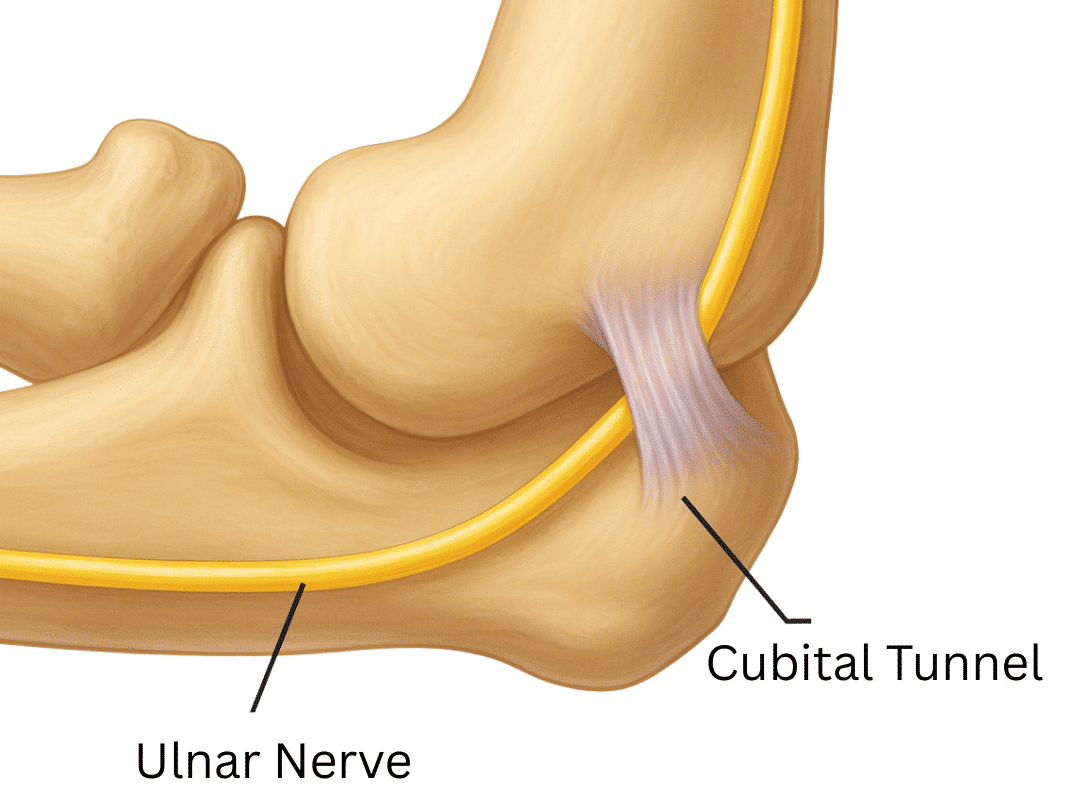
The ulnar nerve provides feeling to the little finger and one side of the ring finger.
The triceps muscle helps straighten the elbow.
The biceps muscle helps bend the elbow.
Referred Pain
Sometimes, pain felt at the elbow actually starts elsewhere. Irritation in the neck or higher up the arm can send pain signals to the elbow region. Your clinician may examine these areas to rule out other sources of pain.
How the Elbow Moves
Your elbow is involved every time your arm bends, straightens, or turns. Bending the elbow to bring the hand toward the body is called flexion, while straightening it away from the body is called extension. These motions help with eating, grooming, lifting, and reaching.
The forearm also rotates at the elbow. Turning the palm up is called supination, and turning the palm down is called pronation. Holding the palm sideways, as if for a handshake, is the neutral position, which places the least strain on the elbow.
Extension
Flexion
Supination
Pronation
Neutral Position
Common Sources of Elbow Pain
Several conditions can irritate the elbow and limit daily activities.
Epicondylitis, often called tennis elbow or golfer's elbow
Bursitis, which involves swelling of the elbow's bursa
Cubital tunnel syndrome, a problem with the ulnar nerve
Fractures from a fall or direct blow
Each condition has telltale signs and effective treatments. The sections below outline what to watch for and how to respond.
Epicondylitis Explained
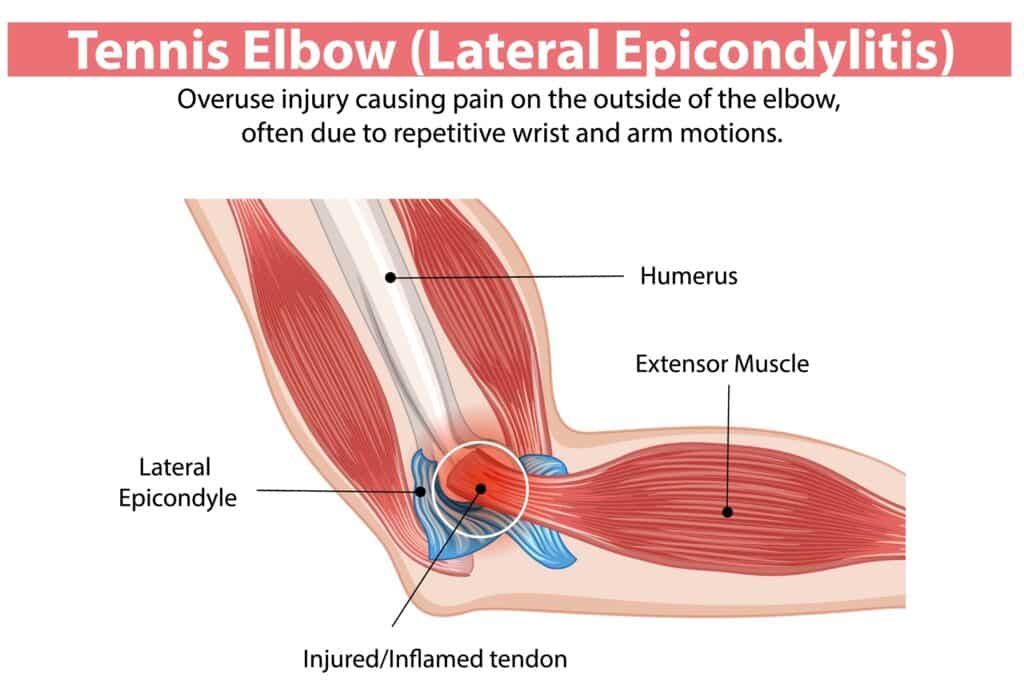
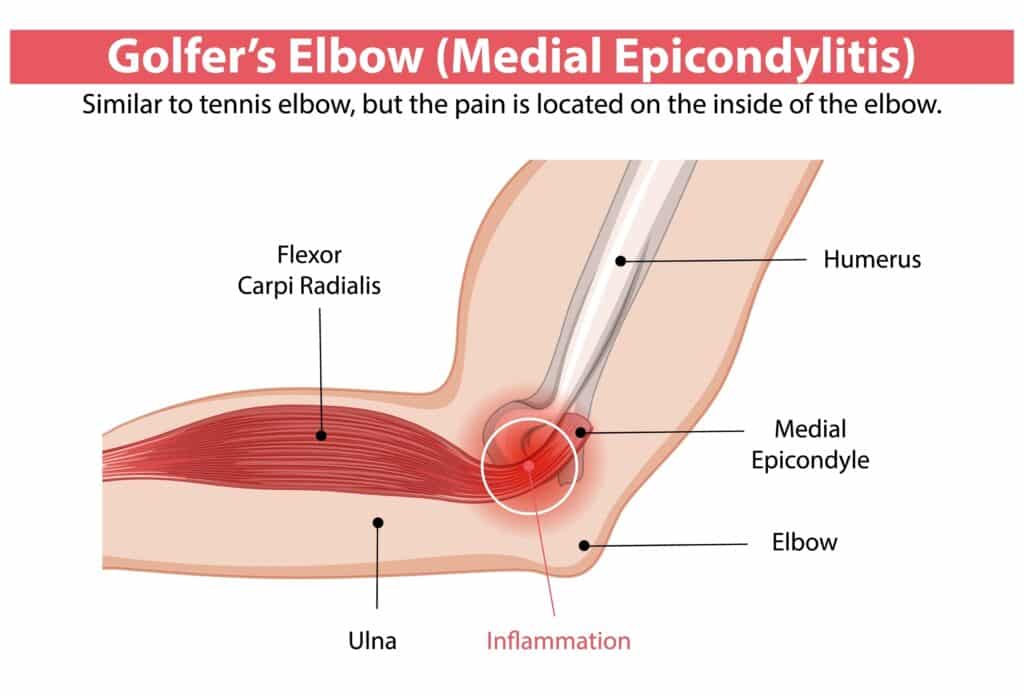
Epicondylitis happens when a muscle or tendon at the elbow becomes inflamed or develops tiny tears. It often results from using the hand or elbow the same way again and again or from poor technique during work or play. It can make gripping, turning the hand, or swinging the arm painful.
Lateral Epicondylitis (Tennis Elbow)
This affects the outer side of the elbow, the side farthest from your ribs. The muscles that extend the wrist and open the hand attach here. Although it is linked to tennis by name, most people who get it do not play the sport.
Medial Epicondylitis (Golfer's Elbow)
This affects the inner side of the elbow, the side closest to your ribs. Muscles that flex the wrist and close the hand attach at this spot. A movement similar to a golf swing can trigger it, but many daily tasks can also strain this area.
When the tendon is involved, the problem may be called tendinitis. You can injure one or more muscles and tendons along either side of the elbow.
Treating Epicondylitis
The goals are simple: reduce pain and restore motion and strength. Many people start with self-care and progress to guided treatment if needed.
First Steps at Home
Rest the elbow by stopping the activity that seems to have caused the pain.
Apply ice for 15 to 20 minutes, two or three times a day for one to two days, using a thin cloth to protect your skin.
Switch tasks between hands at work to reduce stress on the affected side.
Further Treatment Options
Anti-inflammatory medicine or a cortisone injection to reduce pain and swelling.
Motion and strengthening exercises to improve flexibility and function; you may be referred to a physical or occupational therapist for guided care, and treatments such as ultrasound may be used to promote healing.
A splint, brace, or forearm band to reduce stress on injured tissue.
Surgery when symptoms do not improve and damaged tissue needs to be addressed.
Exercises for Epicondylitis
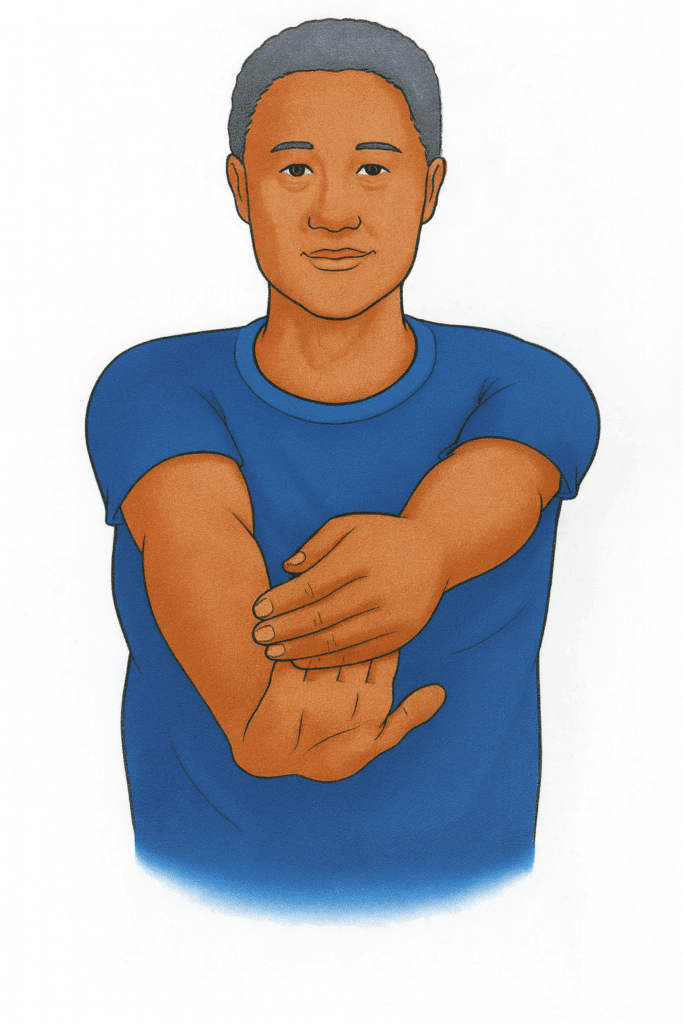
Wrist Flexor Stretch
Hold your right arm out at shoulder height with your palm facing out and fingers up. Keep your shoulder down.
Place your left hand across the palm of your right hand.
Using your left hand, gently pull your right hand toward you. Do not bend your fingertips back.
Hold for [number] seconds. Switch hands and repeat.
Do this with each hand [number] times a day.
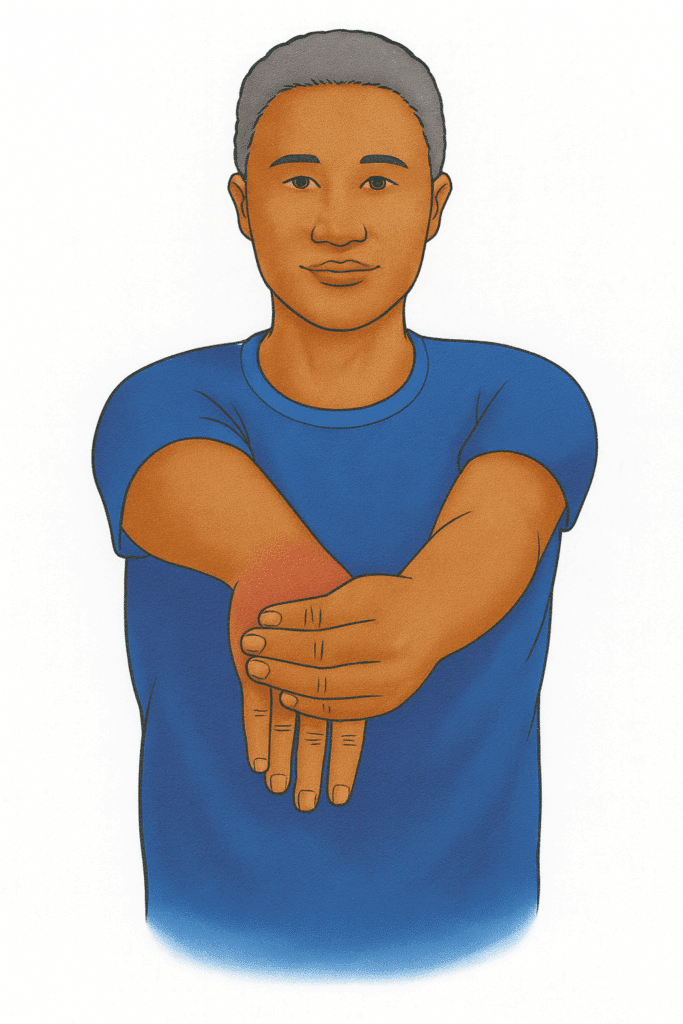
Wrist Extensor Stretch
Hold your right arm out at shoulder height with your palm facing in and fingers down. Keep your shoulder down.
Place your left hand across the back of your right hand.
Using your left hand, gently pull your right hand toward you. Do not bend your fingertips back.
Hold for 5-10 seconds. Switch hands and repeat.
Do this with each hand 3 times a day.
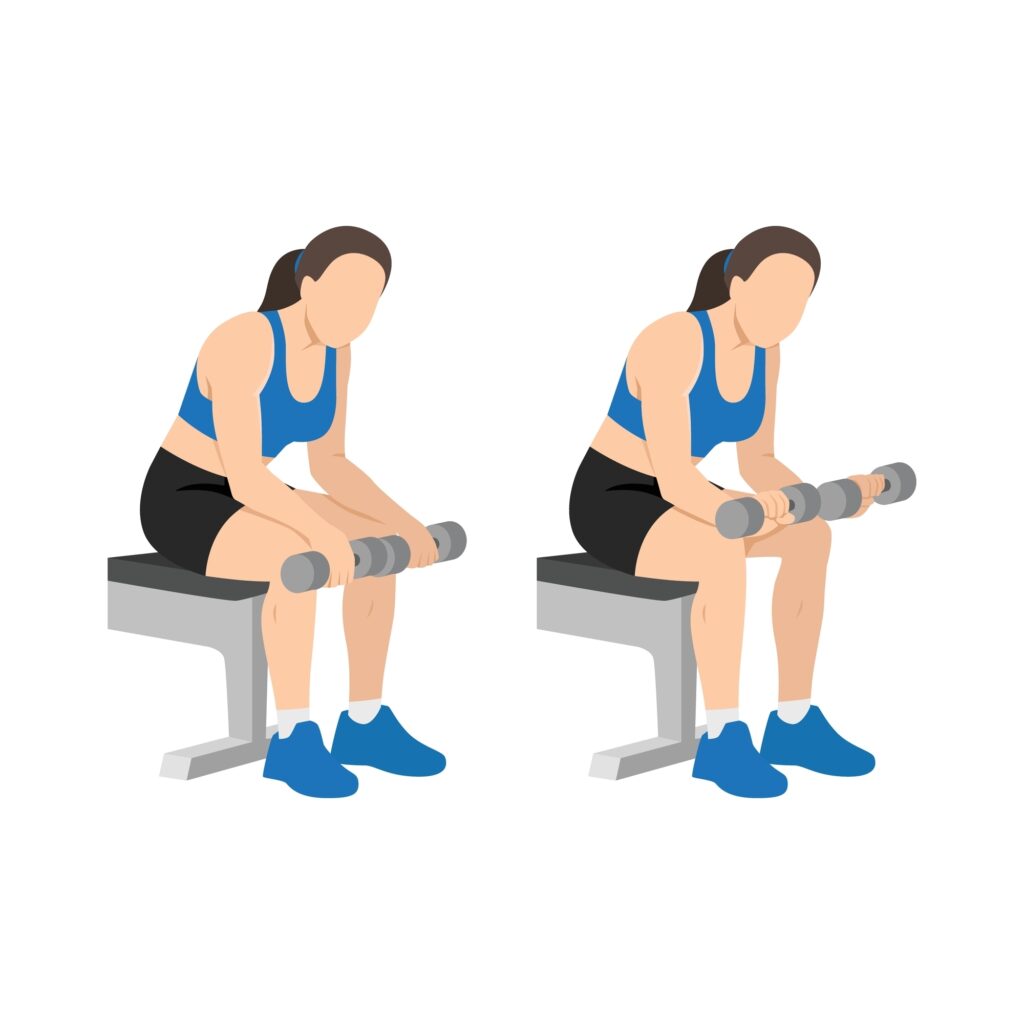
Wrist Extension and Flexion
Hold a [number]-pound weight or [number]-ounce soup can in your hand.
Sit with your forearm supported on your knee or the edge of a table, palm down.
Keeping the forearm supported, curl your wrist up to lift the weight as high as you can.
Lower your wrist back to the starting position.
Repeat [number] times for one set. Then repeat with the palm up. Do [number] sets a day palm down and the same number palm up.
Why Epicondylitis Happens and How to Prevent It
Epicondylitis often stems from repeated motions, poor technique, or awkward positioning that strains the elbow. Improving habits can prevent flare-ups.
Common Causes
Repetitive motions such as frequent wrist turning, gripping, hand shaking, twisting movements, or using vibrating tools.
Poor technique, including unsafe reaching or gripping and failing to warm up before work or sports.
Poor positioning or posture, such as often reaching for items that are too far away.
Prevention Tips at Work
Vary tasks to reduce repeated motions and take frequent breaks.
Switch hands when possible and avoid gripping objects too tightly.
Lift with a side or bottom grip rather than a top grip.
Do warm-up stretches before starting and during your shift.
Keep wrists in a neutral handshake position whenever you can.
Keep elbows close to your body when moving your arms.
Move your keyboard and mouse closer to avoid reaching.
Stand on a raised surface when needed so your shoulder is above the objects you reach for.
Prevention Tips at Play
Avoid bending your elbow or wrist over and over during activities.
Reduce vibration from a tennis racket by choosing nylon strings, a mid-sized frame, or a material such as graphite, and learn proper technique from a professional.
Select equipment with the right grip size and weight for your body; get measured for the correct racket grip.
Warm up before playing and stretch gently afterward.
Use your whole arm, not just the wrist, during a tennis backstroke, and consider a two-handed backstroke.
Let it go if the ball is out of reach.
Keep elbows close to your body and your wrist firm and neutral when you can.
Bursitis of the Elbow
The bursa is a small cushion over the tip of the elbow that protects soft tissues. Overuse, bumps, or injuries can make it fill with fluid and become inflamed. The skin may look red, feel warm, and be painful, and an infection can develop if swelling is left untreated.
First Steps
Rest the elbow and avoid pressure on the tip.
Apply a cold pack for 15 to 20 minutes, three or four times a day as directed, using a thin cloth to protect your skin.
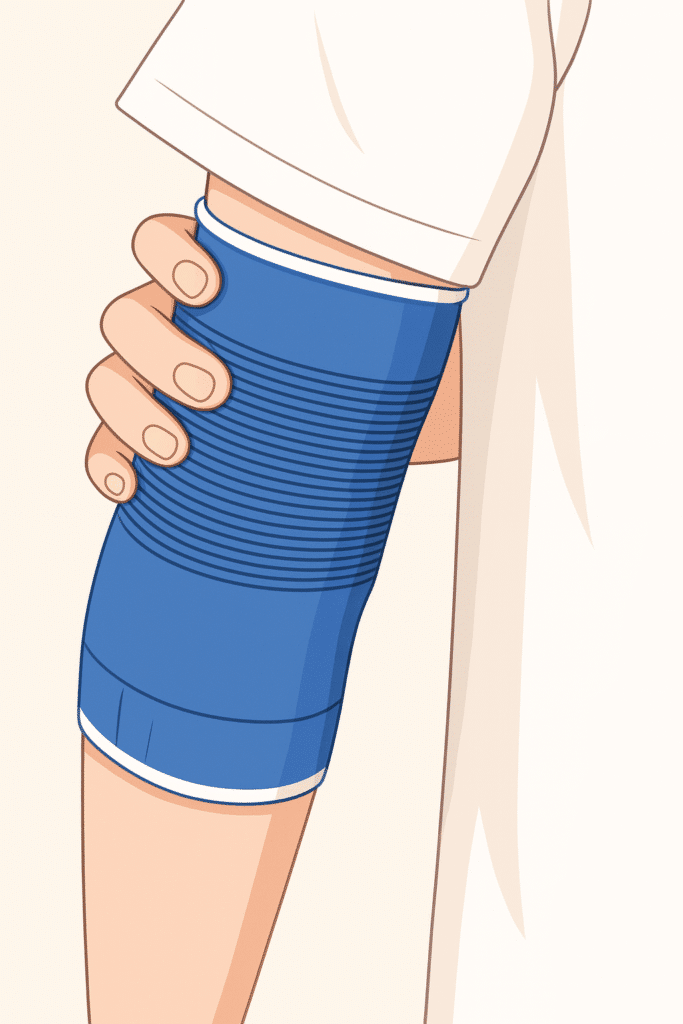
Use an elastic wrap, if advised, to help control swelling.
Further Treatment
A cortisone injection to help reduce inflammation.
Antibiotics if infection is suspected, and anti-inflammatory medicine for pain.
An elbow wrap or splint to keep the arm still.
Removal of excess fluid with a needle, called aspiration, which may be tested for infection.
Rarely, surgery to remove the bursa if other treatments fail.
Preventing Future Bursitis
Wear an elbow pad during activities where you might bump the tip of your elbow. Try to vary tasks so the elbow is not stressed in the same way for long periods.
Cubital Tunnel Syndrome
The ulnar nerve, often called the "funny bone" nerve, passes through a small space near the tip of the elbow called the cubital tunnel. Overuse, leaning on the elbow, or a direct bump can irritate this nerve. You may feel an ache at the elbow with tingling or numbness in the little finger and part of the ring finger.
First Steps
Stop or limit the activity that worsens symptoms to reduce swelling and pain.
Medicines may be recommended to ease pain and inflammation.
A nerve conduction study (NCS) may be used to measure how quickly mild electrical signals travel through the arm and help confirm the diagnosis.
Further Treatment
Keep your hand in a neutral handshake position, rather than turned up or down, while using the arm.
Wear a splint or wrap a towel around the elbow at night to help keep it straight while you sleep.
Consider a cortisone injection to decrease inflammation.
Surgery may be advised to reduce pressure on the nerve if symptoms persist.
Preventing Future Nerve Irritation
Avoid leaning on or bending the elbow for long periods. Use a telephone headset instead of bending the elbow to hold a phone to your ear. Vary your activities so you do not overuse the same motions.
Elbow Fractures
A fracture is a crack or break in a bone. You can fracture your elbow by falling onto it or by trying to break a fall with your hand. Pain, swelling, and trouble bending and straightening are common signs that need prompt medical care.
Most Common Types
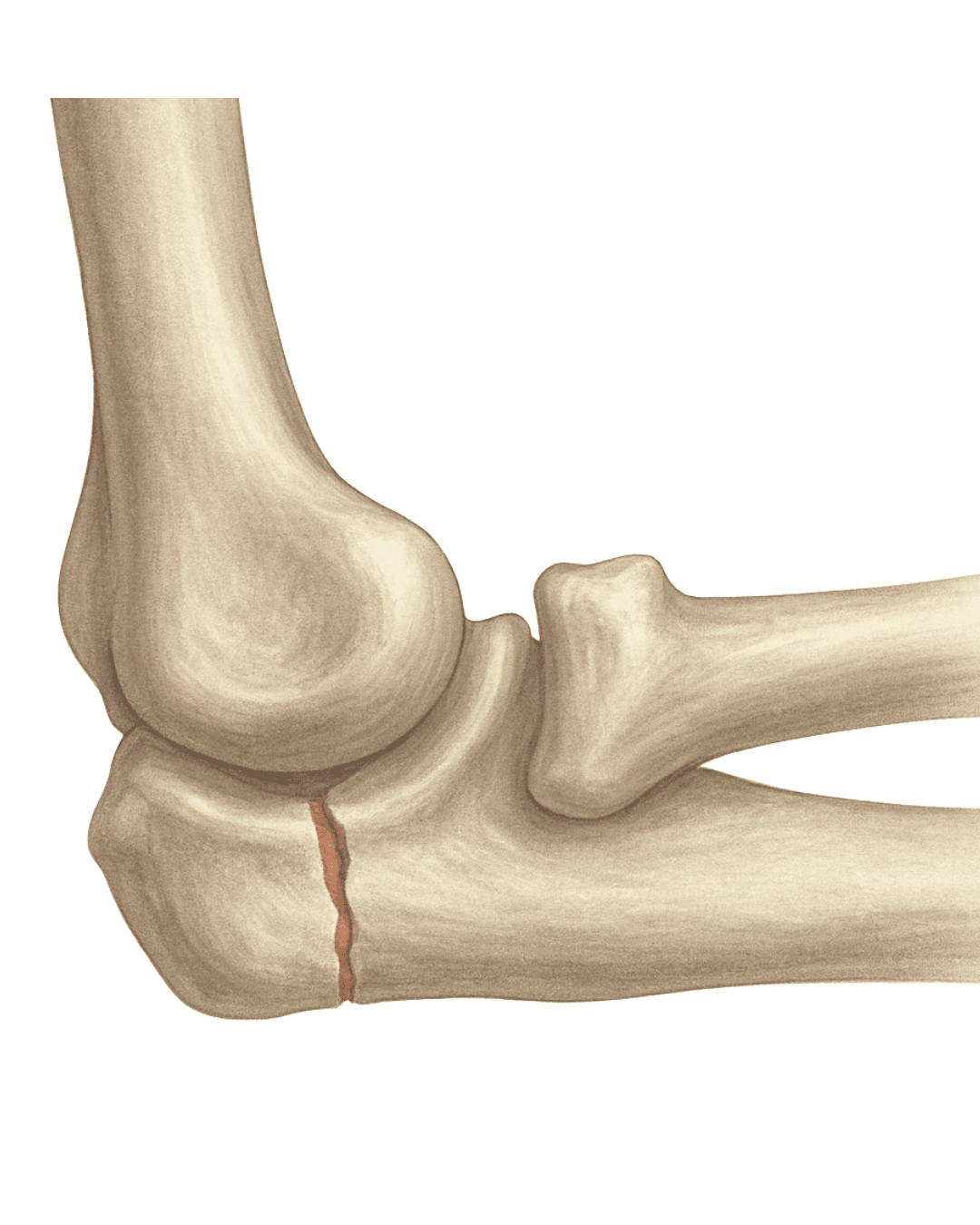
Hairline fracture: The bone has a crack but stays in place.
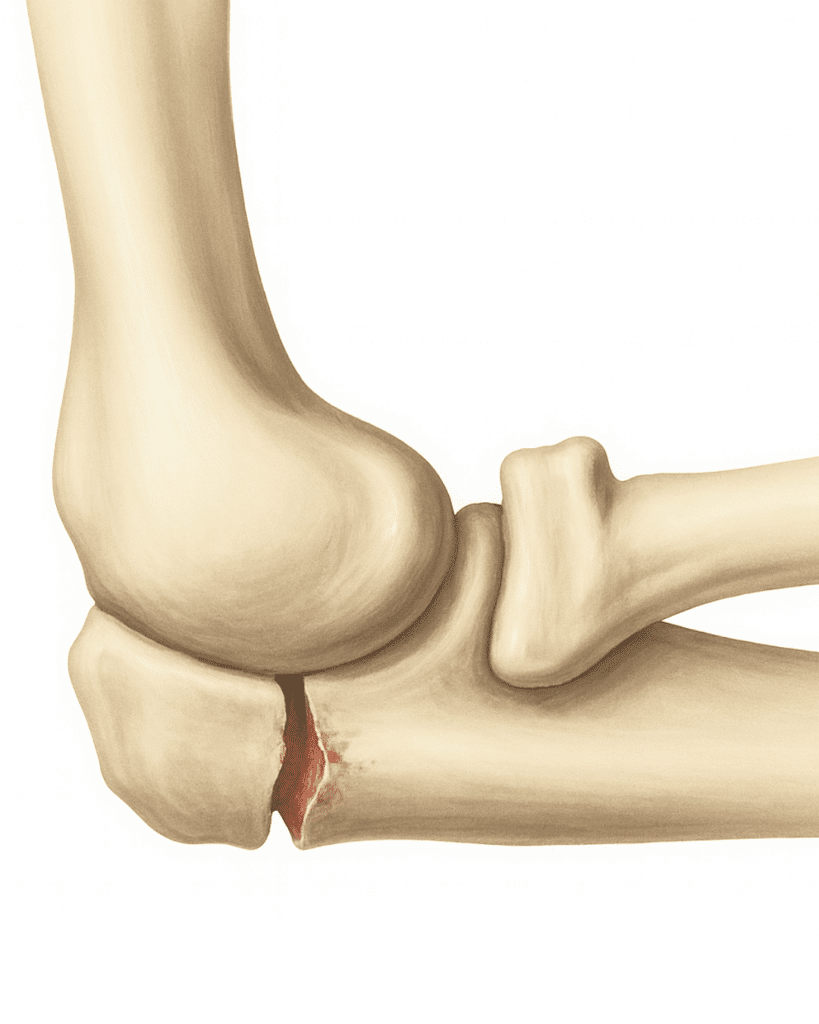
Displaced fracture: The broken ends move out of place, and surgery is often needed to line them up for healing.
Any Elbow Bone Can Break
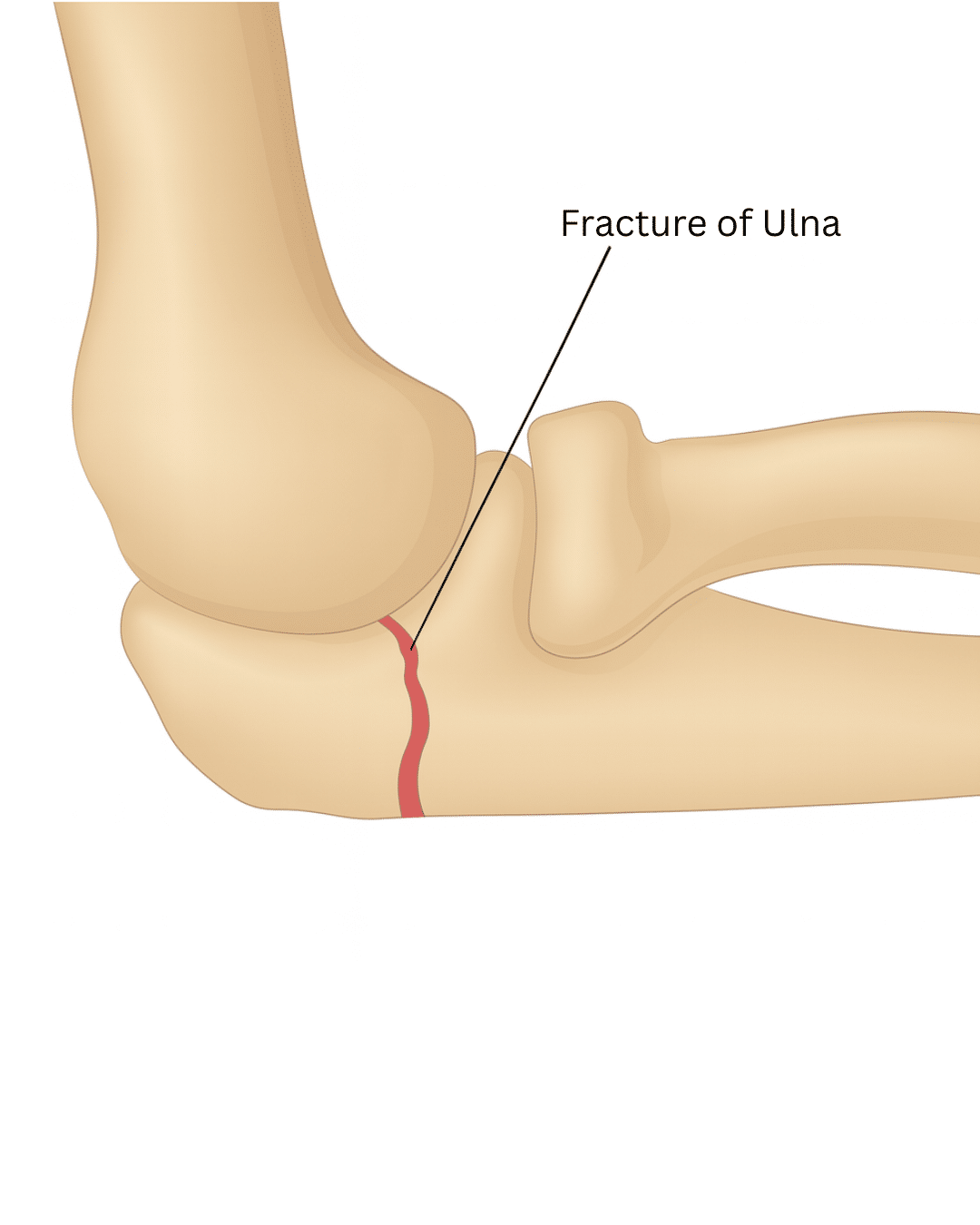
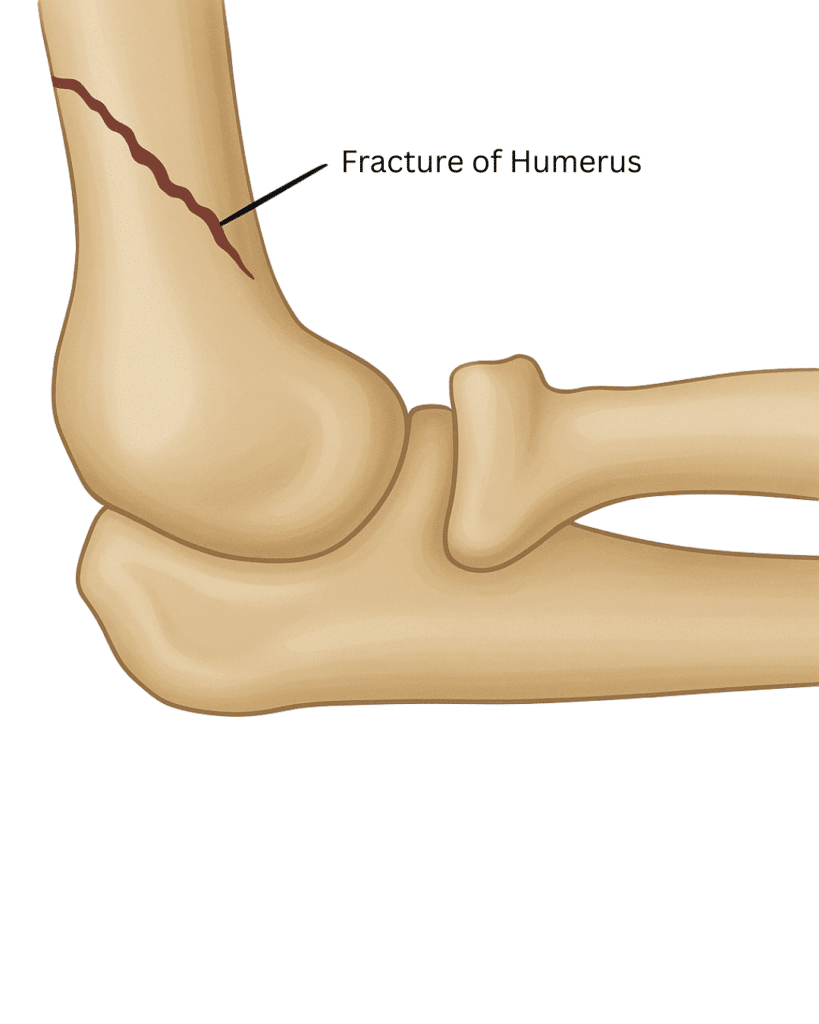
The radius fractures most often, especially the radial head near the elbow. The ulna can break at the tip (the olecranon). The humerus in the upper arm can also fracture and may require a cast and often surgery, depending on the break.
First Steps
Apply ice right away using a cloth or towel between the ice and skin to help reduce pain and swelling.
Seek medical attention quickly for an exam and imaging, such as an X-ray, CT scan, or MRI, to identify the location and severity of the fracture.
A splint or cast may be placed to hold the elbow still while the bone heals, and you may be told to use a sling.
Further Treatment
Keep the elbow elevated when lying down to help decrease swelling.
Use medicines to reduce both pain and inflammation.
Surgery is often needed for displaced fractures. The surgeon may repair the bone, remove loose pieces, or use pins, screws, or wires to hold the pieces together while they heal.
Rehabilitation helps restore function and range of motion after immobilization.
Life with a Cast
Keep the cast dry. If it might get wet, wrap it in plastic bags.
Do not put objects inside the cast. If it itches, use cool air from a hair dryer.
Call your healthcare provider right away for tingling, numbness, swelling, extreme pain, color changes in the fingers, a feeling of extreme cold, or if the cast feels too tight, too loose, or causes pain.
Exercises to Get Going Again
These simple motions help regain flexibility and range of motion. Follow your provider's instructions closely and practice at home.
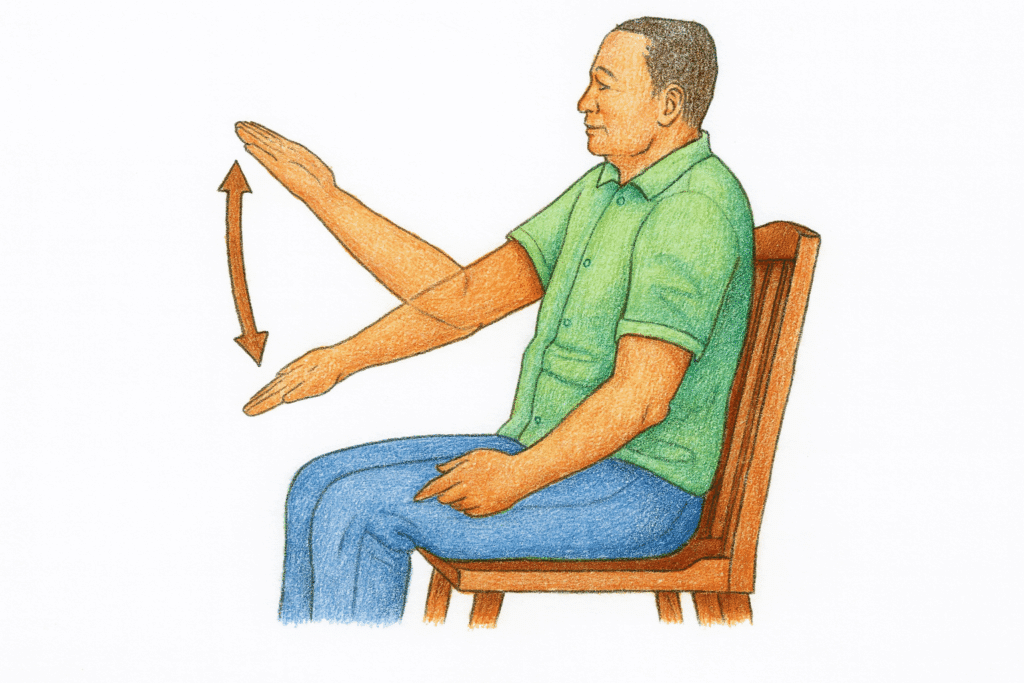
Bend and straighten: With your palm up, slowly and gently straighten and bend your elbow. Keep your shoulder relaxed.
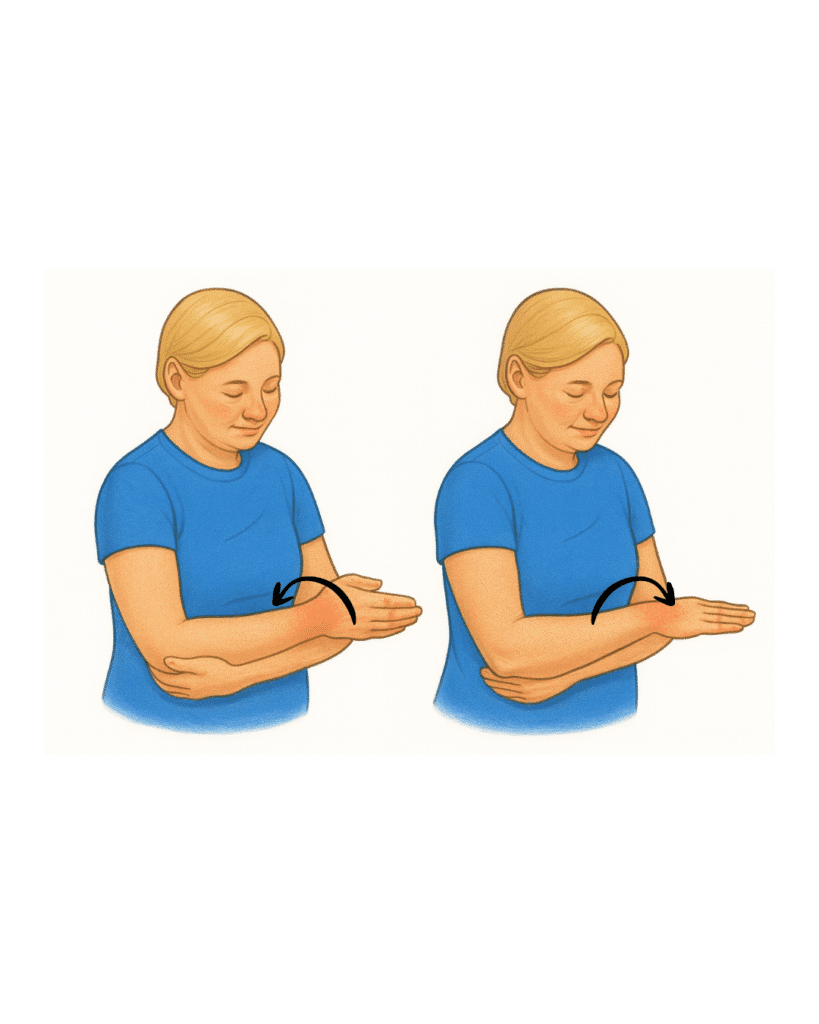
Turn: Gently turn your palm up and down while supporting the injured elbow with your other hand. Keep your shoulder relaxed.
Your Elbow Evaluation
Some elbow problems improve on their own, but many worsen if ignored. A healthcare provider can pinpoint the cause and suggest the best plan.
Your visit will likely include questions about your symptoms, a hands-on exam, and moving the elbow in different directions. Tests may include one or more of the following:
X-ray to look for bone damage.
CT scan to evaluate bones and soft tissues in more detail.
MRI to assess soft tissues such as tendons and ligaments.
Nerve conduction velocity (NCV) and electromyography (EMG) to check how well nerves and muscles are working.
Aspiration, which removes fluid from the elbow to test or relieve pressure.
Arthroscopy, a minimally invasive surgery that uses a small camera to see inside the elbow and sometimes treat the problem at the same time.
Treatment Options That Help
Once your provider confirms the diagnosis, treatment may include the steps below.
RICE if symptoms started suddenly: Rest, Ice, Compression with an elastic wrap if directed, and Elevation above the heart when lying down.
Medicines and therapy to reduce pain and inflammation. Splints or braces may support the joint while it heals, and targeted exercises can speed recovery.
Surgery when needed. Some procedures can be done arthroscopically through small incisions, while others require an open incision.
Use Your Elbow Wisely
Your elbow is not built for one motion repeated for long periods. Both work and play can involve fixed postures and repeated tasks, so plan short breaks to change position and rest your joint.
Vary activities to reduce strain. If you often do one activity, such as tennis, mix in another, such as swimming, to change the load on your arm. Consistency with stretching and strengthening helps maintain flexibility and prevent stiffness.
Switch hands when possible to give each elbow a break. Pick up objects from the side or bottom instead of the top. Find ways to keep your arms straighter or take frequent pauses to straighten your elbows.
If your activity puts pressure on the elbow, wear an elbow pad. Try not to lean heavily on the elbows or hold them sharply bent for long periods. Bend and straighten only as much as you need.
Create an Elbow-Healthy Workspace
Good setup and posture protect your elbows when standing, sitting, or moving around. Take short, regular breaks to relax your hands and arms.
Working While Standing
Keep your work within 14 to 18 inches of your body, depending on your size. Move items or move yourself closer rather than reaching.
Step up or change position if you would otherwise reach over your head or behind your back.
Working While Sitting
Adjust your chair, work surface, monitor, keyboard, and mouse to comfortable heights and distances.
If you reach awkwardly for a mouse, move it closer or try a trackball or another alternative.
When not actively typing or clicking, take your hands off the keyboard and mouse and rest them in a neutral position.
Sit up straight and avoid leaning on your elbows while using a computer or phone.
Working While on the Move
Keep your hands in a neutral handshake position as much as possible, rather than turned up or down.
Pick things up from the side or bottom when you can.
Avoid gripping anything tighter than necessary.
Quick Summary
Do your part: Follow your provider's instructions, take medicines as prescribed, and complete your exercises as directed.
Keep elbows close: Hold items with your elbows near your body when lifting and carrying.
Wear pads: Use elbow pads during tasks that involve leaning on or bumping your elbow.
Rest and ice: If your elbow hurts, rest it and use a cold pack or bag of ice wrapped in a thin towel for up to 20 minutes at a time to reduce pain and swelling.
If you have questions about any of these steps or your symptoms feel severe, contact a healthcare professional for guidance. Timely care can shorten recovery and help you return to the activities you enjoy.
Have Questions?
If you have any questions or concerns, please contact one of our offices. This information is provided solely for educational purposes and is not a substitute for personalized medical advice. For detailed advice please contact us at (609) 924-8131, text us at (609) 757-9992 or send us a message via our contact form.