Torn Meniscus: What It Is, How It Happens, and How We Treat It
Understand what a meniscus tear is, the symptoms to watch for, how it’s diagnosed, and available treatment options. Learn when it’s best to see a specialist and what recovery typically involves so you can make informed decisions about your knee health.
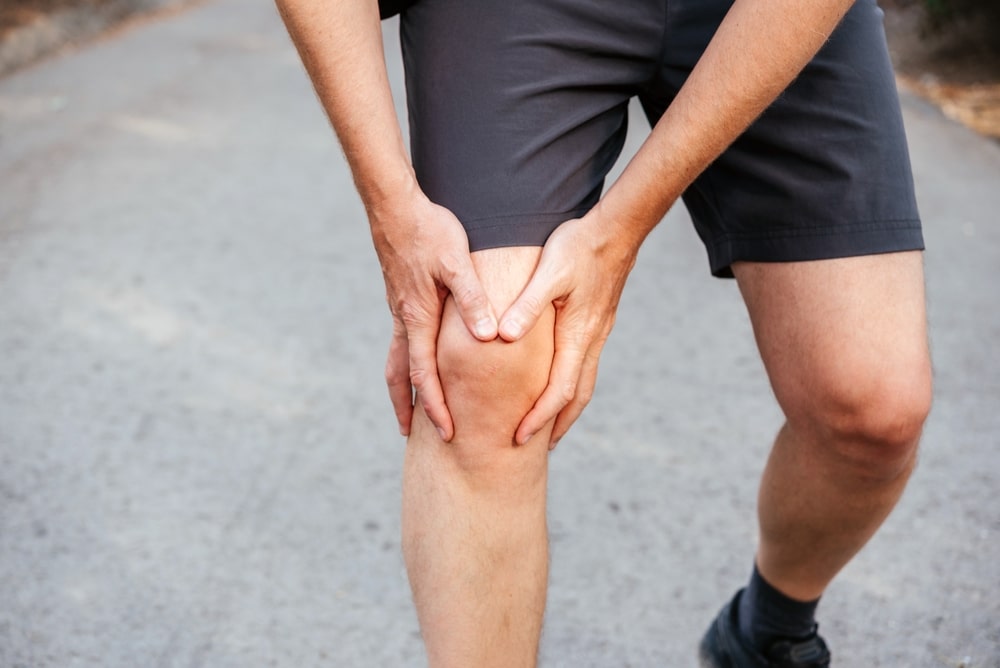
A torn meniscus is a common knee injury that affects the cartilage pads that cushion your thigh bone and shin bone. You may get one from twisting your knee during sports or from gradual wear as you get older. Symptoms and treatments vary, and we walk through what you can expect at each step.
Quick Facts You Should Know
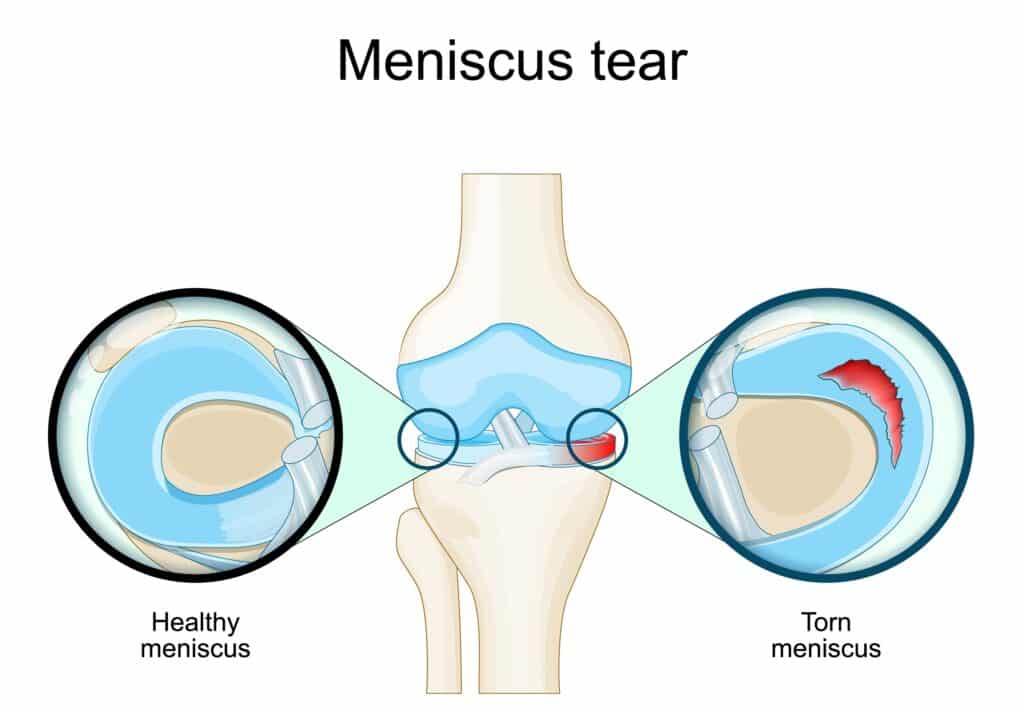
Your menisci are C shaped cartilage pads that help absorb shock and stabilize the knee.
Tears can occur suddenly with a twist or develop slowly from degeneration.
Common symptoms include pain, swelling, catching or locking, and difficulty fully straightening the knee.
Treatment ranges from rest and physical therapy to arthroscopic surgery depending on the tear and your goals.
Young people often have traumatic tears from sports.
Older adults may have degenerative tears that happen with everyday activities.
Some tears can heal with nonoperative care; others need repair or trimming.
We focus on restoring function so you can return to the activities you enjoy.
The menisci are rubbery wedges of cartilage that sit between your femur and tibia. They help spread load across the knee joint, absorb shock, and add stability when you twist or change direction.
When a meniscus tears, the knee loses some of that cushioning. That can cause pain with activity, swelling, and catching sensations. Over time, untreated problems can change how the joint wears, which may increase the risk of arthritis for some people.
What a Meniscus Tear May Feel Like
Pain along the joint line, often on the inside or outside of the knee.
Swelling that can appear right away or develop over 24 to 48 hours.
A catching, locking, or a sense that the knee gives way.
Tenderness when pressing along the joint line.
Limited ability to fully straighten the knee.
Pain that increases with twisting or squatting motions.
Common Ways Meniscus Tears Occur
Tears usually come from one of two patterns. Younger people often tear their meniscus during a forceful twist, pivot, or tackle. Older adults may develop a tear from gradual wear as the cartilage weakens with age.
Traumatic injury during sports or a fall.
Twisting the knee while the foot is planted.
Degenerative changes that make the meniscus fragile over time.
Repetitive squatting or kneeling that stresses the cartilage.
How We Diagnose a Meniscus Tear
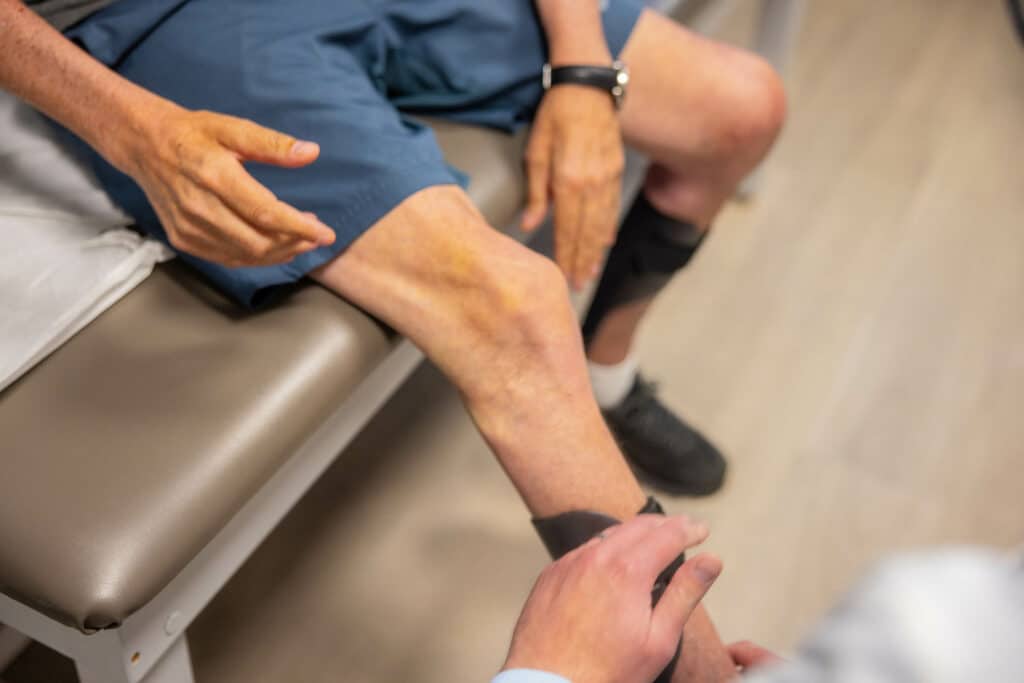
We start with a focused history and knee exam. Certain exam maneuvers help us identify likely meniscal problems, and we check for swelling, range of motion, and mechanical symptoms.
If we need to confirm the diagnosis or plan treatment, imaging such as MRI is often helpful because it shows soft tissue details. X rays can rule out arthritis or bone issues.
Treatment Options: What to Expect
Treatment depends on your symptoms, the tear type and location, your age, and your activity goals. We focus on relieving pain, restoring function, and protecting long term joint health.
Nonoperative Care
Rest, ice, compression, and elevation to control pain and swelling.
Anti inflammatory medication if appropriate and recommended by your provider.
Physical therapy to strengthen muscles around the knee and improve movement patterns.
Activity modification to avoid motions that make symptoms worse while you recover.
Procedures and Surgery
If symptoms persist or there is a mechanical block in the knee, we may recommend arthroscopic surgery. Two common approaches are meniscal repair and partial meniscectomy.
Meniscal repair aims to sew the torn pieces back together when healing potential is good. It preserves meniscus tissue and helps protect the joint long term.
Partial meniscectomy trims the damaged portion when repair is not possible. This often reduces symptoms quickly but removes some cushioning.
Typical Recovery Timelines
Recovery varies based on the treatment chosen and the tear itself. Below are common timelines to help set expectations.
Treatment
Usual Recovery
Notes
Conservative care
Several weeks to a few months
Many people improve with therapy and activity changes.
Partial meniscectomy
4 to 8 weeks for many daily activities
Return to sports may be faster but depends on rehab and surgeon guidance.
Meniscal repair
3 to 6 months
Requires protected rehab to allow healing of the repaired tissue.
When You Should See a Specialist
If your knee locks or you can not fully straighten it.
If swelling or pain does not improve with a few weeks of rest and therapy.
If you have persistent instability or can not return to your normal activities.
Who to see at Princeton Orthopaedic Associates
Specialty
When to Choose
Role
Sports Medicine
Acute injuries and nonoperative care
Diagnosis, rehab planning, and nonsurgical management
Orthopedic Surgeon (Knee)
Persistent symptoms or mechanical problems
Discuss surgical options and perform arthroscopy when needed
Physical Therapy
Recovery after injury or surgery
Hands on care and guided strengthening to restore function
Simple Steps to Reduce Your Risk
Keep leg muscles strong, especially your quadriceps and hamstrings.
Practice balance and agility drills to reduce awkward twists.
Use proper footwear and replace shoes when they wear out.
Warm up before activity and avoid sudden increases in activity level.
If you want help protecting your knee or recovering from a meniscus tear, schedule an exam with one of our specialists. We personalize care so you can get back to your life with confidence.
This blog post is meant to be informative and should not act as a self-diagnosis tool. If you’d like to see one of our doctors, please contact us here.
If you’re an athlete experiencing tenderness and discomfort around the front of your knee, chances are that you may be suffering from Patellofemoral Pain Syndrome (PFPS), more commonly referred to as “runner’s knee.” Although it often affects runners, it can also affect anyone -- especially those who participate in activities involving significant kneeling or squatting motions. Runner's knee is an overuse injury caused by repetitive strain on the patellar tendon located beneath the kneecap, resulting in irritation and damage to this tissue. Fortunately, there are a few things that you can do if you think you have runner's knee; recognizing and understanding its symptoms, having a professional diagnosis confirmed with radiologic imaging studies or X-rays, providing time for rest/healing of injured muscles/tissues along with physical therapy treatment plans including stretching exercises specific to PFPS injuries all serve as important factors towards alleviating pain symptoms. Taking preventive measures such as instituting proper form when running/exercising , wearing properly fitting footwear and ensuring gradual acclimation periods before increasing workout resistances will significantly reduce the risk for developing runner's knee further down the line.
What is Patellofemoral Pain Syndrome (PFPS) and what are the common symptoms of runner's knee
Patellofemoral Pain Syndrome (PFPS), also known as runner's knee, is a common condition among runners and other athletes that occurs when the kneecap doesn't track properly over the femur. This can lead to pain and discomfort in the front of the knee during physical activity or even simple movements like walking up stairs. Common symptoms of runner's knee include a dull ache around the kneecap, a popping or grinding sensation when bending the knee, and swelling or tenderness around the knee joint. It's important to listen to your body and seek medical attention if you experience any of these symptoms, as PFPS can worsen over time and impact your ability to enjoy the activities you love.
How can you diagnose PFPS and what treatments are available ?
Patellofemoral Pain Syndrome (PFPS) is a common condition that affects athletes, runners, and individuals who engage in activities requiring repetitive movements such as stair climbing, squatting, and kneeling. The symptoms of PFPS include pain in the front of the knee, discomfort while sitting, grinding or popping sounds while moving the knee, and difficulty in straightening the leg. Diagnosing PFPS can be done through a physical examination, imaging tests such as MRI or X-ray, and ruling out other knee conditions. Treatment options for PFPS include a combination of physical therapy, pain management, and lifestyle modifications. Physical therapy can help strengthen the muscles around the knee, while medications such as anti-inflammatory drugs can reduce the pain and swelling. Lifestyle modifications such as losing weight and avoiding high-impact activities that exacerbate the pain are also beneficial. Early diagnosis and prompt treatment of PFPS can help individuals return to their daily activities without pain and discomfort.
Common causes of runner's knee and ways to prevent it
As an avid runner, there's nothing more frustrating than experiencing knee pain that can hinder your progress. Unfortunately, runner's knee is a common issue that many athletes face. This condition can be caused by a variety of factors such as overuse, muscle imbalances, or even poor footwear. However, the good news is there are ways to prevent this from happening. By keeping your muscles strong and flexible, maintaining proper form, and gradually increasing your mileage, you can reduce the risk of developing runner's knee. So don't let this issue hold you back from achieving your running goals - take care of your body and keep pounding the pavement.
Exercises to strengthen the muscles around your knee for better stability
If you suffer from knee pain or have had a knee injury, exercises to strengthen the muscles around your knee can make a big difference in your stability and overall comfort. There are many exercises that can help, including squats, lunges, leg presses, and leg curls. These exercises target the quadriceps, hamstrings, and glutes, all of which play a key role in supporting the knee joint. Additionally, exercises like wall sits and single-leg balance exercises can help improve your balance and stability, reducing the risk of future knee injuries. By incorporating these exercises into your workout routine, you can build stronger, more stable knees and enjoy a higher quality of life.
Tips for managing pain from runner's knee on a daily basis
Runner's knee can be an annoying and painful occurrence. Whether you're a seasoned runner or just starting, trying to manage the pain of runner's knee can be a daunting task. However, with the right tools, you can overcome the pain and continue to pursue your fitness goals. Here are some tips for managing pain from runner's knee on a daily basis: (insert list here such as doing low-impact exercises, icing the affected area, taking over-the-counter pain medication, wearing proper shoes, stretching before and after exercise, and consulting with a healthcare professional). By implementing these tips into your daily routine, you'll be able to stay active and pain-free.
When should you seek medical help for PFPS, and what kind of specialist should you see
Patellofemoral pain syndrome (PFPS) is a common condition that affects the knee joint. It is characterized by pain around or under the patella (kneecap), especially during activities that involve bending of the knee. While many cases of PFPS can be treated with self-care measures, some cases require medical attention. You should seek medical help for PFPS if you experience persistent pain or swelling in your knee, or if you have difficulty performing daily activities. A specialist in orthopedics or sports medicine may be the right person to diagnose and treat your condition. They may perform a physical exam, imaging tests, or recommend medication, physical therapy, or surgery, depending on the severity of your condition. Don't ignore your knee pain; seek medical attention promptly and get back to your active lifestyle.
Ultimately, PFPS is a common and treatable condition that affects many runners. It is important to be aware of the symptoms, causes, and potential treatments to ensure runner's knee can be properly managed. By following the tips outlined in this article, you can take necessary steps to diagnose the condition early on and seek adequate treatment. Strengthening exercises are also beneficial for preventing and managing runner's knee. Additionally, paying attention to how certain activities or exercises affect your knee can help you identify when it’s time to rest as well as when to adjust your training plan. Since proper management is key for preventing more serious issues from occurring, seeking medical attention from a physiotherapist or sports medicine specialist if things don’t clear up with self care is always advised. With proper education and management of PFPS, runners can both successfully keep their knees healthy and pursue the activity that they love!
Do you have knee pain when squatting? Do you find it difficult to walk up stairs or stand on your toes?
These are some of the indicators that a person may suffer from Hoffa's Syndrome, or fat pad impingement. Neither one of these names is particularly appealing (Hoffa was the name of the German orthopaedic surgeon for whom the condition is named) and, well... neither is the pain.
Fat pad impingement is a condition where the knee joint presents pain because of inflammation around the aptly named fat pad. It is exactly what it sounds like: a pad of fat behind the kneecap and in between where the femur "connects" to the tibia. It's a little more complicated than that, but that's the gist of it. Impingement of the fat pad can be a result of conditions such as having a bone spur or tight ligaments. Knee fat pad impingement is a common condition that affects many people of all ages and activity levels. If not treated properly, it can lead to long-term complications like arthritis, meniscus tears, and tendonitis.
Knee Fat Pad Impingement a Symptom of Patellofemoral Syndrome
Patellofemoral syndrome is the underlying cause of knee fat pad impingement. The knees are the most commonly used joints in the human body. They take a lot of pressure during daily activities, exercise and even sleeping. Fat pad in the knees is meant to diffuse the pressure. However, if the excess fat pad increases, it may cause knee pain. This is because the pad can press against the kneecap, causing it to rub against the bones and lead to pain. This can also increase your knee joint pressure and make it difficult for you to squat. If you have knee fat pad impingement with patellofemoral syndrome, you may not be able to squat as low as you would ideally like. You may also find it difficult or painful to climb stairs and stay on your toes for a long time.
What Can Help Hoffa's Syndrome?
Squats Can Help You Manage PF Syndrome and Knee Pain
Squats are one of the best exercises to help manage knee fat pad impingement and patellofemoral syndrome. They work your quadriceps, glutes, and hamstrings. Squats are known to have many benefits, including improving flexibility, reducing risk of osteoporosis, and improving balance and coordination. Not only do squats reduce knee pain, they also help you reduce your risk of developing knee arthritis in the future. They also help you manage patellofemoral syndrome better. Bench squats, front squats, and back squats are the most commonly done squats. Bench squat is done on a bench with your feet on the floor. This is a good exercise for those with knee pain. Front squat is done with the weight in front of your body. It is a good exercise for those with knee pain as it reduces the pressure on the knees. Back squat is done with weight on your back. This is generally recommended for those with little or no knee pain.
High-Rep Squats can Build Strength in Your Quads and Glutes
High-rep squats are done with a lighter weight and for a higher number of repetitions. They build strength in your quadriceps and glutes. A good way to do them is by adding a small amount of resistance (such as a dumbbell or weight plate). These squats can help you build strength in your quadriceps, quads, and glutes. This in turn can also help you manage patellofemoral syndrome better. Although high-rep squats are not as effective as moderate-rep squats at building strength, they have many other benefits. These include improved flexibility, better coordination, and reduced risk of arthritis.
Knee Band Exercises are Also Effective at Managing PF Syndrome
Knee band exercises can also help you manage patellofemoral syndrome better. This is done by strengthening the muscles around your knees and reducing the excess fat pad. You can do these exercises at home or in the office with a knee band. Some knee bands are pre-stretching and have a unique design that allows you to do knee band exercises. Other knee bands are stretchable and can be worn during activities. Common knee band exercises include knee lifts, squats, and lunges. These exercises can help you strengthen the muscles around your knee and reduce knee fat pad impingement.
Build Strength
Working on building strength--slowly and without overdoing it!--is a great way to manage pain from Hoffa's Syndrome. You can also ice your knees when you feel pain, take over-the-counter anti-inflammatories, and stretch regularly. Be sure to schedule an appointment with us for a correct diagnosis, though, and a bespoke treatment plan so that you don't injure yourself more and so you can recover as quickly as possible.
Sequence rules uses cookies to track the order of requests a user has made and the time between requests and makes them available via Cloudflare Rules. This allows you to write rules that match valid or invalid sequences. The specific cookies used to validate sequences are called sequence cookies.
session
cf_ob_info
The cf_ob_info cookie provides information on: The HTTP Status Code returned by the origin web server. The Ray ID of the original failed request. The data center serving the traffic
session
cf_use_ob
The cf_use_ob cookie informs Cloudflare to fetch the requested resource from the Always Online cache on the designated port. Applicable values are: 0, 80, and 443. The cf_ob_info and cf_use_ob cookies are persistent cookies that expire after 30 seconds.
session
__cfwaitingroom
The __cfwaitingroom cookie is only used to track visitors that access a waiting room enabled host and path combination for a zone. Visitors using a browser that does not accept cookies cannot visit the host and path combination while the waiting room is active.
session
cf_chl_rc_i
These cookies are for internal use which allows Cloudflare to identify production issues on clients.
session
cf_chl_rc_ni
These cookies are for internal use which allows Cloudflare to identify production issues on clients.
session
cf_chl_rc_m
These cookies are for internal use which allows Cloudflare to identify production issues on clients.
session
__cfruid
Used by the content network, Cloudflare, to identify trusted web traffic.
session
__cf_bm
Cloudflare's bot products identify and mitigate automated traffic to protect your site from bad bots. Cloudflare places the __cf_bm cookie on End User devices that access Customer sites that are protected by Bot Management or Bot Fight Mode. The __cf_bm cookie is necessary for the proper functioning of these bot solutions.
session
__cflb
When enabling session affinity with Cloudflare Load Balancer, Cloudflare sets a __cflb cookie with a unique value on the first response to the requesting client. Cloudflare routes future requests to the same origin, optimizing network resource usage. In the event of a failover, Cloudflare sets a new __cflb cookie to direct future requests to the failover pool.
session
_cfuvid
The _cfuvid cookie is only set when a site uses this option in a Rate Limiting Rule, and is only used to allow the Cloudflare WAF to distinguish individual users who share the same IP address.
session
cf_clearance
Whether a CAPTCHA or Javascript challenge has been solved.
session
Google reCAPTCHA helps protect websites from spam and abuse by verifying user interactions through challenges.
Name
Description
Duration
_GRECAPTCHA
Google reCAPTCHA sets a necessary cookie (_GRECAPTCHA) when executed for the purpose of providing its risk analysis.
179 days
Google Tag Manager simplifies the management of marketing tags on your website without code changes.
Name
Description
Duration
cookiePreferences
Registers cookie preferences of a user
2 years
td
Registers statistical data on users' behaviour on the website. Used for internal analytics by the website operator.
session
These cookies are used for managing login functionality on this website.
Name
Description
Duration
wordpress_logged_in
Used to store logged-in users.
Persistent
wordpress_sec
Used to track the user across multiple sessions.
15 days
wordpress_test_cookie
Used to determine if cookies are enabled.
Session
WPForms is a user-friendly WordPress plugin for creating custom forms with drag-and-drop functionality.
Name
Description
Duration
wpfuuid
Used to track user interactions with forms.
11 years
Statistics cookies collect information anonymously. This information helps us understand how visitors use our website.
Google Analytics is a powerful tool that tracks and analyzes website traffic for informed marketing decisions.
Used to distinguish new sessions and visits. This cookie is set when the GA.js javascript library is loaded and there is no existing __utmb cookie. The cookie is updated every time data is sent to the Google Analytics server.
30 minutes after last activity
__utmc
Used only with old Urchin versions of Google Analytics and not with GA.js. Was used to distinguish between new sessions and visits at the end of a session.
End of session (browser)
__utmz
Contains information about the traffic source or campaign that directed user to the website. The cookie is set when the GA.js javascript is loaded and updated when data is sent to the Google Anaytics server
6 months after last activity
__utmv
Contains custom information set by the web developer via the _setCustomVar method in Google Analytics. This cookie is updated every time new data is sent to the Google Analytics server.
2 years after last activity
__utmx
Used to determine whether a user is included in an A / B or Multivariate test.
18 months
_ga
ID used to identify users
2 years
_gali
Used by Google Analytics to determine which links on a page are being clicked
30 seconds
_ga_
ID used to identify users
2 years
_gid
ID used to identify users for 24 hours after last activity
24 hours
_gat
Used to monitor number of Google Analytics server requests when using Google Tag Manager
1 minute
_gac_
Contains information related to marketing campaigns of the user. These are shared with Google AdWords / Google Ads when the Google Ads and Google Analytics accounts are linked together.
90 days
__utma
ID used to identify users and sessions
2 years after last activity
__utmt
Used to monitor number of Google Analytics server requests
10 minutes
These cookies help us measure the effectiveness of our website content and understand how visitors find and use our site. This allows us to improve the experience and provide more helpful resources.
Facebook Pixel is a web analytics service that tracks and reports website traffic.