Torn Meniscus: What It Is, How It Happens, and How We Treat It
Understand what a meniscus tear is, the symptoms to watch for, how it’s diagnosed, and available treatment options. Learn when it’s best to see a specialist and what recovery typically involves so you can make informed decisions about your knee health.
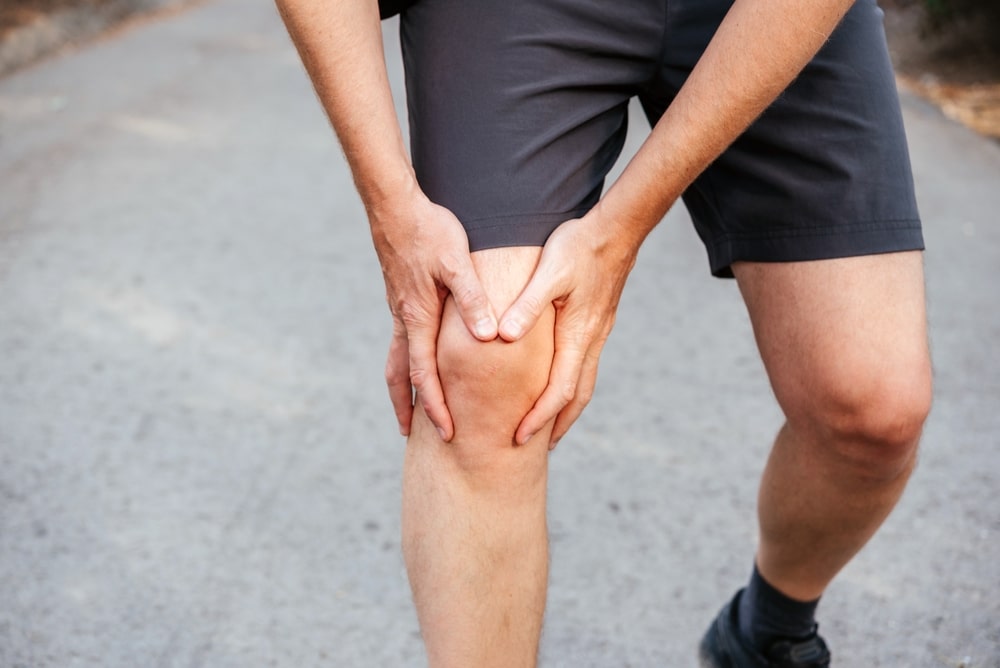
A torn meniscus is a common knee injury that affects the cartilage pads that cushion your thigh bone and shin bone. You may get one from twisting your knee during sports or from gradual wear as you get older. Symptoms and treatments vary, and we walk through what you can expect at each step.
Quick Facts You Should Know
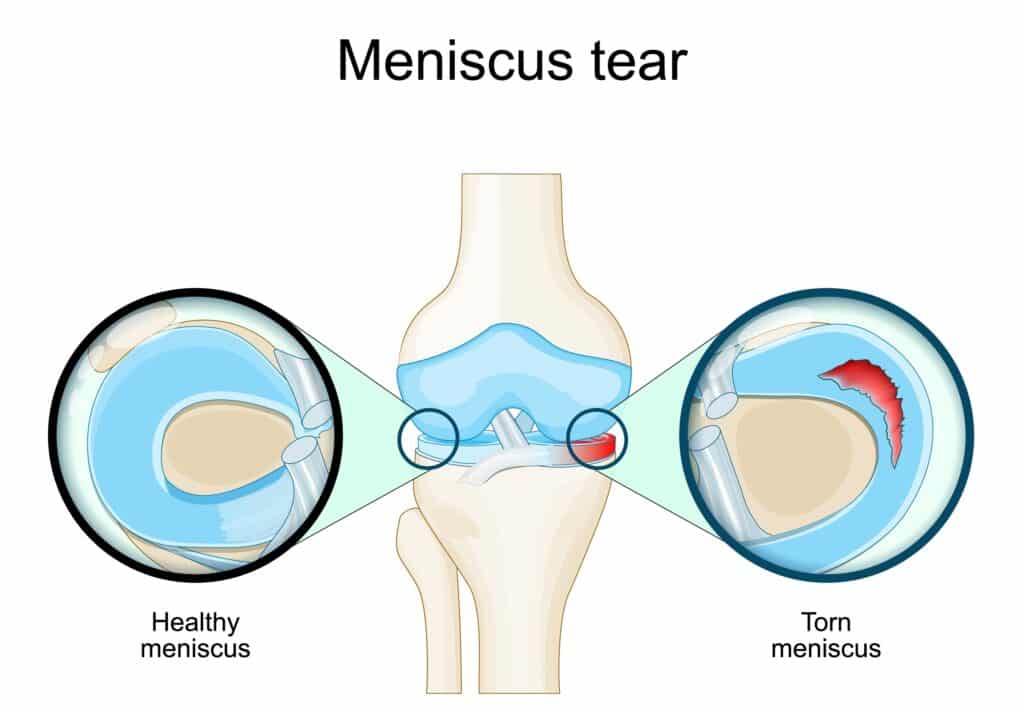
Your menisci are C shaped cartilage pads that help absorb shock and stabilize the knee.
Tears can occur suddenly with a twist or develop slowly from degeneration.
Common symptoms include pain, swelling, catching or locking, and difficulty fully straightening the knee.
Treatment ranges from rest and physical therapy to arthroscopic surgery depending on the tear and your goals.
Young people often have traumatic tears from sports.
Older adults may have degenerative tears that happen with everyday activities.
Some tears can heal with nonoperative care; others need repair or trimming.
We focus on restoring function so you can return to the activities you enjoy.
The menisci are rubbery wedges of cartilage that sit between your femur and tibia. They help spread load across the knee joint, absorb shock, and add stability when you twist or change direction.
When a meniscus tears, the knee loses some of that cushioning. That can cause pain with activity, swelling, and catching sensations. Over time, untreated problems can change how the joint wears, which may increase the risk of arthritis for some people.
What a Meniscus Tear May Feel Like
Pain along the joint line, often on the inside or outside of the knee.
Swelling that can appear right away or develop over 24 to 48 hours.
A catching, locking, or a sense that the knee gives way.
Tenderness when pressing along the joint line.
Limited ability to fully straighten the knee.
Pain that increases with twisting or squatting motions.
Common Ways Meniscus Tears Occur
Tears usually come from one of two patterns. Younger people often tear their meniscus during a forceful twist, pivot, or tackle. Older adults may develop a tear from gradual wear as the cartilage weakens with age.
Traumatic injury during sports or a fall.
Twisting the knee while the foot is planted.
Degenerative changes that make the meniscus fragile over time.
Repetitive squatting or kneeling that stresses the cartilage.
How We Diagnose a Meniscus Tear
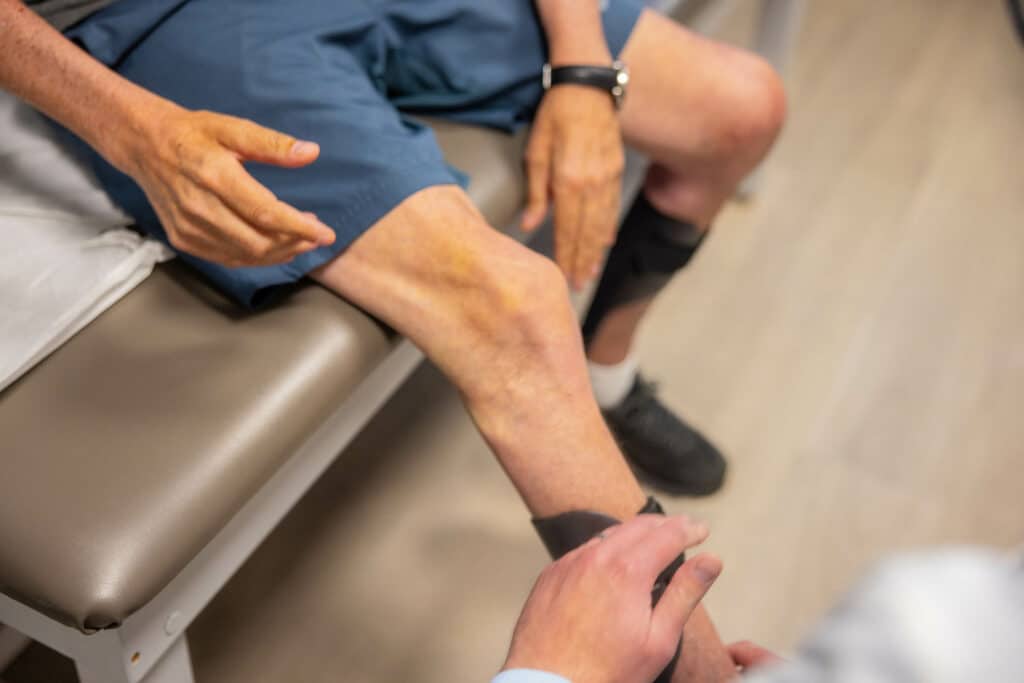
We start with a focused history and knee exam. Certain exam maneuvers help us identify likely meniscal problems, and we check for swelling, range of motion, and mechanical symptoms.
If we need to confirm the diagnosis or plan treatment, imaging such as MRI is often helpful because it shows soft tissue details. X rays can rule out arthritis or bone issues.
Treatment Options: What to Expect
Treatment depends on your symptoms, the tear type and location, your age, and your activity goals. We focus on relieving pain, restoring function, and protecting long term joint health.
Nonoperative Care
Rest, ice, compression, and elevation to control pain and swelling.
Anti inflammatory medication if appropriate and recommended by your provider.
Physical therapy to strengthen muscles around the knee and improve movement patterns.
Activity modification to avoid motions that make symptoms worse while you recover.
Procedures and Surgery
If symptoms persist or there is a mechanical block in the knee, we may recommend arthroscopic surgery. Two common approaches are meniscal repair and partial meniscectomy.
Meniscal repair aims to sew the torn pieces back together when healing potential is good. It preserves meniscus tissue and helps protect the joint long term.
Partial meniscectomy trims the damaged portion when repair is not possible. This often reduces symptoms quickly but removes some cushioning.
Typical Recovery Timelines
Recovery varies based on the treatment chosen and the tear itself. Below are common timelines to help set expectations.
Treatment
Usual Recovery
Notes
Conservative care
Several weeks to a few months
Many people improve with therapy and activity changes.
Partial meniscectomy
4 to 8 weeks for many daily activities
Return to sports may be faster but depends on rehab and surgeon guidance.
Meniscal repair
3 to 6 months
Requires protected rehab to allow healing of the repaired tissue.
When You Should See a Specialist
If your knee locks or you can not fully straighten it.
If swelling or pain does not improve with a few weeks of rest and therapy.
If you have persistent instability or can not return to your normal activities.
Who to see at Princeton Orthopaedic Associates
Specialty
When to Choose
Role
Sports Medicine
Acute injuries and nonoperative care
Diagnosis, rehab planning, and nonsurgical management
Orthopedic Surgeon (Knee)
Persistent symptoms or mechanical problems
Discuss surgical options and perform arthroscopy when needed
Physical Therapy
Recovery after injury or surgery
Hands on care and guided strengthening to restore function
Simple Steps to Reduce Your Risk
Keep leg muscles strong, especially your quadriceps and hamstrings.
Practice balance and agility drills to reduce awkward twists.
Use proper footwear and replace shoes when they wear out.
Warm up before activity and avoid sudden increases in activity level.
If you want help protecting your knee or recovering from a meniscus tear, schedule an exam with one of our specialists. We personalize care so you can get back to your life with confidence.
This blog post is meant to be informative and should not act as a self-diagnosis tool. If you’d like to see one of our doctors, please contact us here.
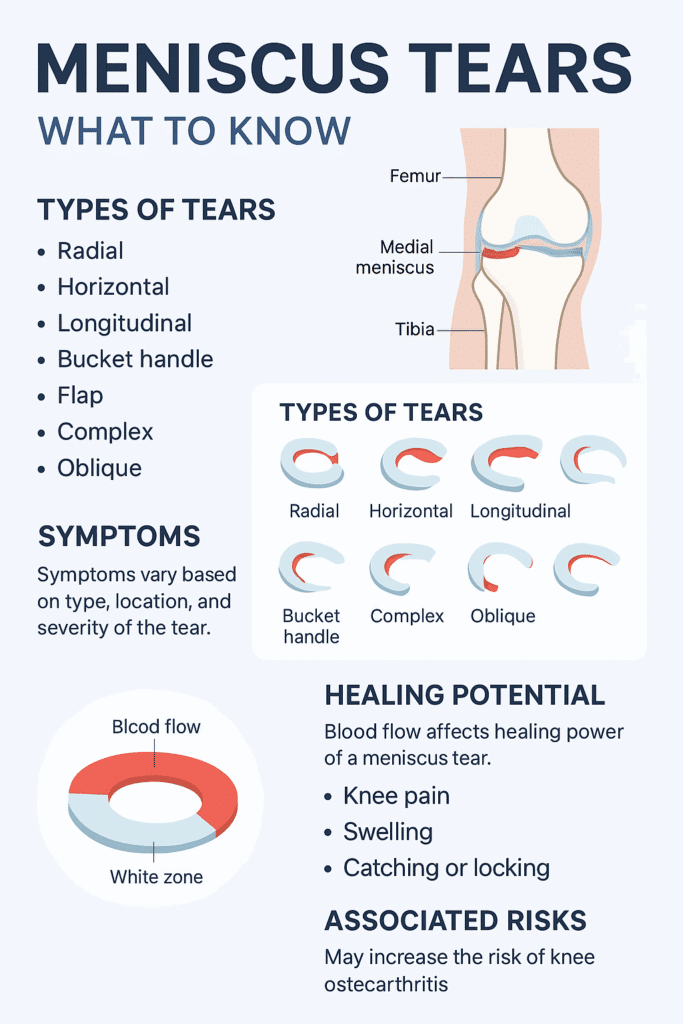
Meniscus tears are classified based on tear shape and tear location. This classification helps determine whether the injury may heal with rest and therapy or if it needs surgical treatment. If you're looking to understand the type of tear you have, we have broken them down below:
Meniscus Tear Shapes
1. Meniscus Radial Tear
A radial tear cuts straight across the meniscus from the inner edge toward the outer rim, similar to the spoke of a wheel. These are common and usually occur in areas with poor blood flow, which limits the body’s ability to heal the tear on its own. Treatment often involves trimming the damaged section.
2. Meniscus Horizontal Tear
A horizontal tear runs between the upper and lower layers of the meniscus, dividing it in half like a sandwich. These tears are more common in older adults and may be repairable if located in the outer region of the meniscus, where blood supply is better.
3. Meniscus Vertical (Longitudinal) Tear
This tear runs lengthwise along the curve of the meniscus, following its C-shape. It is often seen in younger, athletic individuals and may respond well to surgical repair, especially when located in the outer third of the meniscus.
4. Meniscus Bucket Handle Tear
A bucket handle tear is a severe form of a vertical tear. In this case, a large portion of the meniscus flips inward into the knee joint, making it difficult to bend or straighten the knee. It often causes locking and typically requires surgery to correct.
5. Meniscus Flap Tear
A flap tear results in a loose piece of cartilage that creates an uneven edge. This flap may shift with knee motion, causing clicking, catching, or locking. If symptoms are persistent, the loose section is often trimmed during a minor procedure.
6. Meniscus Complex Tear
A complex tear includes multiple tear patterns—usually both radial and horizontal—and often occurs in worn or degenerated menisci. These are difficult to repair and typically require removal of the damaged sections.
7. Meniscus Oblique (Parrot Beak) Tear
An oblique tear forms at an angle, creating a curved flap that resembles a parrot’s beak. The flap can catch in the joint and lead to sharp pain or instability. Surgical trimming is often used if the tear is unstable.
Meniscus Tear Locations
In addition to the shape of the tear, the location is a major factor in symptoms and treatment decisions. These are the meniscus tear locations:
Medial meniscus tear – inside of the knee
Lateral meniscus tear – outside of the knee
Posterior horn tear – back portion of the meniscus
Anterior horn tear – front portion of the meniscus
Meniscus root tear – where the meniscus anchors to the bone
Each location has different mechanical demands, and tears in different areas may feel different or affect how the knee moves.
Location and Healing Potential
The meniscus has three zones based on blood supply that affect how well a tear can heal:
Red zone (outer third) – good blood supply; better chance of healing on its own or after repair
White zone (inner third) – poor blood flow; limited natural healing
Red-white zone (middle third) – transitional; healing depends on tear size and stability
Long-Term Effects of Untreated Meniscus Tears
How long does it take a meniscus tear to heal? The answer is, it depends. However, if a torn meniscus is left untreated or heals poorly, it can lead to:
Chronic knee instability
Frequent swelling and inflammation
Faster joint cartilage breakdown
Higher risk of developing osteoarthritis
Early diagnosis, combined with the right treatment approach, helps protect long-term knee function and mobility.
This blog post is meant to be informative and should not act as a self-diagnosis tool. If you’d like to see one of our doctors, please contact us here.