Building a Strong Posterior Chain: Relieving Back and knee pain.
by Princeton Orthopaedic Associates
Strengthen Your Posterior Chain to Move Better and Hurt Less
A strong back line, called the posterior chain, helps you stand tall and move well. It may help protect your spine, and it supports everyday tasks like lifting, climbing stairs, and getting up from a chair. It covers what the posterior chain includes, why it matters for back and knee comfort, easy form cues, and safe exercises you can start today.
We’ll also outline how often to train, common mistakes to avoid, and when it may be helpful to see a clinician at Princeton Orthopaedic Associates for personalized care and safer progress.
Disclaimer
Please note that these exercises are listed here as examples. You will absolutely need to consult with a qualified doctor, trainer, or medical professional to decide if this information is right for you. You can cause harm to yourself by doing exercises incorrectly or those that do not align with your body or desired outcomes. Please be careful!
Quick highlights
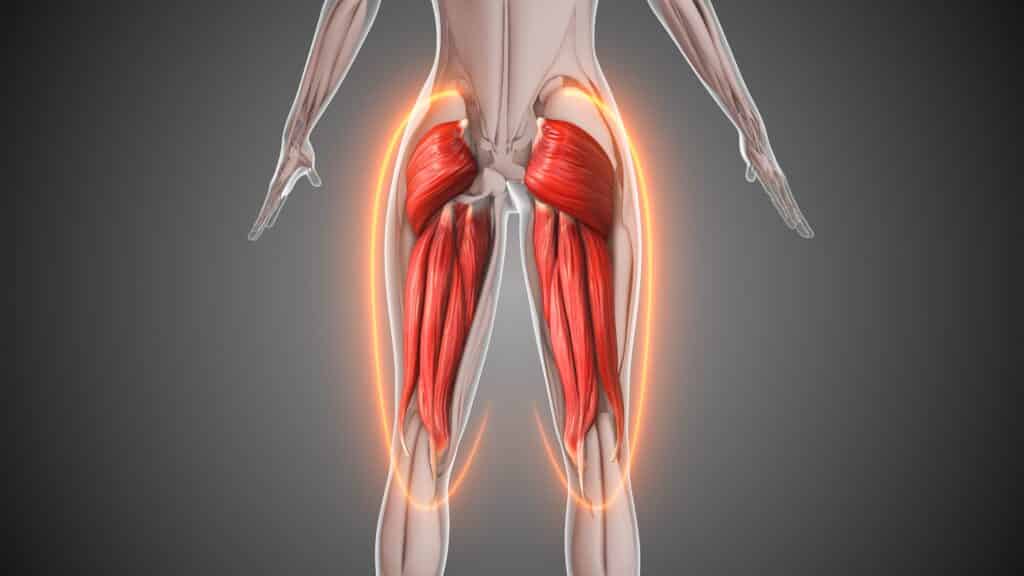
The posterior chain includes the glutes, hamstrings, calves, and the muscles that support your spine.
Training these muscles improves posture, balance, and lifting mechanics while reducing strain on the knees and lower back.
Start with hip-hinge patterns and bodyweight exercises, then progress to resistance as control improves.
What Is the Posterior Chain?
The posterior chain runs along the back of the body and is made of muscles that help keep the spine steady and allow the hips to extend. These muscles work together with many daily activities, such as standing, walking, lifting, and climbing stairs, so keeping them strong can support good posture and ease movement. Keeping this area strong supports your posture and reduces strain during daily activities.
The gluteal muscles in the hips generate power and control hip alignment
Hamstrings are in the back of the thigh, which assist hip extension and bend the knee
Calves, which help you push off the ground and keep the ankle stable
Spinal and core stabilizers, which keep the trunk steady so the hips can do their job
Why Building These Muscles Matters
Supports healthy posture and reduces stress on the lower back
Improves hip control to help reduce knees collapsing inward during squats, steps, or runs
Enhances balance and reduces the chance of slips during daily activities
Makes lifting, carrying, and stair climbing feel easier and safer
Master the Hip Hinge First
The hip hinge is the foundation of many posterior chain moves. Instead of bending your back, shift your hips back while keeping your spine in a comfortable neutral range so the glutes and hamstrings do the work.
Hinge cues
Stand tall, unlock your knees, and keep your chest lifted
Push your hips back toward a wall while maintaining a comfortable neutral range in your spine
Feel a stretch in the hamstrings; stop before the back rounds
Drive through your heels and squeeze the glutes to return to standing
Practice by lightly touching your hips to a wall behind you or sliding your palms down your thighs to learn the pattern.
Posterior Chain Exercises You Can Start Today
Choose 3 to 5 movements that feel comfortable and fit your body. Do each with slow, controlled reps and steady breathing. Focus on keeping good muscle control rather than rushing to finish. This careful approach helps you learn the pattern and build strength safely.
Exercise
Main Muscles
How to Do It
Reps
Glute Bridge
Glutes, hamstrings
Lie on your back, knees bent, feet hip-width. Exhale and lift hips until shoulders, hips, and knees line up. Pause, then lower with control.
8 to 12
Hip Hinge to Wall
Glutes, hamstrings
Stand a foot from a wall. Push hips back to tap the wall while maintaining a comfortable neutral range in your spine, then stand tall.
8 to 12
Romanian Deadlift (light dumbbells)
Glutes, hamstrings, back stabilizers
Hold weights by your thighs. Hinge at the hips with soft knees until you feel hamstring tension, then press through heels to stand.
6 to 10
Hamstring Curl (exercise ball or sliders)
Hamstrings, glutes
Bridge hips, then bend knees to roll the ball or sliders toward you. Keep hips lifted and trunk steady.
8 to 12
Bird Dog
Spinal stabilizers, glutes
On hands and knees, brace your core. Reach opposite arm and leg long without arching the back. Pause, switch sides.
6 to 10 each side
Step-up
Glutes, calves
Stand a foot from a wall. Push your hips back to tap the wall while maintaining a comfortable neutral spine, then stand tall.
8 to 12 each side
How Often Should You Train?
Most people benefit from training the posterior chain on nonconsecutive days so the muscles have time to rest and recover. Spacing workouts helps you keep good form and avoid overload. Consistent practice slowly builds strength and control while protecting your knees and back.
Level
Frequency
Sets x Reps
Notes
Beginner
2 days per week
1 to 2 sets of 8 to 12 reps
Prioritize form and slow tempo; stop a rep or two before fatigue changes your form.
Intermediate
2 to 3 days per week
2 to 3 sets of 6 to 12 reps
Increase load gradually when all reps feel steady and controlled.
Common Mistakes to Avoid
Rounding or overextending your lower back during hinges and deadlifts
Letting knees collapse inward during squats, step-ups, or bridges
Moving too fast and using momentum instead of muscle control
Loading heavy before you can keep a neutral range and steady knee alignment
Safety Tips
Warm up with 5 minutes of light cardio and dynamic movements like leg swings
Brace your midsection as if preparing for a gentle cough to protect the spine
Stop if you feel sharp pain, tingling, or symptoms traveling down a leg
Progress weight slowly and give your body at least 24 to 48 hours between sessions
Safety note: Individuals with osteoporosis, acute low back or radicular pain, or recent postoperative status should consult a clinician before hip hinging or deadlifting.
Who Benefits From Posterior Chain Training?
Desk workers looking to counteract long hours of sitting
Walkers, runners, and cyclists who want better hip control and stride efficiency
Parents and caregivers who lift and carry throughout the day
Adults seeking better balance and confidence with daily activities
When to See an Orthopaedic Specialist
If pain limits your daily activities, you’re unsure about your form, or you have had a recent injury, consider seeing an orthopaedic specialist. Getting advice early can help you avoid delays, keep your movement safe, and build strength steadily. A clinician can check your technique and tailor exercises to your needs.
At Princeton Orthopaedic Associates, we evaluate the way you move, identify which muscles need attention, and create a clear plan to reach your goals. If needed, we coordinate care with physical therapy to help you progress step by step.
This blog post is meant to be informative and should not act as a self-diagnosis tool. If you’d like to see one of our doctors, please contact us here.
Sequence rules uses cookies to track the order of requests a user has made and the time between requests and makes them available via Cloudflare Rules. This allows you to write rules that match valid or invalid sequences. The specific cookies used to validate sequences are called sequence cookies.
session
cf_ob_info
The cf_ob_info cookie provides information on: The HTTP Status Code returned by the origin web server. The Ray ID of the original failed request. The data center serving the traffic
session
cf_use_ob
The cf_use_ob cookie informs Cloudflare to fetch the requested resource from the Always Online cache on the designated port. Applicable values are: 0, 80, and 443. The cf_ob_info and cf_use_ob cookies are persistent cookies that expire after 30 seconds.
session
__cfwaitingroom
The __cfwaitingroom cookie is only used to track visitors that access a waiting room enabled host and path combination for a zone. Visitors using a browser that does not accept cookies cannot visit the host and path combination while the waiting room is active.
session
cf_chl_rc_i
These cookies are for internal use which allows Cloudflare to identify production issues on clients.
session
cf_chl_rc_ni
These cookies are for internal use which allows Cloudflare to identify production issues on clients.
session
cf_chl_rc_m
These cookies are for internal use which allows Cloudflare to identify production issues on clients.
session
__cfruid
Used by the content network, Cloudflare, to identify trusted web traffic.
session
__cf_bm
Cloudflare's bot products identify and mitigate automated traffic to protect your site from bad bots. Cloudflare places the __cf_bm cookie on End User devices that access Customer sites that are protected by Bot Management or Bot Fight Mode. The __cf_bm cookie is necessary for the proper functioning of these bot solutions.
session
__cflb
When enabling session affinity with Cloudflare Load Balancer, Cloudflare sets a __cflb cookie with a unique value on the first response to the requesting client. Cloudflare routes future requests to the same origin, optimizing network resource usage. In the event of a failover, Cloudflare sets a new __cflb cookie to direct future requests to the failover pool.
session
_cfuvid
The _cfuvid cookie is only set when a site uses this option in a Rate Limiting Rule, and is only used to allow the Cloudflare WAF to distinguish individual users who share the same IP address.
session
cf_clearance
Whether a CAPTCHA or Javascript challenge has been solved.
session
Google reCAPTCHA helps protect websites from spam and abuse by verifying user interactions through challenges.
Name
Description
Duration
_GRECAPTCHA
Google reCAPTCHA sets a necessary cookie (_GRECAPTCHA) when executed for the purpose of providing its risk analysis.
179 days
Google Tag Manager simplifies the management of marketing tags on your website without code changes.
Name
Description
Duration
cookiePreferences
Registers cookie preferences of a user
2 years
td
Registers statistical data on users' behaviour on the website. Used for internal analytics by the website operator.
session
These cookies are used for managing login functionality on this website.
Name
Description
Duration
wordpress_logged_in
Used to store logged-in users.
Persistent
wordpress_sec
Used to track the user across multiple sessions.
15 days
wordpress_test_cookie
Used to determine if cookies are enabled.
Session
WPForms is a user-friendly WordPress plugin for creating custom forms with drag-and-drop functionality.
Name
Description
Duration
wpfuuid
Used to track user interactions with forms.
11 years
Statistics cookies collect information anonymously. This information helps us understand how visitors use our website.
Google Analytics is a powerful tool that tracks and analyzes website traffic for informed marketing decisions.
Used to distinguish new sessions and visits. This cookie is set when the GA.js javascript library is loaded and there is no existing __utmb cookie. The cookie is updated every time data is sent to the Google Analytics server.
30 minutes after last activity
__utmc
Used only with old Urchin versions of Google Analytics and not with GA.js. Was used to distinguish between new sessions and visits at the end of a session.
End of session (browser)
__utmz
Contains information about the traffic source or campaign that directed user to the website. The cookie is set when the GA.js javascript is loaded and updated when data is sent to the Google Analytics server
6 months after last activity
__utmv
Contains custom information set by the web developer via the _setCustomVar method in Google Analytics. This cookie is updated every time new data is sent to the Google Analytics server.
2 years after last activity
__utmx
Used to determine whether a user is included in an A / B or Multivariate test.
18 months
_ga
ID used to identify users
2 years
_gali
Used by Google Analytics to determine which links on a page are being clicked
30 seconds
_ga_
ID used to identify users
2 years
_gid
ID used to identify users for 24 hours after last activity
24 hours
_gat
Used to monitor number of Google Analytics server requests when using Google Tag Manager
1 minute
_gac_
Contains information related to marketing campaigns of the user. These are shared with Google AdWords / Google Ads when the Google Ads and Google Analytics accounts are linked together.
90 days
__utma
ID used to identify users and sessions
2 years after last activity
__utmt
Used to monitor number of Google Analytics server requests
10 minutes
These cookies help us measure the effectiveness of our website content and understand how visitors find and use our site. This allows us to improve the experience and provide more helpful resources.
Facebook Pixel is a web analytics service that tracks and reports website traffic.