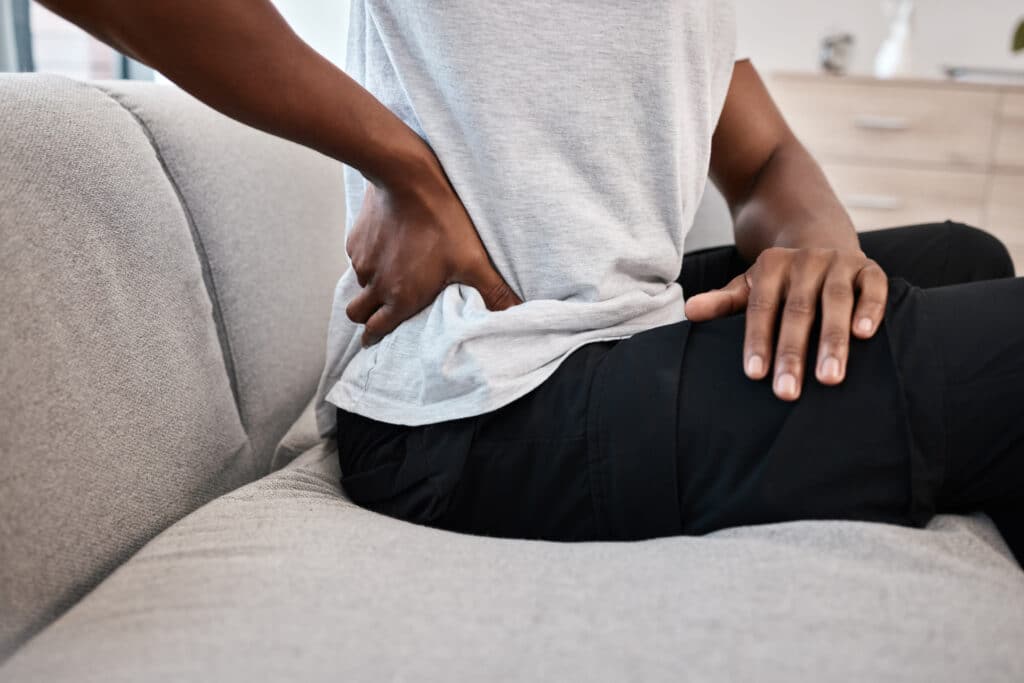
Sore Lower Back? Here's How the Home Remedies Compare
When your back hurts, if you're like us, you'll try anything to relieve the pain. Some things work. And many things don't. We've compared many options below. You'll also see what changes once pain has hung around for weeks, how to use heat without hurting your skin, and the symptoms that mean you should call us.
Most back pain isn't dangerous. It's still miserable, and it has a habit of showing up on the days you can least afford it.
Our goal is simple. We want your time and effort going toward the things with evidence behind them, and we want you to know when home care has done all it can.
What you should know:
New back pain often gets better within a few weeks, and gentle movement usually helps more than rest.
Heat and walking are good places to start; for pain that lasts months, regular exercise usually matters most.
A medium-firm mattress is a good starting point for most adults with back pain.
Loss of bladder or bowel control, new trouble passing urine, or numbness in the groin, inner thighs, or around the buttocks means go to the emergency room right away.
Leg weakness that keeps getting worse, or fever with back pain, also needs care right away; see the full list below.
Confused about what to try? Come in for an exam.
How long it's been hurting changes the plan
How long your back has hurt changes the best next step. When the pain is new, gentle movement and comfort measures like heat are usually the plan, and many people feel much better within about a month. When pain hangs on for months, regular exercise and physical therapy usually become the heart of the plan. Not sure what fits you? Come in for an exam rather than guessing.
The home options, side by side
None of these is a cure, but they can take the edge off and help you keep moving while your back settles down.
Option
Worth trying when
Keep in mind
Heat
A new flare, especially when you feel stiff
Relief is short-lived; follow the safety tips below
Cold packs
You find cold soothing after a strain
Wrap the pack in a towel, keep it to about 15 minutes at a time, and follow the same skin cautions as heat
Walking and daily movement
Almost always, as much as you can manage
Short, frequent walks usually beat one long push
Physical therapy or guided exercise
Pain has lasted a few months or keeps coming back
Sticking with it usually matters more than working hard
Yoga or tai chi
You want gentle, calming movement
Tell the instructor about your back
Massage
Tight muscles are the main thing you feel
Tends to work best alongside exercise, not instead of it
Using heat the right way
Heat is one of the better home options for new back pain. Single-use heat wraps are made to be worn under clothing for several hours, and that steady, low heat is what tends to help. Use an electric pad or microwaveable pack for only about 15 to 20 minutes at a time.
Follow the heat with some movement. A short walk or gentle stretching afterward usually helps more than heat alone.
Warmth should feel comforting. If it feels hot enough to make you flinch, it's too hot.
Heat safety basics we go over with patients:
Keep a layer of clothing or a towel between the heat source and bare skin
Use electric pads on low or medium settings, limit each session to about 15 to 20 minutes, and never fall asleep on one
Test microwaveable packs before use, since they can heat unevenly
Avoid heat over skin that's swollen, red, hot, infected, numb, or has reduced feeling
Use extra caution if you have circulation problems, nerve damage from diabetes, or any condition that dulls your sense of temperature
Follow the package directions on single-use wraps and stop if your skin looks irritated
The eight hours you're not thinking about
Patients often ask us whether a hard bed is best for a bad back. That used to be the common advice, but for most adults, a medium-firm mattress is a good starting point.
An old, saggy mattress can undo a good firmness rating and leave your back sorer in the morning.
Your size and how you usually sleep both change how a mattress feels.
Give a new bed a few weeks before you decide. A single rough night tells you very little.
What we'd skip, and why
Long bed rest. It usually leaves you stiffer. Gentle movement is usually safe and part of getting better, even if you go slowly.
Early scans without warning signs. In the first few weeks, an X-ray or MRI rarely changes the plan. It often shows normal age-related changes that have nothing to do with your pain.
Gadgets that haven't been shown to help. Home ultrasound machines and TENS units (small electrical pain-relief devices) don't seem to do much for low back pain.
Signs that home care isn't the right answer
If you have any of these, skip the home remedies and get checked. Some are emergencies.
Loss of bladder or bowel control
New trouble passing urine
Numbness in the groin, inner thighs, or around the buttocks
Sudden, severe back pain with chest pain, shortness of breath, faintness, or a pulsing feeling in your belly
Leg weakness that is getting worse, or a foot that drags
Fever, chills, or night sweats with back pain
Unexplained weight loss, or a history of cancer
Back pain after a fall, a crash, or another significant injury
Pain that wakes you every night or doesn't ease with any change in position
Pain running down below the knee that isn't improving after a few weeks
Loss of bladder or bowel control, new trouble passing urine, or numbness in the groin, inner thighs, or around the buttocks means go to the emergency room right away, or call 911. Call 911 for sudden, severe back pain with chest pain, shortness of breath, faintness, or a pulsing feeling in your belly. Leg weakness that is getting worse, fever with back pain, and pain after a serious fall or crash also need care right away; if they are severe, go to the emergency room. For the other signs, call us within a few days rather than waiting it out.
Where to start with our team
If four to six weeks of home care hasn't changed much, or the pain keeps coming back, it's time to have us take a look. We'll work out what's driving the pain and build a plan around how you live and move.
Often the main part of care for pain that has lasted for months
Orthopaedic spine specialist
Leg symptoms that won't go away, or problems that may need a scan
Considered when other care hasn't been enough
Bring your history with you: when it started, what makes it worse, what you've already tried, and how you're sleeping. Those details shape the plan more than any single test does.
Schedule Exam with Princeton Orthopaedic Associates and let's get your back moving comfortably again.
This blog post is meant to be informative and should not act as a self-diagnosis tool. If you’d like to see one of our doctors, please contact us here.
Sequence rules uses cookies to track the order of requests a user has made and the time between requests and makes them available via Cloudflare Rules. This allows you to write rules that match valid or invalid sequences. The specific cookies used to validate sequences are called sequence cookies.
session
cf_ob_info
The cf_ob_info cookie provides information on: The HTTP Status Code returned by the origin web server. The Ray ID of the original failed request. The data center serving the traffic
session
cf_use_ob
The cf_use_ob cookie informs Cloudflare to fetch the requested resource from the Always Online cache on the designated port. Applicable values are: 0, 80, and 443. The cf_ob_info and cf_use_ob cookies are persistent cookies that expire after 30 seconds.
session
__cfwaitingroom
The __cfwaitingroom cookie is only used to track visitors that access a waiting room enabled host and path combination for a zone. Visitors using a browser that does not accept cookies cannot visit the host and path combination while the waiting room is active.
session
cf_chl_rc_i
These cookies are for internal use which allows Cloudflare to identify production issues on clients.
session
cf_chl_rc_ni
These cookies are for internal use which allows Cloudflare to identify production issues on clients.
session
cf_chl_rc_m
These cookies are for internal use which allows Cloudflare to identify production issues on clients.
session
__cfruid
Used by the content network, Cloudflare, to identify trusted web traffic.
session
__cf_bm
Cloudflare's bot products identify and mitigate automated traffic to protect your site from bad bots. Cloudflare places the __cf_bm cookie on End User devices that access Customer sites that are protected by Bot Management or Bot Fight Mode. The __cf_bm cookie is necessary for the proper functioning of these bot solutions.
session
__cflb
When enabling session affinity with Cloudflare Load Balancer, Cloudflare sets a __cflb cookie with a unique value on the first response to the requesting client. Cloudflare routes future requests to the same origin, optimizing network resource usage. In the event of a failover, Cloudflare sets a new __cflb cookie to direct future requests to the failover pool.
session
_cfuvid
The _cfuvid cookie is only set when a site uses this option in a Rate Limiting Rule, and is only used to allow the Cloudflare WAF to distinguish individual users who share the same IP address.
session
cf_clearance
Whether a CAPTCHA or Javascript challenge has been solved.
session
Google reCAPTCHA helps protect websites from spam and abuse by verifying user interactions through challenges.
Name
Description
Duration
_GRECAPTCHA
Google reCAPTCHA sets a necessary cookie (_GRECAPTCHA) when executed for the purpose of providing its risk analysis.
179 days
Google Tag Manager simplifies the management of marketing tags on your website without code changes.
Name
Description
Duration
cookiePreferences
Registers cookie preferences of a user
2 years
td
Registers statistical data on users' behaviour on the website. Used for internal analytics by the website operator.
session
These cookies are used for managing login functionality on this website.
Name
Description
Duration
wordpress_logged_in
Used to store logged-in users.
Persistent
wordpress_sec
Used to track the user across multiple sessions.
15 days
wordpress_test_cookie
Used to determine if cookies are enabled.
Session
WPForms is a user-friendly WordPress plugin for creating custom forms with drag-and-drop functionality.
Name
Description
Duration
wpfuuid
Used to track user interactions with forms.
11 years
Statistics cookies collect information anonymously. This information helps us understand how visitors use our website.
Google Analytics is a powerful tool that tracks and analyzes website traffic for informed marketing decisions.
Used to distinguish new sessions and visits. This cookie is set when the GA.js javascript library is loaded and there is no existing __utmb cookie. The cookie is updated every time data is sent to the Google Analytics server.
30 minutes after last activity
__utmc
Used only with old Urchin versions of Google Analytics and not with GA.js. Was used to distinguish between new sessions and visits at the end of a session.
End of session (browser)
__utmz
Contains information about the traffic source or campaign that directed user to the website. The cookie is set when the GA.js javascript is loaded and updated when data is sent to the Google Analytics server
6 months after last activity
__utmv
Contains custom information set by the web developer via the _setCustomVar method in Google Analytics. This cookie is updated every time new data is sent to the Google Analytics server.
2 years after last activity
__utmx
Used to determine whether a user is included in an A / B or Multivariate test.
18 months
_ga
ID used to identify users
2 years
_gali
Used by Google Analytics to determine which links on a page are being clicked
30 seconds
_ga_
ID used to identify users
2 years
_gid
ID used to identify users for 24 hours after last activity
24 hours
_gat
Used to monitor number of Google Analytics server requests when using Google Tag Manager
1 minute
_gac_
Contains information related to marketing campaigns of the user. These are shared with Google AdWords / Google Ads when the Google Ads and Google Analytics accounts are linked together.
90 days
__utma
ID used to identify users and sessions
2 years after last activity
__utmt
Used to monitor number of Google Analytics server requests
10 minutes
These cookies help us measure the effectiveness of our website content and understand how visitors find and use our site. This allows us to improve the experience and provide more helpful resources.
Facebook Pixel is a web analytics service that tracks and reports website traffic.