IT Band Stretches: Safe Relief for Outer Knee and Hip Tightness
by Princeton Orthopaedic Associates
IT Band Stretches: Simple, Safe Moves to Ease Outer Knee and Hip Tightness
f the outside of your knee or hip feels tight or sore, your iliotibial band (IT band) may be involved. You can safely reduce that tension with targeted stretches, proper use of foam rolling, and consistent practice for meaningful relief.
Follow step-by-step stretches that target the muscles connected to the IT band, try a quick 10-minute routine, and be aware of common mistakes to avoid. It’s also important to know when it’s time to see a specialist at Princeton Orthopaedic Associates.
What Your IT Band Does and Why It Feels Tight
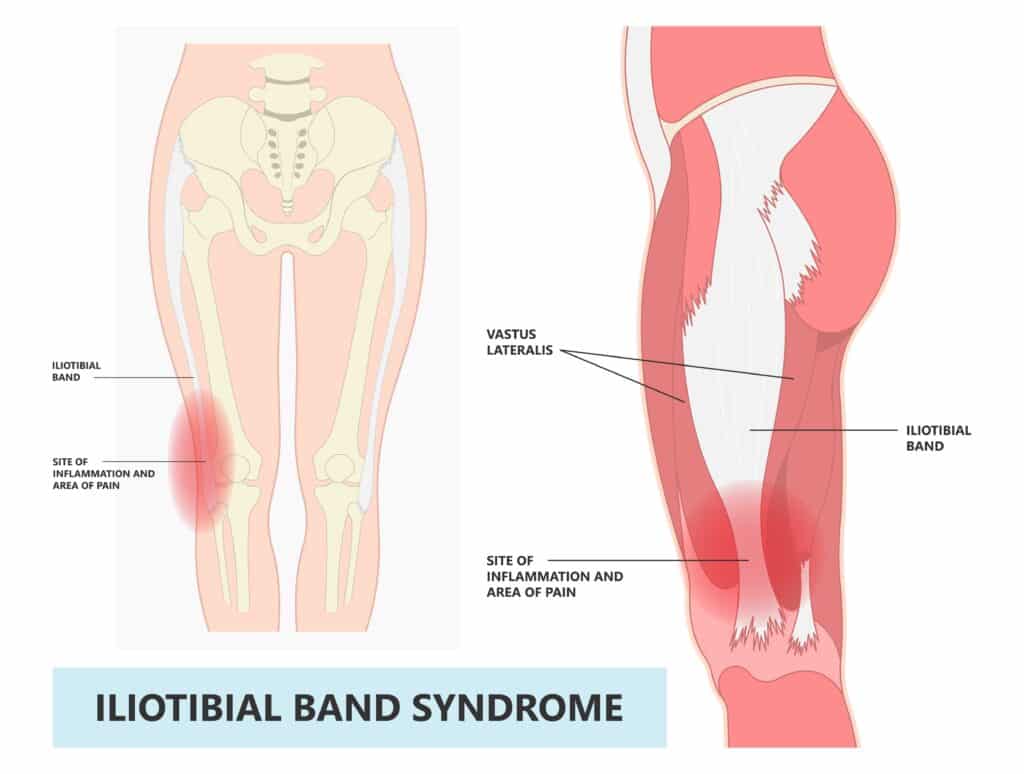
The IT band is a strong band of tissue on the outside of your thigh from your hip to just below the knee. It helps steady the knee while you move. Because it’s not a muscle, you can’t stretch the IT band itself like a hamstring or quad. Instead, you’ll get relief by improving mobility in the muscles that connect to it: the tensor fasciae latae (TFL), glutes, quadriceps, and hamstrings.
Tightness is often linked to repeating the same moves over and over, sitting for long periods, or muscle imbalances around the hip and knee.
Gentle stretching plus smart strengthening offers longer-lasting relief than stretching alone.
Discomfort should feel like a mild, tolerable stretch in the muscle. Sharp or joint pain means stop.
Before You Start: Safety Tips
Warm up with 3 to 5 minutes of easy movement: a short walk or gentle cycling.
Move slowly, avoid bouncing, and breathe normally through each stretch.
Hold each stretch 20 to 30 seconds. Repeat 2 to 3 times per side.
You should feel a comfortable stretch, not tingling, numbness, or sharp pain.
If you have a recent injury, significant swelling, or a joint replacement, ask your clinician which stretches are right for you.
Targeted Stretches That Help Ease IT Band Related Tightness
1) Standing TFL and Outer Hip Stretch (Wall Support)
Stand tall beside a wall for balance. The leg closest to the wall will be your back leg.
Cross the inside leg behind the outside leg. Gently tuck your pelvis under.
Lean your upper body away from the wall until you feel a stretch along the outer hip and upper thigh of the back leg.
Hold 20 to 30 seconds. Repeat 2 to 3 times per side.
2) Seated Figure-4 Glute Stretch
Sit near the front of a sturdy chair, feet flat.
Place your right ankle over your left knee (a figure-4 position). Keep your back tall.
Gently hinge forward from your hips until you feel a stretch in the right glute and outer hip.
Hold 20 to 30 seconds. Repeat 2 to 3 times per side.
3) Half-Kneeling Hip Flexor Stretch With Side Reach
Kneel on a pad with your right knee down and left foot forward.
Gently tuck your pelvis under and shift forward slightly until you feel a front-hip stretch on the right side.
To target the TFL a bit more, reach your right arm overhead and lean your torso slightly to the left.
Hold 20 to 30 seconds. Repeat 2 to 3 times per side.
4) Standing Quadriceps Stretch
Stand and hold a counter or wall for balance.
Bend your right knee and hold your ankle or use a strap. Keep your knees close together.
Gently tuck your pelvis under and avoid arching your low back. You should feel the stretch in the front of the thigh.
Hold 20 to 30 seconds. Repeat 2 to 3 times per side.
5) Supine Hamstring Stretch With Strap
Lie on your back with one knee bent and foot on the floor. Loop a strap around the other foot.
Straighten the strapped leg toward the ceiling until you feel a stretch along the back of the thigh. Keep your knee slightly soft if needed.
Hold 20 to 30 seconds. Repeat 2 to 3 times per side.
Your 10-Minute Stretch Routine: At a Glance
Use this quick reference to build a consistent routine. Aim for most days of the week.
Area
Stretch
Hold
Reps/Side
Frequency
TFL/Outer Hip
Standing cross-over lean
20 to 30 sec
2 to 3
5 to 7 days/week
Glutes
Seated figure-4
20 to 30 sec
2 to 3
5 to 7 days/week
Hip Flexor
Half-kneel with side reach
20 to 30 sec
2 to 3
5 to 7 days/week
Quadriceps
Standing quad stretch
20 to 30 sec
2 to 3
5 to 7 days/week
Hamstring
Supine strap stretch
20 to 30 sec
2 to 3
5 to 7 days/week
Foam Rolling: Where It Helps
Foam rolling can help ease soreness and improve movement around the IT band. Focus on the muscles that affect the IT band instead of pressing directly on the band itself. Move slowly, breathe normally, and stop if anything sharp or lingering hurts. This simple tool can make it easier to glide through stretches and daily activities with less tension in the area.
Glutes: sit on the roller, angle to one side, and work the outer glute area.
Lateral quadriceps: roll the outer front thigh just ahead of the IT band.
TFL (front outer hip): use a small ball or roller to gently address the muscle near the bony front of the hip.
Move slowly for 30 to 60 seconds per area. Avoid direct pressure over the outside of the knee.
Stop if you feel sharp, nerve-like, or lingering pain.
Strength Also Matters
Having balanced strength around your hips and core helps protect the IT band. When the hips and trunk are strong, less stress reaches the outer thigh, and symptoms are less likely to come back. Add simple movements a few days a week to build support and stability for your legs and lower back.
Clamshells and side-lying leg lifts for the gluteus medius.
Bridges or banded bridges for the gluteus maximus.
Lateral band walks and mini-squats with good knee alignment.
Hip hikes on a step and single-leg balance drills.
Start 2 to 3 days per week. Focus on quality form, not speed.
Common Stretching Mistakes
Forcing deep stretches that create sharp pain.
Bouncing or holding your breath.
Ignoring the hips and focusing only on the knee.
Skipping strength work that supports long-term results.
When to Pause and See a Clinician
If any of these signs show up, pause your stretches and seek a checkup. A quick evaluation can stop a small issue from turning into a longer lasting problem. Listening to your body now may save you from more pain later.
Pain lasts more than 1 to 2 weeks despite rest and stretching.
Night pain, swelling, or warmth around the knee or hip.
Catching, locking, or a feeling that the knee might give way.
Numbness or tingling down the leg.
Recent fall or a new injury.
History of hip or knee replacement: confirm safe options with your surgeon or physical therapist.
If you’re unsure which stretches are best for you, our team can help. Sports medicine specialists and physical therapists at Princeton Orthopaedic Associates can tailor a plan to your goals and activity level.
This blog post is meant to be informative and should not act as a self-diagnosis tool. If you’d like to see one of our doctors, please contact us here.