Carpal tunnel syndrome, often called CTS, affects the wrist and hand. Tingling and numbness can make everyday tasks frustrating, but the good news is that symptoms can be managed. Learning how CTS develops and how it is treated can help you make confident choices.
Common Signs You Might Notice
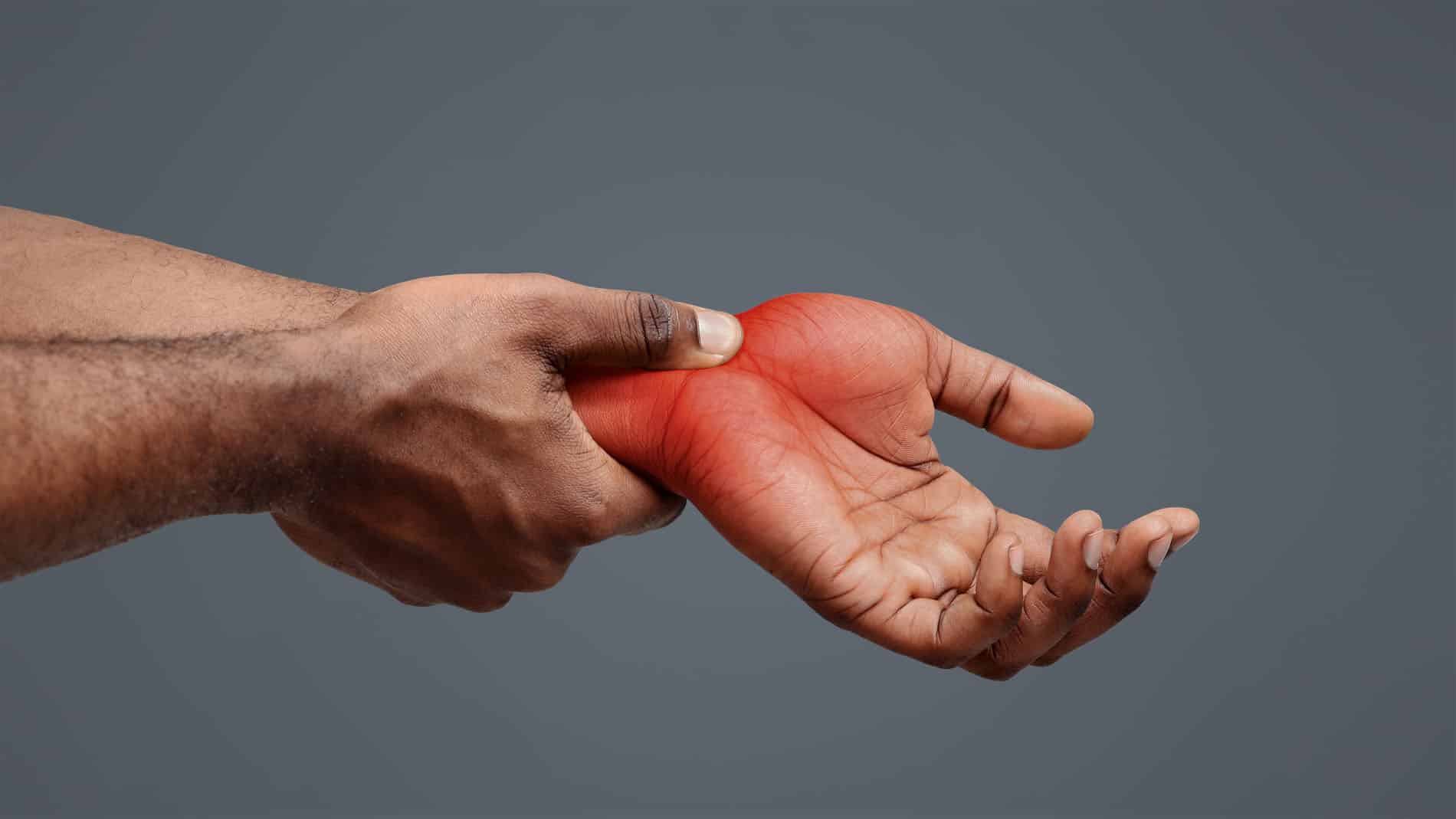
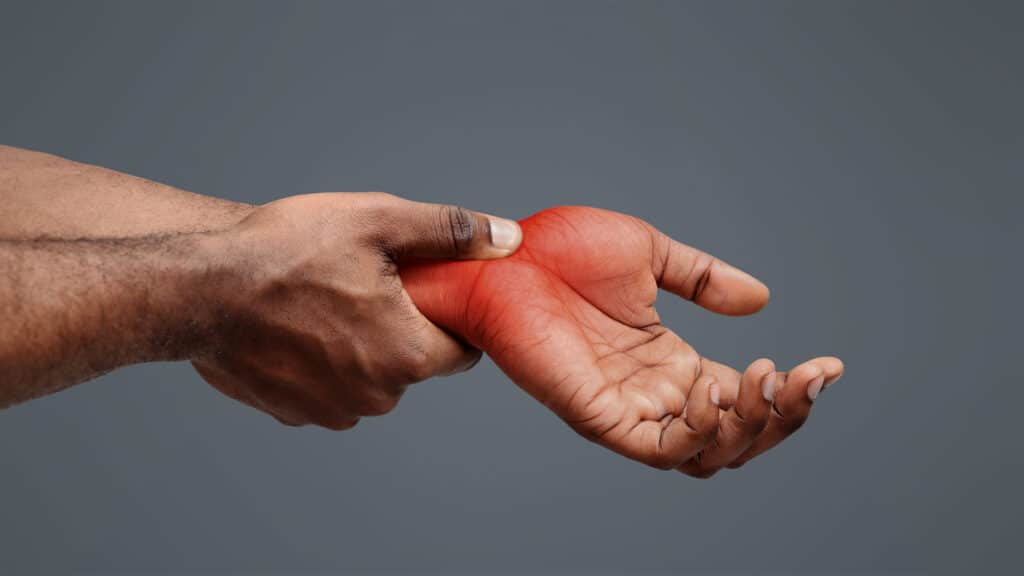
Tingling and numbness are the most frequent symptoms of CTS. Some people also feel hand pain or notice a weaker grip. Symptoms may wake you at night at first, then show up during daily routines like driving or holding a newspaper, and they can become more intense over time.
Partnering With Your Doctor
Your doctor will perform an exam to better understand your symptoms and rule out other causes. Once CTS is diagnosed, you can create a treatment plan together that may include symptom relief and, if needed, surgery. If you do have surgery, most people go home the same day.
The Exam Start with an exam from your POA Doctor
A Splint may be recommended along with medication
In certain severe cases surgery may be required
Inside the Wrist: What Is the Carpal Tunnel?
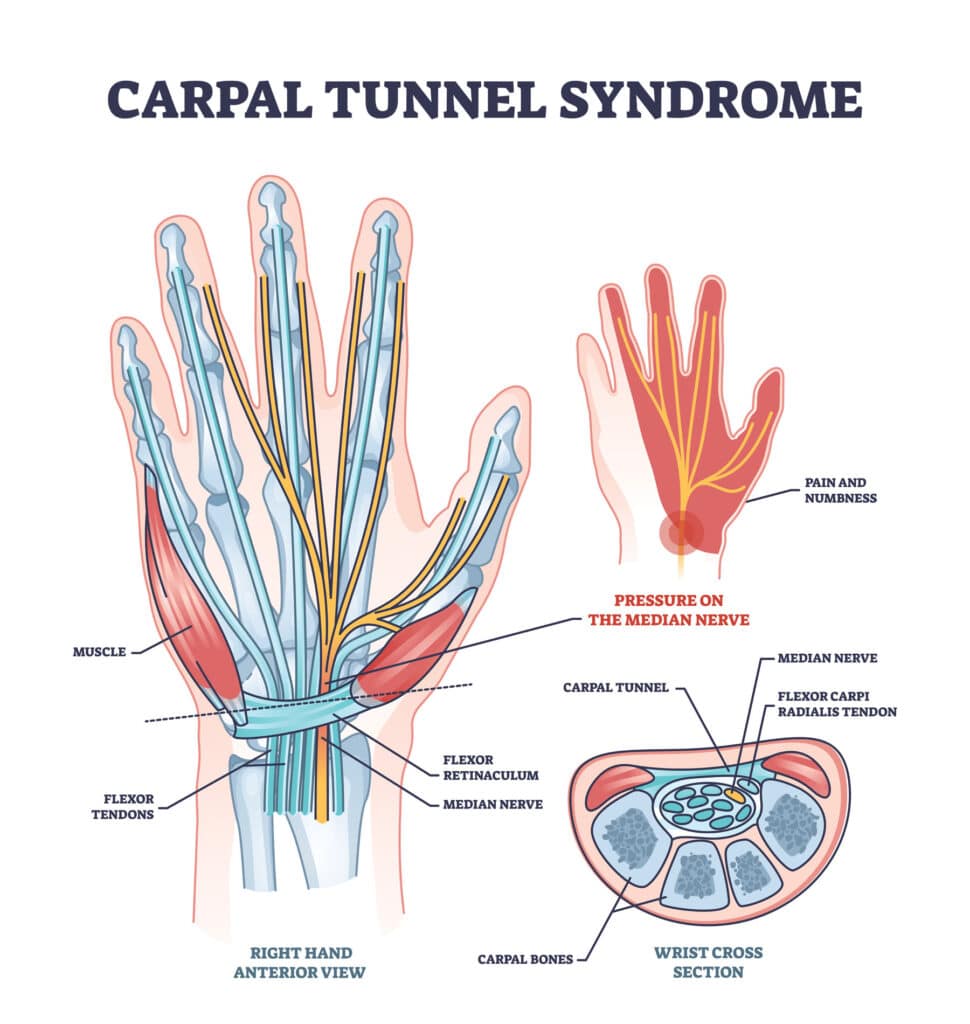
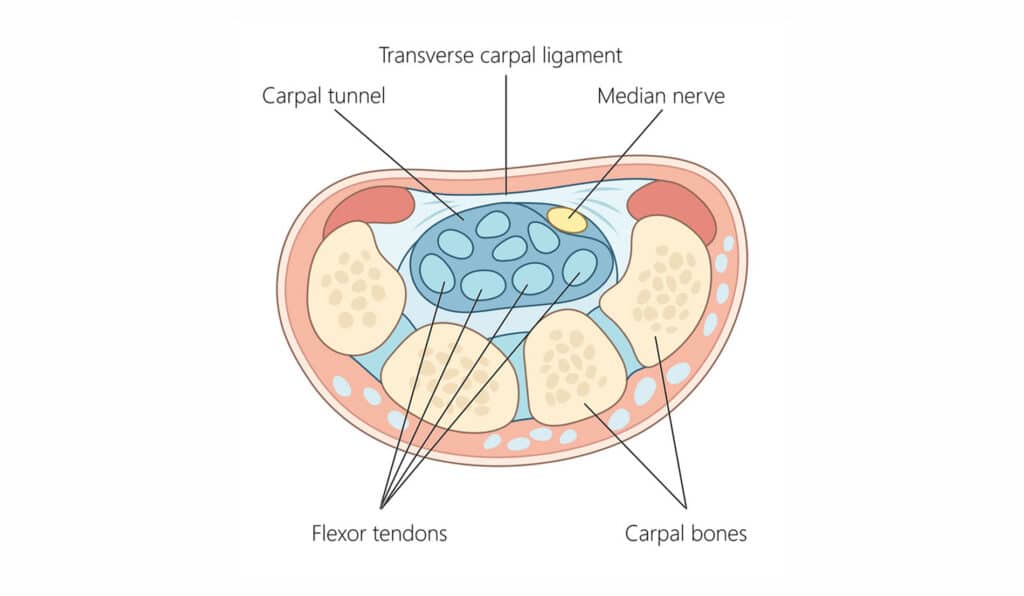
The carpal tunnel is a narrow passage in your wrist that allows tendons and a major nerve to travel from the forearm into the hand. Knowing what lives in this space helps explain why symptoms occur and how treatment works.
Transverse carpal ligament: A strong band of tissue that forms the roof of the tunnel.
Median nerve: The main nerve that carries signals between your hand and brain.
Tendon sheath: A slick covering that helps tendons glide smoothly.
Flexor tendons: Cords that connect muscles to bones and move your fingers.
Carpal bones: A U-shaped group of small wrist bones that make the tunnel's floor and sides.
With CTS, the tendon sheath can thicken and take up extra space in the tunnel. This narrowing can squeeze the median nerve and lead to tingling, numbness, pain, or a weaker grip.
Diagnosis and Testing
There are a series of tests that may be required to confirm Carpal Tunnel Syndrome in your case.
Exam with Your Doctor
Your doctor will ask about your symptoms and when they happen. Your hand and wrist may be placed in certain positions to check for irritation, and the median nerve will be assessed. Be ready to describe what makes symptoms better or worse.
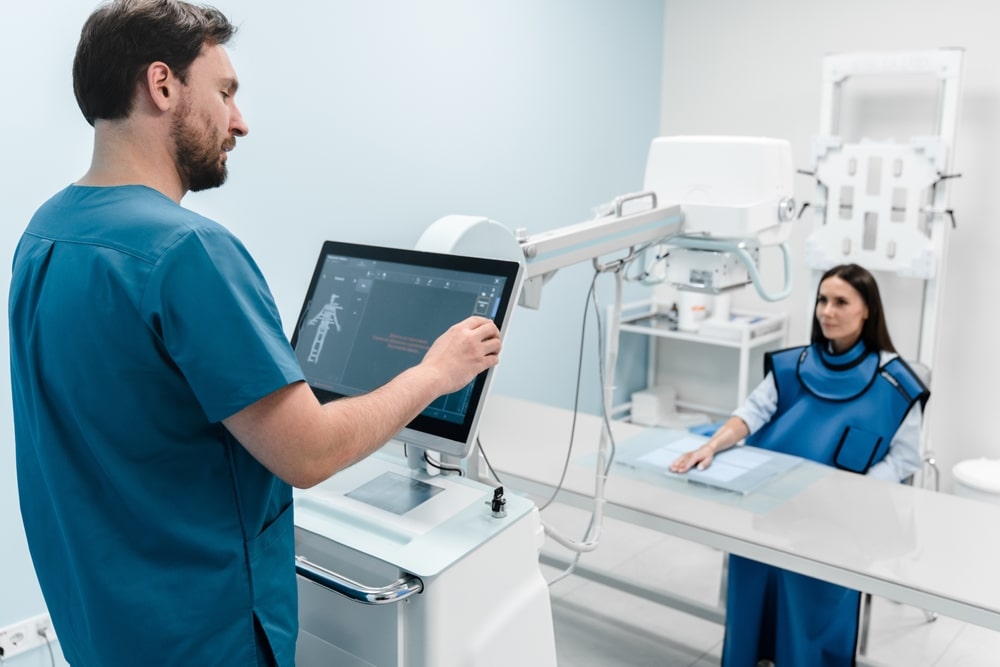
Wrist X-Rays
X-rays of the hand or wrist can reveal a broken bone or arthritis, which may explain your symptoms. You may also have a nerve conduction study and an electromyogram, known as an EMG. These tests use low levels of electrical current to see how well your nerves and muscles are working and can also help guide surgical planning if needed.
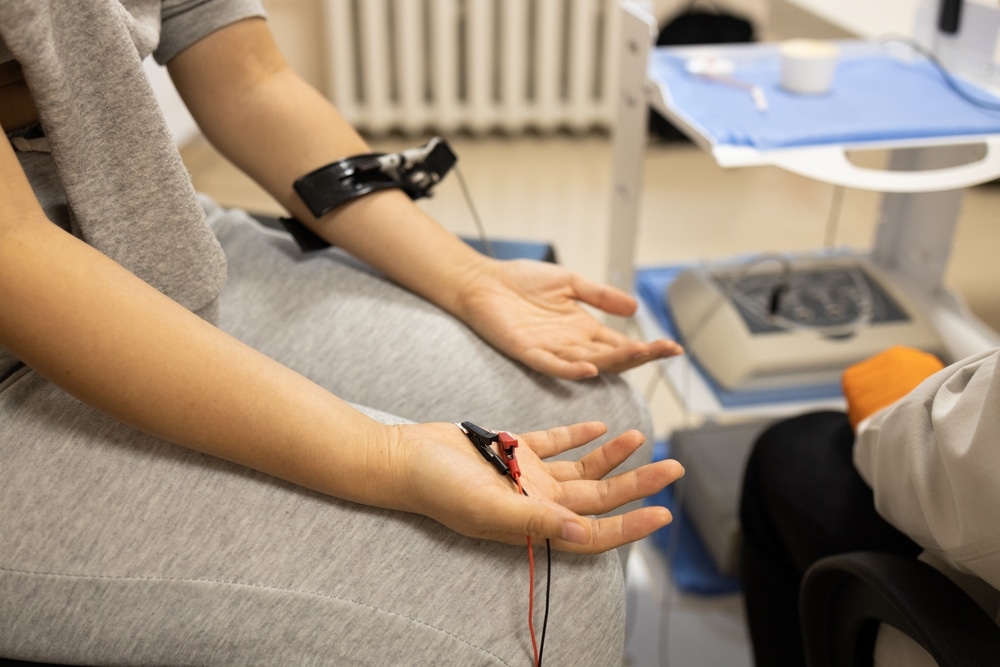
Nerve Conductivity Test
Nerve connectivity tests help confirm carpal tunnel syndrome and assess nerve damage. A nerve conduction study checks how fast signals travel through the median nerve, while an EMG evaluates muscle and nerve communication. These low-current tests identify compression typical of CTS and guide treatment, including surgery if needed.
Relief and Treatment
There are a series of tests that may be required to confirm Carpal Tunnel Syndrome in your case.
Medicine
Over-the-counter medicines: Your doctor may suggest aspirin or ibuprofen to ease pain and swelling. If you find yourself needing them every day, call your doctor, since a prescription option may be better for you.
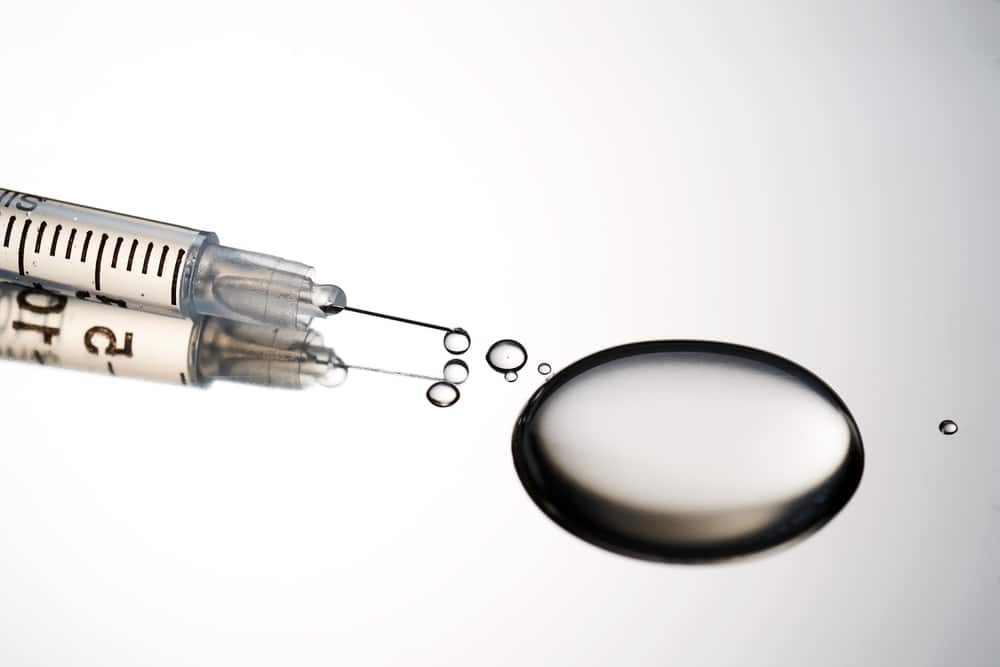
Cortisone Injections
Cortisone injection: A corticosteroid shot can calm inflammation in the tunnel. Mild soreness for a day or two is common, and many people get relief for several weeks after the injection.
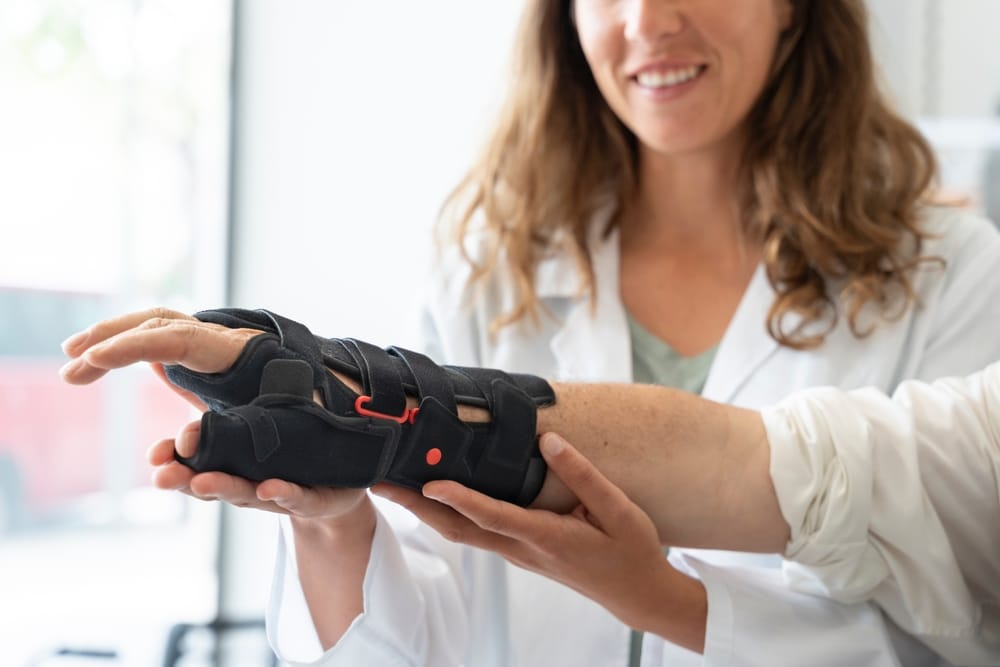
Wrist Splinting
Wrist splinting: Wearing a splint at night or during the day can keep your wrist in a neutral, straight position. This limits extreme bending that can narrow the tunnel. Use the type of splint your doctor recommends.
Considering Surgery
When Surgery Is an Option
Surgery may be advised if symptoms are severe or if splints, medicines, and injections do not provide lasting relief. Your care team will review your goals, daily demands, and test results to help you decide.
Preparing Safely for Your Procedure
Do your best to stop smoking in the weeks before surgery, since this can reduce complications and may help you heal faster.
Tell your doctor about all medicines and supplements, including aspirin and other blood thinners.
You will learn what type of anesthesia you will receive so you know what to expect.
Do not eat or drink after midnight before surgery, or follow the specific instructions you are given.
Surgical Goal and How Long It Takes
The aim of surgery is to relieve pressure on the median nerve by releasing the transverse carpal ligament. This creates more space in the tunnel. The procedure typically takes about an hour.
There are several kinds of surgery, but the two most common are Open Surgery and Endoscopic Surgery
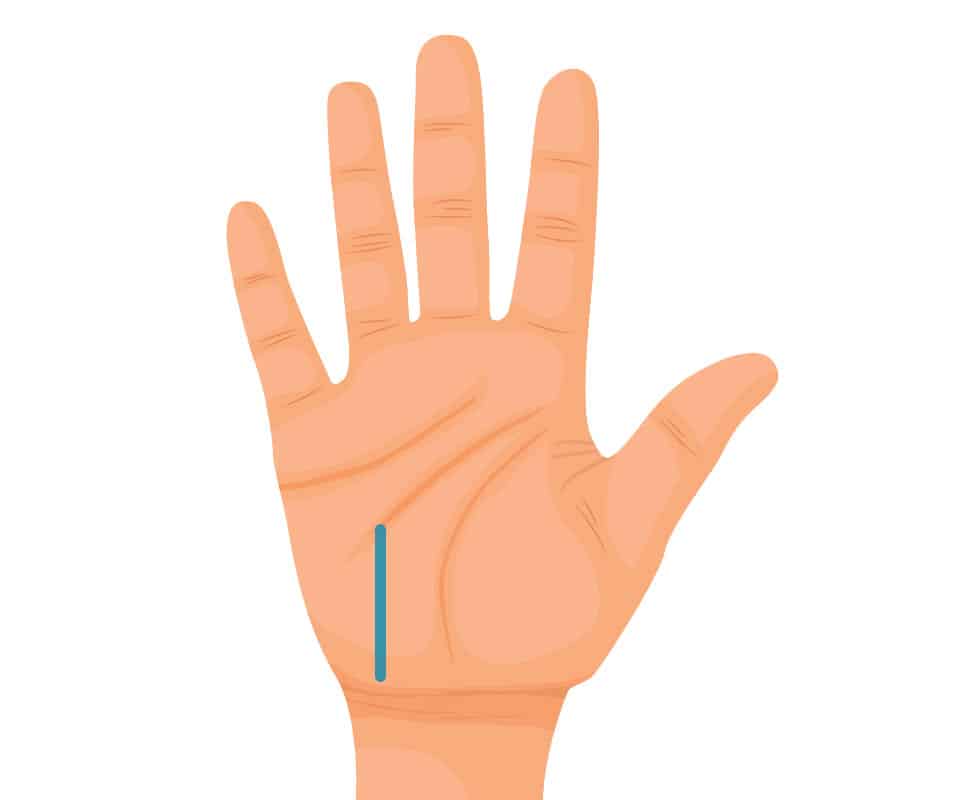
Open Surgery
Open surgery: Your surgeon makes a single incision in the palm to view and release the transverse carpal ligament with standard instruments.
*Blue indicates potential spot of incision.
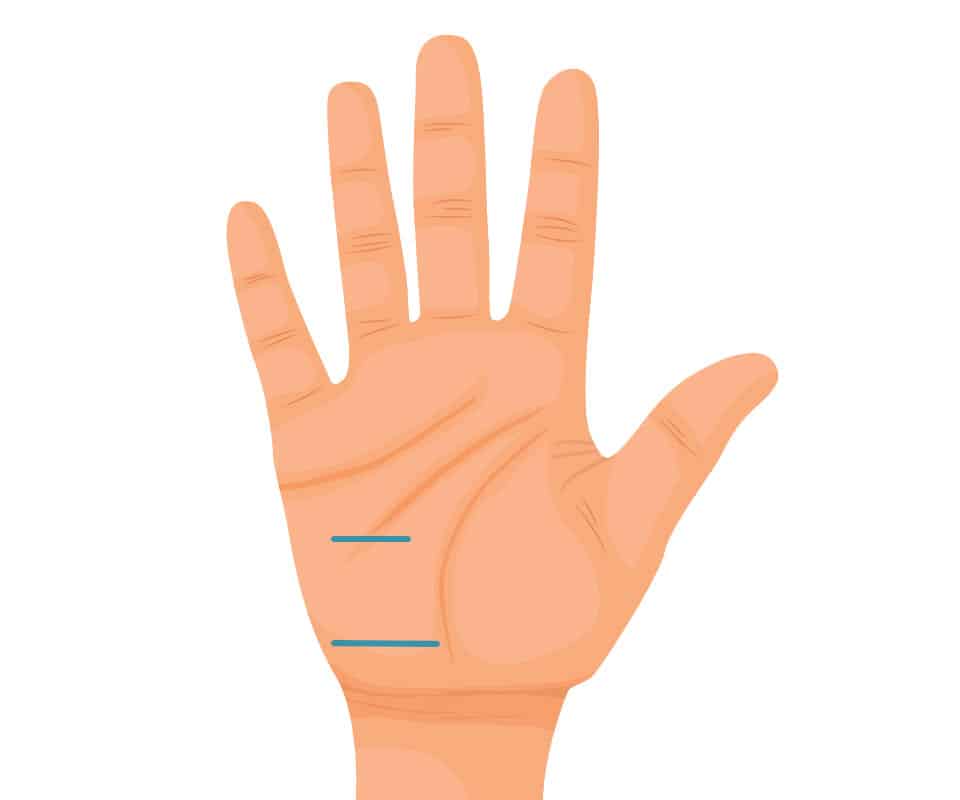
Endoscopic Surgery
Endoscopic surgery: One or two small incisions are made so a thin scope with a tiny camera and surgical tools can be guided under the ligament. The surgeon watches a video screen to perform the release.
*Blue indicates potential spot of incisions.
Both approaches create space in the carpal tunnel and reduce pressure on the median nerve. Your surgeon will recommend the method that fits your needs.
Possible Risks
Although uncommon, risks can include damage to nerves or blood vessels, an infection, or symptoms that do not fully improve. Your surgeon will go over these risks and how they are minimized.
After Surgery: Healing and Next Steps
You will rest for a few hours after surgery while your hand's sensation and circulation are checked. Most people return home the same day with clear instructions for care. Your provider will teach you how to care for the incision before you leave.
At home, a few habits can support healing:
Keep your hand raised above heart level to limit swelling.
Limit hand and wrist use as instructed by your care team.
Take pain medicine only as directed.
Do hand and finger exercises as prescribed to ease back into activity. Keep your wrist in a neutral position when you exercise.
When to Call Your Surgeon
Contact your surgeon right away if you notice any of the following:
A white or pale-blue color in your hand or nails, especially if pinching the skin does not bring color back
Pain that does not improve with prescribed medicine
Loss of sensation or more than expected swelling in your hand or fingers
A fever higher than 101°F
Quick Summary
Many people experience meaningful relief with splints, medicines, or a cortisone shot. If you need surgery, most patients recover well and return to daily activities with fewer symptoms. We are here to answer questions and support you at every step.
Have Questions?
If you have any questions or concerns, please contact one of our offices. This information is provided solely for educational purposes and is not a substitute for personalized medical advice. For detailed advice please contact us at (609) 924-8131, text us at (609) 757-9992 or send us a message via our contact form.
Sequence rules uses cookies to track the order of requests a user has made and the time between requests and makes them available via Cloudflare Rules. This allows you to write rules that match valid or invalid sequences. The specific cookies used to validate sequences are called sequence cookies.
session
cf_ob_info
The cf_ob_info cookie provides information on: The HTTP Status Code returned by the origin web server. The Ray ID of the original failed request. The data center serving the traffic
session
cf_use_ob
The cf_use_ob cookie informs Cloudflare to fetch the requested resource from the Always Online cache on the designated port. Applicable values are: 0, 80, and 443. The cf_ob_info and cf_use_ob cookies are persistent cookies that expire after 30 seconds.
session
__cfwaitingroom
The __cfwaitingroom cookie is only used to track visitors that access a waiting room enabled host and path combination for a zone. Visitors using a browser that does not accept cookies cannot visit the host and path combination while the waiting room is active.
session
cf_chl_rc_i
These cookies are for internal use which allows Cloudflare to identify production issues on clients.
session
cf_chl_rc_ni
These cookies are for internal use which allows Cloudflare to identify production issues on clients.
session
cf_chl_rc_m
These cookies are for internal use which allows Cloudflare to identify production issues on clients.
session
__cfruid
Used by the content network, Cloudflare, to identify trusted web traffic.
session
__cf_bm
Cloudflare's bot products identify and mitigate automated traffic to protect your site from bad bots. Cloudflare places the __cf_bm cookie on End User devices that access Customer sites that are protected by Bot Management or Bot Fight Mode. The __cf_bm cookie is necessary for the proper functioning of these bot solutions.
session
__cflb
When enabling session affinity with Cloudflare Load Balancer, Cloudflare sets a __cflb cookie with a unique value on the first response to the requesting client. Cloudflare routes future requests to the same origin, optimizing network resource usage. In the event of a failover, Cloudflare sets a new __cflb cookie to direct future requests to the failover pool.
session
_cfuvid
The _cfuvid cookie is only set when a site uses this option in a Rate Limiting Rule, and is only used to allow the Cloudflare WAF to distinguish individual users who share the same IP address.
session
cf_clearance
Whether a CAPTCHA or Javascript challenge has been solved.
session
Google reCAPTCHA helps protect websites from spam and abuse by verifying user interactions through challenges.
Name
Description
Duration
_GRECAPTCHA
Google reCAPTCHA sets a necessary cookie (_GRECAPTCHA) when executed for the purpose of providing its risk analysis.
179 days
Google Tag Manager simplifies the management of marketing tags on your website without code changes.
Name
Description
Duration
cookiePreferences
Registers cookie preferences of a user
2 years
td
Registers statistical data on users' behaviour on the website. Used for internal analytics by the website operator.
session
These cookies are used for managing login functionality on this website.
Name
Description
Duration
wordpress_logged_in
Used to store logged-in users.
Persistent
wordpress_sec
Used to track the user across multiple sessions.
15 days
wordpress_test_cookie
Used to determine if cookies are enabled.
Session
WPForms is a user-friendly WordPress plugin for creating custom forms with drag-and-drop functionality.
Name
Description
Duration
wpfuuid
Used to track user interactions with forms.
11 years
Statistics cookies collect information anonymously. This information helps us understand how visitors use our website.
Google Analytics is a powerful tool that tracks and analyzes website traffic for informed marketing decisions.
Used to distinguish new sessions and visits. This cookie is set when the GA.js javascript library is loaded and there is no existing __utmb cookie. The cookie is updated every time data is sent to the Google Analytics server.
30 minutes after last activity
__utmc
Used only with old Urchin versions of Google Analytics and not with GA.js. Was used to distinguish between new sessions and visits at the end of a session.
End of session (browser)
__utmz
Contains information about the traffic source or campaign that directed user to the website. The cookie is set when the GA.js javascript is loaded and updated when data is sent to the Google Analytics server
6 months after last activity
__utmv
Contains custom information set by the web developer via the _setCustomVar method in Google Analytics. This cookie is updated every time new data is sent to the Google Analytics server.
2 years after last activity
__utmx
Used to determine whether a user is included in an A / B or Multivariate test.
18 months
_ga
ID used to identify users
2 years
_gali
Used by Google Analytics to determine which links on a page are being clicked
30 seconds
_ga_
ID used to identify users
2 years
_gid
ID used to identify users for 24 hours after last activity
24 hours
_gat
Used to monitor number of Google Analytics server requests when using Google Tag Manager
1 minute
_gac_
Contains information related to marketing campaigns of the user. These are shared with Google AdWords / Google Ads when the Google Ads and Google Analytics accounts are linked together.
90 days
__utma
ID used to identify users and sessions
2 years after last activity
__utmt
Used to monitor number of Google Analytics server requests
10 minutes
These cookies help us measure the effectiveness of our website content and understand how visitors find and use our site. This allows us to improve the experience and provide more helpful resources.
Facebook Pixel is a web analytics service that tracks and reports website traffic.