
Pain that starts in the lower back or buttocks and travels down one leg is often linked to irritation or pressure on the sciatic nerve. Gentle stretching can help ease tight muscles, calm nerve sensitivity, and support a gradual return to everyday activities.
These stretches are designed to be gentle and accessible. Move slowly, stay within a comfortable range of motion, and focus on steady breathing. If any movement increases pain, tingling, or numbness, it's best to ease off or skip that stretch. Knowing when and how to stretch, along with what to avoid during flareups, can make a big difference in your recovery. If symptoms persist or worsen, it’s important to consult a medical professional.

The sciatic nerve is the largest nerve in your body. It forms in the lower spine, travels through the buttock, and runs down the back of each leg. When structures around the nerve get irritated or compressed, pain can spread from the low back or hip into the thigh, calf, or foot.
Causes vary. A lumbar disc can bulge and press on the nerve root. Spinal stenosis narrows the canal that the nerves pass through. Sometimes the deep hip muscles tighten and create local nerve irritation. Your plan should match your diagnosis, which is why an exam is helpful before starting a new routine.

1) Figure-4 Stretch on Back
Lie on your back with knees bent and feet on the floor. Cross the ankle of your painful side over the opposite thigh.
Gently pull the uncrossed thigh toward you until you feel a stretch in the buttock.
Hold 20 to 30 seconds. Repeat 2 to 3 times.

2) Knee to Opposite Shoulder
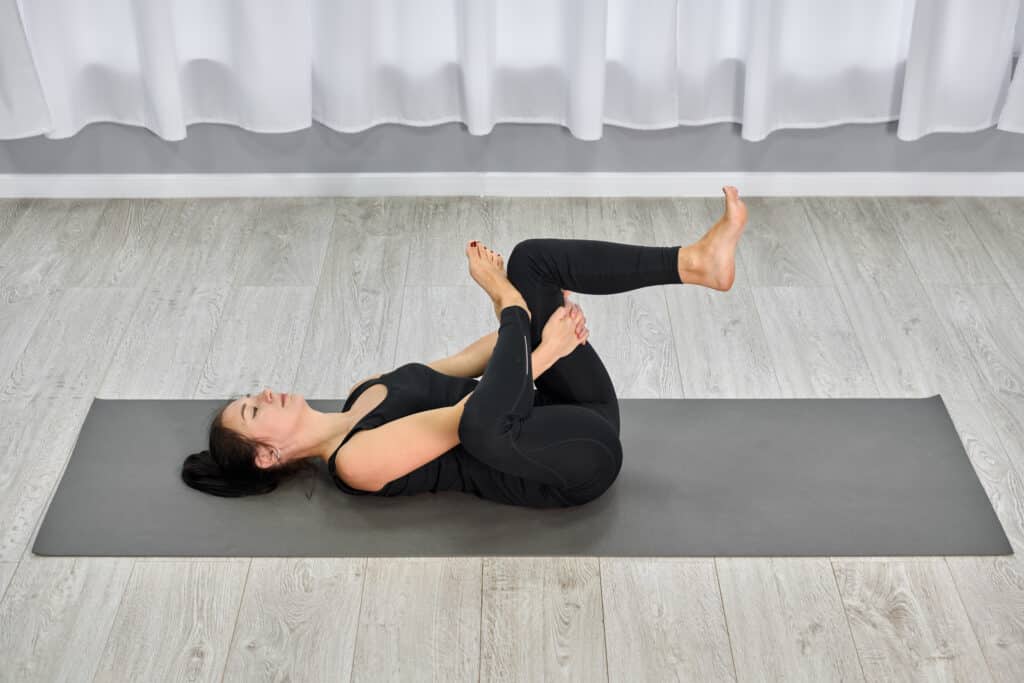
Lie on your back. Bend the knee on the painful side.
Use both hands to draw the knee across your body toward the opposite shoulder.
Stop at a comfortable stretch in the outer hip. Hold 20 to 30 seconds. Repeat 2 to 3 times.

3) Seated Hamstring Stretch
Sit on the floor with one leg extended straight and the other leg bent, with the sole of the foot resting against the inner thigh of the extended leg. Keep your back straight and shoulders relaxed.
Gently lean forward from your hips, reaching toward your shin, ankle, or foot. Stop when you feel a mild stretch in the back of your thigh. Hold for 15–30 seconds, breathing steadily. Return to upright and switch legs. Repeat 2–3 times on each side.

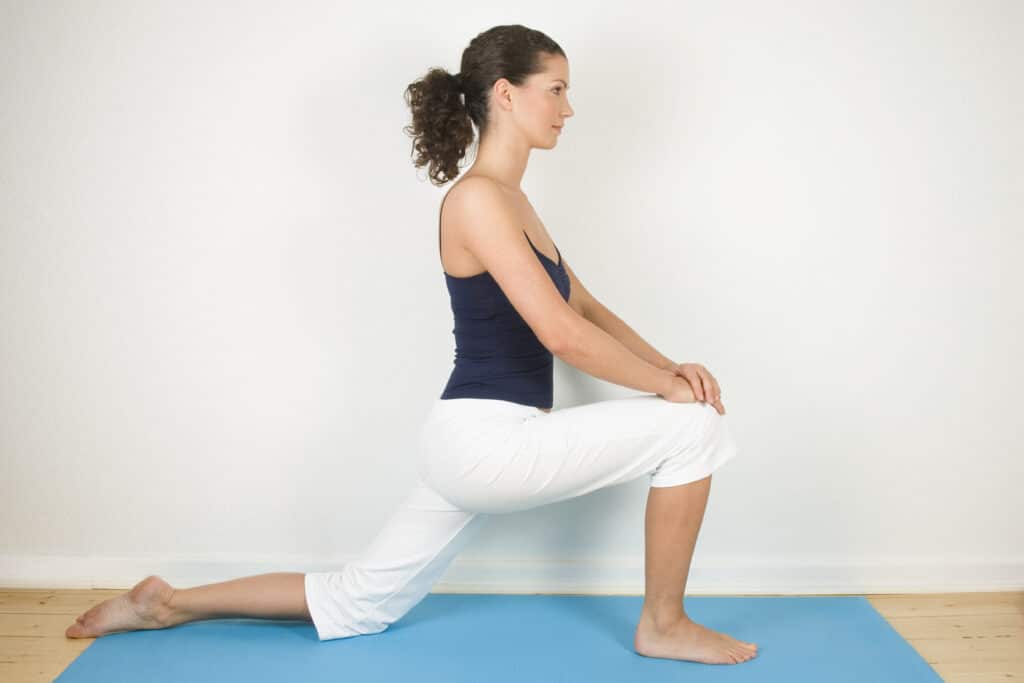
4) Half-Kneeling Hip Flexor Stretch
Kneel on one knee with the other foot in front. Tuck your tailbone slightly and gently shift your weight forward.
You should feel a stretch in the front of the hip on the kneeling side. Keep your trunk upright.
Hold 20 to 30 seconds. Repeat 2 to 3 times each side.

5) Child's Pose, Comfortable Range
Start on hands and knees. Sit your hips back toward your heels while reaching your arms forward.
Stay where it feels easy to breathe. If you notice leg pain or tingling increases with spinal flexion, reduce the depth or skip this position.
Hold 20 to 30 seconds. Repeat 2 to 3 times.

6) Cat–Cow
On hands and knees, gently arch your back toward the ceiling, then lower your belly toward the floor.
Move slowly with your breath for 30 to 60 seconds. Stop if leg pain increases.

7) Seated Piriformis Stretch
Sit tall. Cross the painful-side ankle over the opposite knee.
Lean forward slightly until you feel a stretch in the buttock. Hold 20 to 30 seconds, repeat 2 to 3 times.
Consistency helps calm sensitive tissues. Use this simple guide to pace your recovery.
| Stage | Frequency | Holds/Reps | Notes |
|---|---|---|---|
| Early pain | 1 to 2 times daily | 20 to 30 second holds, 2 to 3 sets | Stay gentle, avoid positions that trigger leg pain |
| Improving | Daily or every other day | Progress range as comfort allows | Add short walks and easy core work |
| Maintenance | 3 to 5 days per week | Brief routine after activity | Keep flexibility in hips, hamstrings, and low back |
Deep spinal flexion or sustained forward bending if it increases leg symptoms.
Get medical care promptly if any of the following occur:
If sciatic pain is limiting your day, we can help you find the cause and build a plan that fits your life. Our clinicians guide you on safe exercises, posture, and next steps if additional treatment is needed. Schedule an evaluation to get moving comfortably again.

Please contact us! We'd love to help.
If you have pain, please contact us and schedule an appointment. We have urgent care facilities all over New Jersey for your convenience.
This blog post is meant to be informative and should not act as a self-diagnosis tool. If you’d like to see one of our doctors, please contact us here.
© 2025 Princeton Orthopaedic Associates. The contents of PrincetonOrthopaedic.com are licensed under a Creative Commons Attribution-NonCommercial 4.0 International License. Copying without permission is strictly forbidden. Privacy Policy | Accessibility