Hand cramps are sudden, involuntary squeezes of the muscles in your hand or fingers. They can happen during activity or at rest and often respond to simple measures, but sometimes they point to an underlying issue that needs professional care.
What Are Hand Cramps?
A hand cramp is a tight, often painful contraction of one or more hand muscles that you cannot relax immediately. They usually happen without warning and can last from a few seconds to several minutes.
Squeezing or knotting feeling in the palm or fingers
Difficulty opening the hand while the muscle is tight
Sometimes a visible twitch or hard lump under the skin
Common Triggers for Hand Cramps
Several everyday factors can make hand cramps more likely. Often more than one factor is involved.
Muscle overuse from repetitive tasks like typing, sewing, or gripping tools
Muscle fatigue after unusual or prolonged hand activity
Dehydration or mineral imbalances such as potassium, magnesium, or calcium can contribute in some contexts, but not all cramps require supplementation
Nerve irritation or compression in the wrist or forearm
Certain medications or medical conditions that affect nerves or muscles
What a Hand Cramp Feels Like
Hand cramps can vary from a mild tightness to a painful spasm. They may affect one finger, several fingers, or the whole hand. Symptoms often come on suddenly and can interfere with normal hand use until the muscle relaxes.
Sharp or aching pain during the spasm
Stiffness or reduced grip strength afterwards
Occasional tingling if a nerve is involved
Immediate Steps to Ease a Cramp
If a cramp starts, try these simple measures to help the muscle relax. These steps are safe for most people and often work quickly.
Stop the activity that triggered it and gently stretch the affected finger or hand
Massage the tight muscle using light pressure to increase blood flow
Apply a warm compress if the muscle feels tight, or cold if there is sharp pain after activity
Drink water; if dehydration or electrolyte imbalance is suspected, seek clinician guidance and appropriate testing; routine potassium or magnesium supplementation for isolated hand cramps is not universally recommended
Try shaking your hand or opening and closing the fingers slowly to help the spasm pass
Note: If cramps happen frequently, or are severe, it is important to get a medical review to find the cause.
Longer Term Strategies to Prevent Recurrence
Preventing hand cramps often means addressing how you use your hands and caring for overall muscle and nerve health. Small daily changes can reduce episodes significantly.
Take regular short breaks during repetitive tasks to rest and stretch
Use ergonomic tools and adjust your workspace to reduce strain on the wrist and hand
Strengthen hand and forearm muscles with guided exercises if recommended by a therapist
Stay hydrated and eat a balanced diet that includes minerals important for muscle function
Consider splinting at night if cramps wake you from sleep or if a nerve problem is suspected
When to See a Doctor
See a clinician if cramps are persistent, frequent, worsening, occur at rest without clear triggers, or are accompanied by numbness and weakness. Those signs may indicate a nerve or systemic issue that needs evaluation.
Who Can Help
Specialist
When to Choose
Notes
Primary Care Provider
First evaluation, blood tests, medication review
Good starting point to rule out common causes
Orthopaedic Hand Specialist
Suspected structural or nerve problems in the hand or wrist
Helps correct movement patterns and build hand endurance
Neurologist
Frequent cramps with weakness or other neurological signs
Assesses nerve disorders and coordination
Treatment Options Your Specialist May Discuss
Treatment depends on the cause. Many people improve with conservative measures. In select cases, targeted therapies may be recommended.
Activity modification and ergonomic changes
Guided hand and forearm exercise programs with a therapist
Medication review and correction of electrolyte or metabolic issues
Botulinum toxin injections are not standard for routine hand cramps. They are generally considered only in rare focal dystonias or specific nerve related conditions, and carry risks such as focal weakness
Simple Hand Stretches You Can Try
These gentle stretches may reduce tightness and build resilience. Stop if they cause sharp pain and check with a clinician if you have an injury.
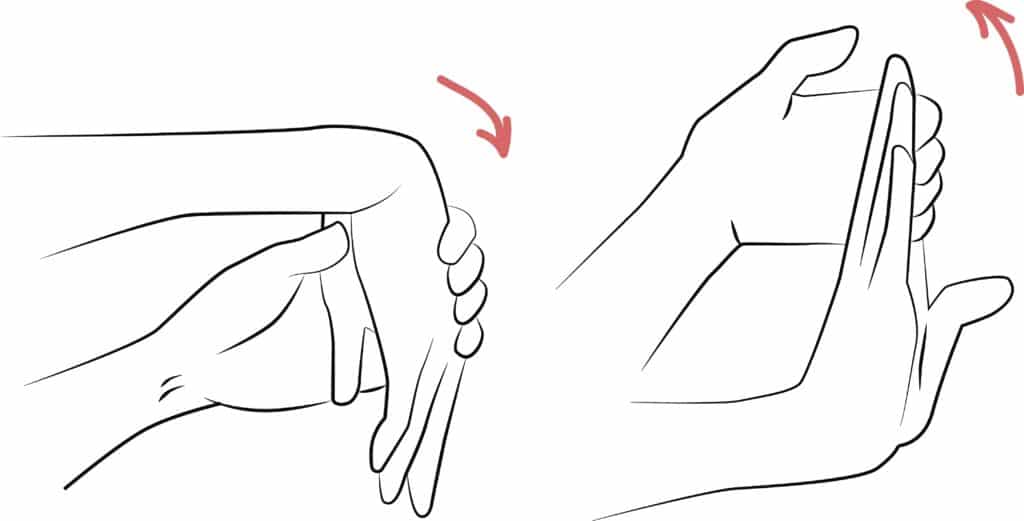
Finger extension: gently bend the fingers back with the other hand and hold for 15 to 30 seconds
Thumb stretch: pull the thumb away from the palm and hold for 15 seconds
Wrist flexor stretch: straighten the arm, bend the wrist down with the palm facing out, and hold
How Long Until I Feel Better?
Recovery varies by cause and how soon you begin appropriate care. Many people improve within days when the issue is temporary. If cramps come from nerve compression or a chronic condition, recovery may take weeks to months with therapy and targeted treatment.
Typical Pattern
Timeframe
What Helps
Acute, activity related
Days to weeks
Rest, hydration, stretching
Recurrent with overuse
Several weeks
Ergonomic changes, therapy
Nerve-related (peripheral nerve compression) or other nerve-related causes
Weeks to months
Specialist evaluation and targeted care
Living With Occasional Hand Cramps
Most people can manage occasional cramps with simple self-care and small changes to daily routines. If cramps limit your work or hobbies, we can help find the right plan so you can stay active and comfortable.
If your cramps are persistent or troubling, schedule an exam with one of our hand specialists. We will review your history, examine your hand, and recommend tests or therapy if needed. Together we will create a plan tailored to your needs.
This blog post is meant to be informative and should not act as a self-diagnosis tool. If you’d like to see one of our doctors, please contact us here.
Cartilage Explained: What It Is and Why Your Joints Need It
Cartilage is one of the body’s most important support tissues, yet many people do not notice it until pain, stiffness, or an injury begins to affect daily life. This smooth, durable tissue helps joints move easily, cushions pressure, and supports several parts of the body, including your knees, hips, shoulders, spine, ears, and nose.
When cartilage is healthy, movement often feels smooth and comfortable. When it becomes damaged or wears down over time, you may notice swelling, catching, reduced motion, or joint pain that does not fully settle. In some cases, symptoms may come and go, depending on what your joint is doing.
Learning what cartilage does, where it is found, and why it can be difficult to heal may help you make sense of symptoms and decide when orthopaedic care could be helpful. A clearer understanding can also make it easier to describe what you feel, when it happens, and what movements make it worse.
Key Facts About Cartilage
What You Should Know
Cartilage is a strong, flexible connective tissue found throughout the body.
In joints, it covers the ends of bones and helps them glide smoothly.
It acts as a shock absorber, helping reduce pressure during walking, running, and everyday movement.
Cartilage has very little blood supply, which is one reason it heals slowly.
Damage can happen suddenly from injury or gradually from wear over time.
There are three main types of cartilage in the body, and each has a different role.
Joint cartilage problems may cause pain, stiffness, swelling, or a sense that the joint is catching.
Cartilage loss is commonly linked with osteoarthritis, but cartilage can also be torn or injured in sports and accidents.
Early evaluation can help identify whether cartilage, bone, ligaments, or another structure is contributing to symptoms.
Care plans depend on the location, severity, and cause of the cartilage problem.
What Is Cartilage?
Cartilage is a type of connective tissue that is firm but still flexible. It helps support the body while allowing certain areas to bend, cushion impact, and move more easily. Because it is smooth, it can help reduce stress where bones meet in a joint.
You have cartilage in several places, not just in your joints. It is found in the ears, nose, rib cage, airway, spine, and at the ends of bones where joints come together. The type and thickness can vary based on what each area needs to do.
In orthopaedics, cartilage matters most because it protects joint surfaces. Without it, bones in a joint can rub more directly against each other, which may lead to pain, stiffness, and ongoing wear over time.
What Does Cartilage Do?
Cartilage serves several important jobs in the body. Its exact function depends on where it is located, but it generally helps provide structure, flexibility, and protection. Different cartilage types are built for different demands, such as bending, shock absorption, or holding shape.
It cushions the ends of bones inside joints
It allows joints to move with less friction
It absorbs impact from daily activities and sports
It helps certain body parts keep their shape while remaining flexible
It supports growth and development in the skeleton
That mix of strength and flexibility is why cartilage is so useful. It is sturdy enough to handle pressure, yet soft enough to help your body move comfortably. When it stays healthy, joints are more likely to work smoothly.
The Three Main Types of Cartilage
Cartilage is not the same everywhere in the body. There are three main types, and each one is designed for a specific purpose. Knowing the type can help explain why some areas handle pressure well, while others focus more on smooth movement.
Type of Cartilage
What It Does
Common Locations
Hyaline cartilage
Provides smooth support and helps surfaces move easily
Ends of bones in joints, ribs, nose, airway
Elastic cartilage
Offers more flexibility while keeping shape
Ears and parts of the throat
Fibrocartilage
Handles heavy pressure and shock absorption
Spinal discs, meniscus in the knee, pubic symphysis
Why Cartilage Is So Important in Joints
When most people talk about cartilage problems, they are referring to articular cartilage, the smooth layer that covers the ends of bones in a joint. This tissue helps the joint glide and spreads force across the joint surface.
In a healthy knee, hip, shoulder, or ankle, cartilage can help motion feel controlled and smooth. If the surface becomes rough, thinner, or torn, normal activity can start to feel more uncomfortable. Symptoms may also show up with certain positions or after repeated use.
Cartilage damage may affect more than athletes. It can also affect people who want to walk, climb stairs, get up from a chair, or stay active without pain. How much it hurts can vary from person to person and from day to day.
Why Cartilage Doesn’t Heal Easily
One of the biggest challenges with cartilage injuries is that cartilage has very limited blood supply. Blood flow helps many tissues heal, so when this supply is low, recovery may be slower and may not fully restore the original surface. This is one reason cartilage wear can become a long-term issue.
This can help explain why cartilage wear and tears can become ongoing issues. In some cases, symptoms may improve with time, changes in activity, and therapy, but the tissue itself may not repair like muscle or skin. Instead, joints may adapt, and surrounding tissues may take on more stress.
How Cartilage Gets Damaged
Cartilage can be injured in different ways. Some problems start after a sudden event, while others build over many years. In both situations, the cartilage surface may get stressed beyond what it can handle.
A sports injury or fall
A twisting injury that also affects the joint
Repeated stress over time
Changes related to aging
Joint instability or poor alignment
Osteoarthritis and gradual wearing away of joint cartilage
Minor damage may cause only occasional discomfort. More significant cartilage loss can lead to pain with weight-bearing, swelling after activity, and difficulty trusting the joint. Over time, some people notice less comfort with everyday tasks.
Symptoms of Cartilage Problems
Cartilage itself does not always cause symptoms right away, especially in the early stages. As damage progresses, you may notice problems during activity or even at rest. Pain can also come from other joint structures rather than from cartilage alone.
Cartilage itself has limited nerve supply, so pain from cartilage problems often comes from nearby areas such as the synovium, joint capsule, ligaments, or the bone under the cartilage. For that reason, the amount of cartilage wear may not match the level of pain you feel.
Joint pain
Stiffness, especially after sitting or first thing in the morning
Swelling
Clicking, catching, or grinding
A reduced range of motion
Pain with walking, squatting, kneeling, or stairs
These symptoms can overlap with other orthopaedic conditions, which is why a proper evaluation matters. Ligament injuries, meniscus tears, tendon problems, and arthritis can feel similar in everyday life, even when the cause is different.
Cartilage Damage Compared With Healthy Joint Cartilage
Healthy Cartilage
Damaged Cartilage
Smooth joint movement
Rougher movement or joint irritation
Helps absorb shock well
Less cushioning with impact
Supports comfortable daily activity
May lead to pain, swelling, or stiffness
Even joint surface
Can become thinned, frayed, or worn down
Cartilage and Osteoarthritis
One of the most common cartilage-related conditions is osteoarthritis. It happens when the cartilage in a joint gradually breaks down, which can make movement less smooth and more painful over time. The joint lining may also become irritated.
As cartilage thins, the joint may become inflamed and less flexible. You may notice stiffness after rest, aching with activity, or pain that slowly becomes more frequent. Some people also feel flare-ups when they do more than usual.
Osteoarthritis often affects the knees, hips, hands, and spine, but it can occur in many joints. Early care may help you stay mobile and manage symptoms before they interfere more seriously with daily routines.
How Orthopaedic Specialists Evaluate Cartilage Problems
If cartilage damage is suspected, a provider will usually start with a physical exam and a discussion of symptoms, activity level, and any history of injury. The goal is to understand which movements trigger pain and whether the joint feels unstable, swollen, or limited.
Imaging may also be part of the evaluation. X-rays can show joint space changes or arthritis, while other studies may be used when more detail is needed about cartilage and surrounding structures. The plan can depend on your symptoms and exam results.
Treatment Options for Cartilage Injuries and Wear
Treatment depends on where the cartilage problem is located, how severe it is, and how much it affects daily life. Many people begin with non-surgical care aimed at improving comfort and function. If symptoms do not improve, the plan may be adjusted.
Activity changes to reduce stress on the joint
Physical therapy to improve strength, motion, and joint support
Anti-inflammatory medication if appropriate and recommended by your doctor
Bracing or other support in select cases
Surgical treatment when symptoms are persistent or the damage is more advanced
Because cartilage problems vary, care is often tailored. What helps for mild wear in one joint may be different from what is needed after a sports injury or with more advanced arthritis. Your team can help you weigh options based on your goals and health history.
When to See an Orthopaedic Specialist
Consider an evaluation if joint pain, swelling, or stiffness limits your normal routine or if symptoms keep coming back. It is especially important to be seen if your joint catches, locks, gives way, or stays swollen after an injury. Early support can help clarify the cause and guide next steps.
Pain that lasts more than a few days or keeps returning
Stiffness that makes it hard to move normally
Swelling after activity or after a twisting injury
Reduced ability to walk, exercise, or climb stairs
Grinding, catching, or locking in the joint
Getting answers early can help you understand what is causing your pain and take steps to protect the joint over time. With the right plan, many people can improve comfort and move more freely.
Understanding Cartilage Can Help You Protect Your Joints
Cartilage plays a quiet but essential role in how the body moves. It cushions joints, supports smooth motion, and helps absorb stress from everyday activity. When it becomes damaged, worn, or inflamed, even simple movements can feel harder than they should.
If joint pain or stiffness is affecting quality of life, a care team can help evaluate the cause and discuss possible next steps. Schedule an exam with Princeton Orthopaedic Associates to learn what may be happening in a joint and what options could help you manage symptoms.
This blog post is meant to be informative and should not act as a self-diagnosis tool. If you’d like to see one of our doctors, please contact us here.
Hurt your shoulder in your Friday evening tennis league? Have an orthopaedic injury that just happened? Did your daughter hurt her knee in her Saturday morning Soccer game?
Princeton Orthopaedic Associates is excited to announce the re-opening of our Saturday morning Urgent Care for Orthopaedics. The Practice you have entrusted with your orthopaedic care over the years now offers the opportunity to be seen by a fellowship-trained Orthopaedic Surgeon able to fix all of your family’s muscular and skeletal sprains, strains, and breaks.
We offer walk-in, no appointment necessary, Orthopaedic Urgent Care on Saturdays from 8 AM to 11 AM at our office located on the SECOND FLOOR at 325 Princeton Avenue, Princeton. We offer the same service at our Forsgate office on Monday and Wednesday evenings from 5 PM until 8 PM and on Saturday from 8 AM until 11 AM.
We are sorry, but we must address spine issues during the regular workweek.
If you or a family member had an orthopaedic injury within the last 36 hours, give Princeton Orthopaedics a call to be seen and evaluated by one of our Orthopaedic Specialists. And we accept most insurances.
Avoid the long waiting times in the Hospital Emergency Departments and give us a call at 609-924-8131.
Princeton Orthopedic Associates is the orthopedic group your friends and neighbors recommend.
Sequence rules uses cookies to track the order of requests a user has made and the time between requests and makes them available via Cloudflare Rules. This allows you to write rules that match valid or invalid sequences. The specific cookies used to validate sequences are called sequence cookies.
session
cf_ob_info
The cf_ob_info cookie provides information on: The HTTP Status Code returned by the origin web server. The Ray ID of the original failed request. The data center serving the traffic
session
cf_use_ob
The cf_use_ob cookie informs Cloudflare to fetch the requested resource from the Always Online cache on the designated port. Applicable values are: 0, 80, and 443. The cf_ob_info and cf_use_ob cookies are persistent cookies that expire after 30 seconds.
session
__cfwaitingroom
The __cfwaitingroom cookie is only used to track visitors that access a waiting room enabled host and path combination for a zone. Visitors using a browser that does not accept cookies cannot visit the host and path combination while the waiting room is active.
session
cf_chl_rc_i
These cookies are for internal use which allows Cloudflare to identify production issues on clients.
session
cf_chl_rc_ni
These cookies are for internal use which allows Cloudflare to identify production issues on clients.
session
cf_chl_rc_m
These cookies are for internal use which allows Cloudflare to identify production issues on clients.
session
__cfruid
Used by the content network, Cloudflare, to identify trusted web traffic.
session
__cf_bm
Cloudflare's bot products identify and mitigate automated traffic to protect your site from bad bots. Cloudflare places the __cf_bm cookie on End User devices that access Customer sites that are protected by Bot Management or Bot Fight Mode. The __cf_bm cookie is necessary for the proper functioning of these bot solutions.
session
__cflb
When enabling session affinity with Cloudflare Load Balancer, Cloudflare sets a __cflb cookie with a unique value on the first response to the requesting client. Cloudflare routes future requests to the same origin, optimizing network resource usage. In the event of a failover, Cloudflare sets a new __cflb cookie to direct future requests to the failover pool.
session
_cfuvid
The _cfuvid cookie is only set when a site uses this option in a Rate Limiting Rule, and is only used to allow the Cloudflare WAF to distinguish individual users who share the same IP address.
session
cf_clearance
Whether a CAPTCHA or Javascript challenge has been solved.
session
Google reCAPTCHA helps protect websites from spam and abuse by verifying user interactions through challenges.
Name
Description
Duration
_GRECAPTCHA
Google reCAPTCHA sets a necessary cookie (_GRECAPTCHA) when executed for the purpose of providing its risk analysis.
179 days
Google Tag Manager simplifies the management of marketing tags on your website without code changes.
Name
Description
Duration
cookiePreferences
Registers cookie preferences of a user
2 years
td
Registers statistical data on users' behaviour on the website. Used for internal analytics by the website operator.
session
These cookies are used for managing login functionality on this website.
Name
Description
Duration
wordpress_logged_in
Used to store logged-in users.
Persistent
wordpress_sec
Used to track the user across multiple sessions.
15 days
wordpress_test_cookie
Used to determine if cookies are enabled.
Session
WPForms is a user-friendly WordPress plugin for creating custom forms with drag-and-drop functionality.
Name
Description
Duration
wpfuuid
Used to track user interactions with forms.
11 years
Statistics cookies collect information anonymously. This information helps us understand how visitors use our website.
Google Analytics is a powerful tool that tracks and analyzes website traffic for informed marketing decisions.
Used to distinguish new sessions and visits. This cookie is set when the GA.js javascript library is loaded and there is no existing __utmb cookie. The cookie is updated every time data is sent to the Google Analytics server.
30 minutes after last activity
__utmc
Used only with old Urchin versions of Google Analytics and not with GA.js. Was used to distinguish between new sessions and visits at the end of a session.
End of session (browser)
__utmz
Contains information about the traffic source or campaign that directed user to the website. The cookie is set when the GA.js javascript is loaded and updated when data is sent to the Google Analytics server
6 months after last activity
__utmv
Contains custom information set by the web developer via the _setCustomVar method in Google Analytics. This cookie is updated every time new data is sent to the Google Analytics server.
2 years after last activity
__utmx
Used to determine whether a user is included in an A / B or Multivariate test.
18 months
_ga
ID used to identify users
2 years
_gali
Used by Google Analytics to determine which links on a page are being clicked
30 seconds
_ga_
ID used to identify users
2 years
_gid
ID used to identify users for 24 hours after last activity
24 hours
_gat
Used to monitor number of Google Analytics server requests when using Google Tag Manager
1 minute
_gac_
Contains information related to marketing campaigns of the user. These are shared with Google AdWords / Google Ads when the Google Ads and Google Analytics accounts are linked together.
90 days
__utma
ID used to identify users and sessions
2 years after last activity
__utmt
Used to monitor number of Google Analytics server requests
10 minutes
These cookies help us measure the effectiveness of our website content and understand how visitors find and use our site. This allows us to improve the experience and provide more helpful resources.
Facebook Pixel is a web analytics service that tracks and reports website traffic.