Foot Pain: Causes by Location, Symptoms, and Treatments
by Princeton Orthopaedic Associates
Foot Pain: Common Causes, Symptoms, and Treatment Options
Foot pain can come from many sources, from irritated tendons and tight fascia to nerve irritation and arthritis. Here, you’ll find a clear overview of why feet hurt, how to tell what might be going on, and the proven ways we help people heal and stay active.
Whether your foot pain is new or has lasted for months, know how your pain acts, where it hurts, and how it changes with walking or standing. This helps you find relief faster. You can start practical steps today and use the medical options we choose when home care does not work.
Foot Pain at a Glance: What to Know
Location matters. Heel, arch, forefoot, toes, top of foot, or ankle pain often points to different causes.
Common culprits include plantar fasciitis, tendon irritation, stress fractures, arthritis, and nerve problems.
Training errors, worn shoes, long days on your feet, or sudden changes in activity can trigger pain.
Early care helps. Activity changes, ice, supportive footwear, and guided exercises often ease symptoms.
See a specialist if pain is severe, you can’t bear weight, there’s deformity, or symptoms persist despite rest.
Imaging, such as X-rays, ultrasound, or MRI, may be used when a fracture, tendon tear, or arthritis is suspected.
Most cases improve without surgery through physical therapy, orthotics, and targeted treatments.
Persistent bunions, neuromas, severe arthritis, or unstable injuries sometimes need surgical care.
Good shoes, gradual training, and strengthening reduce the odds of recurring pain.
Your plan should match your specific diagnosis, goals, and activity demands.
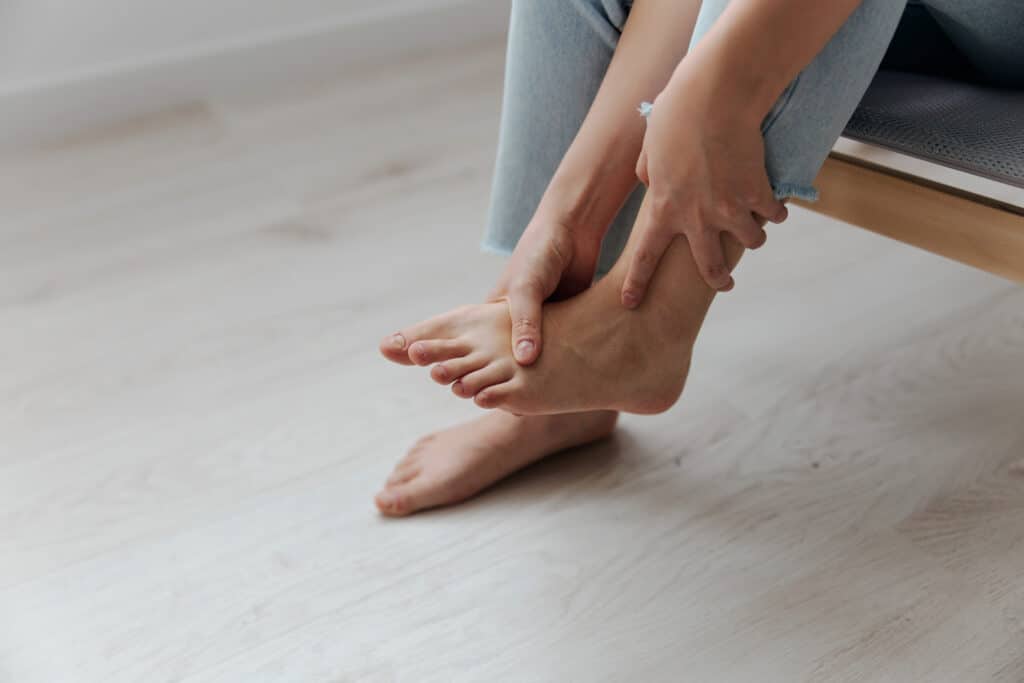
Closeup shot of pain leg foot suffering tanned beautiful young Asian woman touch ankle at home interior living room Injuries Poor health Illness concept Cool offer Banner
How Your Foot Works and Why It Can Hurt
Your foot has 26 bones, numerous joints, strong ligaments, and powerful tendons. This complex design allows it to absorb shock, stabilize the body, and push you forward with every step.
Problems arise when tissues are overworked, inflamed, worn by arthritis, or irritated by pressure or footwear. The plantar fascia, Achilles tendon, and small nerves between the toes are frequent sources of symptoms.
Where It Hurts Can Point to the Cause
Use this guide to match common pain locations with frequent causes and typical clues. A precise diagnosis still requires an exam.
Pain with lacing shoes tightly, swelling on top, pain with push-off
Outer Foot / Ankle
Ankle sprain, peroneal tendinitis
Tenderness along outer ankle or foot, pain on uneven ground
Big Toe Joint
Bunion, hallux rigidus, turf toe, gout
Prominent bunion, stiffness or grinding, sudden redness and swelling with gout
Common Causes by Area
Heel Pain
Plantar fasciitis: Irritation of the band of tissue under the foot that supports the arch. Often worse with the first steps in the morning.
Achilles tendinitis: Overuse irritation of the tendon connecting the calf to the heel. Common with increased training or tight calves.
Heel spur: A bony growth at the heel that may accompany plantar fasciitis. Pain usually comes from the irritated soft tissues, not the spur itself.
Bursitis or retrocalcaneal irritation: Inflammation of cushioning sacs near the Achilles insertion at the back of the heel.
Stress fracture: Tiny crack in the heel bone from repetitive load. Tender to touch, often worse with weight bearing.
Arch and Bottom of the Foot
Plantar fasciitis: The most common cause of arch pain, related to overload of the plantar fascia.
Posterior tibial tendon problems: This tendon supports the arch. Irritation or insufficiency can cause aching along the inside of the ankle and arch, sometimes with a flattening of the foot.
Flatfoot strain: Flexible flat feet may ache after prolonged standing or walking, especially on hard surfaces.
Ball of the Foot and Toes
Metatarsalgia: Pain under the ball of the foot from overload or footwear pressure.
Morton neuroma: Thickening of a small nerve between the toes, causing burning, tingling, or a sock-bunched-up feeling.
Sesamoiditis: Irritation of the small bones under the big toe joint, often in push-off athletes or with flexible forefeet.
Hammertoe irritation: A toe deformity that rubs in shoes and can cause corns or calluses.
Stress fractures: Small cracks in the metatarsal bones from repetitive impact.
Top of Foot and Midfoot
Extensor tendinitis: Irritation of the tendons on top of the foot, sometimes from tight laces or increased activity.
Midfoot arthritis: Wear of the joints in the middle of the foot, causing stiffness and aching, often worse with push-off.
Lisfranc sprain: Injury to the midfoot ligaments that needs careful evaluation if pain and swelling persist. Persistent midfoot pain, inability to bear weight, or bruising on the bottom of the foot warrants prompt evaluation.
Stress fracture: Overuse injury of the midfoot bones, common with training spikes or sudden activity changes.
Outer Foot and Ankle
Ankle sprain: Ligament injury after rolling the ankle. Pain, swelling, and tenderness on the outside are typical.
Peroneal tendinitis: Irritation of the tendons that run behind the outer ankle bone, often aggravated by uneven ground.
Big Toe Joint
Bunion (hallux valgus): A bony prominence and angulation at the base of the big toe that can cause shoe pressure and pain.
Hallux rigidus: Arthritis and stiffness of the big toe joint that makes push-off painful.
Turf toe: Sprain of the big toe joint from a hyperextension injury.
Gout: Sudden, intense pain, redness, and swelling at the big toe joint due to crystal inflammation.
When to Seek Care Urgently
Severe pain or swelling after an injury, or visible deformity
Inability to bear weight or take four steps
Numbness, tingling, or weakness in the foot
Fever, redness, warmth, or an open wound near a painful area
Pain that persists beyond a couple of weeks despite rest and home care
How To Diagnose Foot Pain
Your specialist begins with a careful history and hands-on exam. We look at where it hurts, when it hurts, your footwear, and how you walk.
Physical exam: Tender points, flexibility, strength, alignment, and gait
Imaging as needed: X-rays for bones and joints, ultrasound for soft tissues, MRI for complex or persistent problems
Nerve testing in select cases when symptoms suggest nerve entrapment
The goal is a clear diagnosis, so your treatment targets the true source of pain.
Treatment Options That Help
Most foot pain improves with a combination of activity changes, shoe adjustments, focused exercises, and targeted medical care. Your plan will be tailored to your diagnosis and goals.
Self-Care and Rehabilitation
Activity changes: Reduce high-impact activities while symptoms settle
Ice and elevation for swelling or after activity as needed. Avoid prolonged direct skin contact. If you have diabetes with neuropathy or peripheral vascular disease, consult a clinician before icing.
Supportive footwear and, when appropriate, cushioned insoles or custom orthotics
Stretching tight calves and plantar fascia, plus strengthening foot and ankle stabilizers
Physical therapy to correct mechanics, restore mobility, and build resilience
Medical Treatments
Medications such as anti-inflammatories, when appropriate
Cushioning pads or offloading for pressure points under the forefoot or heel
Immobilization or a walking boot for stress fractures or significant sprains
Image-guided corticosteroid injections for select conditions,s such as plantar fasciitis or a neuroma. They are typically reserved for cases that do not respond to conservative care and carry small risks, such as plantar fascia rupture or fat pad atrophy, so they should be used judiciously.
Surgery is considered when pain persists despite comprehensive nonoperative care, or when structural problems require correction
Prevention Tips to Protect Your Feet
Wear supportive shoes that match your activity and replace them when worn
Increase training volume gradually and vary your activities
Warm up, stretch calves and hamstrings, and maintain ankle and foot strength
Use orthotics or padding if your provider recommends them for alignment or offloading
Address new pain early to prevent chronic irritation
Getting Back on Your Feet
If foot pain is limiting your day, we’re here to help you find the cause and create a clear plan forward. Schedule an exam with a Princeton Orthopaedic Associates specialist to start moving comfortably again.
This blog post is meant to be informative and should not act as a self-diagnosis tool. If you’d like to see one of our doctors, please contact us here.