Walking After a Knee Pop? Your ACL Can Still Be Torn
by Princeton Orthopaedic Associates
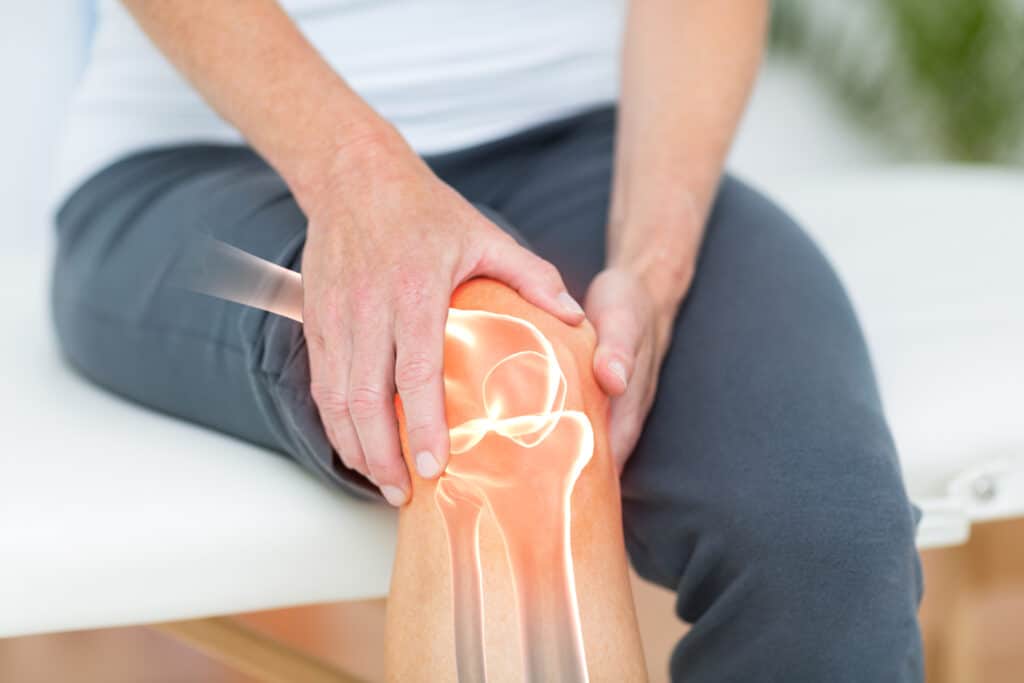
A pop, fast swelling, and a knee that still walks
An ACL tear usually happens without contact: a plant and turn, an awkward landing, or a sudden stop. Many people feel or hear a pop, and the knee swells within a few hours. What catches them off guard is that they can often stand up and walk on it.
We see this pattern in our exam rooms almost every week, in athletes and in people who were only stepping off a curb. Clinicians typically follow same course: settle swelling, conduct a careful exam, image when needed, and start rehab before surgery decisions.
The short version? Walking on it proves very little. A knee that pops and then swells fast deserves an exam.
Quick answers first
A pop during a twist, then swelling within a few hours, is one of the more telling patterns we see with an ACL tear.
Fast swelling after a knee injury is often blood inside the joint, not ordinary puffiness. That's why the knee feels tight and full.
Many people with a torn ACL can still walk. Being able to walk doesn't rule anything out.
Most ACL injuries happen without contact, during cutting, pivoting, landing, or a hard stop.
A cold, pale, blue, or numb foot, an obviously deformed knee, or a knee that may have dislocated, which usually means several ligaments tore at once, is an emergency. Go straight to the emergency department, because the popliteal artery and the nerves behind the knee can be injured.
A knee stuck in a bent position that won't straighten is urgent rather than an emergency. It often means a bucket handle meniscus tear has flipped into the joint, and it should be seen within a day or two.
ACL tears often come with a meniscus or cartilage injury, which is one reason imaging matters.
Getting the swelling down and the quad muscle working before any surgery is part of the plan, not a delay.
Growing kids and teens are handled differently than adults, and waiting it out has its own risks.
Returning to pivoting sports is based on how the knee performs, not only on the calendar.
Why the knee swells so fast, and what that swelling really is
The ACL has its own small blood supply. When it tears, those vessels tear with it, and blood collects inside the joint capsule. We call that a hemarthrosis: blood in the joint.
Speed is the clue. A knee that fills up within a few hours of a twisting injury is behaving differently from a knee that gets mildly puffy overnight, and that quick, tight swelling raises our concern for an injury inside the joint. The ACL is one of the most common culprits, though a meniscus tear or a break in the bone can do the same thing.
Blood in a joint also hurts in a particular way. The knee feels stiff and full. Bending it is uncomfortable, and straightening it all the way can feel impossible for a few days.
The first 48 hours at home
What you do in the first couple of days won't repair a ligament, but it can keep the knee calmer and make your exam more useful to us. The goal is simple: settle the swelling and pain, and avoid a second injury on a knee that can't protect itself yet. Here's how we'd coach a patient who called us from the parking lot after a game.
Do this now
Hold off on this
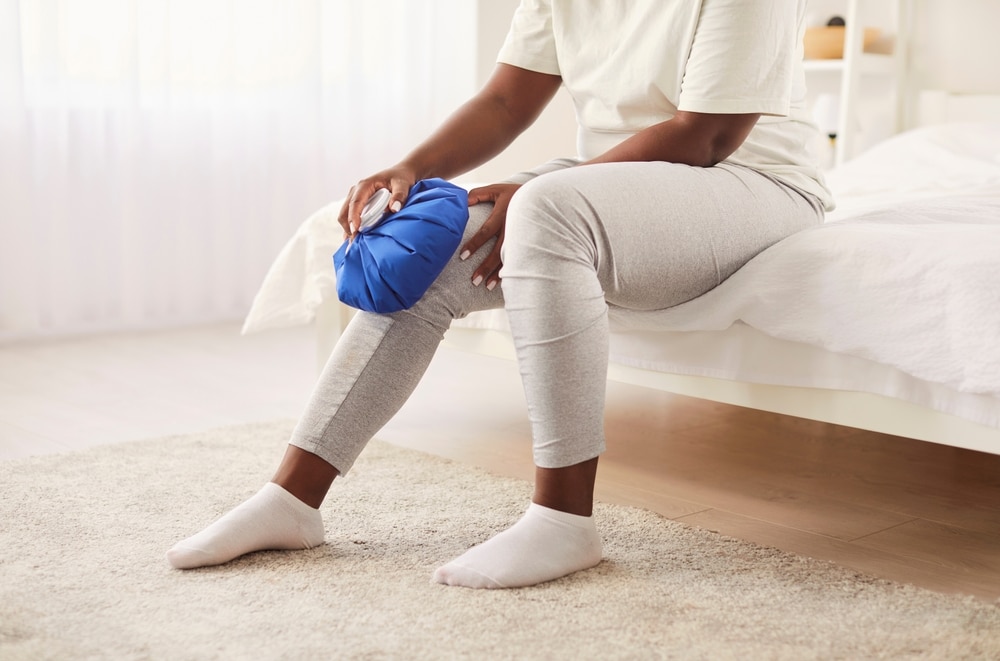
Ice the knee for roughly 15 to 20 minutes at a time, several times a day, with a thin towel against the skin
Testing the knee to see if it "still works"
Prop the leg up above heart level when you're sitting or lying down
Going back into the game or practice, even if the pain eases
Use a light compression sleeve or wrap if it feels better
Twisting, cutting, or pivoting on the leg
Use crutches if walking makes you limp or hitch
Hot tubs, heating pads, and deep massage in the first days
Gently bend and straighten the knee as tolerated so it doesn't stiffen up
Waiting weeks to be seen because the pain settled down
Call us to be examined
Guessing at the diagnosis from videos online
Over the counter anti inflammatory medicine is reasonable for many people, as long as it's safe for you. Check with your doctor or pharmacist first if you have kidney disease, a history of stomach ulcers or bleeding in the gut, heart failure, or blood pressure that isn't well controlled, if you take a blood thinner, or if you're pregnant.
Walking on it fools a lot of people
Plenty of patients who turn out to have a complete tear stand up and walk off the field.
Straight line walking on a flat floor doesn't ask much of the ACL. The ligament's job is controlling rotation and keeping the shin bone from sliding forward on the thigh bone, so the trouble shows up later, when you turn quickly, change direction, or step down off a stair. Patients describe the knee shifting or buckling. Others just say they don't trust it.
You'll hear the words partial and complete. A complete tear means the ligament is torn all the way through and no longer steadies the shin bone. A partial tear leaves some fibers attached, and a few of those knees stay stable enough for sport, while others start behaving like a complete tear once the swelling clears. The exam and the MRI together usually sort out which one you have.
There's another reason the early days can be misleading. Pain and swelling can shut the quadriceps down, so the thigh muscle stops firing the way it should, and that weakness lingers well after the knee stops hurting.
What we do at your visit
We start by listening to the story of the injury. How it happened, whether you heard or felt a pop, and how fast the knee swelled all point us in a direction before we ever touch the leg.
Then we examine both knees and compare them. We check how much fluid is in the joint, how far the knee bends and straightens, where it's tender, and how much the shin moves when we gently steady the thigh. We often take X rays to look at the bones. In kids and teens who are still growing, those films also help rule out a growth plate fracture or a tibial spine avulsion fracture, where a piece of bone pulls away with the ligament, since both can look and feel like an ACL tear.
An MRI gives us the rest of the picture. It confirms the ligament injury and shows the meniscus, the cartilage surfaces, and the other ligaments. These injuries travel together more often than people expect.
Injuries that feel like a torn ACL
A pop and a swollen knee can come from several different injuries, and more than you can happen at the same moment. The table below shows patterns we tend to see. Patterns aren't diagnoses, though, and sorting this out takes an exam, with imaging when it's needed.
Injury
What often stands out
ACL tear
Pop during a twist or landing, swelling within hours, the knee feels like it could give way when turning
Meniscus tear
Swelling that builds over a day or two, catching or locking, soreness along the joint line
Kneecap dislocation
The kneecap slides out of place and may pop back on its own, with pain and swelling across the front of the knee
MCL sprain
Pain along the inner side after the knee is pushed inward, with less swelling and often the ability to walk
Patellar or quadriceps tendon tear
Trouble straightening the knee or lifting the leg, and the kneecap may sit higher or lower than usual
Bone bruise or fracture
Sharp pain over bone, trouble putting any weight on the leg, swelling that comes on quickly
Prehab: the weeks before surgery count
If surgery is on the table, the time between the injury and the operating room isn't dead time. We use it.
Physical therapy before an ACL reconstruction, often called prehab, has a few clear jobs. Calm the swelling. Get the knee straightening fully again. Wake the quadriceps back up and rebuild strength in the hip and hamstring. Many patients who go into surgery with a quiet, mobile, stronger knee recover motion and strength more easily afterward, and a stiff, swollen knee at the time of surgery tends to stay stiff longer.
Swelling control and full knee extension
Quadriceps activation and strengthening
Hamstring, glute, and calf strength
Balance and body position awareness
Walking normally again, without a limp
Learning what the surgery and the first weeks after will involve
The research behind prehab is encouraging rather than settled. Study quality is moderate, so the benefit is best described as likely instead of certain. We still use those weeks, because there's little downside to arriving at surgery with a calmer, stronger knee.
Prehab helps patients who choose not to have surgery too. For some people, a strong, well trained knee handles daily life comfortably without a reconstruction, and that's a legitimate path we discuss openly.
Kids and teens are not small adults
A growing child has open growth plates near the knee, and surgeons used to routinely wait for those plates to close before reconstructing an ACL. That thinking has shifted.
Research over the past couple of decades has shown that a young knee left unstable tends to keep shifting during sports and play, and that shifting can damage the meniscus and the cartilage surfaces over time. Kids also find it harder than adults to sit still. Surgical techniques now exist that work around or across the growth plates with care, which gives families real options.
None of that means every child needs surgery tomorrow. It means the decision deserves a conversation with a surgeon who treats young athletes, weighing how much growth is left, how unstable the knee is, and what else was injured.
Why the calendar alone can't clear you for sports
Patients ask for a date. We understand why, and we'd rather give you a target with honest conditions attached.
A graft needs many months to mature inside the knee. In the Delaware-Oslo ACL cohort, Grindem and colleagues reported in 2016 that reinjury risk dropped with each added month of delay up to about nine months, and athletes who went back before nine months had much higher reinjury rates. Time is only half of it. Strength and hop testing is usually expected to reach roughly 90 percent of the uninvolved leg, along with controlled landing, confident change of direction, and a knee that doesn't swell after hard sessions. Many competitive athletes need twelve months or longer.
Confidence belongs on that list too. Fear of reinjury keeps some athletes from returning even when the leg tests well, and it's worth naming and working on with your therapist rather than ignoring.
One more thing that surprises people: after an ACL reconstruction, the opposite knee carries real risk as well, especially in young athletes going back to pivoting sports. Rehab should train both legs.
The warm up that lowers your risk
Here's the part worth sharing with a coach. Structured warm up programs built around strength, balance, hopping, and landing and cutting technique have been studied across many sports. They've been shown to reduce lower body injuries, including ACL injuries, in athletes who do them consistently. The FIFA 11+ and the PEP program are the best studied examples. They run about 15 to 20 minutes, stand in for a normal warm up, and need little or no equipment, usually a ball and a few cones.
Done as the team warm up, most practice days, all season
Hip and hamstring strengthening, not just stretching
Single leg balance work
Jump and landing drills with the knees tracking over the toes, not caving inward
Deceleration and cutting drills at controlled speed before full speed
Female athletes in cutting and pivoting sports tear the ACL at a notably higher rate than male athletes in the same sports. A good part of that gap is tied to muscle control and landing mechanics, and that's exactly what these warm up drills train, so part of the risk is trainable.
The honest catch is sticking with it. These programs work when teams do them routinely, and the benefit fades when the warm up gets skipped in a busy week.
Get care the same day if you notice any of these
Not every alarming knee is an emergency, and knowing the difference saves you a long night in a waiting room. A few findings point to a possible injury to the artery or the nerves behind the knee, and those can't wait. Others need attention quickly, though a clinic visit within a day or two is enough.
Emergency, go now: a foot that is cold, pale, blue, or numb
Emergency, go now: an obvious deformity of the knee or leg, or a knee that may have dislocated, since that usually means several ligaments tore and the popliteal artery may be hurt
Emergency, go now: severe pain with a knee that swells very quickly and feels tense and hard
Same day visit: fever, spreading redness, or warmth over the joint in the days after an injury, which can signal infection
Urgent, within a day or two: a knee locked in one position that will not straighten, often a bucket handle meniscus tear folded into the joint
Urgent, within a day or two: no ability to put weight on the leg at all
Everything short of that still deserves an appointment, ideally within a week or so. Symptoms that quiet down are not proof that the ligament is intact.
Surgery or not: how we decide together
The American Academy of Orthopaedic Surgeons published a clinical practice guideline on ACL injuries in 2022, and it weighs how much growing is left, age, and activity level together rather than any one of them alone. Younger, more active patients are generally treated without long delay, while older, less active patients often do well without surgery. A seventy year old who plays doubles tennis four times a week and a thirty year old with a desk job and a treadmill are still two different conversations.
Several things get weighed together when we talk through your options, and none of them stands alone. How the knee behaves day to day matters as much as what the MRI shows, and what you want to get back to matters just as much as both. Here's what usually shapes the conversation:
Whether the knee gives way during normal activity
Whether the meniscus or cartilage is also injured
The sports, work, and daily activities you want back
Your age and how much growing is left, for younger patients
How the knee responds to a course of physical therapy
For years the teaching was flat: a torn ACL doesn't knit back together. The picture has gotten more detailed. Some tears near the top of the ligament have shown signs of healing on MRI when the knee is braced early in a specific position, though that work is still being studied and isn't standard care for every patient yet.
The practical message hasn't changed much. Pain and swelling settle, plenty of people walk comfortably afterward, and the rotational stability needed for pivoting usually still has to be rebuilt, either through surgery or through serious, ongoing strength and control work. Structured rehab without surgery is a well studied path for selected patients, including many who are not heading back to pivoting sport.
Let's take a look at that knee
For most knee injuries like this, the first visit follows the same plan. We examine both knees, order an MRI when it's needed, and build a plan with you, and with your parents if you're a young athlete, that starts with swelling control and quad strength long before any decision about surgery.
Our sports medicine physicians, knee surgeons, and physical therapists work together at Princeton Orthopaedic Associates, so your exam, imaging, and rehab stay connected from the first visit through your return to the activities you care about. If your knee popped, swelled, or feels unreliable, schedule an exam with our team.
This blog post is meant to be informative and should not act as a self-diagnosis tool. If you’d like to see one of our doctors, please contact us here.
Sequence rules uses cookies to track the order of requests a user has made and the time between requests and makes them available via Cloudflare Rules. This allows you to write rules that match valid or invalid sequences. The specific cookies used to validate sequences are called sequence cookies.
session
cf_ob_info
The cf_ob_info cookie provides information on: The HTTP Status Code returned by the origin web server. The Ray ID of the original failed request. The data center serving the traffic
session
cf_use_ob
The cf_use_ob cookie informs Cloudflare to fetch the requested resource from the Always Online cache on the designated port. Applicable values are: 0, 80, and 443. The cf_ob_info and cf_use_ob cookies are persistent cookies that expire after 30 seconds.
session
__cfwaitingroom
The __cfwaitingroom cookie is only used to track visitors that access a waiting room enabled host and path combination for a zone. Visitors using a browser that does not accept cookies cannot visit the host and path combination while the waiting room is active.
session
cf_chl_rc_i
These cookies are for internal use which allows Cloudflare to identify production issues on clients.
session
cf_chl_rc_ni
These cookies are for internal use which allows Cloudflare to identify production issues on clients.
session
cf_chl_rc_m
These cookies are for internal use which allows Cloudflare to identify production issues on clients.
session
__cfruid
Used by the content network, Cloudflare, to identify trusted web traffic.
session
__cf_bm
Cloudflare's bot products identify and mitigate automated traffic to protect your site from bad bots. Cloudflare places the __cf_bm cookie on End User devices that access Customer sites that are protected by Bot Management or Bot Fight Mode. The __cf_bm cookie is necessary for the proper functioning of these bot solutions.
session
__cflb
When enabling session affinity with Cloudflare Load Balancer, Cloudflare sets a __cflb cookie with a unique value on the first response to the requesting client. Cloudflare routes future requests to the same origin, optimizing network resource usage. In the event of a failover, Cloudflare sets a new __cflb cookie to direct future requests to the failover pool.
session
_cfuvid
The _cfuvid cookie is only set when a site uses this option in a Rate Limiting Rule, and is only used to allow the Cloudflare WAF to distinguish individual users who share the same IP address.
session
cf_clearance
Whether a CAPTCHA or Javascript challenge has been solved.
session
Google reCAPTCHA helps protect websites from spam and abuse by verifying user interactions through challenges.
Name
Description
Duration
_GRECAPTCHA
Google reCAPTCHA sets a necessary cookie (_GRECAPTCHA) when executed for the purpose of providing its risk analysis.
179 days
Google Tag Manager simplifies the management of marketing tags on your website without code changes.
Name
Description
Duration
cookiePreferences
Registers cookie preferences of a user
2 years
td
Registers statistical data on users' behaviour on the website. Used for internal analytics by the website operator.
session
These cookies are used for managing login functionality on this website.
Name
Description
Duration
wordpress_logged_in
Used to store logged-in users.
Persistent
wordpress_sec
Used to track the user across multiple sessions.
15 days
wordpress_test_cookie
Used to determine if cookies are enabled.
Session
WPForms is a user-friendly WordPress plugin for creating custom forms with drag-and-drop functionality.
Name
Description
Duration
wpfuuid
Used to track user interactions with forms.
11 years
Statistics cookies collect information anonymously. This information helps us understand how visitors use our website.
Google Analytics is a powerful tool that tracks and analyzes website traffic for informed marketing decisions.
Used to distinguish new sessions and visits. This cookie is set when the GA.js javascript library is loaded and there is no existing __utmb cookie. The cookie is updated every time data is sent to the Google Analytics server.
30 minutes after last activity
__utmc
Used only with old Urchin versions of Google Analytics and not with GA.js. Was used to distinguish between new sessions and visits at the end of a session.
End of session (browser)
__utmz
Contains information about the traffic source or campaign that directed user to the website. The cookie is set when the GA.js javascript is loaded and updated when data is sent to the Google Analytics server
6 months after last activity
__utmv
Contains custom information set by the web developer via the _setCustomVar method in Google Analytics. This cookie is updated every time new data is sent to the Google Analytics server.
2 years after last activity
__utmx
Used to determine whether a user is included in an A / B or Multivariate test.
18 months
_ga
ID used to identify users
2 years
_gali
Used by Google Analytics to determine which links on a page are being clicked
30 seconds
_ga_
ID used to identify users
2 years
_gid
ID used to identify users for 24 hours after last activity
24 hours
_gat
Used to monitor number of Google Analytics server requests when using Google Tag Manager
1 minute
_gac_
Contains information related to marketing campaigns of the user. These are shared with Google AdWords / Google Ads when the Google Ads and Google Analytics accounts are linked together.
90 days
__utma
ID used to identify users and sessions
2 years after last activity
__utmt
Used to monitor number of Google Analytics server requests
10 minutes
These cookies help us measure the effectiveness of our website content and understand how visitors find and use our site. This allows us to improve the experience and provide more helpful resources.
Facebook Pixel is a web analytics service that tracks and reports website traffic.