Torn ACL: Symptoms, Diagnosis, Treatment & Recovery Timeline
by Princeton Orthopaedic Associates
PLEASE NOTE: This is provided for your general information only. If you are concerned about a Torn ACL or suspect you've sustained an ACL injury, consult a doctor immediately. Misunderstanding or misusing this information can cause harm. This information is provided only as general information about Torn ACLs and ACL injuries.
Torn ACL: Symptoms, Treatment Options, and Recovery
A torn anterior cruciate ligament, or ACL, can make your knee feel unstable and limit daily activities as well as sports. Below you will find what an ACL does, how tears happen, the signs to watch for, how we diagnose the injury, and the nonsurgical and surgical treatments that can help you return to what you love.
Experiencing a knee that suddenly pops, swells quickly, or feels unstable after an injury can be scary and confusing. You are not alone in this experience. People of many ages and from different athletic backgrounds come to our clinic with one shared goal: to move well again. We listen to each person, learn about their daily life and the demands of sport, and then create a plan that fits how they move, what they want to do, and what is safest for their knee as it heals. This plan can adapt over time as symptoms change, goals shift, and strength improves, always aiming for a safe return to the activities that matter most.
Key Points About ACL Tears
The ACL is a stabilizing ligament inside the knee that helps control twisting and sudden changes in direction.
ACL tears often occur during cutting, pivoting, or awkward landings. They can also occur during contact plays.
Common signs include a popping sensation, rapid swelling, and a feeling that the knee may buckle.
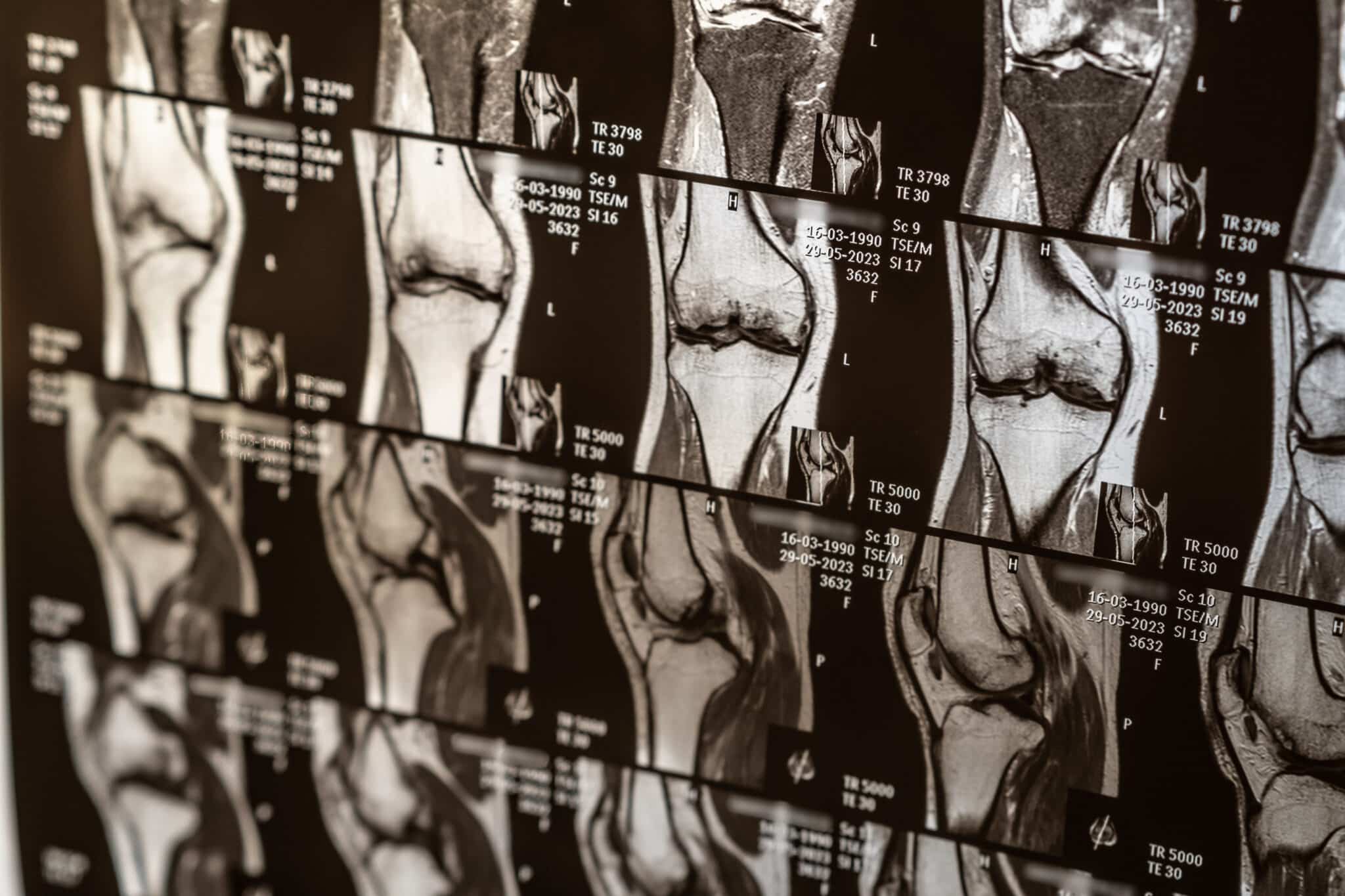
Diagnosis involves a careful exam and often an MRI to assess the ACL and look for related injuries like meniscus tears.
Treatment ranges from bracing and physical therapy to ACL reconstruction. The choice depends on your symptoms, activity demands, and goals.
Return to cutting and pivoting sports usually requires several months of structured rehabilitation and meeting strength and movement milestones.
Magnetic resonance imaging of human knee joint for medical diagnosis
What Is the ACL and Why Does It Matters
The ACL is one of four major ligaments that connect the thigh bone to the shin bone. It runs diagonally through the center of the knee, preventing the shin bone from sliding forward and the knee from twisting too far.
When the ACL is torn, the knee can feel loose or unstable, especially during sudden stops, pivots, or side-to-side movements. This instability can limit both everyday activities and sports.
How ACL Tears Happen
Many ACL injuries are noncontact. A quick cut, a sudden stop, or a landing where the knee collapses inward can overload the ligament. Direct blows to the knee can also cause tears, especially in contact sports.
ACL tears are common in sports that involve jumping, cutting, and pivoting such as soccer, basketball, football, lacrosse, and skiing. Certain factors can raise risk.
Sudden changes in direction or awkward landings
Playing on uneven or slick surfaces
Muscle strength or control imbalances around the hip and knee
Limited flexibility and poor landing mechanics
Higher risk among female athletes due to a combination of anatomical and neuromuscular factors
Common Signs and Symptoms
Symptoms can vary, but many people report several of the following right after injury or when returning to activity.
A popping sound or sensation at the moment of injury
Rapid swelling that develops within a few hours
Pain and difficulty putting weight on the leg
A feeling that the knee may give way with turning or pivoting
Limited range of motion because of pain or swelling
Seek care promptly if your knee swells quickly or feels unstable. Early evaluation can reduce complications and speed recovery.
Diagnosing an ACL Tear
We start with a detailed history and a focused knee exam. Specific tests like the Lachman test and pivot shift help assess ACL stability.
X-rays can check for fractures or other bone injuries. An MRI is often ordered to confirm an ACL tear and evaluate the meniscus, cartilage, and other ligaments. This full picture guides the best treatment plan for you.
Immediate Care After Injury
In the first few days, simple steps can help control pain and swelling and protect the knee.
Rest from painful activities and use crutches if weight bearing hurts
Ice for 15 to 20 minutes several times per day
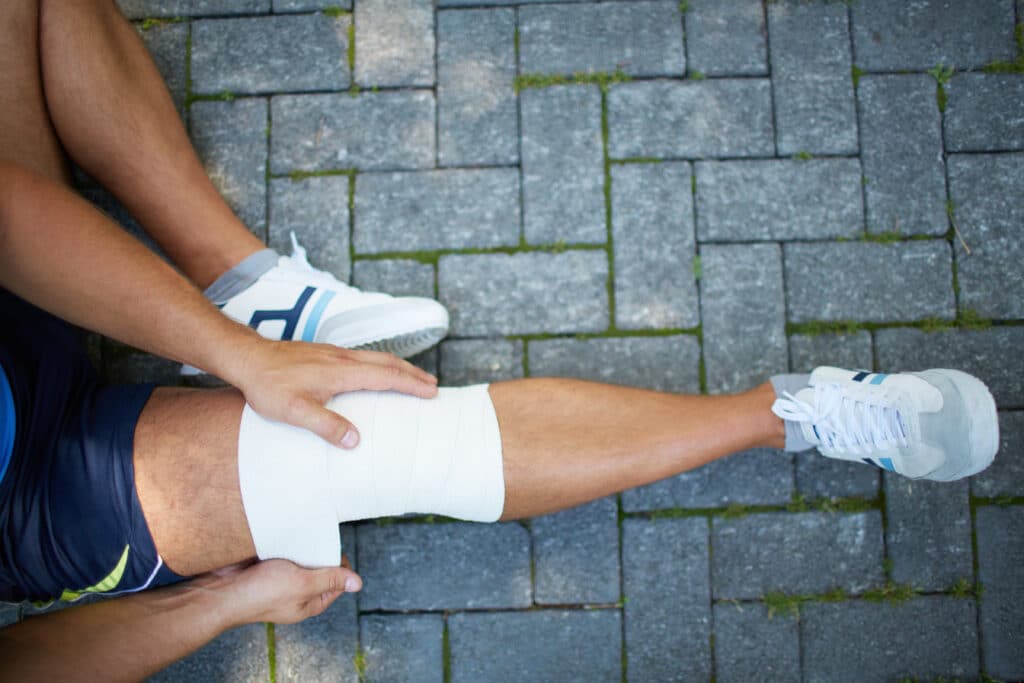
Compression with an elastic bandage or sleeve
Elevation to reduce swelling
Over-the-counter anti-inflammatory medication if approved by your clinician
Early gentle range-of-motion and quadriceps activation as guided by your care team
Treatment Paths: Nonsurgical and Surgical
Some people can do well without surgery, especially if their knee feels stable during daily life and they do not plan to return to cutting or pivoting sports. Others benefit from ACL reconstruction to restore stability and protect the knee during higher-demand activities. The decision is based on your symptoms, goals, activity level, knee stability, and any associated injuries.
Approach
Who It May Suit
What It Includes
Pros
Considerations
Nonsurgical Management
Lower-demand lifestyles, no significant instability, ability to avoid pivoting sports
Recurrent instability, desire to return to cutting and pivoting sports or high-demand work, combined with injuries
Avoids surgery and graft harvest
May not prevent giving way during cutting or pivoting activities
ACL Reconstruction
Recurrent instability, desire to return to cutting and pivoting sports or high-demand work, combined injuries
Arthroscopic reconstruction with a graft, followed by structured rehabilitation
Restores knee stability for higher-demand tasks
Requires surgery and several months of rehabilitation
For skeletally immature patients, surgeons use growth-friendly techniques to protect growth plates and allow ongoing bone development as the knee heals.
Who Often Benefits From ACL Reconstruction
Athletes in sports that require cutting, pivoting, or rapid deceleration
People who experience repeated giving way in daily life
Those with associated injuries such as significant meniscus tears
Workers whose jobs require rapid directional changes or ladder work
Graft Options for ACL Reconstruction
Reconstruction uses a tendon graft to create a new ACL. Grafts come from your own body, called an autograft, or from a donor, called an allograft. Your surgeon will discuss the options based on your age, sport, and personal preferences.
Graft Type
Source
Advantages
Considerations
Patellar Tendon Autograft
Middle third of the patellar tendon with bone plugs
Strong fixation, commonly used in high-demand athletes
Possible front-of-knee discomfort and kneeling sensitivity
Hamstring Tendon Autograft
Semitendinosus and sometimes gracilis tendons
Semitendinosus and sometimes the gracilis tendons
Possible hamstring weakness during early recovery
Quadriceps Tendon Autograft
Portion of the quadriceps tendon, with or without bone plug
Thick graft size and reliable strength
Possible tenderness above the kneecap during early healing
Allograft
Donor tendon
No graft harvest site, shorter operative time
Higher retear rates reported in young, high-demand patients
What to Expect From Surgery
ACL reconstruction is typically performed arthroscopically through small incisions. The surgeon prepares tunnels in the thigh bone and shin bone, places the graft, and secures it so it can heal in place. Most patients go home the same day with a brace and crutches. It’s important to know that ACL reconstruction does not eliminate the risk of knee arthritis later in life.
Early rehabilitation focuses on reducing swelling, restoring gentle motion, and activating the quadriceps. Your care team will guide you step by step and progress your plan based on healing and testable milestones.
Recovery and Return to Sport
Time is only one part of recovery. Safe return to sport depends on strength, balance, hop testing, and movement quality. In most cases, return to cutting or pivoting sports should be based on clear milestones, not just how many weeks have passed. Your surgeon and physical therapist will assess these criteria and only clear higher-level activity after you meet them.
Phase
Typical Timing
Primary Goals
Protection and Early Motion
Weeks 0 to 2
Control pain and swelling, regain gentle extension and flexion, activate quadriceps
Foundation Strength
Weeks 2 to 6
Normalize gait, improve range of motion, begin closed-chain strengthening and balance
Progressive Strength and Control
Weeks 6 to 12
Advance lower extremity strength, balance, and movement mechanics
Running and Agility Preparation
Months 3 to 6
Introduce light jogging, agility drills, and plyometrics when cleared
Return to Cutting and Pivoting Sports
Around 9 to 12 months or later
Meet strength and functional testing criteria and demonstrate safe movement patterns
Possible Risks and How We Reduce Them
Stiffness or loss of motion which is addressed with early, guided range-of-motion work
Graft retear, which we help reduce through progressive strengthening and movement training
Front-of-knee discomfort which is managed with targeted rehabilitation and activity modification
Blood clots or infection which are uncommon and monitored closely after surgery
Prevention Strategies
Not all ACL tears can be prevented, but careful training can lower your chances. Programs that improve how your muscles work, along with good form, help protect the knee during fast movements. Focus on strong hips and legs, balance, and flexible calves and thighs. This is especially helpful in sports that involve quick cuts and jumps.
Structured warm-up programs that teach safe jumping and landing
Strengthening of the hips, hamstrings, and core for better knee control
Balance and single-leg control drills
Consistent flexibility work for the calves, quads, and hamstrings
Appropriate footwear and sport-specific technique coaching
When to See a Knee Specialist
Schedule an evaluation if your knee swells quickly after injury, feels unstable, or keeps giving way during daily life or sports. Prompt diagnosis and a clear plan can protect your knee and support a confident return to activity.
We will help you understand your options, choose a treatment path that fits your goals, and guide you through each stage of recovery. To get started, schedule an exam with our team.
This blog post is meant to be informative and should not act as a self-diagnosis tool. If you’d like to see one of our doctors, please contact us here.
Sequence rules uses cookies to track the order of requests a user has made and the time between requests and makes them available via Cloudflare Rules. This allows you to write rules that match valid or invalid sequences. The specific cookies used to validate sequences are called sequence cookies.
session
cf_ob_info
The cf_ob_info cookie provides information on: The HTTP Status Code returned by the origin web server. The Ray ID of the original failed request. The data center serving the traffic
session
cf_use_ob
The cf_use_ob cookie informs Cloudflare to fetch the requested resource from the Always Online cache on the designated port. Applicable values are: 0, 80, and 443. The cf_ob_info and cf_use_ob cookies are persistent cookies that expire after 30 seconds.
session
__cfwaitingroom
The __cfwaitingroom cookie is only used to track visitors that access a waiting room enabled host and path combination for a zone. Visitors using a browser that does not accept cookies cannot visit the host and path combination while the waiting room is active.
session
cf_chl_rc_i
These cookies are for internal use which allows Cloudflare to identify production issues on clients.
session
cf_chl_rc_ni
These cookies are for internal use which allows Cloudflare to identify production issues on clients.
session
cf_chl_rc_m
These cookies are for internal use which allows Cloudflare to identify production issues on clients.
session
__cfruid
Used by the content network, Cloudflare, to identify trusted web traffic.
session
__cf_bm
Cloudflare's bot products identify and mitigate automated traffic to protect your site from bad bots. Cloudflare places the __cf_bm cookie on End User devices that access Customer sites that are protected by Bot Management or Bot Fight Mode. The __cf_bm cookie is necessary for the proper functioning of these bot solutions.
session
__cflb
When enabling session affinity with Cloudflare Load Balancer, Cloudflare sets a __cflb cookie with a unique value on the first response to the requesting client. Cloudflare routes future requests to the same origin, optimizing network resource usage. In the event of a failover, Cloudflare sets a new __cflb cookie to direct future requests to the failover pool.
session
_cfuvid
The _cfuvid cookie is only set when a site uses this option in a Rate Limiting Rule, and is only used to allow the Cloudflare WAF to distinguish individual users who share the same IP address.
session
cf_clearance
Whether a CAPTCHA or Javascript challenge has been solved.
session
Google reCAPTCHA helps protect websites from spam and abuse by verifying user interactions through challenges.
Name
Description
Duration
_GRECAPTCHA
Google reCAPTCHA sets a necessary cookie (_GRECAPTCHA) when executed for the purpose of providing its risk analysis.
179 days
Google Tag Manager simplifies the management of marketing tags on your website without code changes.
Name
Description
Duration
cookiePreferences
Registers cookie preferences of a user
2 years
td
Registers statistical data on users' behaviour on the website. Used for internal analytics by the website operator.
session
These cookies are used for managing login functionality on this website.
Name
Description
Duration
wordpress_logged_in
Used to store logged-in users.
Persistent
wordpress_sec
Used to track the user across multiple sessions.
15 days
wordpress_test_cookie
Used to determine if cookies are enabled.
Session
WPForms is a user-friendly WordPress plugin for creating custom forms with drag-and-drop functionality.
Name
Description
Duration
wpfuuid
Used to track user interactions with forms.
11 years
Statistics cookies collect information anonymously. This information helps us understand how visitors use our website.
Google Analytics is a powerful tool that tracks and analyzes website traffic for informed marketing decisions.
Used to distinguish new sessions and visits. This cookie is set when the GA.js javascript library is loaded and there is no existing __utmb cookie. The cookie is updated every time data is sent to the Google Analytics server.
30 minutes after last activity
__utmc
Used only with old Urchin versions of Google Analytics and not with GA.js. Was used to distinguish between new sessions and visits at the end of a session.
End of session (browser)
__utmz
Contains information about the traffic source or campaign that directed user to the website. The cookie is set when the GA.js javascript is loaded and updated when data is sent to the Google Anaytics server
6 months after last activity
__utmv
Contains custom information set by the web developer via the _setCustomVar method in Google Analytics. This cookie is updated every time new data is sent to the Google Analytics server.
2 years after last activity
__utmx
Used to determine whether a user is included in an A / B or Multivariate test.
18 months
_ga
ID used to identify users
2 years
_gali
Used by Google Analytics to determine which links on a page are being clicked
30 seconds
_ga_
ID used to identify users
2 years
_gid
ID used to identify users for 24 hours after last activity
24 hours
_gat
Used to monitor number of Google Analytics server requests when using Google Tag Manager
1 minute
_gac_
Contains information related to marketing campaigns of the user. These are shared with Google AdWords / Google Ads when the Google Ads and Google Analytics accounts are linked together.
90 days
__utma
ID used to identify users and sessions
2 years after last activity
__utmt
Used to monitor number of Google Analytics server requests
10 minutes
These cookies help us measure the effectiveness of our website content and understand how visitors find and use our site. This allows us to improve the experience and provide more helpful resources.
Facebook Pixel is a web analytics service that tracks and reports website traffic.