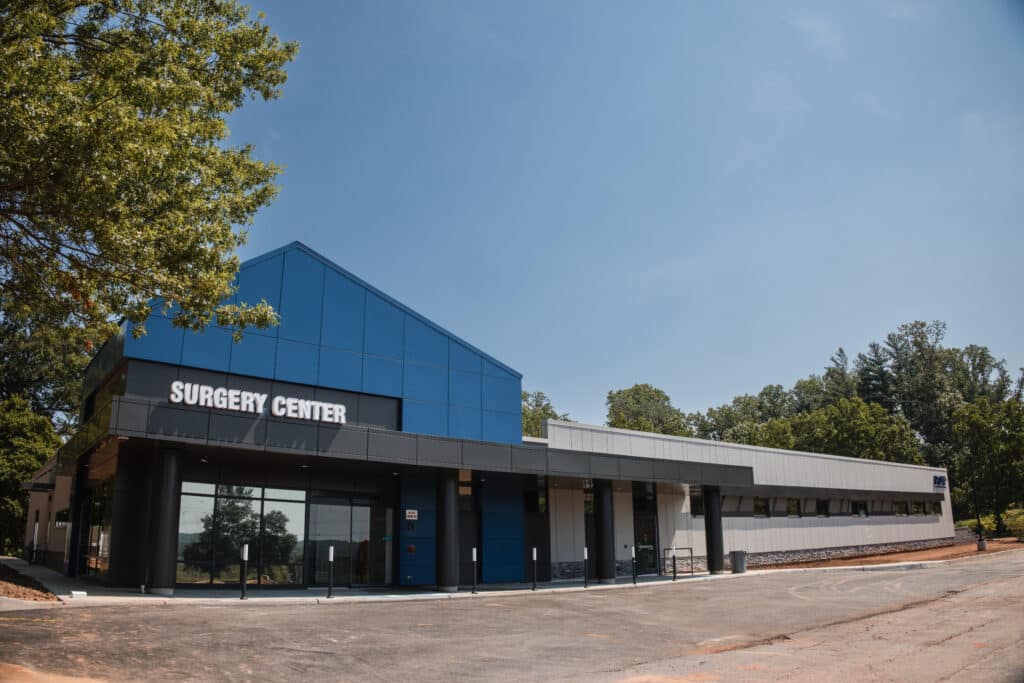
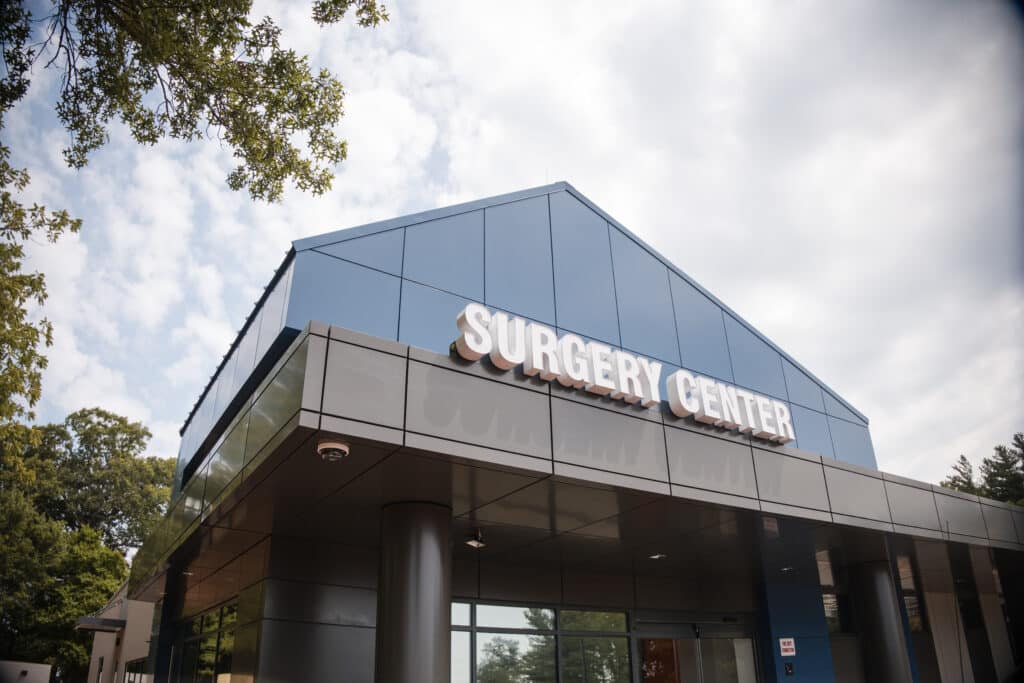
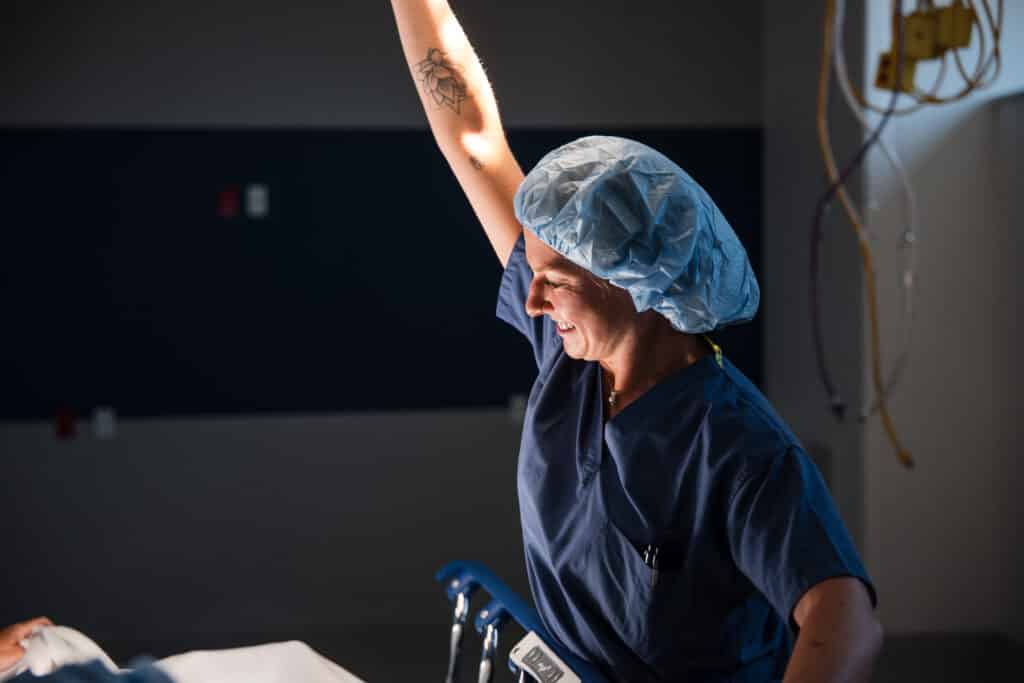
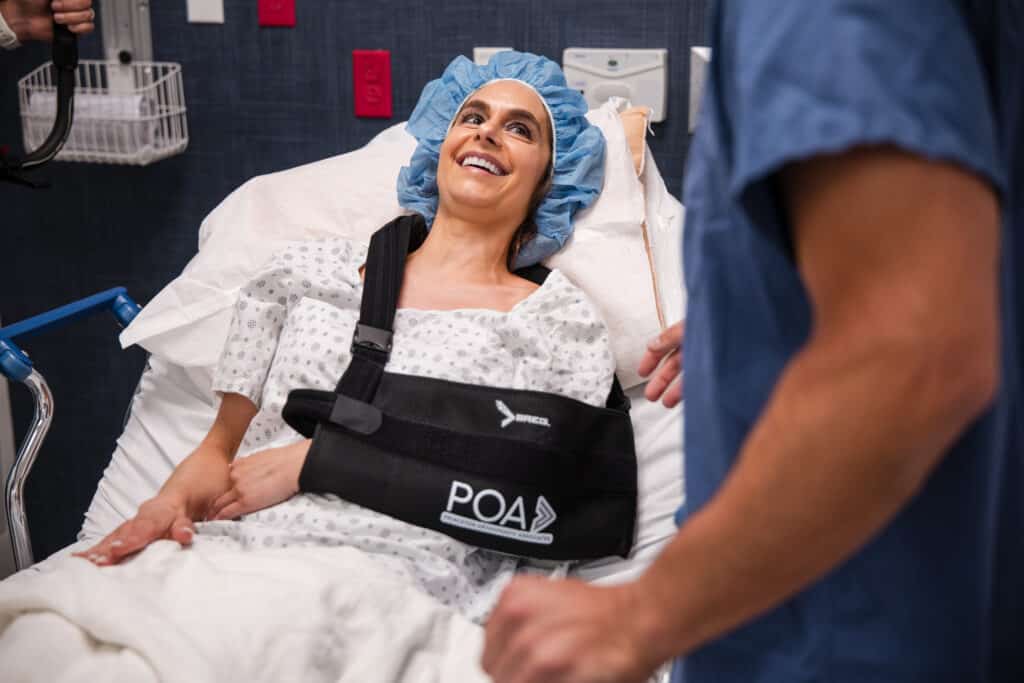
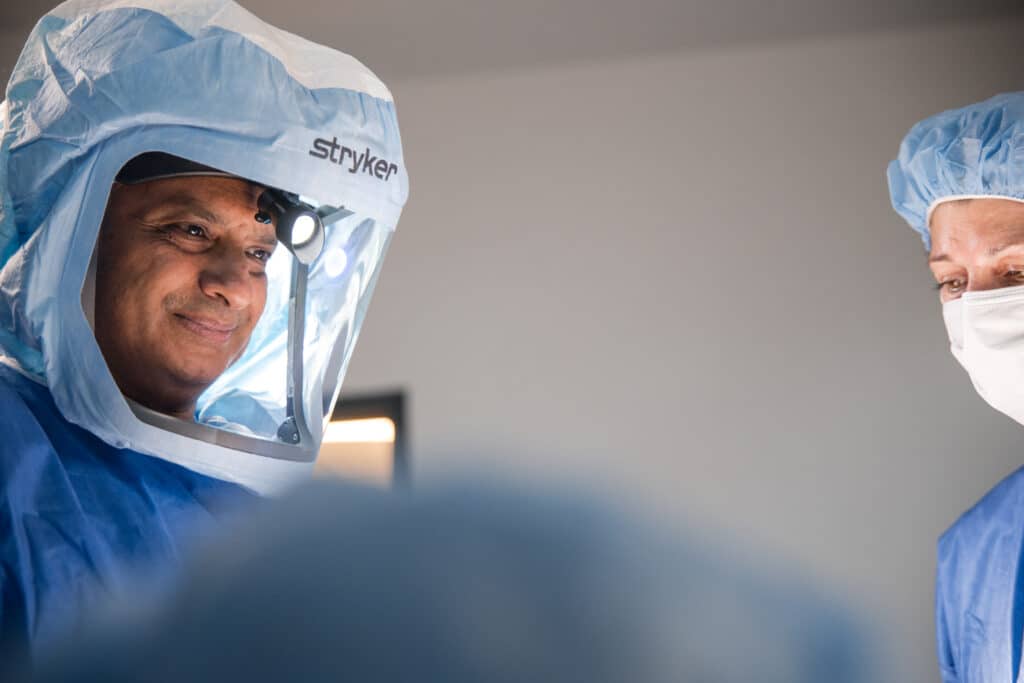
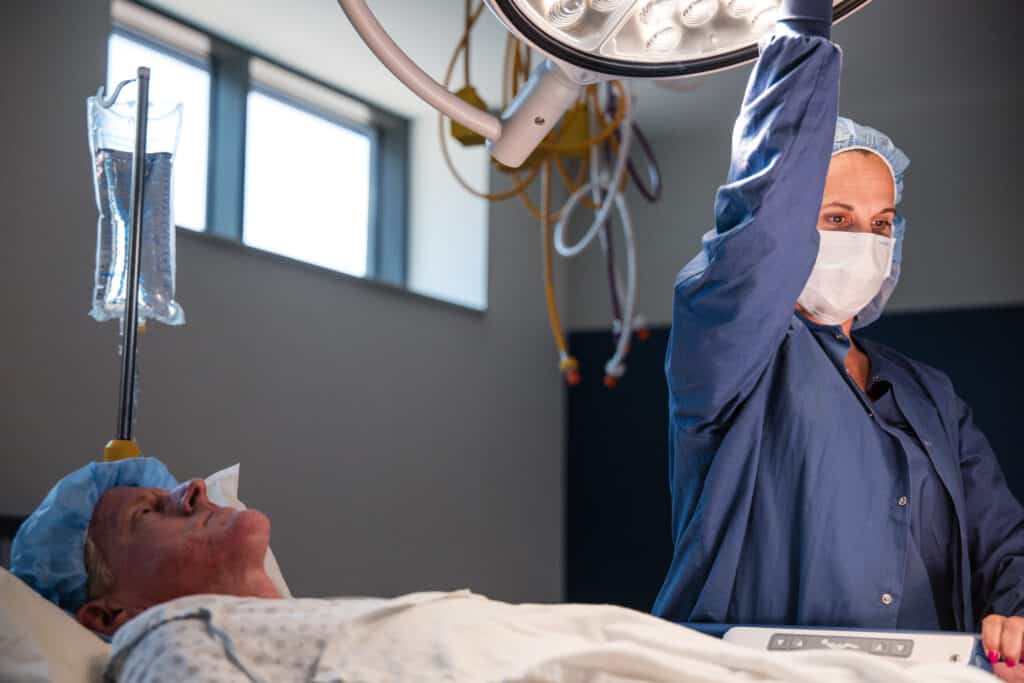
The new POA Surgery Center is a standalone surgical facility that provides patients with an exceptional surgical experience. Surgery can feel like a big deal. Because of that, our team designed a surgical fascility to help patients recover safely and comfortably, often going home the same day, with a hand-selected orthopedic team. It's the same equipment, treatments and care our surgeons would choose for their own families.
Our team made every decision about the Surgery Center with one question in mind: what is best for the patient?
Ultimately, it matters because our patients matter. With a surgery center, our team maintains control over your care. In a large hospital, orthopaedic patients share operating rooms, staff and schedules with every other specialty. At our center, every room, every team member and every piece of equipment exists for the types of surgery we perform daily.
"What we built with our new surgical center is a facility where we can provide optimal care under our control to our patients."
Why It Matters.
It was designed by our team to help patients avoid the common stress and hassle of surgery. They ge to recover where they are most comfortable: at home, cared for by people they know. Every decision about the center was made by your surgeons with care, convenience and recovery in mind.
Benefits of Surgery at the POA Surgery Center
You heal at home
At POA's surgical center, you often get to recover in your own bed and return to your life sooner than you expected.
A center just for orthopaedic care
Our surgical center is used for orthopaedic surgeries. Nothing else. That means a cleaner, less stressful environment.
Simpler, less stressful care
Parking is at the door. You are greeted by people who know who you are and why you are here, and the staff are in touch from the minute your procedure is scheduled.
A team that does orthopaedics every day
Nurses, technicians and surgeons alike are experts. We do this every day, and this is our home court.
Your surgeon makes the decisions
Your surgeon does what is best for you. Decisions are not made by an administrator or a financial analyst.
State of the art, chosen by surgeons
Our surgeons choose the operating rooms, equipment and implants they would choose for their own families.
No hospital visit
Avoid the lines. Avoid admission. Avoid the crowds. Avoid the hospital altogether.
Close to home
You do not have to travel out of state for advanced orthopaedic surgical care.
This blog post is meant to be informative and should not act as a self-diagnosis tool. If you’d like to see one of our doctors, please contact us here.
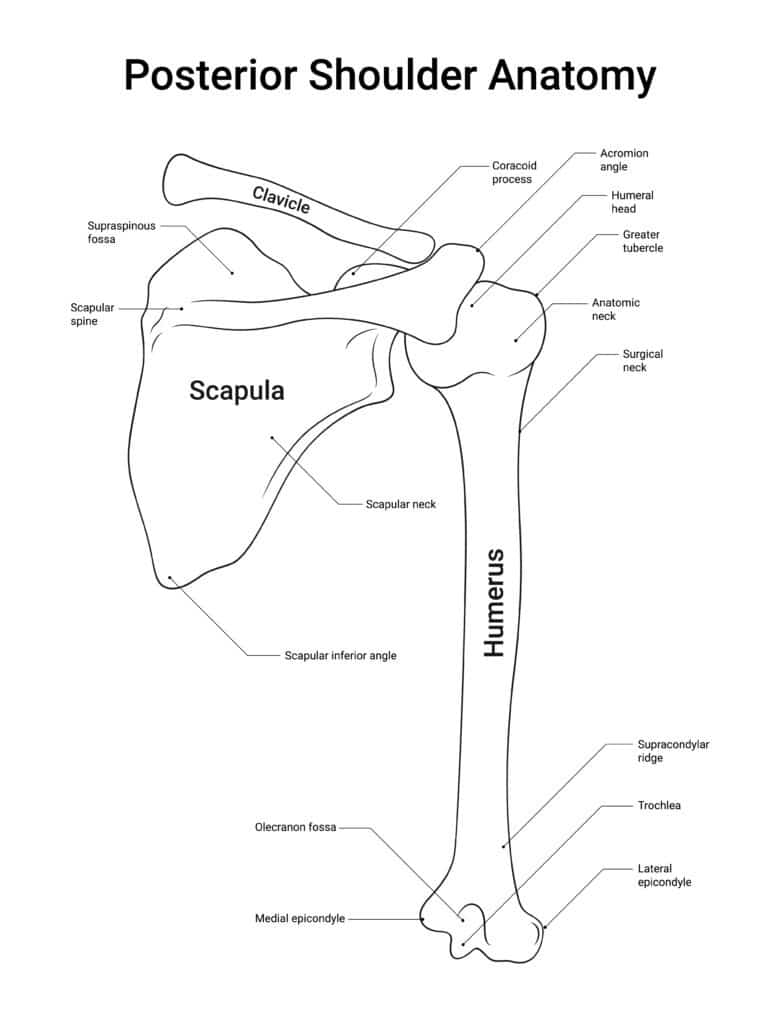
Shoulder and upper arm pain: Why?
Pain that sits deep in the shoulder and runs down the outside of the upper arm is an incredibly common complaint at Princeton Orthopaedic Associates. That question leads to others: Is the neck the real source of the pain? What does a torn rotator cuff actually mean? Why does a stiff shoulder take so long to settle? Where does treatment start? How likely is a dislocated shoulder to come out again? And which warning signs need care right away?
You're in good company. Shoulder pain is one of the most common reasons people see a doctor for aches and pains. Not rare. And not something you have to live with.
Quick answers before the details
Start here: what your shoulder may be telling you
Pain in the outer shoulder and upper arm is often tendon-related, but the neck, the joint at the top of the shoulder, and the joint lining can all cause a similar ache.
Numbness or tingling that runs past the elbow points us toward the neck.
A rotator cuff tear seen on a scan is common with age and isn't always the reason your arm hurts.
A shoulder that's getting stiffer in every direction, not just weaker, may be a frozen shoulder.
For most tendon-related shoulder pain, care begins with guided exercise, not the operating room.
Night pain and trouble sleeping on the painful side are very common, and they're worth telling us about.
After an injury, sudden weakness or not being able to lift the arm needs a prompt exam.
Shoulder or arm pain with chest pressure, sweating, jaw pain, or trouble breathing is a 911 call, not an orthopaedic visit.
Could my shoulder pain actually be coming from my neck?
Yes, and it gets missed a lot. Nerves leave the neck and run through the shoulder into the hand, so a pinched nerve in the neck can make the outer shoulder and upper arm ache while the shoulder itself is healthy.
Pain that comes from the neck often changes when you move your neck, and it can bring tingling, numbness or weakness down the arm. Neck and shoulder problems also show up together, so we check both at the same visit.
My shoulder is getting stiff, not just sore. What is frozen shoulder?
Frozen shoulder is when the lining around the ball-and-socket joint becomes inflamed and tight. Reaching behind your back or turning the arm outward gets hard, and the stiffness shows up in every direction. It most often shows up in middle age.
It also tends to move through phases, which can help you know what to expect when progress feels slow. Most people get much better, but it can take a year or more, and some stiffness can linger, so we don't simply wait it out.
Stage
What you may notice
Freezing
Pain, often at night, and stiffness that keeps growing
Frozen
The pain eases, but the shoulder stays stiff
Thawing
Symptoms settle, and motion gradually returns
Every shoulder moves through these at its own pace. We'll help you with the pain and keep the shoulder moving along the way.
What does treatment usually start with?
Almost always with movement. For most tendon pain at the top of the shoulder, guided exercise is the first treatment, because it helps pain, motion and strength.
If we need a closer look at a tendon, an ultrasound or MRI can help.
If pain is too strong to do your exercises, an injection may calm it down enough to get started.
For a rotator cuff tear that didn't come from an injury, we usually start with exercise too, and talk about surgery only if you aren't improving after a few months.
If you do have surgery, we get the shoulder moving again early rather than keeping it still for long.
Here's what that means for you. Starting with rehab isn't a delay tactic, and we're not hoping the problem quietly goes away. Rehab is the treatment.
I dislocated my shoulder once. Will it happen again?
Age at the first dislocation is one of the strongest clues we have. Younger people are more likely to have it happen again, usually within the first couple of years. That's why we don't treat a teenage wrestler and a 55-year-old gardener the same way.
Older shoulders behave differently. After 40, it's less likely to come out again, but we look more carefully for damage that came with the dislocation, like a rotator cuff tear or a nerve injury. A first dislocation after 40 is worth checking for both.
Which symptoms shouldn't wait?
Most shoulder pain can be watched for a couple of weeks while it settles down. Some signs shouldn't wait, though. If any of these apply to you, get seen promptly rather than giving it more time:
Shoulder or arm pain along with chest pain or pressure, sweating, nausea, jaw pain, or shortness of breath. Call 911. This can be a heart attack, not a shoulder problem. Be especially careful with sudden left-sided shoulder or arm pain, and in women and people with diabetes, whose warning signs can look unusual.
An injury that leaves the shoulder looking out of place or unable to move. Go to the emergency room, since a dislocated shoulder needs to be put back in right away.
An injury followed by pain and weakness, or suddenly not being able to raise your arm, which can mean a torn rotator cuff.
Signs of infection such as red skin, a very painful joint, fever, or feeling generally unwell. Get checked the same day.
New numbness, tingling, or weakness anywhere in the arm or hand.
Any new lump or swelling around the shoulder.
Weight loss you can't explain, or a past history of cancer.
Constant pain at rest that never lets up, or night pain that doesn't change when you shift position.
New swelling in several joints at once.
Watch for a slower timeline as well. If your pain isn't getting better after about three months of treatment, it's time to see a specialist, and sooner if the shoulder feels loose or the pain after an injury is severe.
What happens when you come see us?
We listen first. How the pain started, which positions set it off, whether it wakes you, whether anything travels into the hand, and what you can't do right now. Then we examine the shoulder and the neck together, test your strength, and watch how your shoulder blade moves when you lift.
Imaging comes after the exam, not before it, and only when it will change the plan. X-rays show bone. Ultrasound and MRI show tendons and soft tissue. Plenty of patients leave with a diagnosis and a rehab plan, no scan needed.
What can I do while I wait for my visit?
Small changes often take the edge off while you wait. None of these steps replace an exam, and none of them will fix a torn tendon, but they can make the days before your visit easier to get through. If something sharply increases your pain, stop doing it and tell us at the appointment:
Step back from repeated overhead reaching for a while, but don't stop all activity. Gentle motion usually beats total rest.
Use ice or heat, whichever feels better, for short sessions.
Ask your pharmacist or doctor before taking an over-the-counter anti-inflammatory, especially if you have kidney or heart problems, stomach ulcers, or take blood thinners.
For night pain, try sleeping on the other side with a pillow supporting the sore arm in front of you.
Keep moving the arm through a comfortable range each day, a few times a day, so it doesn't tighten up.
Write down which movements hurt. That list saves us time and makes your exam more accurate.
Let's figure out what's going on with your shoulder
Our shoulder and sports medicine team at Princeton Orthopaedic Associates sees this every day, from the weekend pickleball ache to the arm you can no longer lift. We'd invite you to come in for a clear answer and a plan built around what you need to get back to.
Schedule Exam with our team and let's start with the cause, not just the pain.
This blog post is meant to be informative and should not act as a self-diagnosis tool. If you’d like to see one of our doctors, please contact us here.
Pain under your shoulder blade?
Shoulder blade pain is confusing. The blade itself is rarely the part that is actually hurt. Scapular fractures do happen, usually after a car crash or another high-energy hit, and stress fractures in the scapula turn up now and then in throwers and overhead athletes. More often the ache comes from the muscles and cushions that let the blade glide. It can also come from an irritated nerve in the neck, a nearby rib or joint, or a bone in the spine.
What sits under your shoulder blade
Your shoulder blade doesn't lock into a socket against your rib cage. It rests there, held in place by muscles, with small fluid-filled cushions (bursae) between it and the ribs to cut friction. When those muscles tire or weaken, the blade can rub instead of glide, and it starts to ache.
Match your symptoms before you guess at a cause
How the pain behaves tells us more than where you point. Use this table as a rough guide, not a diagnosis. If sharp pain with breathing comes with shortness of breath, see the emergency list below. If no row fits, come in for an exam and we'll sort it out together.
What you feel
What it might be
A dull ache along the inner edge of the blade
Overworked muscles
Burning pain with tingling into the arm or hand
A pinched nerve in the neck
Sharp pain with a deep breath or a twist
An irritated joint or rib
Grinding or clicking as you raise your arm
The blade rubbing on the ribs
Weakness lifting your arm, with the blade sticking out
A muscle or nerve problem
Sudden pain over the spine after a minor fall or lift
A spine fracture
Get emergency care right away for these
Shoulder blade or upper back pain that comes with chest pain or pressure, shortness of breath, sweating, nausea, or pain spreading to your jaw or arm. This can be a heart problem. Call 911.
Sharp pain when you breathe that comes with shortness of breath, coughing up blood, a racing heart, or a swollen, painful calf. This can be a blood clot or a lung problem. Call 911.
New weakness in your legs, unsteady walking, numbness in the groin or inner thighs, or changes in bladder or bowel control. Go to the emergency room right away.
See a doctor soon for these
These aren't usually emergencies, but don't wait a few weeks to see if they settle.
Pain that started right after a crash, a fall, a heavy lift or a direct blow to the upper back
New weakness in the arm or hand, or numbness that stays instead of coming and going
Shoulder blade or upper back pain in anyone with a history of cancer, a weakened immune system, or a history of injecting drugs
Pain that is worse at night, doesn't ease when you change position, or wakes you from sleep
Fever, chills, night sweats, or weight loss you can't explain
Pain on the right side with nausea or belly symptoms, often after meals, but no chest pain or shortness of breath. It can come from an organ like the gallbladder and needs a medical check. When in doubt, call 911.
Pain that doesn't change no matter how you move your arm
Fever or chills with new back pain should be checked the same day, especially if your immune system is weak or you have injected drugs.
The everyday causes: too much load, too little support
The cause we see most is simple: the muscles that hold your shoulder blade steady get overworked from desk work, a heavy bag, or lots of reaching, and they turn sore and tight.
A pinched nerve in the neck feels different: burning pain, often with tingling down the arm into the hand. Irritated joints or ribs in the upper back tend to cause a sharp, catching pain with a deep breath, a cough or a twist.
When it grinds, clicks or snaps
Some people hear their shoulder blade and feel it. It can grind, click or snap against the ribs as you raise your arm, often after lots of overhead work. A hands-on exam usually tells us what's going on.
When the blade sticks out like a wing
Sometimes the inner edge of your shoulder blade lifts away from your ribs. Weak muscles can cause this, and a nerve problem can also make the shoulder blade stick out like a wing. Come in for an exam so we can tell which it is.
The cause that hides: a spine fracture
If you're over 50 or have thin bones, sudden pain in your upper back or around your shoulder blade should be checked within a day or two, not weeks. A minor fall or lift can be enough to crack a bone in the spine so it squashes down (a compression fracture). If we find one, we treat it and help you start a bone-health plan.
Your desk is part of the treatment plan
Sitting at a computer all day long can be the culprit. Moving often, getting up, stretching and paying attention to your posture are helpful. No single posture protects you on its own, so take short breaks. Set up your desk in this order, since each step affects the next.
Set the chair first, with your feet flat and your lower back supported.
Adjust the armrests next. Armrests set too high keep your shoulders shrugged.
Bring the mouse in close, so your shoulder isn't holding your arm out all day.
Then set the screen height. A screen that's too high makes you tip your head back.
Last, check how high your arms sit while you type. Arms held too high or too low both strain your shoulders.
On a laptop, a separate keyboard and a stand that raises the screen often help your neck.
How we pin down the cause
We start with your story and a hands-on exam, watching how your shoulder blade moves and checking your neck, ribs, spine and strength. We add imaging, such as an X-ray or MRI, only when it will change the plan. Many people never need an MRI or CT scan.
Treatment, simplest first
Almost every plan starts without surgery. Rest, medicine, physical therapy and home exercises help many people, and injections or surgery come up only if the pain stays strong. Worsening arm weakness needs to be seen quickly.
Likely cause
Where we usually start
If it doesn't settle
Overworked muscles
Activity changes, strengthening, hands-on therapy
A closer look for another cause
Pinched nerve in the neck
Therapy, medicine, home exercises
Imaging, then a talk about injections or surgery
Irritated joints or ribs
Gentle movement and hands-on therapy
Imaging, and sometimes an injection
A blade that grinds or sticks out
Exercises that steady the blade
More testing and a talk about surgery
Spine fracture
Care without surgery, plus a bone health check
A procedure if the pain doesn't ease
What you can do this week
You don't have to wait for your visit to start. Try these and write down what happens.
Hold anything heavy close to your body, not out at arm's length.
Break up overhead work into shorter blocks, with rests in between.
Notice whether turning your head toward the sore side brings back the pain or tingling in your fingers.
Notice whether a deep breath or a twist makes the pain sharp.
Work through the desk steps above, in order.
Let's find out what's actually causing it
If your shoulder blade pain has lasted more than a couple of weeks, keeps coming back, or comes with weakness, numbness or grinding, we'd like to take a look. Our orthopaedic physicians, physiatrists (rehabilitation doctors) and physical therapists work side by side on a plan built around your goals.
Schedule Exam with Princeton Orthopaedic Associates and let's get you moving comfortably again.
The information here is educational and is not a substitute for individual evaluation, diagnosis or treatment by a qualified clinician.
This blog post is meant to be informative and should not act as a self-diagnosis tool. If you’d like to see one of our doctors, please contact us here.
Pain behind the knee and calf: what it usually means
Pain behind the knee or in the calf is usually something simple, like a pulled calf muscle or an irritated knee. Most of the time it settles with some rest and a little patience. Once in a while it's a blood clot, and that needs care the same day. Here's how to tell the difference, what you can do at home, and when to come see us.
When to get help right away
Get seen the same day if you notice any of these:
Swelling, warmth or redness in the calf, especially if nothing happened to explain it
A heavy, tight leg with no injury to explain it
Chest pain, shortness of breath or coughing up blood (call 911)
Fever along with a hot, swollen knee
Numbness, weakness, or a foot that drags when you walk
Numbness in both legs, numbness around your groin, buttocks or inner thighs, or trouble controlling your bladder or bowels (call 911 or go to the emergency room)
Knee pain right after a fall, a car accident or a twist you couldn't walk off
You can't put weight on the leg
A snap or pop at the back of the lower calf or ankle, or you can't stand on tiptoe (possibly a torn Achilles tendon)
Why this matters: A blood clot in the leg can feel a lot like a pulled muscle. If your calf is swollen and you can't point to something that caused it, don't wait it out. Get it checked.
Common causes of pain behind the knee and calf
Where it hurts and how it started are the two best clues. Here's a simple guide:
Where it hurts
How it often feels
What it might be
Middle of the back of the knee
Fullness or a soft lump, tight when you bend all the way
A Baker's cyst
Inner or outer back of the knee
An ache that's often worse on stairs
Tendon irritation or a meniscus tear
Upper calf
Sudden sharp pain while pushing off, bruising later
A calf muscle strain
Whole calf
Swelling, warmth and heaviness with no injury
A possible blood clot. Get checked the same day.
Takeaway: Pain that starts suddenly during activity is usually a strain. Pain that builds up slowly is more often tendon irritation or wear inside the knee. If you're not sure which it is, that's exactly what an exam is for.
A lump behind the knee
A soft bulge in the crease behind your knee is usually a Baker's cyst. The cyst itself is harmless, just a pocket of joint fluid, but any new lump needs a check. A cyst is often a sign that something inside the knee, like arthritis or a meniscus tear, is making extra fluid. Treating that problem is usually what settles the cyst.
Now and then a cyst bursts and fluid leaks down into the calf. That can look just like a blood clot, with swelling and pain in the calf, so it always needs a proper check before anyone treats it.
Takeaway: A lump behind the knee usually isn't dangerous by itself, but it's worth letting us find out what's causing it.
Other causes we check for
We also check for these:
A hamstring strain or sore tendon. The hamstring tendons cross the back of the knee. A strain often starts suddenly during a sprint, while a sore tendon usually builds up from overuse.
Knee arthritis. This usually builds slowly, with stiffness that's often worse in the morning or after sitting.
A pinched nerve in the lower back. Nerve pain (sciatica) can travel from the back or buttock down into the calf, sometimes with tingling.
Muscle cramps. Common at night or after a hard workout, and gentle stretching usually eases them.
Takeaway: Several of these feel alike, so an exam looks beyond just the spot that hurts.
What you can do at home
If you have none of the warning signs above and you know what set it off, like a sprint, a jump or a long hike, simple care usually helps:
Rest from the activity that hurt it, but keep walking gently
Use ice and keep the leg raised to calm the swelling
Skip hard stretching for the first few days
Ask your doctor before taking anti-inflammatory medicine
Ice or heat? Start with ice, in short sessions with a cloth between the ice and your skin. Hold off on heat and massage for the first few days.
Give it about two weeks. If it isn't clearly better by then, come in for an exam. Get checked the same day if the pain gets worse, you can't put weight on the leg, the swelling grows or your calf turns warm.
Protecting your calf and knee
A few simple habits can lower your chances of a strain:
Warm up before activity and stretch your calves regularly
Build up new or harder workouts gradually
Keep your calves and the backs of your thighs strong, with rest days between hard workouts
Know when a clot is more likely. Most calf pain isn't a clot, but the chances go up after surgery or a leg injury, on long trips, or when you have been laid up in bed or a cast. At those times, move around as much as your care team allows, and get a swollen, warm calf checked the same day.
What happens at your visit
We'll ask how and when the pain started, then examine your knee, your calf and the way you walk. Imaging isn't always needed. When we do want a closer look, we pick the test that answers the question: an X-ray for bone, or an ultrasound or MRI for muscles, tendons and cysts. Then we'll build a plan around what you want to get back to.
How long recovery takes
It depends on the cause. A mild calf strain often feels better within a few weeks, while a bigger tear can take a couple of months or longer. Physical therapy helps you rebuild strength step by step, so you can get back to walking, running or sports and lower the chance of hurting it again. We'll give you a realistic timeline after your exam.
Who to see for pain behind the knee and calf
Our team works together, and the right place to start depends on what's going on.
Rebuilding strength and getting back to activity safely
Schedule Exam
If the pain behind your knee or calf has lasted more than two weeks, keeps coming back or is changing the way you walk, come see us. You don't have to figure it out on your own; that's what the exam is for.
This blog post is meant to be informative and should not act as a self-diagnosis tool. If you’d like to see one of our doctors, please contact us here.
Sequence rules uses cookies to track the order of requests a user has made and the time between requests and makes them available via Cloudflare Rules. This allows you to write rules that match valid or invalid sequences. The specific cookies used to validate sequences are called sequence cookies.
session
cf_ob_info
The cf_ob_info cookie provides information on: The HTTP Status Code returned by the origin web server. The Ray ID of the original failed request. The data center serving the traffic
session
cf_use_ob
The cf_use_ob cookie informs Cloudflare to fetch the requested resource from the Always Online cache on the designated port. Applicable values are: 0, 80, and 443. The cf_ob_info and cf_use_ob cookies are persistent cookies that expire after 30 seconds.
session
__cfwaitingroom
The __cfwaitingroom cookie is only used to track visitors that access a waiting room enabled host and path combination for a zone. Visitors using a browser that does not accept cookies cannot visit the host and path combination while the waiting room is active.
session
cf_chl_rc_i
These cookies are for internal use which allows Cloudflare to identify production issues on clients.
session
cf_chl_rc_ni
These cookies are for internal use which allows Cloudflare to identify production issues on clients.
session
cf_chl_rc_m
These cookies are for internal use which allows Cloudflare to identify production issues on clients.
session
__cfruid
Used by the content network, Cloudflare, to identify trusted web traffic.
session
__cf_bm
Cloudflare's bot products identify and mitigate automated traffic to protect your site from bad bots. Cloudflare places the __cf_bm cookie on End User devices that access Customer sites that are protected by Bot Management or Bot Fight Mode. The __cf_bm cookie is necessary for the proper functioning of these bot solutions.
session
__cflb
When enabling session affinity with Cloudflare Load Balancer, Cloudflare sets a __cflb cookie with a unique value on the first response to the requesting client. Cloudflare routes future requests to the same origin, optimizing network resource usage. In the event of a failover, Cloudflare sets a new __cflb cookie to direct future requests to the failover pool.
session
_cfuvid
The _cfuvid cookie is only set when a site uses this option in a Rate Limiting Rule, and is only used to allow the Cloudflare WAF to distinguish individual users who share the same IP address.
session
cf_clearance
Whether a CAPTCHA or Javascript challenge has been solved.
session
Google reCAPTCHA helps protect websites from spam and abuse by verifying user interactions through challenges.
Name
Description
Duration
_GRECAPTCHA
Google reCAPTCHA sets a necessary cookie (_GRECAPTCHA) when executed for the purpose of providing its risk analysis.
179 days
Google Tag Manager simplifies the management of marketing tags on your website without code changes.
Name
Description
Duration
cookiePreferences
Registers cookie preferences of a user
2 years
td
Registers statistical data on users' behaviour on the website. Used for internal analytics by the website operator.
session
These cookies are used for managing login functionality on this website.
Name
Description
Duration
wordpress_logged_in
Used to store logged-in users.
Persistent
wordpress_sec
Used to track the user across multiple sessions.
15 days
wordpress_test_cookie
Used to determine if cookies are enabled.
Session
WPForms is a user-friendly WordPress plugin for creating custom forms with drag-and-drop functionality.
Name
Description
Duration
wpfuuid
Used to track user interactions with forms.
11 years
Statistics cookies collect information anonymously. This information helps us understand how visitors use our website.
Google Analytics is a powerful tool that tracks and analyzes website traffic for informed marketing decisions.
Used to distinguish new sessions and visits. This cookie is set when the GA.js javascript library is loaded and there is no existing __utmb cookie. The cookie is updated every time data is sent to the Google Analytics server.
30 minutes after last activity
__utmc
Used only with old Urchin versions of Google Analytics and not with GA.js. Was used to distinguish between new sessions and visits at the end of a session.
End of session (browser)
__utmz
Contains information about the traffic source or campaign that directed user to the website. The cookie is set when the GA.js javascript is loaded and updated when data is sent to the Google Analytics server
6 months after last activity
__utmv
Contains custom information set by the web developer via the _setCustomVar method in Google Analytics. This cookie is updated every time new data is sent to the Google Analytics server.
2 years after last activity
__utmx
Used to determine whether a user is included in an A / B or Multivariate test.
18 months
_ga
ID used to identify users
2 years
_gali
Used by Google Analytics to determine which links on a page are being clicked
30 seconds
_ga_
ID used to identify users
2 years
_gid
ID used to identify users for 24 hours after last activity
24 hours
_gat
Used to monitor number of Google Analytics server requests when using Google Tag Manager
1 minute
_gac_
Contains information related to marketing campaigns of the user. These are shared with Google AdWords / Google Ads when the Google Ads and Google Analytics accounts are linked together.
90 days
__utma
ID used to identify users and sessions
2 years after last activity
__utmt
Used to monitor number of Google Analytics server requests
10 minutes
These cookies help us measure the effectiveness of our website content and understand how visitors find and use our site. This allows us to improve the experience and provide more helpful resources.
Facebook Pixel is a web analytics service that tracks and reports website traffic.