Relief for Neck Pain: A Patient's Guide to Recovery
A Quick-Start Guide to Neck Pain Relief
Learn the warning signs that mean your neck pain needs urgent medical care.
Try safe home remedies for immediate relief, including ice, heat, and gentle movement.
Improve your daily posture and body mechanics to reduce strain on your neck.
Explore guided physical therapy if pain persists for structured recovery.
Practice stress relief techniques and build daily, neck-friendly habits.
Use provider-approved exercises to build strength, increase mobility, and prevent future pain.
What Is Neck Pain?
Neck pain is a common condition that can affect anyone. It can be caused by a variety of factors, including poor posture, injuries, and age-related wear and tear. Pain is your body's way of alerting you that something needs attention. It may feel sharp, dull, or achy, and it can be constant or intermittent.
Many people have neck pain at some point in their lives. Things such as poor posture, injury, and aging can lead to neck pain. Neck pain can be the result of an injury. Getting older can also mean more aches and pains. But neck pain can also be caused by strain from overuse and bad habits that can include poor posture, bad body mechanics, lack of exercise, and repetitive motion.
With proper care, you can help your neck feel better now and prevent pain in the future.
When to Seek Immediate Medical Care
While most neck pain can be managed at home, some symptoms require immediate medical attention. Call a healthcare professional right away if you experience any of the following:
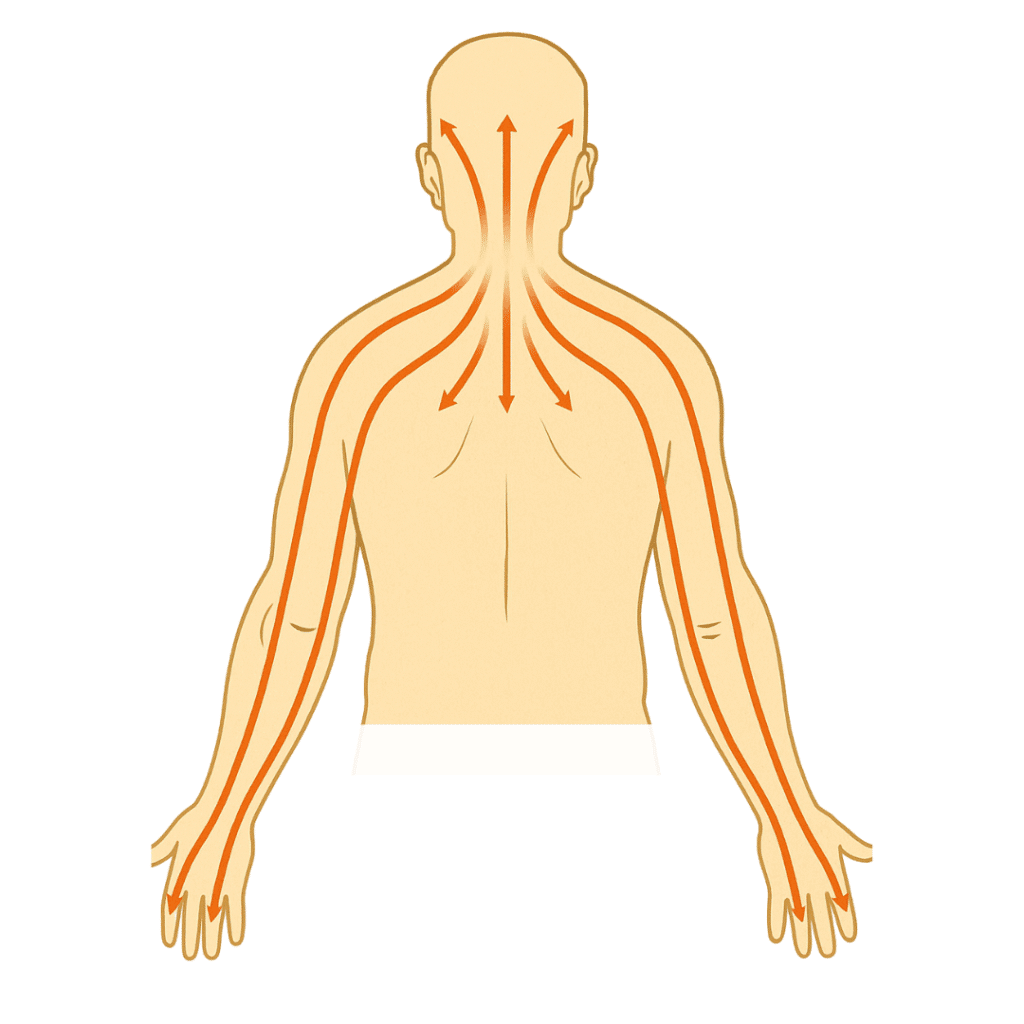
Numbness, tingling, or weakness in your shoulder, arm, or hand.
Neck pain or limited motion that does not improve or gets worse.
Dizziness or trouble walking.
Loss of bowel or bladder control.
Your Path to Recovery
Rest can feel good at first, but avoiding all movement for too long can cause the neck to stiffen and weaken. Gentle, guided exercises that stretch and strengthen the neck are often key to feeling better. Always check with your healthcare provider before starting a new exercise program. With the right plan, you can safely move toward relief and prevent future flare-ups.
Improving your posture, body mechanics, and overall health can significantly reduce or even resolve neck pain. These changes take practice, but most people feel better with consistent effort.
Understanding Your Neck's Anatomy
A healthy neck supports the head and allows the shoulders and arms to move freely. Strong muscles help maintain good posture and keep the spine aligned, which reduces strain and discomfort.
Inside the Neck
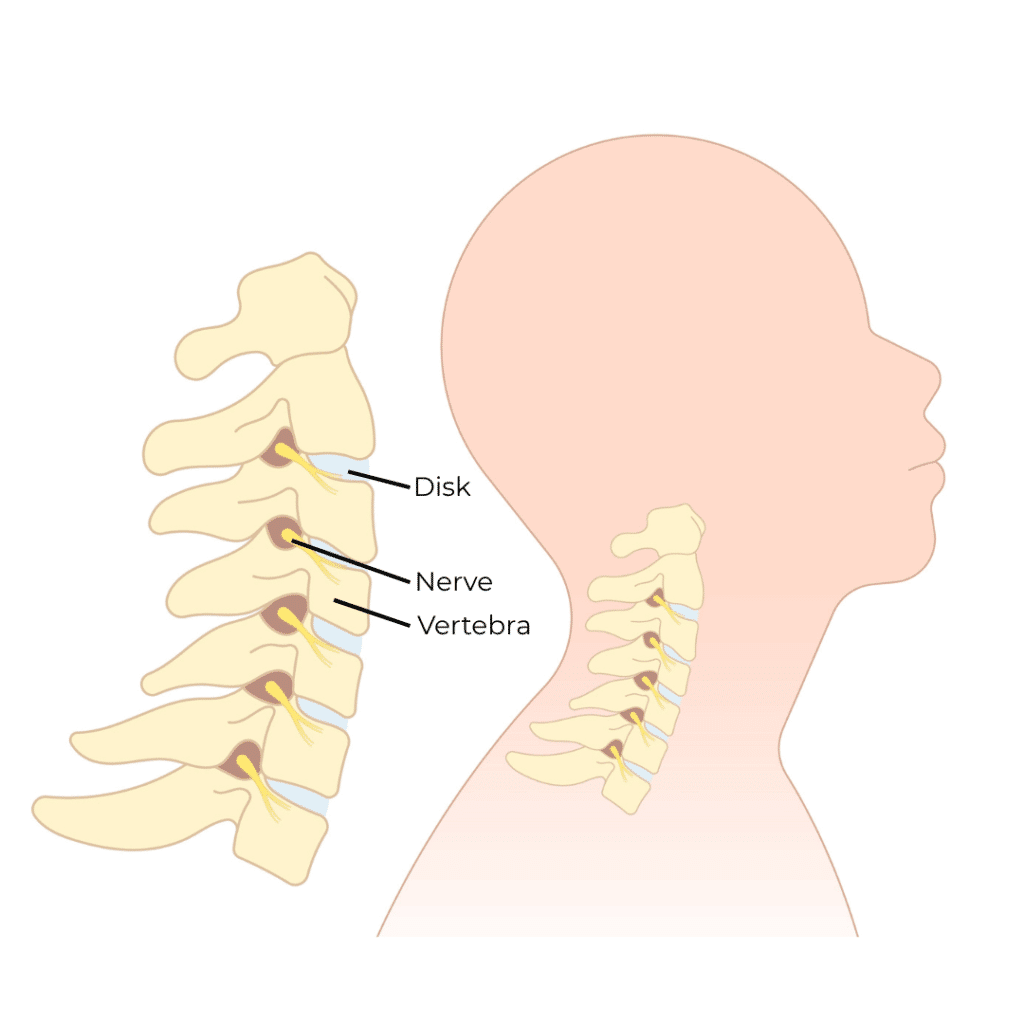
Vertebrae: The neck contains the first seven stacked bones (vertebrae) of the spine.
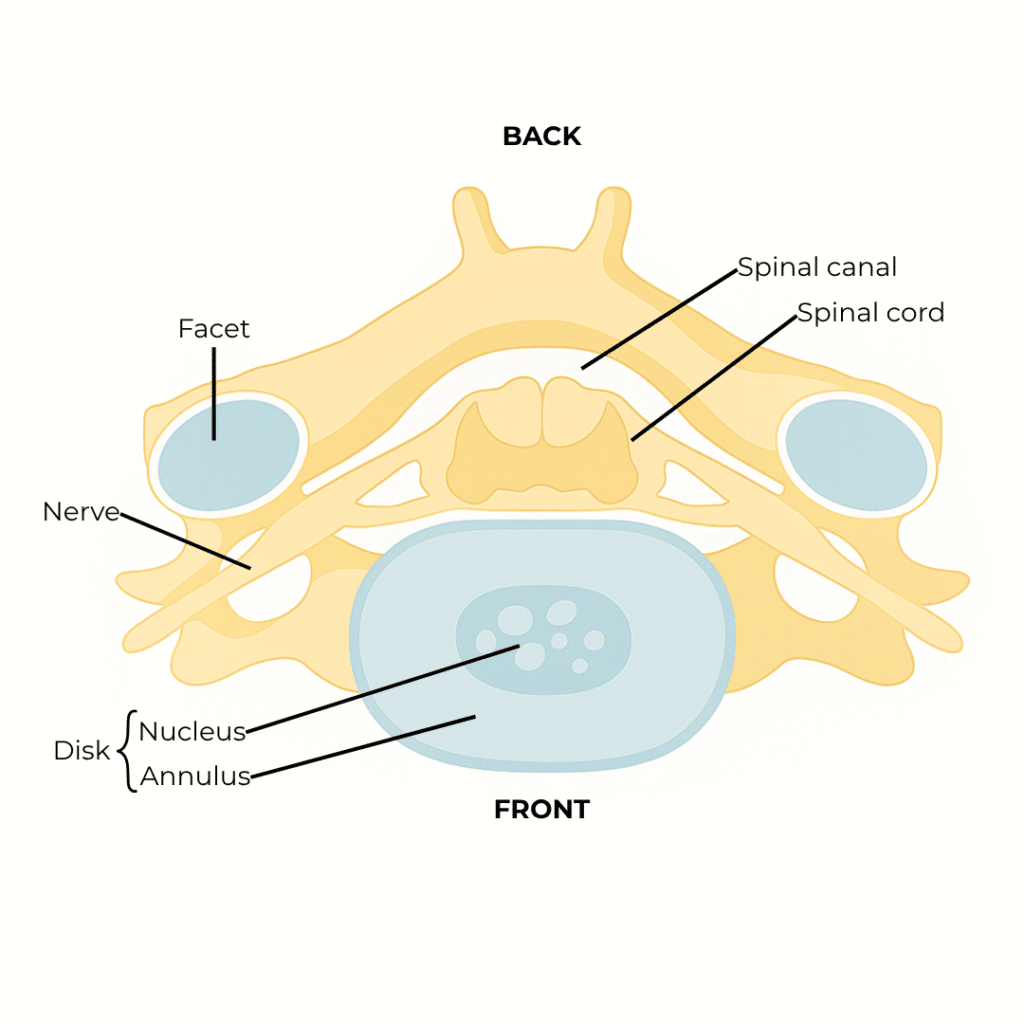
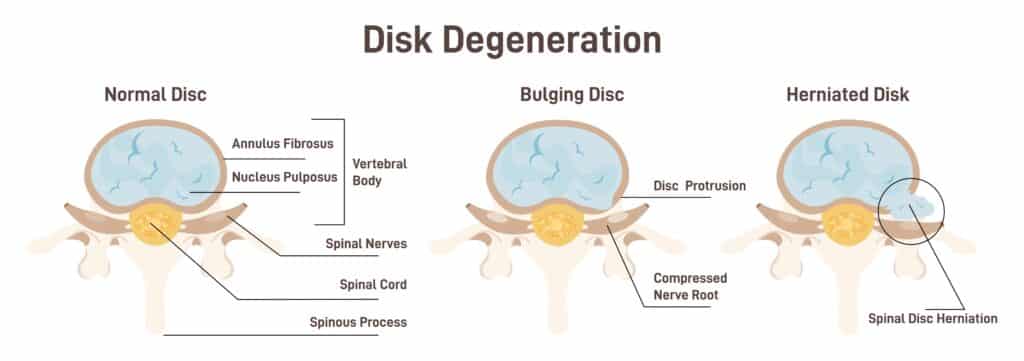
Disks: These soft, shock-absorbing pads sit between the vertebrae. Each disk has a tough outer ring (annulus) and a soft gel-like center (nucleus).
Facet joints: These small joints, lined with smooth cartilage, are where the vertebrae connect and allow the spine to move easily.
Spinal canal and nerves: The vertebrae form a protective tunnel for the spinal cord. Nerves branch off from the spinal cord to the rest of the body.
Ligaments and tendons: Ligaments connect bone to bone, and tendons connect muscle to bone. Both help stabilize the neck.
Neck Muscles and Movement
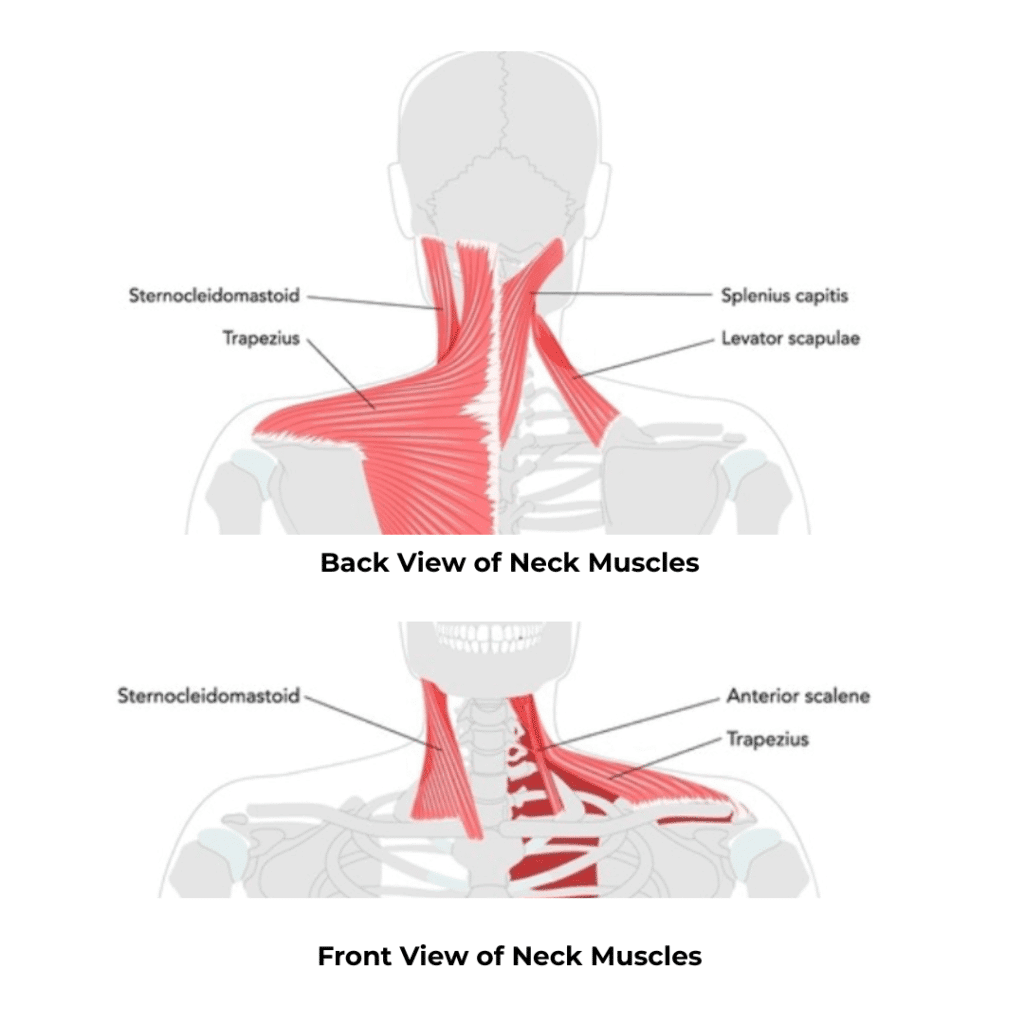
The neck muscles work together with the shoulders, chest, and back to support and move your head. Keeping these muscles strong and flexible helps protect joints and ligaments and can reduce pain.
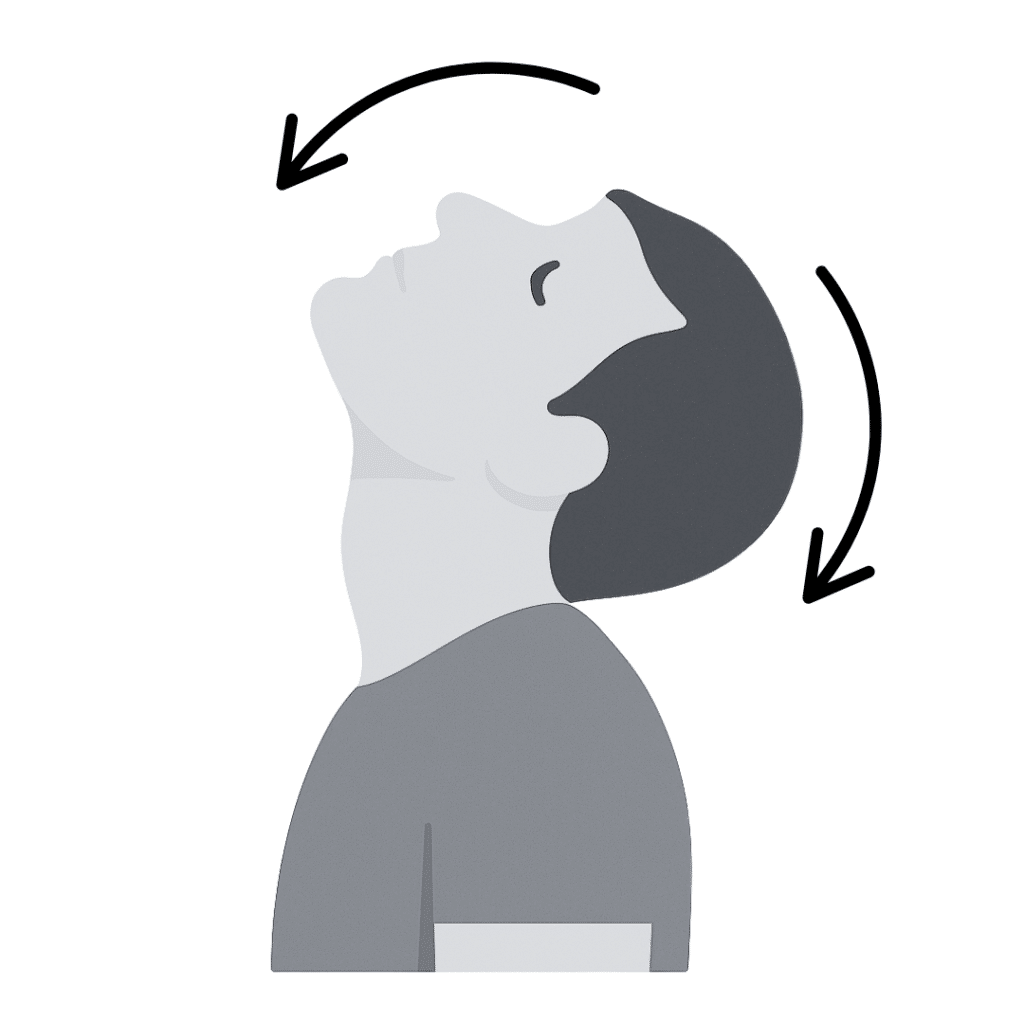
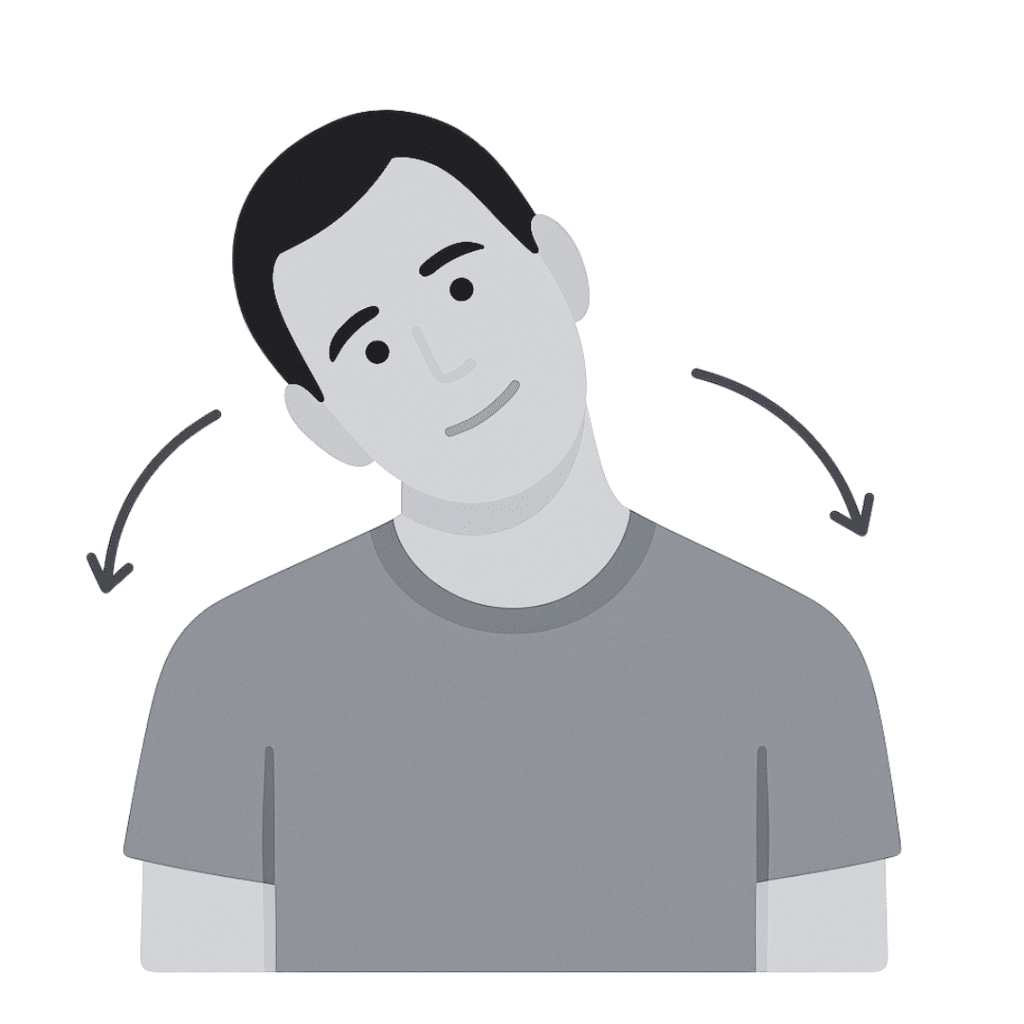
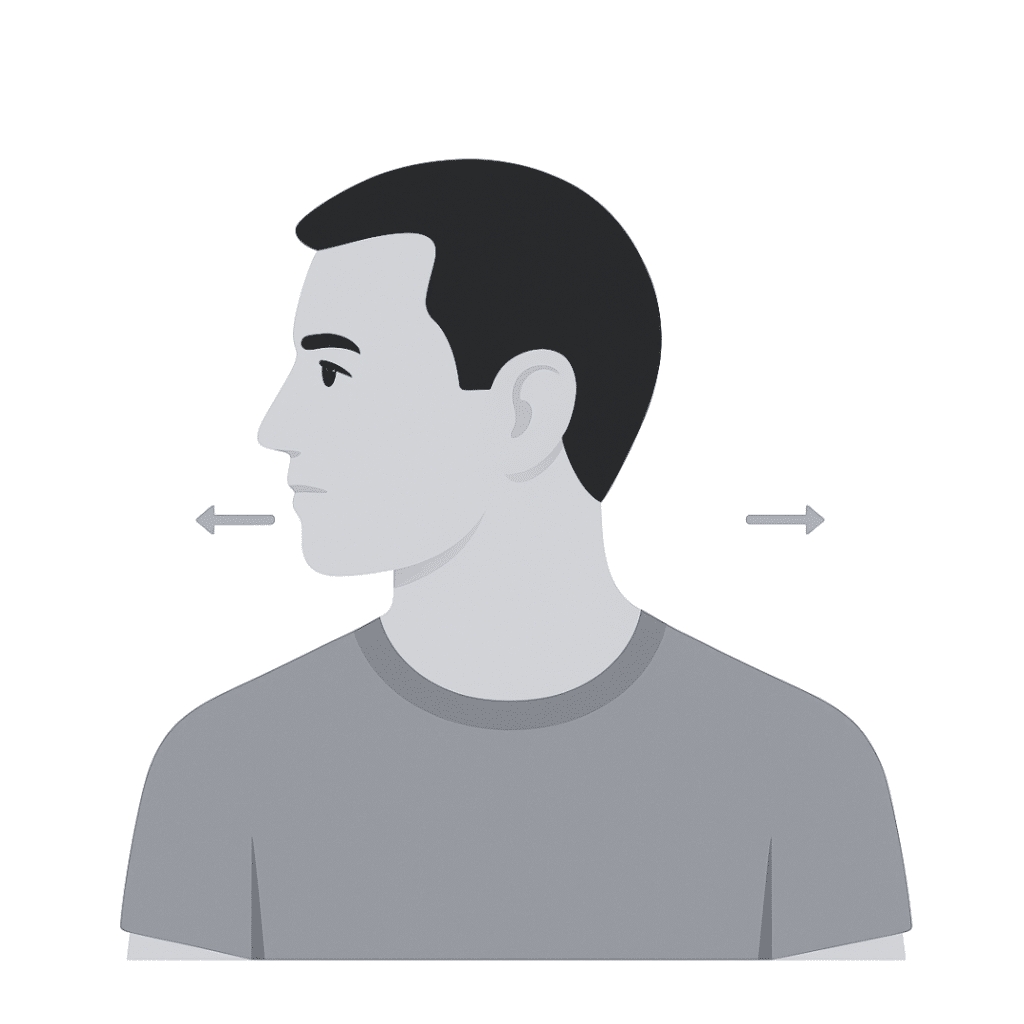
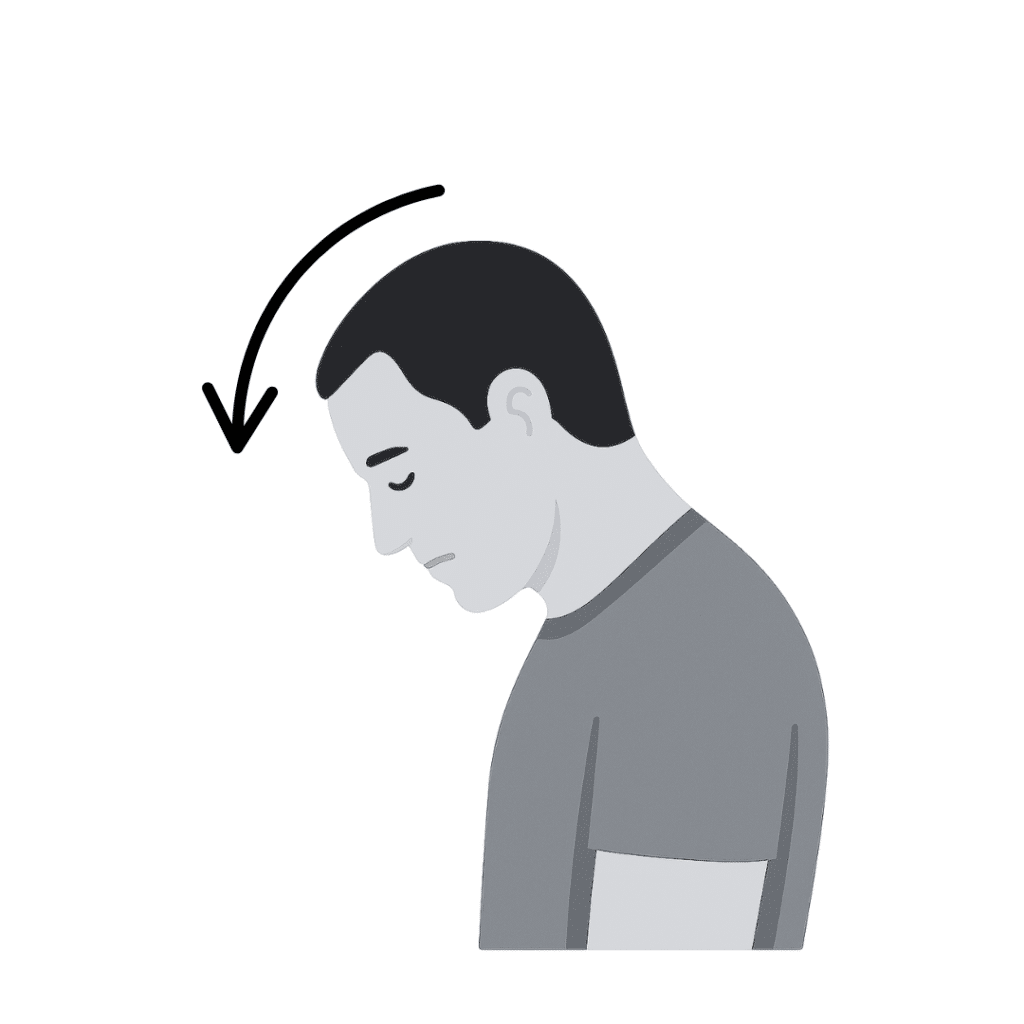
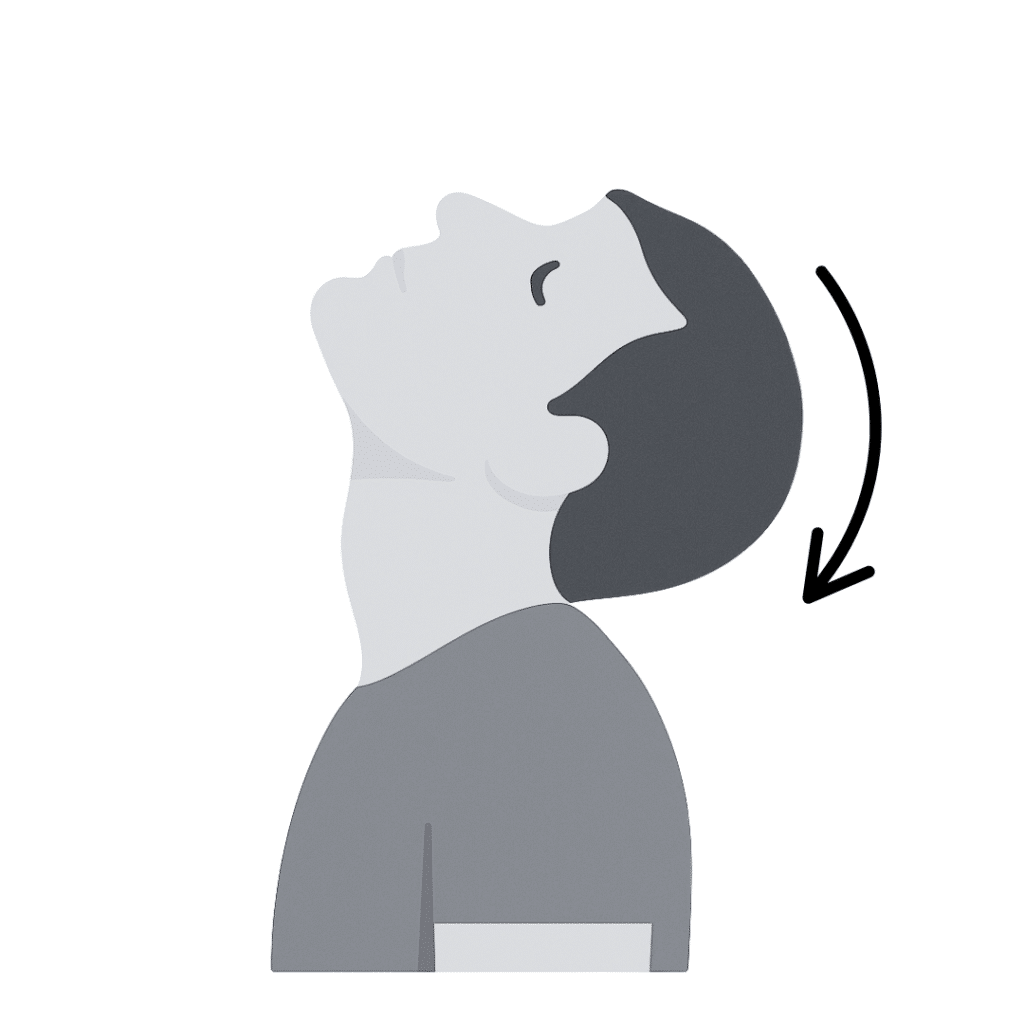
Your neck moves in three primary ways: flexion (head forward), extension (head backward), rotation (side to side), and side bending (ear toward shoulder). Always stay within a comfortable range of motion to prevent injury.
Extension (head backward), Flexion (head forward)
Side Bending (ear toward shoulder)
Rotation (side to side)
Common Causes of Neck Pain
A healthy neck can become painful for many reasons. Age-related wear and tear, repeated strain, and poor body mechanics can all affect the disks, bones, and joints of the neck.
Disk Problems
Torn annulus: Small tears in the disk's tough outer ring can irritate nearby nerves and cause pain.
Bulging or herniated disk: If the annulus weakens or tears, the soft center can bulge outward, pressing on a nerve.
Disk degeneration: Over time, disks can thin and lose their cushioning. This can allow vertebrae to rub together, pinching nerves and causing pain.
Bone and Joint Problems
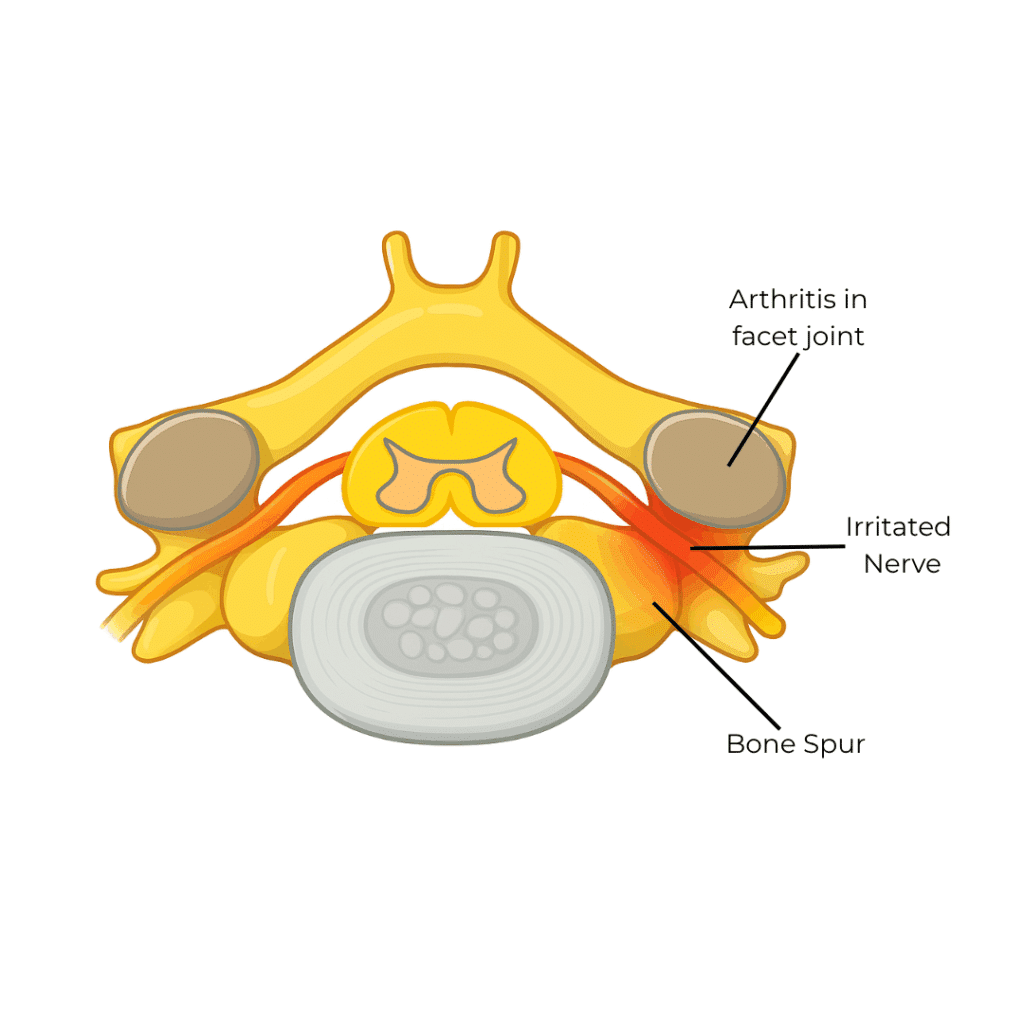
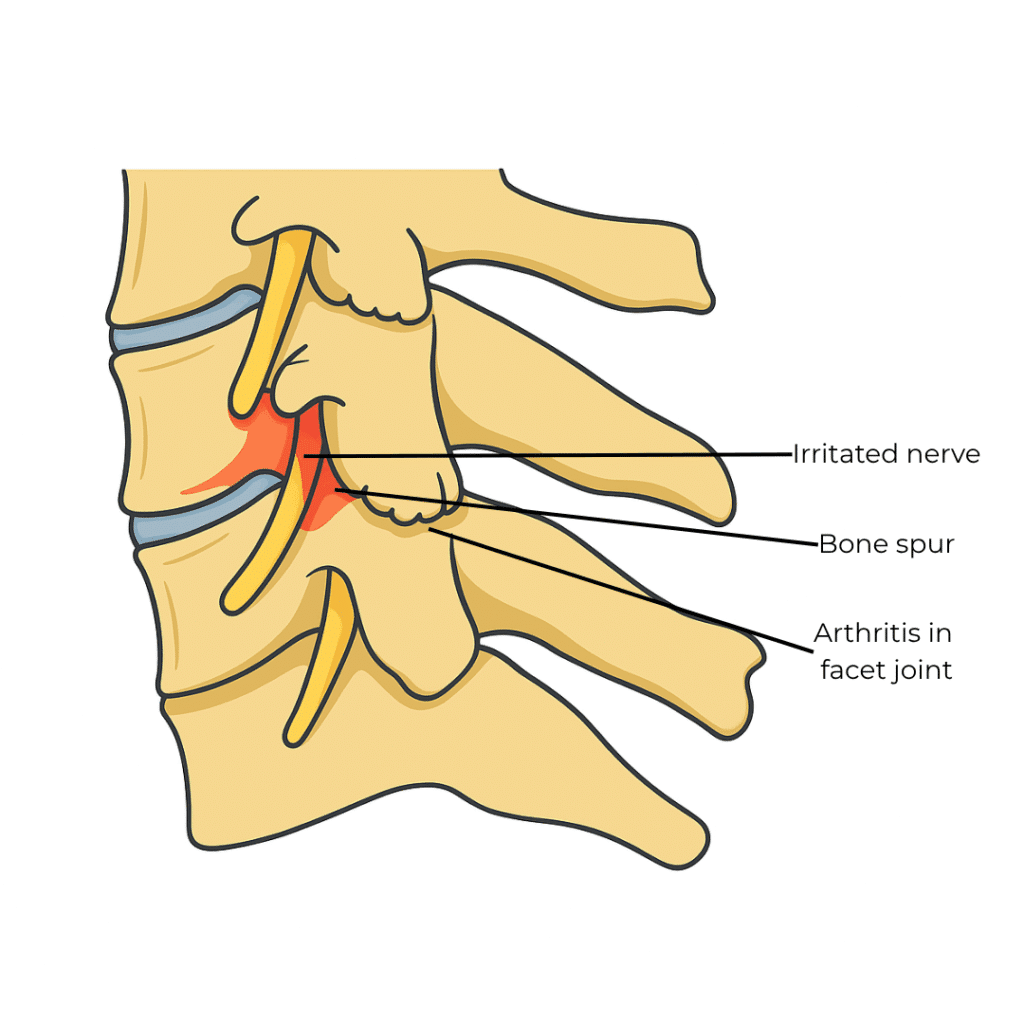
As the cartilage in the facet joints wears down with age, arthritis can develop. This can lead to pain, swelling, and stiffness, making motion difficult. Bone spurs may also form and press on nerves, adding to the discomfort.
Common Neck Injuries
Accidents during driving, sports, or a fall can push the neck beyond its normal limits, resulting in whiplash, strains, or sprains.
Whiplash: A sudden impact throws the head backward and then forward, stressing muscles, ligaments, and joints.
Strains and sprains: Strains are overstretched or torn muscles, while sprains affect ligaments. These can happen in an accident or from overuse and repetitive motion.
Pain from a neck injury can spread beyond the neck. You might also experience headaches or pain, tingling, or numbness in the shoulders, upper back, arms, or hands.
How Healthcare Providers Diagnose Neck Pain
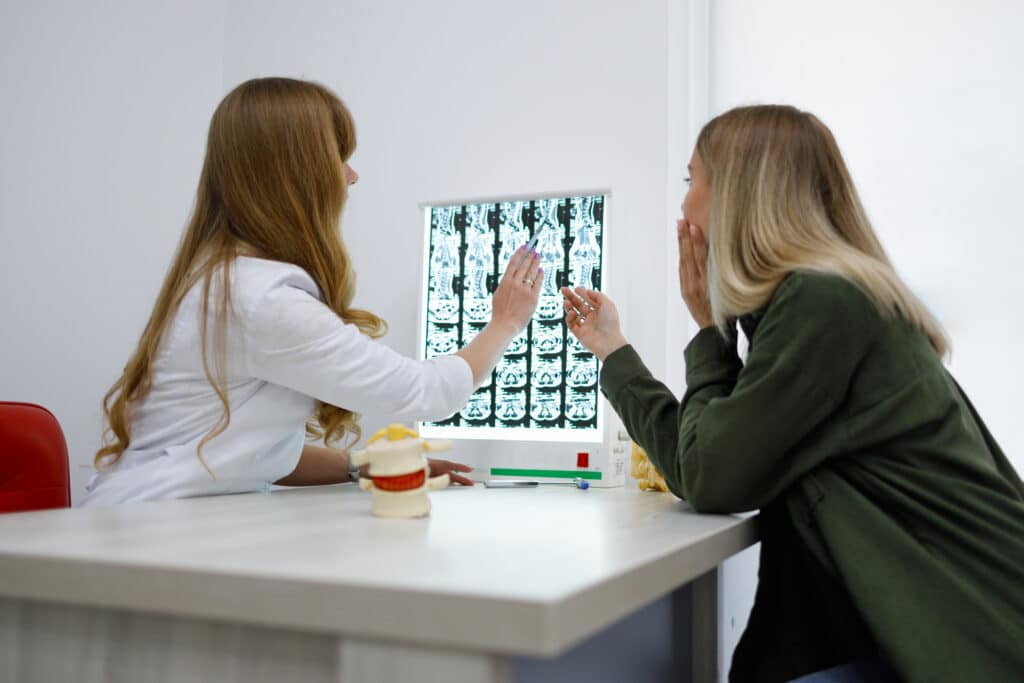
A medical evaluation is the first step to identifying the source of your pain and creating a treatment plan.
Health History Questions
Your provider will likely ask:
Where is your pain, and how often does it occur?
How and when did the pain start?
What activities or positions ease your pain or make it worse?
What are your work duties and hobbies?
How is neck pain affecting your day-to-day life?
Physical Exam and Tests
Your provider may check your posture, neck motion, flexibility, strength, sensation, and reflexes. Based on your symptoms, you may need imaging or nerve testing, such as:
X-rays to assess the vertebrae.
MRI or CT scans to get a detailed look at disks and soft tissues.
EMG or NCV studies to evaluate muscle and nerve function.
At-Home Care for Neck Pain
When neck muscles become inflamed, they can spasm and increase pain. These simple steps may help you feel better at home:
Short rest: Lying down for brief periods takes the weight of your head off your neck.
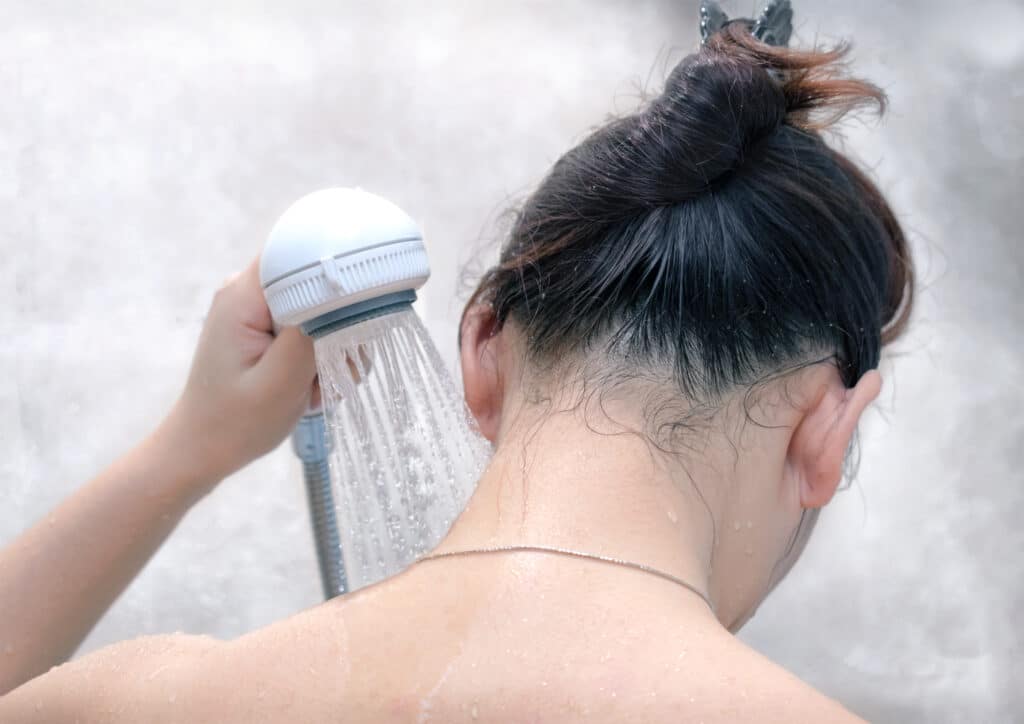
Ice and heat: Use an ice pack wrapped in a thin towel for up to 20 minutes at a time to reduce swelling. Later, use a warm, wet towel, warm shower, or bath to relax sore muscles.
Over-the-counter medicines: Anti-inflammatory drugs like ibuprofen or naproxen may reduce swelling and pain. Use them only as directed and check with your provider or pharmacist if you have questions.
Gentle movement: After warming the area, try provider-approved exercises to ease stiffness and support healing.
Manage Stress to Ease Tension
Stress often causes muscles to tighten, which can trigger spasms and pain. These habits can help you stay relaxed:
Prioritize sleep: A calming bedtime routine can help you get the rest you need.
Eat well: A balanced diet supports your overall health and resilience.
Be active: Regular, gentle movement like walking or swimming can help. Yoga and tai chi are excellent for relaxation and strength.
Breathe deeply: Inhale slowly through your nose, then exhale fully through your mouth. Repeat until you feel your body relax.
Posture That Protects Your Neck
Practicing good posture is one of the most effective ways to keep your neck healthy and comfortable.
How to Improve Your Posture
Breathe deeply and let your shoulders relax away from your ears.
Gently pull your shoulders back and down.
Align your ears, shoulders, and hips in a straight line.
Keep your chin level with the ground, not pointed up or down.
Body Mechanics for Daily Life
How you sit, stand, lift, and sleep has a major impact on your neck. Small changes can protect your neck throughout the day.
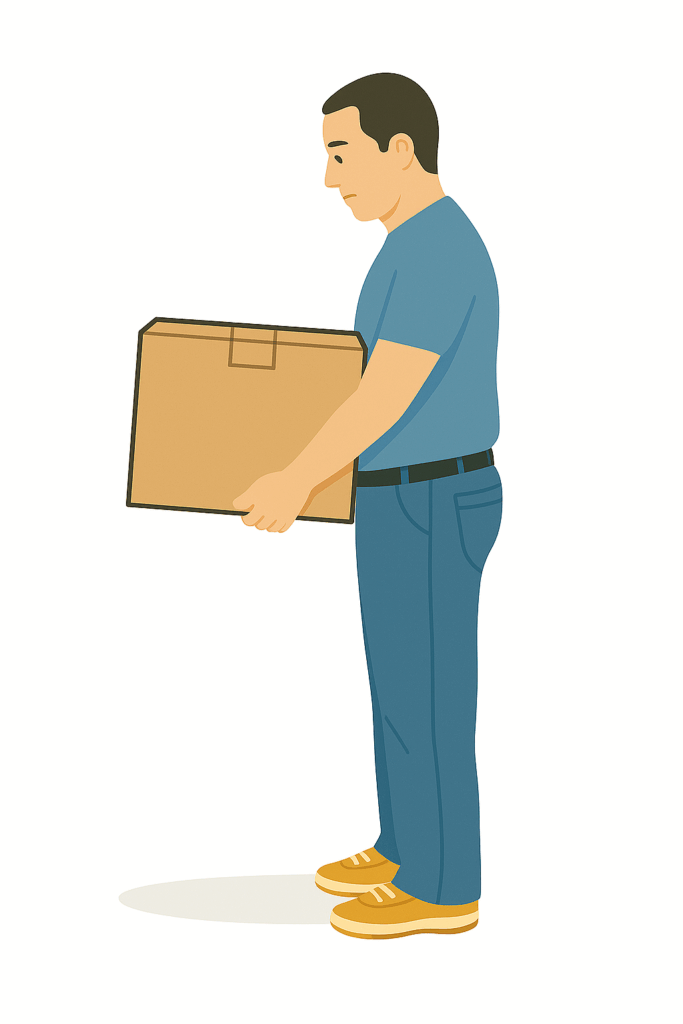
Standing and Lifting
Carry objects close to your body.
Bend at your knees with a straight back to lift, not at your waist.
Arrange your workspace to be at eye level to avoid prolonged overhead reaching.
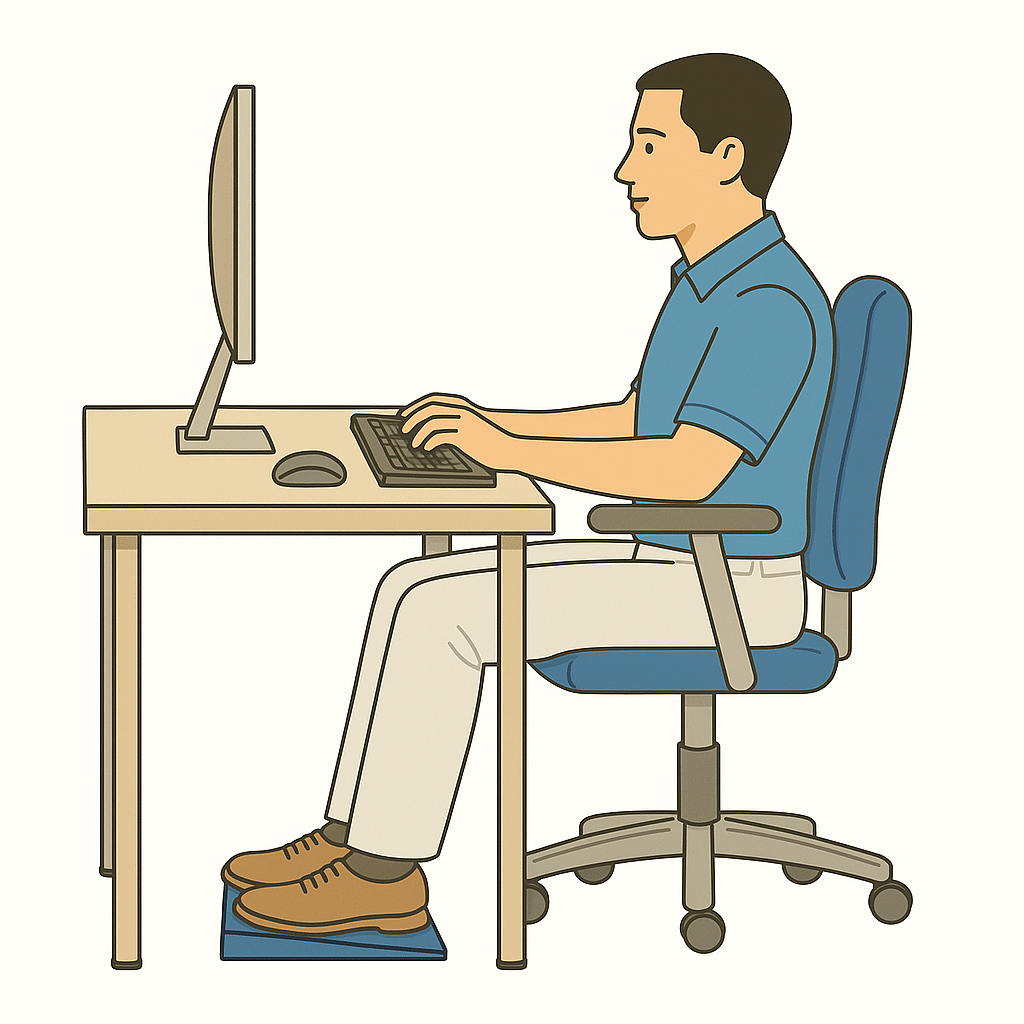
Sitting and Using Screens
Position your monitor at or slightly below eye level.
Sit upright with your feet flat on the floor and your knees at or slightly below hip level.
Take frequent breaks from long periods of sitting or driving to stand and stretch.
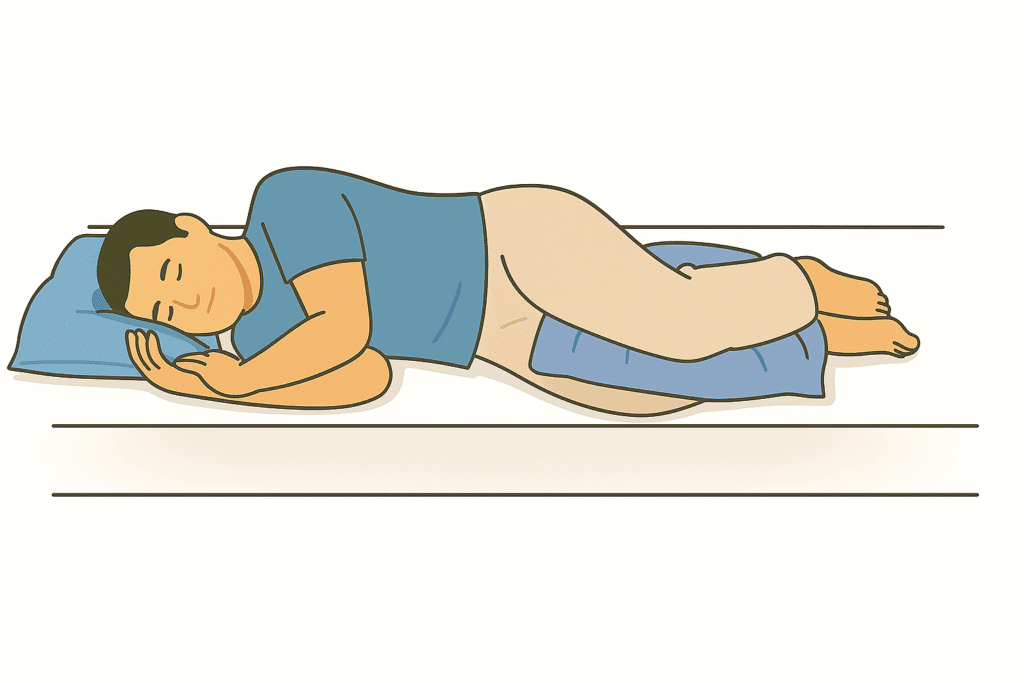
Sleeping
Sleep on your back with a pillow under your knees or on your side with a pillow between your knees.
Use a supportive pillow that keeps your neck aligned with your spine—not bent too high or too low.
Avoid sleeping on your stomach, as it forces your neck into a twisted position.
When to Seek Professional Care
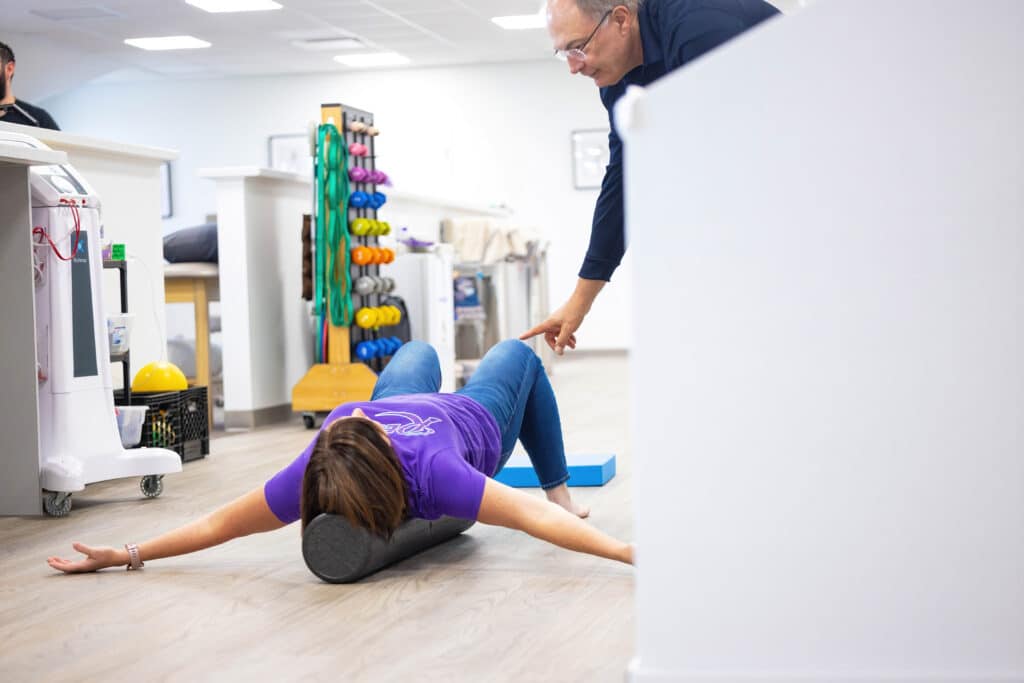
If self-care isn't providing enough relief, your provider may suggest physical therapy. A physical therapist can guide you through specific exercises to restore movement and strength, teach you proper alignment, and help you return to your activities more comfortably.
Common physical therapy methods include:
Therapeutic exercises to improve strength and range of motion.
Joint mobilization using gentle, hands-on techniques to restore motion.
Soft tissue mobilization to stretch and relax tight muscles.
Education on posture and body mechanics to protect your neck long-term.
If physical therapy is not enough, your provider may discuss other options, such as medications, injections, or, in some cases, surgery.
Safe Neck Exercises
Strong, flexible muscles support the neck and help it move naturally. Move slowly, stay within a comfortable range, and never force a position.
Safety Tips
Only perform exercises recommended by your healthcare provider or physical therapist.
Breathe normally and avoid holding your breath.
Stop immediately if you feel sharp pain, tingling, numbness, or dizziness, and contact your provider.
Flexion (Chin to Chest)
Gently lower your chin toward your chest as far as is comfortable.
Hold for 5 seconds.
Slowly return to the starting position. Repeat as advised.
Extension
Tilt your head backward, looking toward the ceiling within a comfortable range.
Hold for 5 seconds.
Return to the starting position. Repeat as advised.
Rotation
Slowly turn your head to the right as far as is comfortable.
Hold for 5 seconds, then return to the center.
Turn your head to the left, hold, and return to the center. Repeat on each side as advised.
Side Bending
Tilt your head toward your left shoulder, keeping the shoulder down.
Hold for 5 seconds, then return to the center.
Tilt your head toward your right shoulder. Repeat as advised.
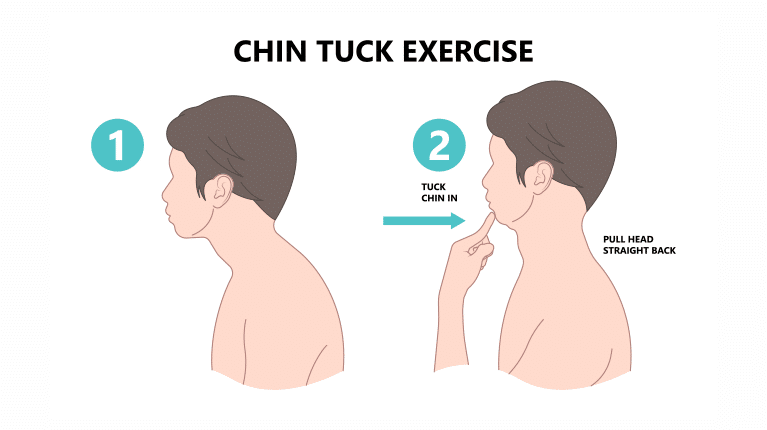
Chin Glide (Chin Tuck)
Sit or stand straight.
Gently tuck your chin and glide your head backward, so your ears move in line with your shoulders. You should feel a stretch at the back of your neck.
Hold for 5 seconds, then return to the starting position. Repeat as advised.
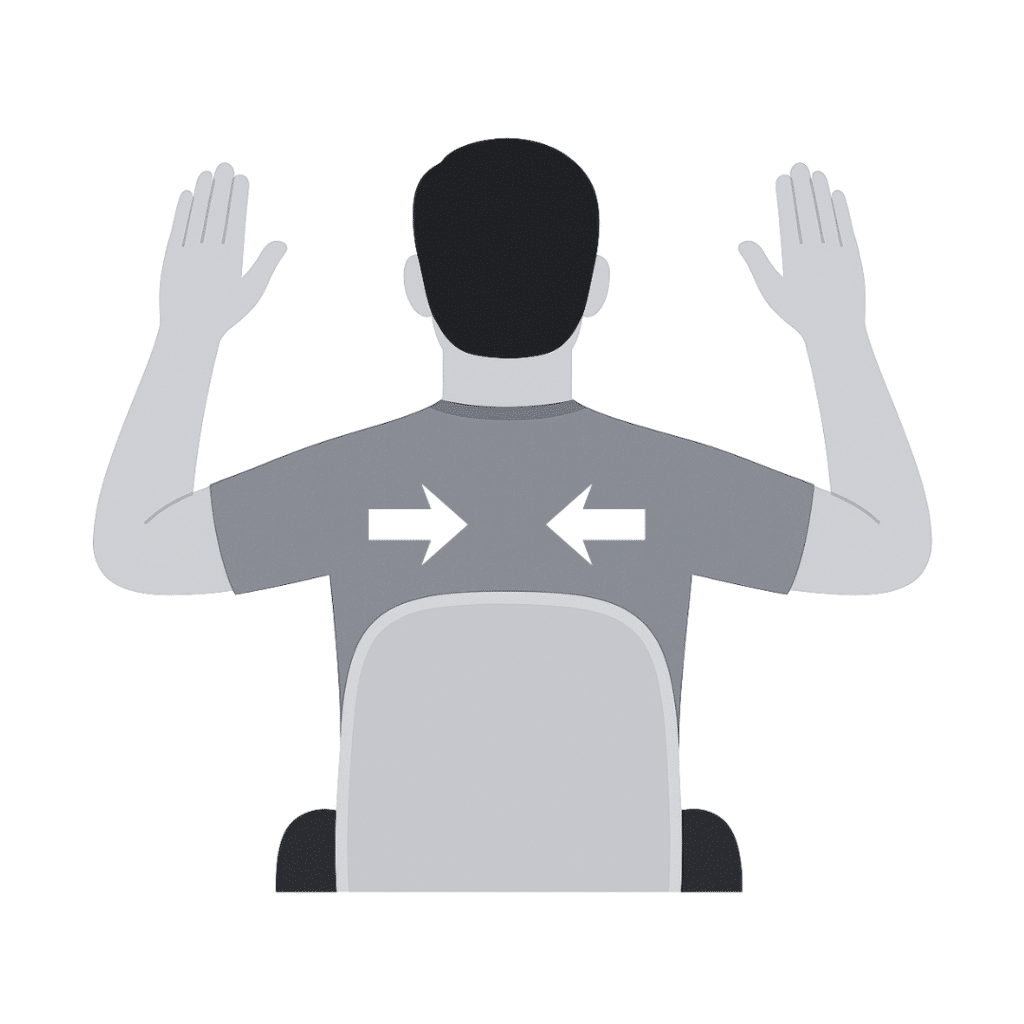
Shoulder Blade Squeeze
Sit or stand with your arms at your sides, elbows bent at 90 degrees.
Gently squeeze your shoulder blades together.
Hold for 5 seconds, then relax. Repeat as advised.
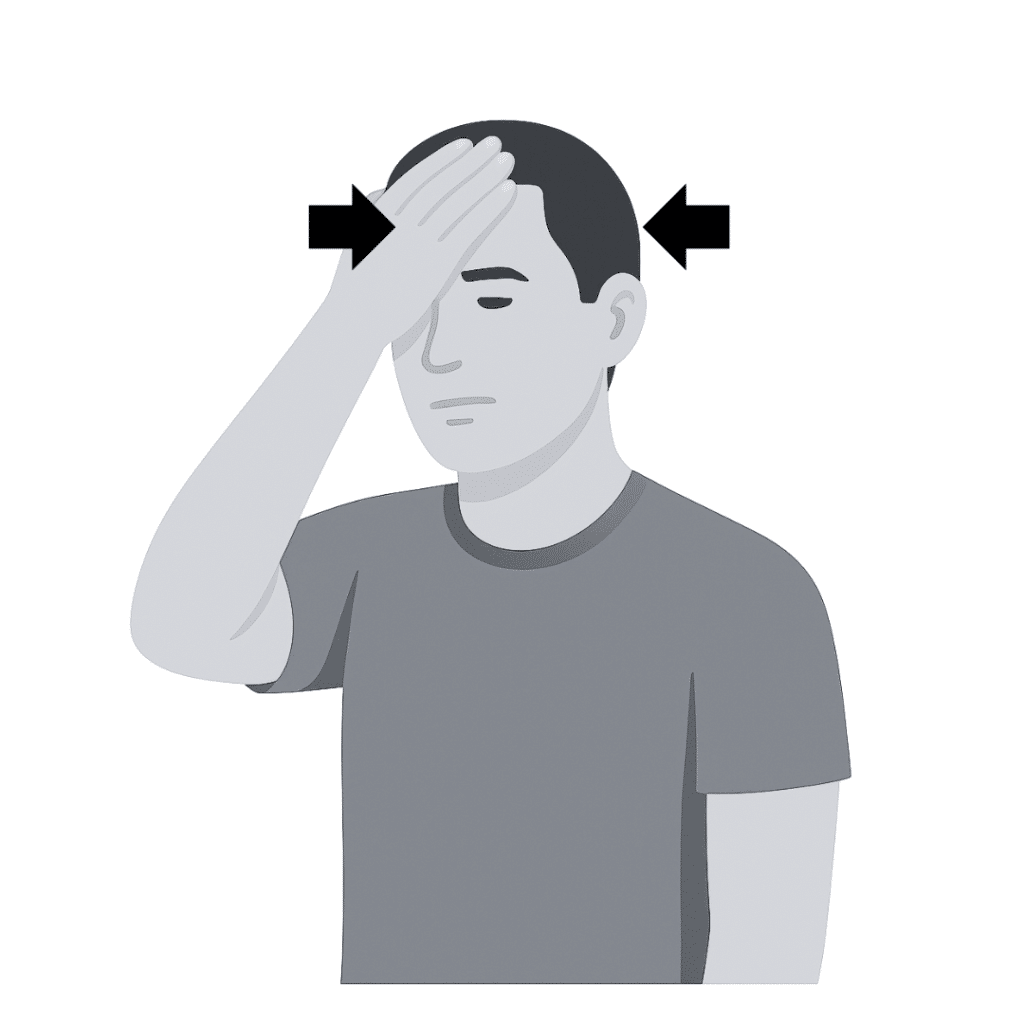
Isometric Head Press (Forward)
Place your palm against your forehead.
Gently press your head forward into your hand without letting your head move.
Hold for 5 seconds, then relax. Repeat as advised.
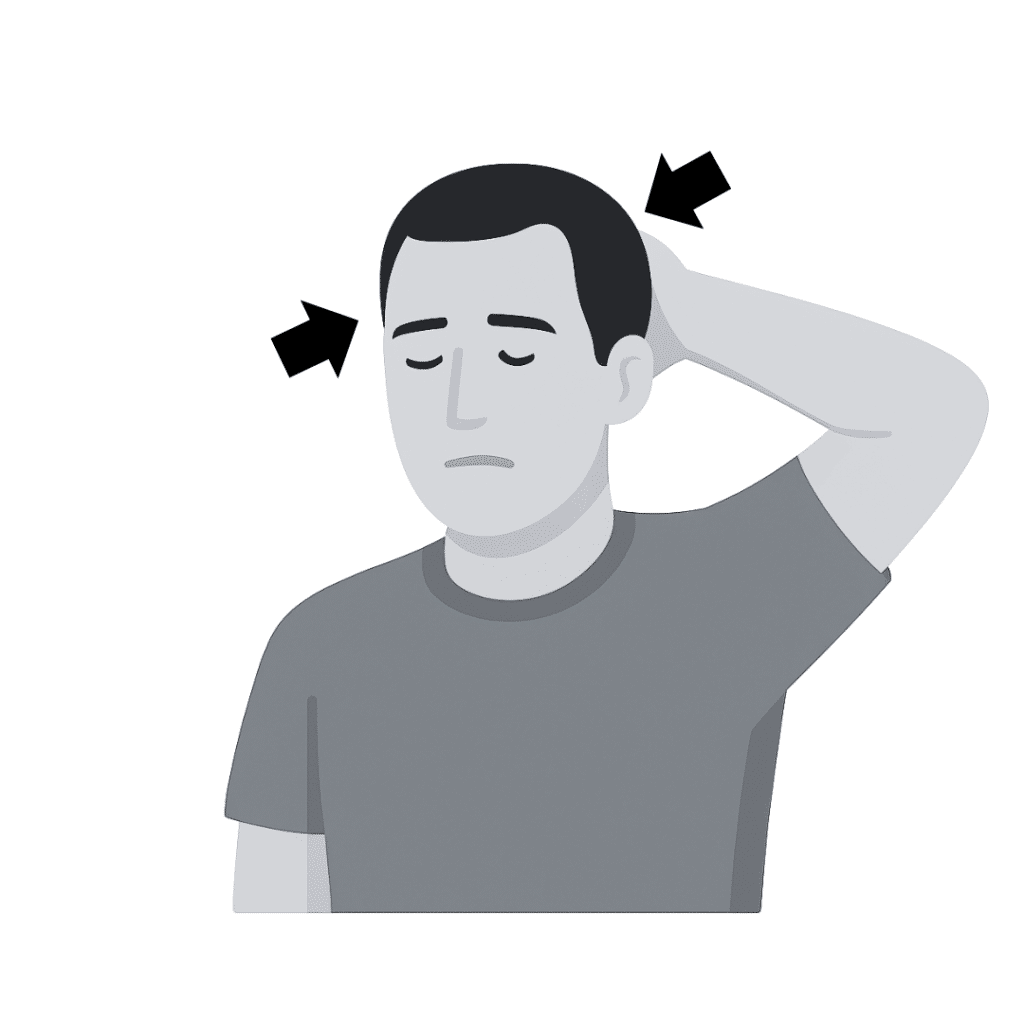
Isometric Head Press (Backward)
Gently press your palms against the back of your head.
Push your head backward using the muscles in your neck.
Hold for 5 seconds, then relax. Repeat as advised.
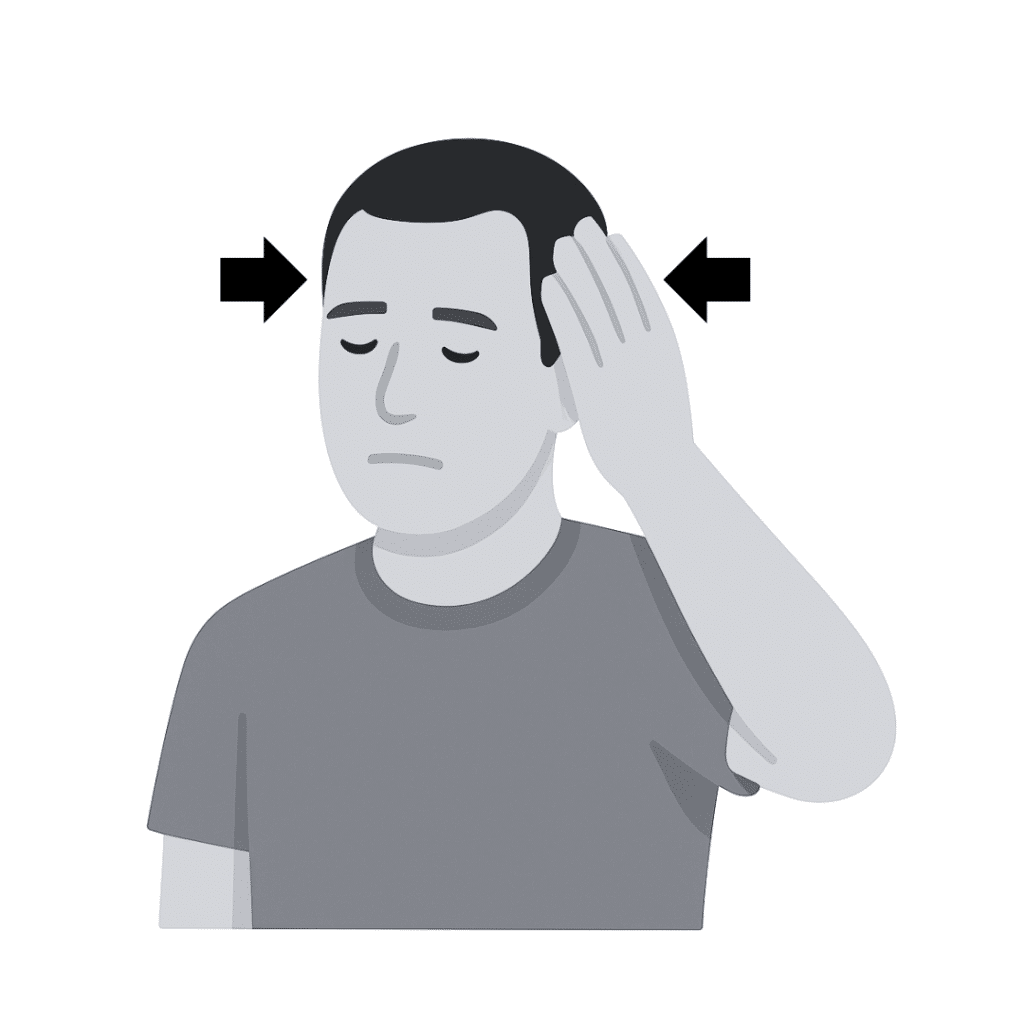
Isometric Head Press (Side)
Place your right palm against the right side of your head.
Press your head into your hand without letting your head move.
Hold for 5 seconds, then relax.
Switch sides and repeat as advised.
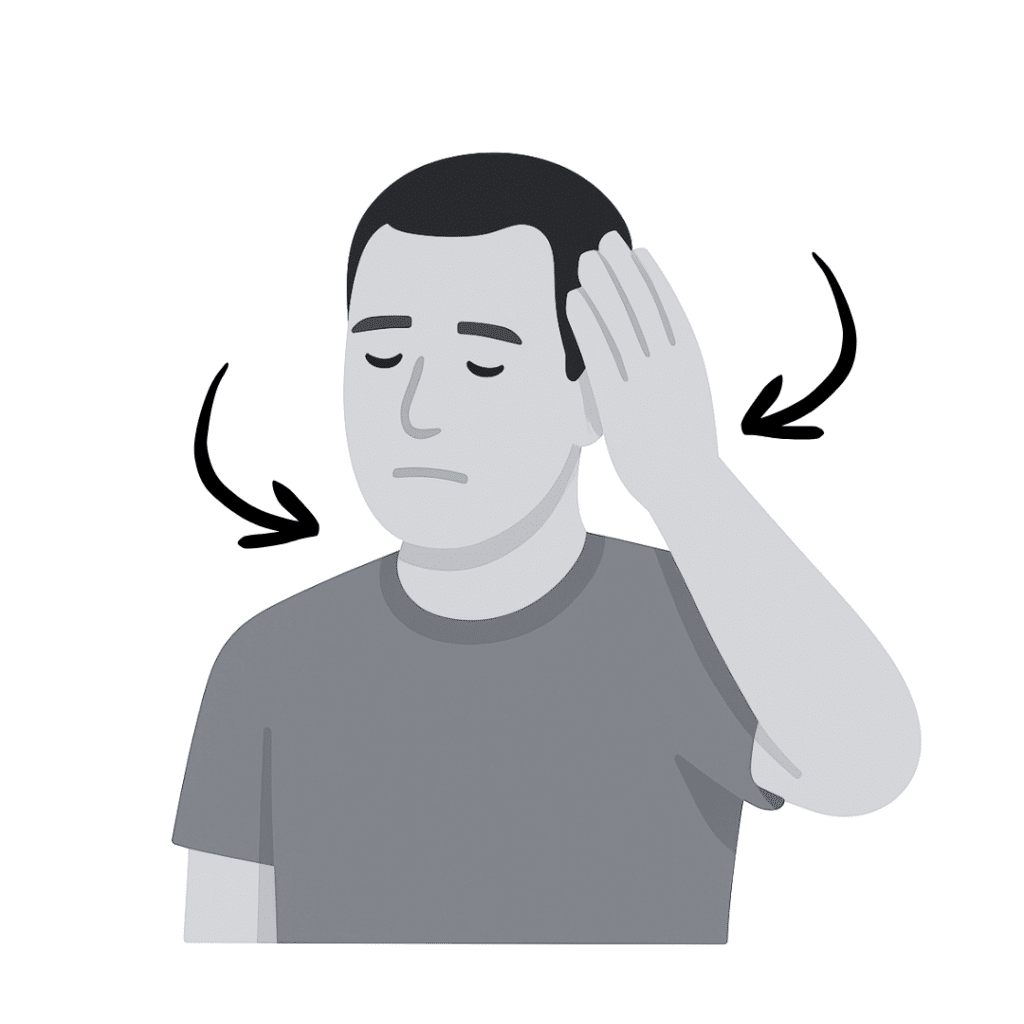
Rotation Head Press
Gently press your left palm against the left side of your head.
Resisting with the muscles in your neck, gently try to turn your head to your left. Don't allow your head or hand to move.
Hold for 5 seconds, then relax.
Switch sides and repeat as advised.
Quick Summary
Keep your computer monitor at or slightly below eye level.
Practice good posture throughout the day.
Use a headset or speakerphone instead of holding a phone between your shoulder and ear.
Take frequent breaks from sitting to stand and stretch.
Exercise regularly to reduce stress and strengthen supportive muscles.
Sleep on a supportive mattress with an appropriate pillow, and avoid stomach sleeping.
If you smoke, talk with your provider about resources to help you quit.
Reach out to your healthcare provider with any questions or concerns about your neck.
Prefer resources in Spanish? Ask your care team for Spanish-language materials.
Have Questions?
If you have any questions or concerns, please contact one of our offices. This information is provided solely for educational purposes and is not a substitute for personalized medical advice. For detailed advice please contact us at (609) 924-8131, text us at (609) 757-9992 or send us a message via our contact form.
We use cookies to understand how people use our site. You can accept or reject non-essential cookies, and change your choice at any time in Preferences.
Cookie Preferences
Manage your cookie preferences below:
Essential cookies enable basic functions and are necessary for the proper function of the website.
Name
Description
Duration
metasync_previous_slug
Set by our website’s search optimization plugin. It holds a fixed value with no information about you, stays on this website and expires after one hour.
1 hour
Cookie Preferences
This cookie is used to store the user's cookie consent preferences.
365 days
CloudFlare provides web performance and security solutions, enhancing site speed and protecting against threats.
Sequence rules uses cookies to track the order of requests a user has made and the time between requests and makes them available via Cloudflare Rules. This allows you to write rules that match valid or invalid sequences. The specific cookies used to validate sequences are called sequence cookies.
session
cf_ob_info
The cf_ob_info cookie provides information on: The HTTP Status Code returned by the origin web server. The Ray ID of the original failed request. The data center serving the traffic
session
cf_use_ob
The cf_use_ob cookie informs Cloudflare to fetch the requested resource from the Always Online cache on the designated port. Applicable values are: 0, 80, and 443. The cf_ob_info and cf_use_ob cookies are persistent cookies that expire after 30 seconds.
session
__cfwaitingroom
The __cfwaitingroom cookie is only used to track visitors that access a waiting room enabled host and path combination for a zone. Visitors using a browser that does not accept cookies cannot visit the host and path combination while the waiting room is active.
session
cf_chl_rc_i
These cookies are for internal use which allows Cloudflare to identify production issues on clients.
session
cf_chl_rc_ni
These cookies are for internal use which allows Cloudflare to identify production issues on clients.
session
cf_chl_rc_m
These cookies are for internal use which allows Cloudflare to identify production issues on clients.
session
__cfruid
Used by the content network, Cloudflare, to identify trusted web traffic.
session
__cf_bm
Cloudflare's bot products identify and mitigate automated traffic to protect your site from bad bots. Cloudflare places the __cf_bm cookie on End User devices that access Customer sites that are protected by Bot Management or Bot Fight Mode. The __cf_bm cookie is necessary for the proper functioning of these bot solutions.
session
__cflb
When enabling session affinity with Cloudflare Load Balancer, Cloudflare sets a __cflb cookie with a unique value on the first response to the requesting client. Cloudflare routes future requests to the same origin, optimizing network resource usage. In the event of a failover, Cloudflare sets a new __cflb cookie to direct future requests to the failover pool.
session
_cfuvid
The _cfuvid cookie is only set when a site uses this option in a Rate Limiting Rule, and is only used to allow the Cloudflare WAF to distinguish individual users who share the same IP address.
session
cf_clearance
Whether a CAPTCHA or Javascript challenge has been solved.
session
Google reCAPTCHA helps protect websites from spam and abuse by verifying user interactions through challenges.
Name
Description
Duration
_GRECAPTCHA
Google reCAPTCHA sets a necessary cookie (_GRECAPTCHA) when executed for the purpose of providing its risk analysis.
179 days
These cookies are used for managing login functionality on this website.
Name
Description
Duration
wordpress_logged_in
Used to store logged-in users.
Persistent
wordpress_sec
Keeps staff signed in to the website securely. Set only for staff who sign in.
15 days
wordpress_test_cookie
Used to determine if cookies are enabled.
Session
Statistics cookies help us understand how visitors use our website, such as which pages are viewed. They stay off until you accept them; until then, videos and the accessibility menu load only when you choose to open them.
Google Analytics is a powerful tool that tracks and analyzes website traffic for informed marketing decisions.
Contains information related to marketing campaigns of the user. These are shared with Google AdWords / Google Ads when the Google Ads and Google Analytics accounts are linked together.
90 days
Google Tag Manager loads our website analytics. It only runs when Statistics cookies are allowed.