Why Is My Thumb Twitching? Causes and When to Seek Care
by Princeton Orthopaedic Associates
Why Is My Thumb Twitching?
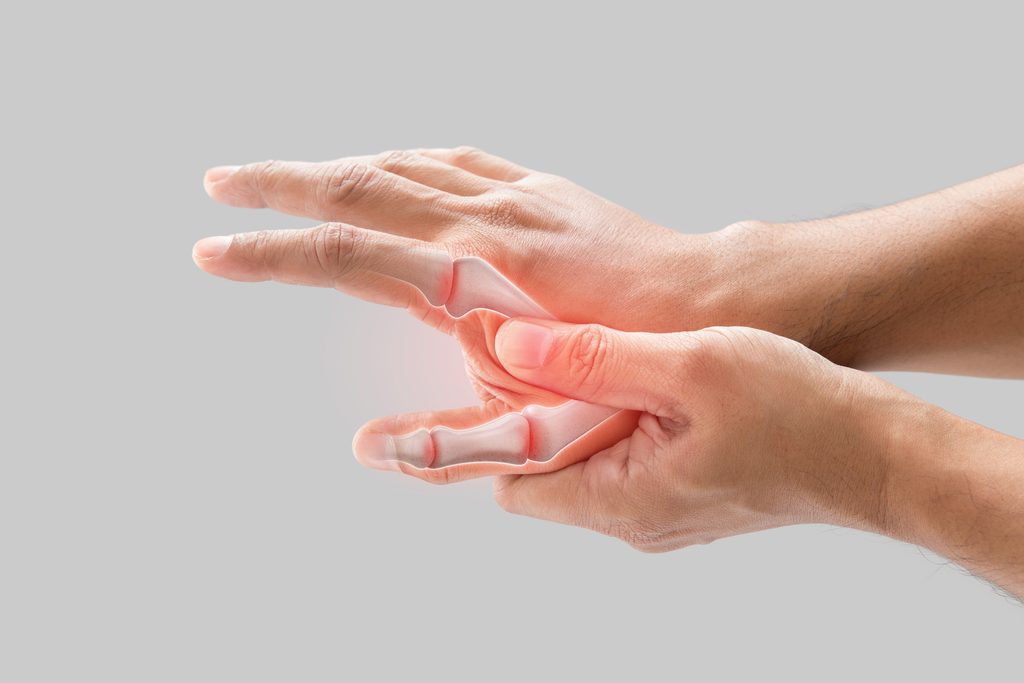
Thumb twitching can feel worrying, especially when it starts without an obvious reason. In many cases, the jerks are linked to muscle fatigue, stress, caffeine, dehydration, or insufficient sleep. Repetitive hand use can also play a role. Often, the twitching is brief and settles on its own, but it's wise to get checked if it keeps going.
Your thumb does a lot more than most people realize. It helps with texting, typing, gripping tools, cooking, and lifting. The small muscles and the tendons around your thumb work together many times a day. When they are overused, they can become irritated or fatigued, and you may notice small, on and off twitching.
Learning the common triggers can help you try safe, simple changes first. It can also guide you on when it is time to ask for an evaluation from an orthopaedic or hand specialist, especially if symptoms affect comfort or hand function.
Key Points About Thumb Twitching
What You Should Know
Thumb twitching is often related to muscle fatigue from repetitive use, stress, or too much caffeine.
Daily triggers can include typing, gaming, texting, writing, and repeated gripping.
Twitching can happen when small hand muscles get tired or irritated.
Dehydration, lack of sleep, and long periods without recovery can make twitching more likely.
Many episodes are temporary, but ongoing symptoms should not be ignored.
Twitching can also come with pain, cramping, weakness, numbness, or a tired feeling.
Nerve signals in the hand, wrist, arm, or neck can contribute to twitching.
Rest, hydration, reducing repetitive activity, and limiting stimulants may help.
If twitching lasts, worsens, or affects hand use, a medical evaluation is important.
An orthopaedic specialist can help sort out whether muscles, tendons, or nerves are involved.
What Causes a Thumb to Twitch?
A twitch is a small, involuntary change in muscle activity. In the thumb, it often comes from brief, small muscle contractions or from nerve signals that affect those muscles. This can feel like brief jumping, pulsing, or a fluttering sensation that comes and goes. The tendon or joint irritation may be present too, especially when use has been heavy.
In many people, the cause is not serious and does not last long. Overuse is a common reason, especially after lots of phone time, keyboard time, or repetitive hand work. When the hand is working in the same way for long periods, the muscles can become tired and more reactive.
Stress, caffeine, dehydration, poor sleep, and general fatigue can also make twitching more noticeable. If you notice the twitching after these triggers, it can point to a temporary muscle or nerve irritation pattern.
Common Triggers You Might Not Realize
Thumb twitching often shows up with everyday habits. Because the thumb helps with many small actions, routine tasks can place extra strain on nearby muscles and on the tendon area. The twitching may increase after a long workday or after you change your usual routine for a few days.
Frequent texting or scrolling on a smartphone
Long hours of typing or using a mouse
Video gaming or repetitive controller use
Writing, crafting, or needlework
Using hand tools or gripping repeatedly at work
Stress and muscle tension
Too much caffeine or other stimulants
Not drinking enough fluids or having poor sleep
When Overuse Is the Likely Cause
Thumb twitching that starts after a busy day of hand activity may be due to overuse. The thumb uses small muscles in the hand and forearm that can become irritated with repeated gripping, pinching, or fast finger movements. The twitching may show up more after work, at night, or after long stretches of screen time.
You might also notice the thumb or hand feels sore, tight, or tired. These feelings can happen at the same time as twitching because tendon and joint irritation can coexist with muscle fatigue. When overuse is the main issue, symptoms often improve after a short period of rest and activity changes.
Taking breaks, changing how you hold the hand, and limiting repetitive activity for several days may reduce symptoms. Gentle movement and avoiding long, steady positions can also help your muscles calm down.
Could It Be Related to a Nerve?
Sometimes thumb twitching is more than muscle fatigue. It can also happen when a nerve that helps control thumb muscles becomes irritated or compressed. This can occur in the hand, wrist, elbow, or even in the neck.
If a nerve is involved, twitching may come with other symptoms like tingling, numbness, burning pain, weakness, or trouble gripping. When twitching is paired with these signs, it is a good idea to seek medical care rather than waiting it out.
Other Symptoms That May Happen With Thumb Twitching
A twitch by itself is often less concerning than twitching plus other changes. It helps to notice what else you feel and whether the symptoms interfere with daily tasks like opening jars, holding a phone, or using tools. Keep track of when symptoms happen and what you were doing right before they started.
Thumb or hand pain
Cramping or stiffness
Numbness or tingling
Weak grip or dropping objects
Swelling near the thumb or wrist
Symptoms that spread into the fingers, forearm, or arm
Possible Causes and What They May Feel Like
Possible Cause
What You May Notice
Common Trigger
Muscle fatigue
Brief twitching or fluttering without major pain
Heavy hand use or repetitive motion
Stress or caffeine
Twitching that comes and goes, sometimes in other areas too
Poor sleep, stress, anxiety, stimulants
Overuse irritation
Twitching along with soreness or tightness
Typing, texting, gaming, gripping
Nerve irritation
Twitching along with numbness, tingling, or weakness
Compression in the hand, wrist, arm, or neck
What You Can Do at Home
If the twitching is mild and started recently, a few simple steps may help. The main goal is to lower strain on the thumb and give the muscles time to recover. These steps are generally safe, especially when there is no worsening weakness or numbness.
Rest from repetitive thumb activities
Take frequent breaks from phones, keyboards, and tools
Drink enough fluids through the day
Cut back on caffeine if you have had more than usual
Work on sleep and stress relief
Adjust hand position and posture during work or device use
If symptoms improve with rest and activity changes, overuse or fatigue may be the likely cause. If symptoms do not improve or keep returning, it is reasonable to get evaluated so the correct source of irritation can be found.
When Should You See a Doctor?
Consider an evaluation if thumb twitching lasts more than a short period, becomes more frequent, or starts to affect how your hand works. It is also important to get care if twitching happens with pain, weakness, numbness, or trouble with coordination. A primary care clinician, neurologist, or orthopaedic or hand specialist can help determine the cause.
In some cases, ongoing or worsening twitching can be linked to systemic or neurologic factors, such as electrolyte imbalance, thyroid problems, or medication or stimulant effects. Benign fasciculation syndrome can also be considered by a clinician, especially if the pattern fits and your exam is otherwise reassuring.
The twitching does not improve after rest, hydration, and reduced caffeine
You have pain in the thumb, hand, or wrist that keeps returning
You notice numbness, tingling, or burning sensations
Your grip feels weak or objects are harder to hold
Symptoms interfere with work, sleep, or daily tasks
Red flags to be evaluated promptly: progressive weakness, muscle wasting, loss of coordination, twitching that spreads to other body areas, significant numbness, severe pain, or symptoms affecting more than one area of the body
How an Orthopaedic Evaluation Can Help
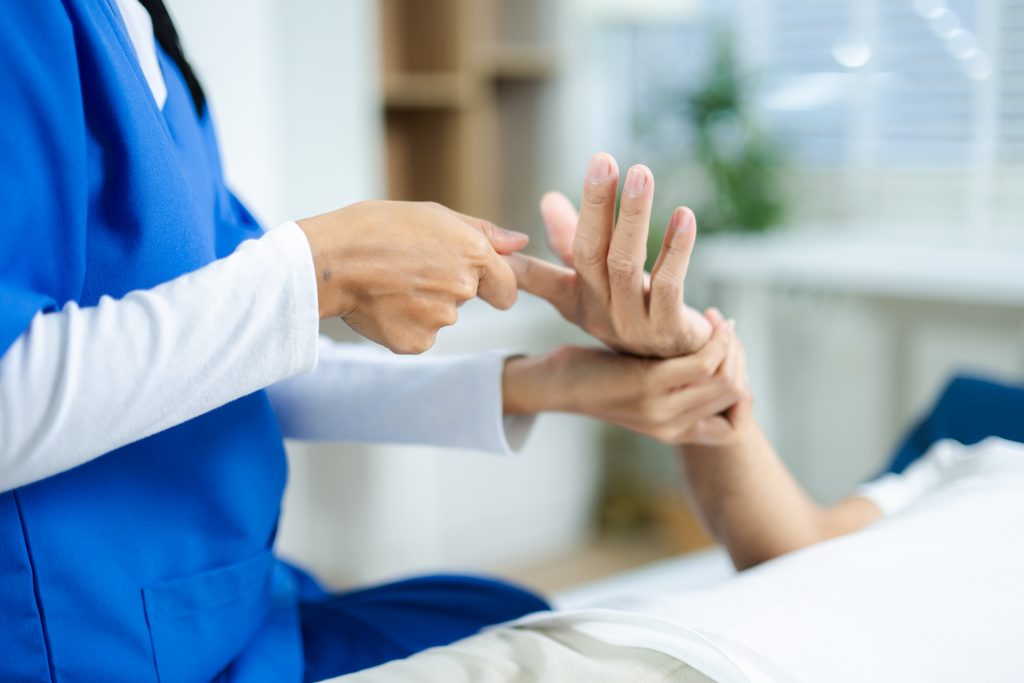
When thumb twitching does not improve, an orthopaedic evaluation helps look at the full pattern. Clinicians may review your symptoms, hand and wrist movement, what activities trigger the twitching, and whether there are signs of tendon, joint, or nerve involvement.
The evaluation may focus on where the twitching seems to start, whether any weakness or sensory changes are present, and how the thumb is functioning during daily tasks. From there, next steps can be recommended to reduce irritation, support healing, and protect hand function.
May help improve grip and reduce strain from repetitive motion while you recover
Don’t Ignore Ongoing Thumb Twitching
Occasional thumb twitching can be linked to overuse or temporary muscle irritation. If twitching keeps happening, makes you feel weaker, or affects daily hand use, a proper diagnosis can help you move forward with the right plan. If symptoms do not improve, schedule an exam with a qualified clinician.
This blog post is meant to be informative and should not act as a self-diagnosis tool. If you’d like to see one of our doctors, please contact us here.
Sequence rules uses cookies to track the order of requests a user has made and the time between requests and makes them available via Cloudflare Rules. This allows you to write rules that match valid or invalid sequences. The specific cookies used to validate sequences are called sequence cookies.
session
cf_ob_info
The cf_ob_info cookie provides information on: The HTTP Status Code returned by the origin web server. The Ray ID of the original failed request. The data center serving the traffic
session
cf_use_ob
The cf_use_ob cookie informs Cloudflare to fetch the requested resource from the Always Online cache on the designated port. Applicable values are: 0, 80, and 443. The cf_ob_info and cf_use_ob cookies are persistent cookies that expire after 30 seconds.
session
__cfwaitingroom
The __cfwaitingroom cookie is only used to track visitors that access a waiting room enabled host and path combination for a zone. Visitors using a browser that does not accept cookies cannot visit the host and path combination while the waiting room is active.
session
cf_chl_rc_i
These cookies are for internal use which allows Cloudflare to identify production issues on clients.
session
cf_chl_rc_ni
These cookies are for internal use which allows Cloudflare to identify production issues on clients.
session
cf_chl_rc_m
These cookies are for internal use which allows Cloudflare to identify production issues on clients.
session
__cfruid
Used by the content network, Cloudflare, to identify trusted web traffic.
session
__cf_bm
Cloudflare's bot products identify and mitigate automated traffic to protect your site from bad bots. Cloudflare places the __cf_bm cookie on End User devices that access Customer sites that are protected by Bot Management or Bot Fight Mode. The __cf_bm cookie is necessary for the proper functioning of these bot solutions.
session
__cflb
When enabling session affinity with Cloudflare Load Balancer, Cloudflare sets a __cflb cookie with a unique value on the first response to the requesting client. Cloudflare routes future requests to the same origin, optimizing network resource usage. In the event of a failover, Cloudflare sets a new __cflb cookie to direct future requests to the failover pool.
session
_cfuvid
The _cfuvid cookie is only set when a site uses this option in a Rate Limiting Rule, and is only used to allow the Cloudflare WAF to distinguish individual users who share the same IP address.
session
cf_clearance
Whether a CAPTCHA or Javascript challenge has been solved.
session
Google reCAPTCHA helps protect websites from spam and abuse by verifying user interactions through challenges.
Name
Description
Duration
_GRECAPTCHA
Google reCAPTCHA sets a necessary cookie (_GRECAPTCHA) when executed for the purpose of providing its risk analysis.
179 days
Google Tag Manager simplifies the management of marketing tags on your website without code changes.
Name
Description
Duration
cookiePreferences
Registers cookie preferences of a user
2 years
td
Registers statistical data on users' behaviour on the website. Used for internal analytics by the website operator.
session
These cookies are used for managing login functionality on this website.
Name
Description
Duration
wordpress_logged_in
Used to store logged-in users.
Persistent
wordpress_sec
Used to track the user across multiple sessions.
15 days
wordpress_test_cookie
Used to determine if cookies are enabled.
Session
WPForms is a user-friendly WordPress plugin for creating custom forms with drag-and-drop functionality.
Name
Description
Duration
wpfuuid
Used to track user interactions with forms.
11 years
Statistics cookies collect information anonymously. This information helps us understand how visitors use our website.
Google Analytics is a powerful tool that tracks and analyzes website traffic for informed marketing decisions.
Used to distinguish new sessions and visits. This cookie is set when the GA.js javascript library is loaded and there is no existing __utmb cookie. The cookie is updated every time data is sent to the Google Analytics server.
30 minutes after last activity
__utmc
Used only with old Urchin versions of Google Analytics and not with GA.js. Was used to distinguish between new sessions and visits at the end of a session.
End of session (browser)
__utmz
Contains information about the traffic source or campaign that directed user to the website. The cookie is set when the GA.js javascript is loaded and updated when data is sent to the Google Analytics server
6 months after last activity
__utmv
Contains custom information set by the web developer via the _setCustomVar method in Google Analytics. This cookie is updated every time new data is sent to the Google Analytics server.
2 years after last activity
__utmx
Used to determine whether a user is included in an A / B or Multivariate test.
18 months
_ga
ID used to identify users
2 years
_gali
Used by Google Analytics to determine which links on a page are being clicked
30 seconds
_ga_
ID used to identify users
2 years
_gid
ID used to identify users for 24 hours after last activity
24 hours
_gat
Used to monitor number of Google Analytics server requests when using Google Tag Manager
1 minute
_gac_
Contains information related to marketing campaigns of the user. These are shared with Google AdWords / Google Ads when the Google Ads and Google Analytics accounts are linked together.
90 days
__utma
ID used to identify users and sessions
2 years after last activity
__utmt
Used to monitor number of Google Analytics server requests
10 minutes
These cookies help us measure the effectiveness of our website content and understand how visitors find and use our site. This allows us to improve the experience and provide more helpful resources.
Facebook Pixel is a web analytics service that tracks and reports website traffic.