Common Knee Injuries: Symptoms, Causes, and Treatment
by Princeton Orthopaedic Associates
Common Knee Injuries and What You Should Know
Your knees handle a lot of force each day, from walking and stairs to sports and getting up from a chair. Because the knee has many moving parts and must stay stable, injuries can range from mild sprains to problems that make it hard to move normally.
Some knee problems show up right after a twist, fall, or awkward landing. Others develop slowly from overuse. When you understand common symptoms, you can recognize concerns early and know when it is time to get medical care.
Knee Injuries Patients Often Ask About
What You Should Know
Common significant knee injuries people often ask about include ACL tears, meniscus tears, MCL injuries, PCL injuries, and patellar tendon tears.
Sports can cause these injuries, but everyday slips, sudden turns, and falls can also lead to them.
Typical symptoms include pain, swelling, a sense that the knee is not stable, locking or stiffness, and trouble bearing weight.
Not every knee injury needs surgery, but getting checked matters because some injuries can worsen if they are ignored.
Treatment usually depends on what structure is hurt, how severe it is, and your activity goals.
Early care may include rest, bracing, physical therapy, and changing what activities you do for a while.
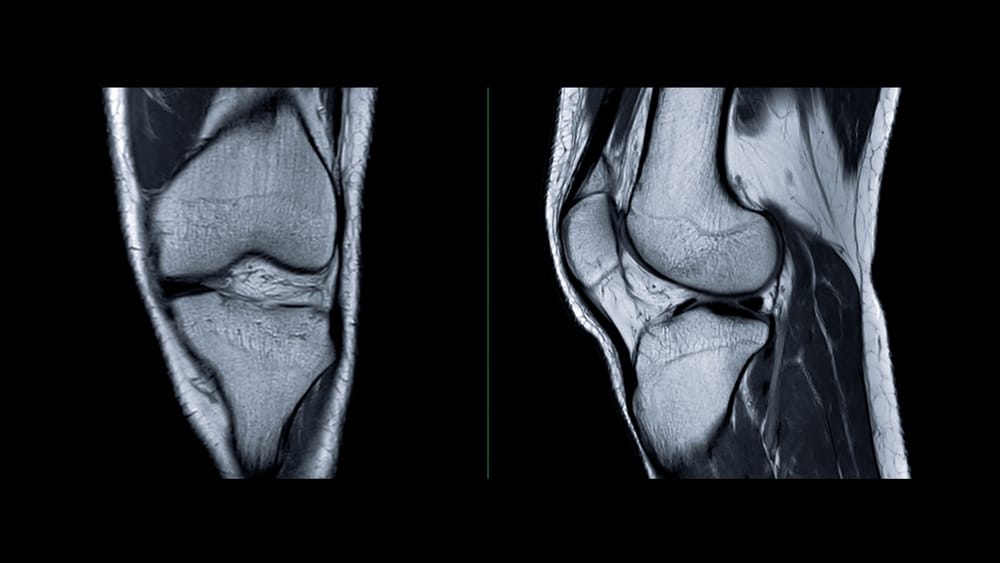
X-rays or MRI may be used to confirm the diagnosis and check for injuries to bones, ligaments, cartilage, or tendons.
Seek orthopaedic care if the knee gives out, swells quickly, or cannot bend or straighten fully.
Why Knee Injuries Are So Common
The knee is a complex joint made up of bones, ligaments, cartilage, tendons, and muscles. It needs strong support to carry your body weight and also needs smooth motion for bending, straightening, and turning.
This mix of stability and movement makes the knee vulnerable. A forceful twist, a direct hit, a sudden stop, or an awkward landing can overload one part of the joint and lead to injury.
A Quick Comparison of Common Knee Injuries
Injury
What It Affects
Common Symptoms
ACL tear
Main stabilizing ligament in the center of the knee
Pain, swelling, feeling of looseness, discomfort with weight-bearing
Patellar tendon tear
Tendon connecting the kneecap to the shinbone
Pain below the kneecap, weakness, trouble straightening the knee
1. ACL Tears
The anterior cruciate ligament, or ACL, helps keep the knee stable, especially during cutting, pivoting, and sudden changes in direction. ACL tears are well known in sports, but they can also happen after a fall or an awkward twist.
Many people describe feeling or hearing a pop at the time of injury. Swelling often starts soon after, and the knee may feel unstable, like it could give way when you turn or try to change direction.
Often caused by pivoting, landing, or sudden stopping
May include a pop at the moment of injury
Often followed by swelling and instability
2. Meniscus Tears
The meniscus is cartilage that acts like a cushion between the thighbone and shinbone. Each knee has two menisci, and they help with shock absorption and joint stability.
A meniscus tear can happen after a twist or deep squat, especially when the foot stays planted. In some people, the tissue can also wear down with age. Symptoms may include pain, swelling, stiffness, and a feeling that the knee catches or locks.
Can happen with twisting or deep bending
May cause catching, locking, or clicking
Sometimes occurs from wear over time rather than a single injury
3. MCL Injuries
The medial collateral ligament, or MCL, runs along the inner side of the knee. It helps resist forces that push the knee inward.
MCL injuries often happen after a blow to the outside of the knee, which is common in contact sports. You may notice pain and tenderness on the inner side of the knee, along with swelling or a feeling that the knee is less stable than usual.
4. PCL Injuries
The posterior cruciate ligament, or PCL, sits behind the ACL and helps keep the shinbone from moving too far backward. PCL injuries are less common than ACL tears, but they can still cause significant symptoms.
These injuries often happen when the front of the bent knee strikes something hard, such as during a fall or motor vehicle collision. Pain, swelling, and a sense that the knee is not moving normally are common complaints.
Signs Your Knee Injury Shouldn’t Be Ignored
Swelling that starts soon after the injury
A knee that buckles or feels unstable
Locking or inability to fully bend or straighten the knee
Difficulty walking or putting weight on the leg
Pain that does not improve with rest
If you have a traumatic knee injury and you cannot bear weight, cannot actively straighten the knee, have rapid or severe swelling, see deformity, feel numbness, notice the leg is cold, or suspect dislocation or fracture, get urgent medical evaluation.
5. Patellar Tendon Tears
The patellar tendon connects your kneecap to your shinbone and helps you straighten your knee. This tendon is important for walking, climbing stairs, standing up, and jumping.
A tear can happen when the tendon is overloaded, often during a forceful jump or landing. Pain is usually felt below the kneecap, and a more serious tear can make it very hard to straighten the leg or support your weight.
How Knee Injuries Are Diagnosed
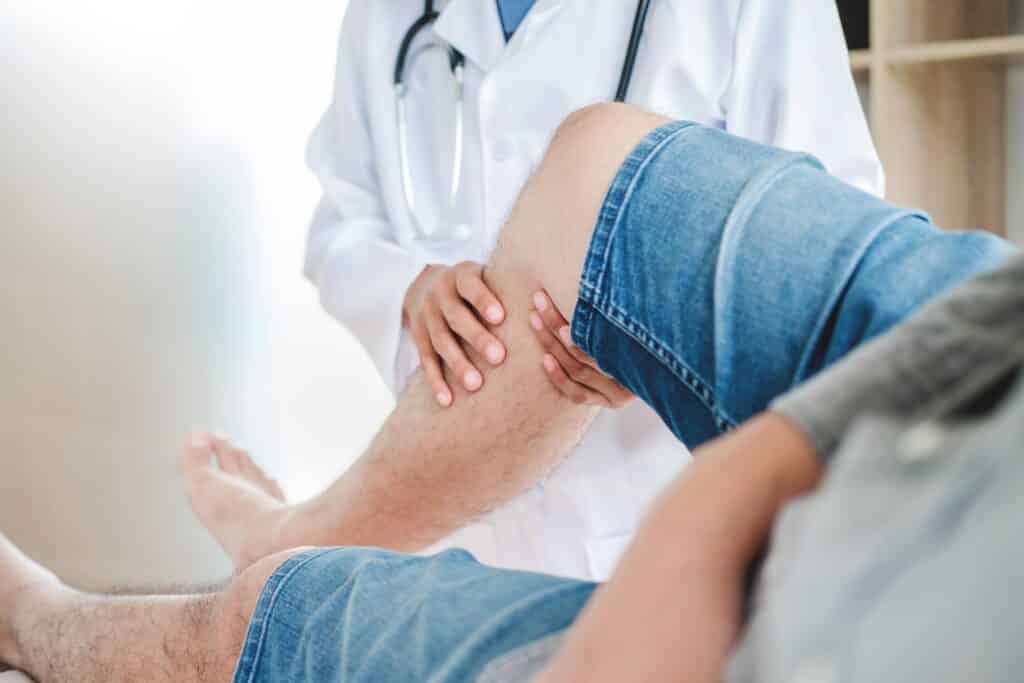
A clinician will start with your history and a physical exam. How the injury happened, where the pain is located, whether the knee swelled right away, and whether the knee feels unstable can all help guide next steps.
Imaging may also be used. X-rays can help rule out fractures, while MRI is often used to look at soft tissues like ligaments, cartilage, and tendons.
Treatment Depends on the Injury
There is no single plan for every knee injury. Care is based on which structure is hurt, how severe the damage is, your symptoms, and what you want to return to in daily life or sports.
Rest and activity changes may help protect the knee early on
Bracing can help support the knee for some ligament injuries
Physical therapy can work on strength, motion, and stability
Some problems may need surgery, especially if there is a suspected complete tendon rupture, major ligament injury, a fracture, or a locked knee
When to See an Orthopaedic Specialist
Get checked soon if your knee pain is severe, if you heard or felt a pop, or if the joint swells quickly after an injury. It also matters if the knee feels like it will give out, gets stuck, or keeps you from walking normally.
A timely evaluation can help prevent additional damage and may help you start the right treatment sooner. If the cause of your symptoms is not clear, a specialist can help you sort out what might be injured and what to do next.
Symptom
Why It Matters
Rapid swelling
Can suggest a significant ligament or internal knee injury
Instability or buckling
May point to ligament damage
Locking or catching
Can happen with meniscus tears or other internal issues
Inability to straighten the knee
May indicate a tendon problem or mechanical block
Pain with weight-bearing
Needs evaluation if it does not quickly improve
Getting Back to Daily Life Safely
A knee injury affects more than sports. It can change work tasks, sleep, exercise routines, and confidence walking on uneven ground or using stairs.
With an accurate diagnosis and a treatment plan that fits your needs, many people can return to their usual activities safely. Focus on healing and guidance, rather than pushing through pain.
This blog post is meant to be informative and should not act as a self-diagnosis tool. If you’d like to see one of our doctors, please contact us here.
Sequence rules uses cookies to track the order of requests a user has made and the time between requests and makes them available via Cloudflare Rules. This allows you to write rules that match valid or invalid sequences. The specific cookies used to validate sequences are called sequence cookies.
session
cf_ob_info
The cf_ob_info cookie provides information on: The HTTP Status Code returned by the origin web server. The Ray ID of the original failed request. The data center serving the traffic
session
cf_use_ob
The cf_use_ob cookie informs Cloudflare to fetch the requested resource from the Always Online cache on the designated port. Applicable values are: 0, 80, and 443. The cf_ob_info and cf_use_ob cookies are persistent cookies that expire after 30 seconds.
session
__cfwaitingroom
The __cfwaitingroom cookie is only used to track visitors that access a waiting room enabled host and path combination for a zone. Visitors using a browser that does not accept cookies cannot visit the host and path combination while the waiting room is active.
session
cf_chl_rc_i
These cookies are for internal use which allows Cloudflare to identify production issues on clients.
session
cf_chl_rc_ni
These cookies are for internal use which allows Cloudflare to identify production issues on clients.
session
cf_chl_rc_m
These cookies are for internal use which allows Cloudflare to identify production issues on clients.
session
__cfruid
Used by the content network, Cloudflare, to identify trusted web traffic.
session
__cf_bm
Cloudflare's bot products identify and mitigate automated traffic to protect your site from bad bots. Cloudflare places the __cf_bm cookie on End User devices that access Customer sites that are protected by Bot Management or Bot Fight Mode. The __cf_bm cookie is necessary for the proper functioning of these bot solutions.
session
__cflb
When enabling session affinity with Cloudflare Load Balancer, Cloudflare sets a __cflb cookie with a unique value on the first response to the requesting client. Cloudflare routes future requests to the same origin, optimizing network resource usage. In the event of a failover, Cloudflare sets a new __cflb cookie to direct future requests to the failover pool.
session
_cfuvid
The _cfuvid cookie is only set when a site uses this option in a Rate Limiting Rule, and is only used to allow the Cloudflare WAF to distinguish individual users who share the same IP address.
session
cf_clearance
Whether a CAPTCHA or Javascript challenge has been solved.
session
Google reCAPTCHA helps protect websites from spam and abuse by verifying user interactions through challenges.
Name
Description
Duration
_GRECAPTCHA
Google reCAPTCHA sets a necessary cookie (_GRECAPTCHA) when executed for the purpose of providing its risk analysis.
179 days
Google Tag Manager simplifies the management of marketing tags on your website without code changes.
Name
Description
Duration
cookiePreferences
Registers cookie preferences of a user
2 years
td
Registers statistical data on users' behaviour on the website. Used for internal analytics by the website operator.
session
These cookies are used for managing login functionality on this website.
Name
Description
Duration
wordpress_logged_in
Used to store logged-in users.
Persistent
wordpress_sec
Used to track the user across multiple sessions.
15 days
wordpress_test_cookie
Used to determine if cookies are enabled.
Session
WPForms is a user-friendly WordPress plugin for creating custom forms with drag-and-drop functionality.
Name
Description
Duration
wpfuuid
Used to track user interactions with forms.
11 years
Statistics cookies collect information anonymously. This information helps us understand how visitors use our website.
Google Analytics is a powerful tool that tracks and analyzes website traffic for informed marketing decisions.
Used to distinguish new sessions and visits. This cookie is set when the GA.js javascript library is loaded and there is no existing __utmb cookie. The cookie is updated every time data is sent to the Google Analytics server.
30 minutes after last activity
__utmc
Used only with old Urchin versions of Google Analytics and not with GA.js. Was used to distinguish between new sessions and visits at the end of a session.
End of session (browser)
__utmz
Contains information about the traffic source or campaign that directed user to the website. The cookie is set when the GA.js javascript is loaded and updated when data is sent to the Google Analytics server
6 months after last activity
__utmv
Contains custom information set by the web developer via the _setCustomVar method in Google Analytics. This cookie is updated every time new data is sent to the Google Analytics server.
2 years after last activity
__utmx
Used to determine whether a user is included in an A / B or Multivariate test.
18 months
_ga
ID used to identify users
2 years
_gali
Used by Google Analytics to determine which links on a page are being clicked
30 seconds
_ga_
ID used to identify users
2 years
_gid
ID used to identify users for 24 hours after last activity
24 hours
_gat
Used to monitor number of Google Analytics server requests when using Google Tag Manager
1 minute
_gac_
Contains information related to marketing campaigns of the user. These are shared with Google AdWords / Google Ads when the Google Ads and Google Analytics accounts are linked together.
90 days
__utma
ID used to identify users and sessions
2 years after last activity
__utmt
Used to monitor number of Google Analytics server requests
10 minutes
These cookies help us measure the effectiveness of our website content and understand how visitors find and use our site. This allows us to improve the experience and provide more helpful resources.
Facebook Pixel is a web analytics service that tracks and reports website traffic.