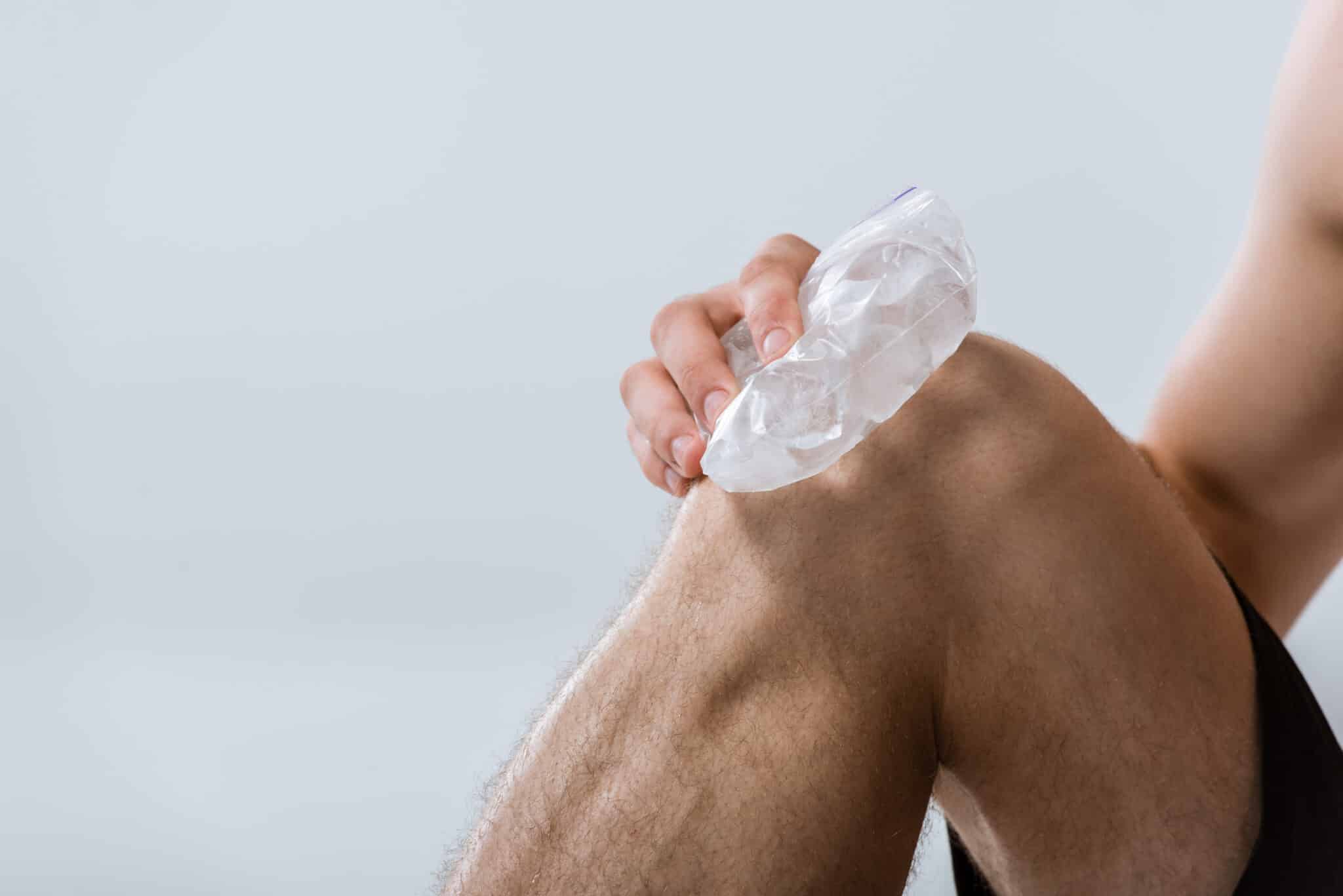
Ice or Heat for Pain Relief: How to Know Which One to Use
There is a tendency for people to put an ice pack or heating pad on when they are in pain or sore, not always sure which is the better remedy. While both have their uses, they go about it in different ways. As a rule of thumb, ice is preferable for fresh injuries where there is swelling, whereas heat will do more for tightness in the muscles or general stiffness.
Applied properly, either can be an aid to comfort and mobility as well as for managing swelling and pain. One should also be mindful of using them in a safe manner. Should the symptoms prove to be severe, fail to get any better or come back time and again, it would be prudent to seek medical counsel.
Quick Differences Between Ice and Heat
Use Ice When You Want to Calm Things Down
Often best after a recent injury
May help reduce swelling
Can ease pain by temporarily numbing the area
Common choices for sprains, strains, and bruises
Use Heat When You Want to Loosen Things Up
Often helpful for stiffness and tight muscles
May increase blood flow to the area
May improve flexibility before movement
Common choices for chronic aches and muscle tension
How Ice Helps an Injured Area
Applying cold therapy is a way to put the brakes on blood flow in the affected region, which can be of some assistance in settling any swelling or irritation in the wake of an abrupt injury. The ice will also serve to dull the pain by numbing sore tissue for a time. While it is not going to remedy the underlying problem on its own, it does allow for more comfortable movement and rest.
One will typically turn to ice in the immediate aftermath of an impact, sprain or strain. This is particularly true if there is throbbing pain, warmth, bruising or visible swelling. A hard bump that has begun to mark the skin, a fresh knee sprain or even a rolled ankle would be typical cases for its use.
How Heat Helps Sore or Stiff Tissue
Applying heat can ease tight muscles and may improve circulation to the part that is sore. The result, for many people, is a stiff joint that can feel more at ease and yield to movement with less difficulty. When the pain is of an achy, tight nature as opposed to being sharp and swollen, many will find warmth to be of particular use.
It is a good remedy for persistent muscle soreness or stiffness in the back and neck where there is no obvious swelling. One might also turn to heat prior to some light activity or a bit of gentle stretching; it can help movement feel less stiff.
A Simple Way to Decide
For a fresh problem accompanied by swelling, warmth or an outbreak of pain, ice is the way to go. On the other hand, where stiffness and tightness are the chief complaints and there is little to no swelling, heat will generally be more effective for the ache. One should observe the area and make any adjustments with care.
While this is not a rule that applies to every injury or constitution, it is sound advice for most ordinary orthopedic discomforts. In cases of doubt, stick to safe measures and if there is no sign of improvement, have the matter evaluated by a professional.
When Ice Is Usually the Better Choice
Right after a sprain or strain
When a joint or muscle is swollen
For bruises or impact injuries
After activity if the area looks more inflamed
When pain feels sharp, hot, or throbbing
When Heat Is Usually the Better Choice
For muscle tightness or spasms
For stiffness in the neck, back, shoulder, or other joints
Before stretching or gentle exercise
For ongoing aches that are not swollen
When movement feels limited because tissue feels tight
Ice vs Heat at a Glance
Situation
Usually Try
Why It May Help
Recent sprain or strain
Ice
May help reduce swelling and numbing pain
Visible swelling
Ice
Cold can calm inflammation in the area
Bruise or bump
Ice
Often used early for pain and swelling
Muscle tightness
Heat
Warmth can help muscles relax
Joint stiffness
Heat
Heat can make movement feel easier
Soreness after activity with swelling
Ice
Often better when inflammation is present
Ongoing achiness without swelling
Heat
Warmth may improve comfort
Can You Alternate Ice and Heat?
There is a time and place for both cold and warmth, particularly as one’s symptoms go from swelling to stiffness. Take an injury for instance: ice may be the way to go in the beginning, but once the swelling has subsided and you are left with tightness, heat will likely prove more soothing. Just be sure to observe proper timing and discontinue if there is any aggravation of symptoms.
Should you be uncertain of where you stand, let the signs tell you. A good rule of thumb is that ice is indicated when there is swelling and heat, whereas a lack of swelling accompanied by stiffness suggests heat would be better. If any doubt remains, err on the side of caution and seek some advice.
How to Use Ice Safely
Wrap an ice pack or bag of ice in a towel before applying
Do not place ice directly on skin
Use for about 15 to 20 minutes at a time, then take a break
Check the skin during and after treatment
Stop if skin becomes painful, blotchy, white, blistered, unusually red, feels burned, or if the area stays numb after treatment
Do not use ice over broken skin or areas with poor circulation unless a clinician tells you to
How to Use Heat Safely
Use a warm heating pad, warm towel, or another gentle heat source
Heat should feel warm, not hot or scalding
Use for about 15 to 20 minutes at a time while checking the skin
Stop if skin becomes painful, blotchy, white, blistered, unusually red, feels burned, or if the area remains numb after treatment
Avoid heat on new injuries, active swelling, redness, warmth, infection, or bleeding
Avoid falling asleep with a heating pad on
When Heat or Ice Should Be Used With Extra Caution
Those with reduced sensation, diabetes, neuropathy or other nerve issues stemming from the condition should consult a clinician prior to applying ice or heat. The same goes for anyone with poor circulation, peripheral vascular disease, Raynaud’s, or simply an inability to gauge temperature properly. One can easily do damage to the skin with cold or heat and not be the wiser for it, so some additional precautions are in order.
Avoid heat on any part of the body that is red, hot, swollen or otherwise inflamed, especially after a new injury. Heat is out of the question if there is a fever, infection or bleeding. As for open wounds or any skin that is not in good shape, ice should not be put on it without the go ahead from a clinician.
When to Get Checked by an Orthopedic Specialist
While ice and heat are useful for easing pain, putting swelling in check and allowing for more comfortable movement, they are no substitute for a proper evaluation if something more serious is at play. Should the pain be considerable, fail to improve, or change for the worse, particularly following an injury, it is best to have it examined.
There are certain warning signs that call for a trip to urgent care or other timely medical intervention: deformity, a suspected fracture, or an inability to put weight on the limb. The same goes for severe or escalating pain, new weakness of any kind, numbness, tingling, a fever or any indication of infection.
Possible blood clot symptoms also need urgent attention. Watch for calf swelling, warmth, redness and pain, especially if it happens in one leg or does not improve. Do not make the mistake of using ice or heat in place of getting the care you need when such symptoms present themselves.
Schedule an Exam if Pain Isn’t Improving
There are times when it is not clear if ice or heat is the right course of action for one’s symptoms, or when pain simply will not abate. In such cases, Princeton Orthopaedic Associates is on hand to assist. We can put you through a clinical evaluation to get to the bottom of the discomfort and recommend a more appropriate treatment plan that is in keeping with your particular injury and what you want to achieve in your recovery.
This blog post is meant to be informative and should not act as a self-diagnosis tool. If you’d like to see one of our doctors, please contact us here.
Sequence rules uses cookies to track the order of requests a user has made and the time between requests and makes them available via Cloudflare Rules. This allows you to write rules that match valid or invalid sequences. The specific cookies used to validate sequences are called sequence cookies.
session
cf_ob_info
The cf_ob_info cookie provides information on: The HTTP Status Code returned by the origin web server. The Ray ID of the original failed request. The data center serving the traffic
session
cf_use_ob
The cf_use_ob cookie informs Cloudflare to fetch the requested resource from the Always Online cache on the designated port. Applicable values are: 0, 80, and 443. The cf_ob_info and cf_use_ob cookies are persistent cookies that expire after 30 seconds.
session
__cfwaitingroom
The __cfwaitingroom cookie is only used to track visitors that access a waiting room enabled host and path combination for a zone. Visitors using a browser that does not accept cookies cannot visit the host and path combination while the waiting room is active.
session
cf_chl_rc_i
These cookies are for internal use which allows Cloudflare to identify production issues on clients.
session
cf_chl_rc_ni
These cookies are for internal use which allows Cloudflare to identify production issues on clients.
session
cf_chl_rc_m
These cookies are for internal use which allows Cloudflare to identify production issues on clients.
session
__cfruid
Used by the content network, Cloudflare, to identify trusted web traffic.
session
__cf_bm
Cloudflare's bot products identify and mitigate automated traffic to protect your site from bad bots. Cloudflare places the __cf_bm cookie on End User devices that access Customer sites that are protected by Bot Management or Bot Fight Mode. The __cf_bm cookie is necessary for the proper functioning of these bot solutions.
session
__cflb
When enabling session affinity with Cloudflare Load Balancer, Cloudflare sets a __cflb cookie with a unique value on the first response to the requesting client. Cloudflare routes future requests to the same origin, optimizing network resource usage. In the event of a failover, Cloudflare sets a new __cflb cookie to direct future requests to the failover pool.
session
_cfuvid
The _cfuvid cookie is only set when a site uses this option in a Rate Limiting Rule, and is only used to allow the Cloudflare WAF to distinguish individual users who share the same IP address.
session
cf_clearance
Whether a CAPTCHA or Javascript challenge has been solved.
session
Google reCAPTCHA helps protect websites from spam and abuse by verifying user interactions through challenges.
Name
Description
Duration
_GRECAPTCHA
Google reCAPTCHA sets a necessary cookie (_GRECAPTCHA) when executed for the purpose of providing its risk analysis.
179 days
Google Tag Manager simplifies the management of marketing tags on your website without code changes.
Name
Description
Duration
cookiePreferences
Registers cookie preferences of a user
2 years
td
Registers statistical data on users' behaviour on the website. Used for internal analytics by the website operator.
session
These cookies are used for managing login functionality on this website.
Name
Description
Duration
wordpress_logged_in
Used to store logged-in users.
Persistent
wordpress_sec
Used to track the user across multiple sessions.
15 days
wordpress_test_cookie
Used to determine if cookies are enabled.
Session
WPForms is a user-friendly WordPress plugin for creating custom forms with drag-and-drop functionality.
Name
Description
Duration
wpfuuid
Used to track user interactions with forms.
11 years
Statistics cookies collect information anonymously. This information helps us understand how visitors use our website.
Google Analytics is a powerful tool that tracks and analyzes website traffic for informed marketing decisions.
Used to distinguish new sessions and visits. This cookie is set when the GA.js javascript library is loaded and there is no existing __utmb cookie. The cookie is updated every time data is sent to the Google Analytics server.
30 minutes after last activity
__utmc
Used only with old Urchin versions of Google Analytics and not with GA.js. Was used to distinguish between new sessions and visits at the end of a session.
End of session (browser)
__utmz
Contains information about the traffic source or campaign that directed user to the website. The cookie is set when the GA.js javascript is loaded and updated when data is sent to the Google Analytics server
6 months after last activity
__utmv
Contains custom information set by the web developer via the _setCustomVar method in Google Analytics. This cookie is updated every time new data is sent to the Google Analytics server.
2 years after last activity
__utmx
Used to determine whether a user is included in an A / B or Multivariate test.
18 months
_ga
ID used to identify users
2 years
_gali
Used by Google Analytics to determine which links on a page are being clicked
30 seconds
_ga_
ID used to identify users
2 years
_gid
ID used to identify users for 24 hours after last activity
24 hours
_gat
Used to monitor number of Google Analytics server requests when using Google Tag Manager
1 minute
_gac_
Contains information related to marketing campaigns of the user. These are shared with Google AdWords / Google Ads when the Google Ads and Google Analytics accounts are linked together.
90 days
__utma
ID used to identify users and sessions
2 years after last activity
__utmt
Used to monitor number of Google Analytics server requests
10 minutes
These cookies help us measure the effectiveness of our website content and understand how visitors find and use our site. This allows us to improve the experience and provide more helpful resources.
Facebook Pixel is a web analytics service that tracks and reports website traffic.